Food · 28 September 2026
Tej, Ethiopian Honey Wine, and Its Alcohol-Free Cousin Birz
Tej is Ethiopia's traditional mead, flavoured with gesho and served in a berele. How it is made, how to drink it, and birz, honey water, for those who prefer a drink without alcohol.
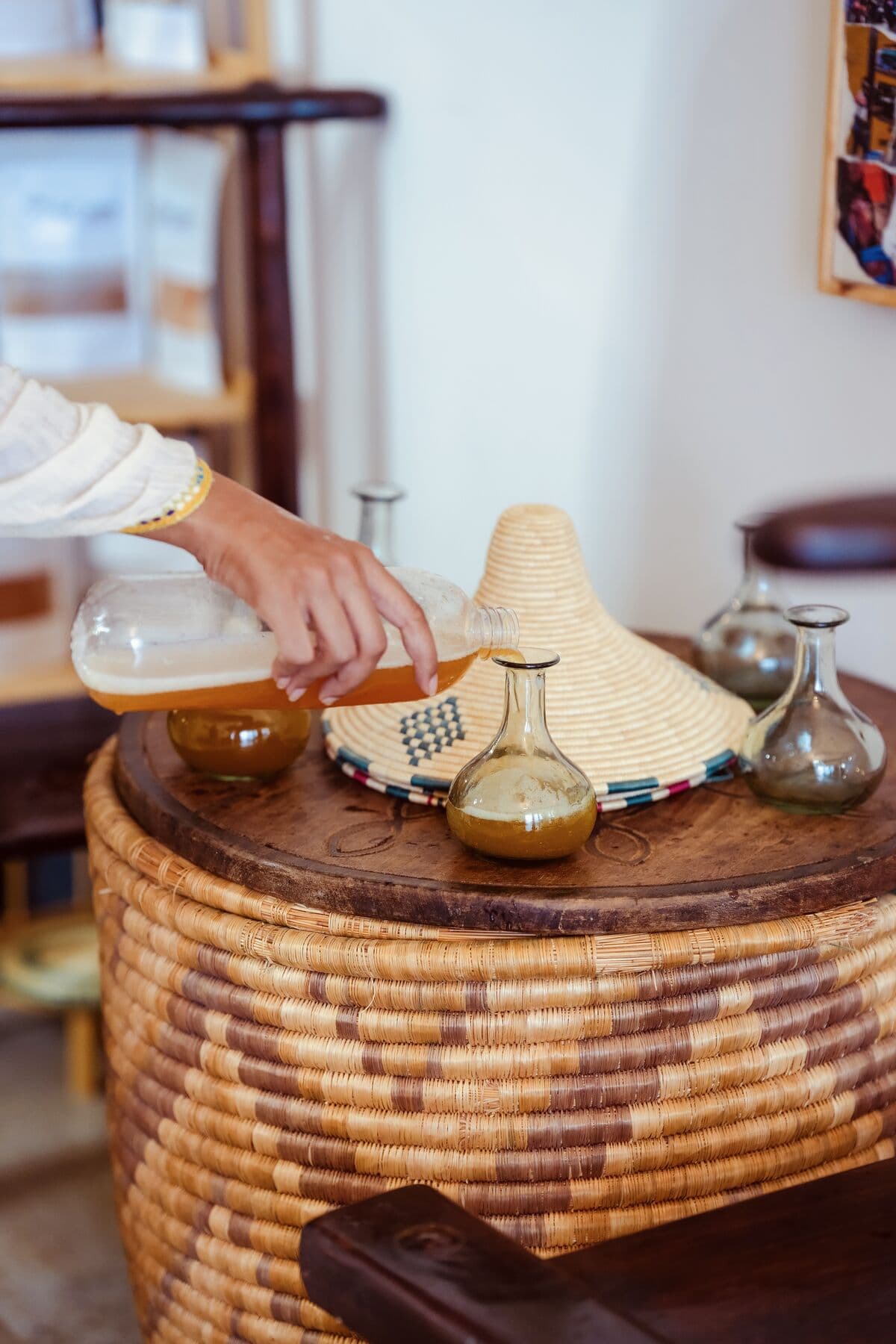
Tej is Ethiopia's traditional mead, a fermented honey wine, sweet and lightly amber. It is served in a berele, a round-bottomed flask with a long neck, and drunk at celebrations and meals. For an alcohol-free drink inspired by the same honey, birz, or honey water, is the alternative.
What tej is
Tej is made from honey, water and gesho. The honey is diluted in water, then the mixture is left to ferment. Gesho, a shrub whose leaves or stems are used, gives tej its bitterness and character, much as hops do in beer. Fermentation time varies: the shorter it is, the sweeter the tej, the longer it is, the drier and stronger in alcohol.
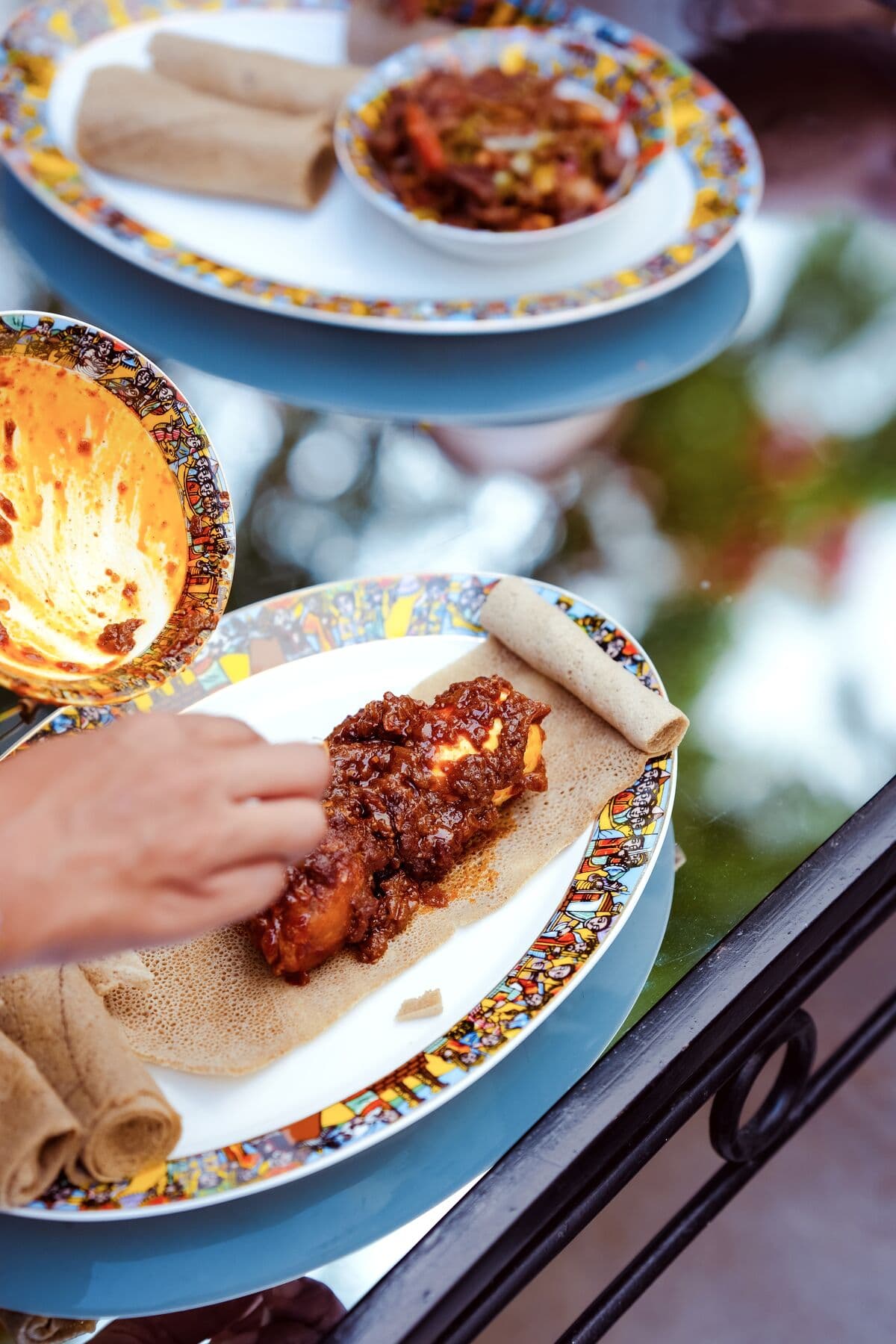
It is the drink of big occasions. It is served at weddings, religious festivals and reception meals, usually with a meat dish such as doro wot (see doro wot). Offering tej to a guest is part of Ethiopian hospitality.
The berele, the tej flask
Tej is traditionally served in a berele, a glass flask with a round bottom and a long neck, held by the neck. Its shape recalls a laboratory flask. It shows off the amber colour of the liquid and lets it be served with a little ceremony. A berele is filled and refilled over the course of the conversation.
How to drink it
Tej is drunk cool, in small sips, with a dish or on its own. Its sweetness suits spicy dishes: berbere and honey go well together (see berbere and Ethiopian spices). Its alcohol level is significant despite the sweetness. So it is enjoyed in moderation, and never before driving.
Birz, alcohol-free honey water
Birz is Ethiopian honey water. At ge'eza the menu describes it like this: pure Senegalese honey and water, two ingredients, centuries of tradition. It offers the scent of honey without fermentation, and suits guests who do not drink alcohol, lunchtime meals, and those who want to taste the tradition without its effects. It also lets you compare, side by side, two versions of the same raw material.
Tej and birz at ge'eza
At ge'eza, tej is a traditional honey wine, sweet, lightly amber and naturally fermented, at 3,500 F. Birz is 2,000 F. Other house drinks: bissap, ginger juice and bouye, at 1,500 F, all homemade, and spris, a layered Ethiopian smoothie, at 3,500 F.
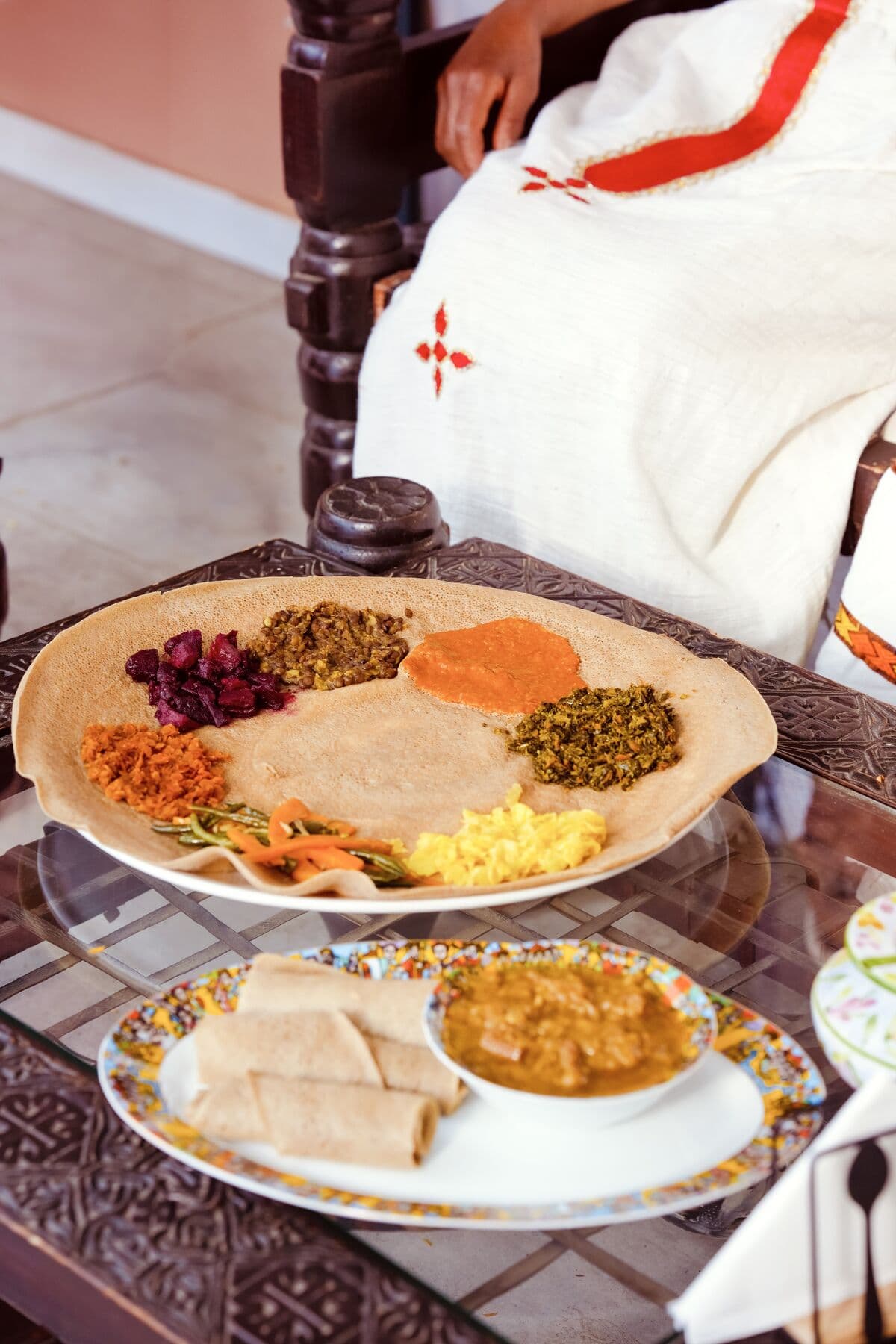
Tej pairs especially well with the meat dishes on the menu: Doro Wot, Siga Wot, Tibs. It can also go with a beyaynetu to balance the berbere of the Shiro. To finish, the coffee ceremony is 5,000 F.
A pleasure of the table
Tej is first of all a moment to share, at the end of a meal or at a reception. It also slots easily into a group dinner: the spaces page presents the private hire options at ge'eza.
Coming to taste
The house is open Tuesday to Sunday, 8am to 10pm, at 656 avenue Birago Diop, Point E. Book online for evenings and weekends.
Honey, the raw material
Everything starts with honey. In Ethiopia, beekeeping is ancient and honey holds a special place in cooking and ceremony. Tej is the most direct expression of that culture: the quality of the honey, its origin and its freshness give the wine its character. At ge'eza the menu specifies that birz is made from pure Senegalese honey, a reminder that the Ethiopian tradition can be lived with local products.
Tej and food: simple pairings
To avoid mistakes, a few markers. With hot meat dishes, such as Siga Wot or Kitfo, tej brings sweetness. With fasting dishes, it offers a round counterpoint to pulses. With dessert, such as peanut baklava, it joins the same family of flavours. And at the end of the meal, you move on to coffee: the drink of a ritual takes over from that of the feast. The Ethiopian food guide details these choices.
Serving and etiquette
Tej is served with a certain ceremony. The host pours, the guest receives with both hands or with the right hand, and refills often come without being asked. It is polite to accept a first glass, even if you drink little. If you prefer not to drink alcohol, say so simply: birz is a natural alternative, and no one will mind. Never feel obliged to finish a berele: it is a drink of sharing, not of quantity.
Tej beyond the table
Tej also has a place in the way Ethiopians talk about hospitality and celebration. Traditional tej houses, called tej bet, are known in Ethiopia as places where people meet to drink and talk. Abroad, the drink has travelled with the diaspora, and mead lovers have started to look at it as a cousin of the honey wines of Europe. Trying tej in Dakar is a way of tasting a very old drink in a new setting, alongside a menu that mixes Ethiopian and Senegalese habits.
Frequently asked questions
Does tej contain alcohol?
Yes. It is a fermented honey wine. Birz, made of honey and water, is the alcohol-free version.
What does berele mean?
It is the traditional glass flask in which tej is served.
Is tej sweet?
It is mellow, with a light bitterness thanks to gesho. Its sweetness varies with fermentation time.
Can birz be served to children?
It is honey water without alcohol. Like any honey, it is not recommended for infants under one year.