
Food · 2 November 2026
What to Drink With Ethiopian Food: A Pairing Guide at Ge'eza
Tej at 5,000 F, birz at 3,000 F, house juices at 2,000 F, spris at 6,000 F, water or soda at 1,500 F, Ethiopian coffee: how to pair a drink with your plate, whether it leans spicy with berbere or mild with alicha, at Ge'eza.
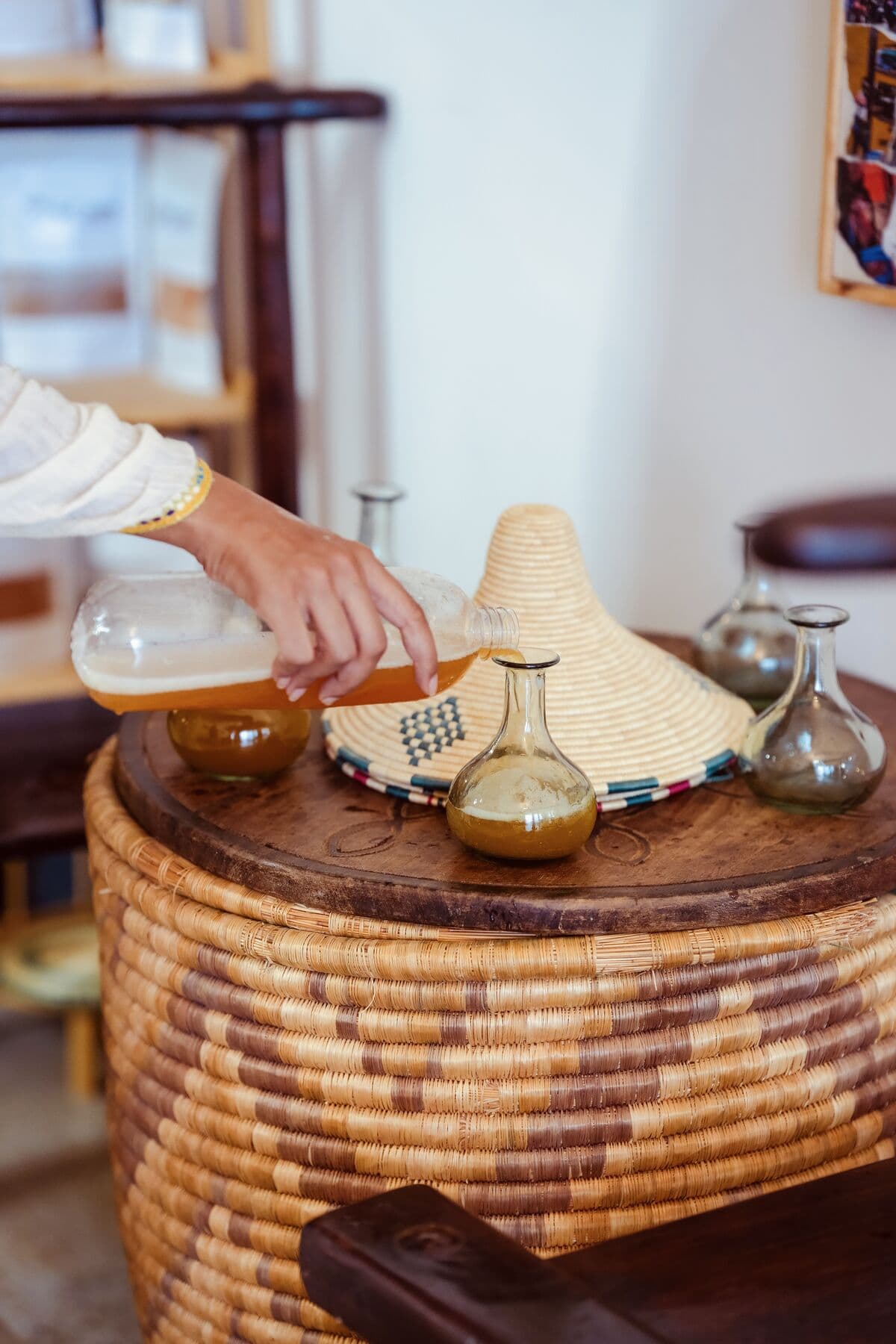
To pair a drink with an Ethiopian meal, Ge'eza's menu offers three broad families: honey drinks, tej (5,000 F) and birz (3,000 F); house-made juices, bissap, ginger or bouye (2,000 F each), or the layered spris (6,000 F); and water or soda (1,500 F), for a table that wants no alcohol and no added sweetness. The right choice mostly comes down to how intense the dish is: a berbere-based wot calls for something different than a milder alicha dish.
Two families of dishes, two approaches to pairing
Ethiopian cooking splits, broadly, into two main families of sauce. On one side, berbere-based dishes, a chilli-led spice blend used in dishes such as siga wot or doro wot, which carry real heat and a deep red colour. On the other, alicha dishes, cooked with turmeric instead of berbere, milder and rounder on the palate. A meal that brings both types to the table, which is common with a beyaynetu platter or a spread shared between several guests, calls for a drink that can sit comfortably with both, or else a rotation of drinks that changes with the dish in front of you.
Tej, for the richer, spicier dishes
Tej, Ethiopia's traditional honey wine, at 5,000 F, is the classic pairing for the spicier meat dishes. Its sweetness balances the heat of berbere without erasing it: the dish's spice is still there, just softened by the fermented honey. It is the drink of major occasions, often served with a doro wot or a siga wot. Its preparation, from honey, water and gesho, is covered in tej, Ethiopian honey wine.
Birz, the same softness without alcohol
For anyone who does not drink alcohol, birz, at 3,000 F, offers the same spirit as tej, since it is made from the same base ingredients, honey and water, without fermentation. It is a honey water, mild, suited to midday meals as much as to tables that prefer to stay alcohol-free. With a spicy dish, it plays a role close to tej's: taking the edge off the heat without masking the flavour of the dish.
House-made juices, for freshness and acidity
The house-made juices, bissap, ginger and bouye, all at 2,000 F, bring a freshness and acidity that cleanse the palate between bites. Bissap, made from hibiscus, is the tangiest of the three and holds up well against a rich, sauce-heavy dish. Ginger, livelier, suits a tibs or a sauteed dish well. Bouye, creamier, soothes a spicier dish without being as sweet as tej or birz. Each juice is covered in more detail in Senegalese drinks: bissap, bouye, ginger.
Spris, for a more festive moment
Spris, a layered Ethiopian smoothie, at 6,000 F, is a more elaborate drink, built for a meal where there is time to spare. Fruity and visually striking, it suits a table that wants to stretch the meal out rather than a quick lunch. It sits on its own, somewhere between a drink to pair with food and a liquid dessert.
Water and soda, for a simple table
For a table that wants no alcohol and no particular pairing, water and soda, at 1,500 F, remain the simplest choice. They suit any dish without playing a specific role against berbere's heat, and let the dish speak for itself.
Choosing by how intense the dish is
In practice, a few guidelines help. With a berbere-based dish, such as siga wot or doro wot, tej or birz take the edge off the heat. With a milder alicha dish, a house-made juice offers a fresh contrast rather than a response to spice. With a beyaynetu platter, which brings several intensities to one plate, the choice depends on the bite in front of you: it is not unusual to switch drinks mid-meal, or to order two for the table. To see where each dish on the menu sits between spicy and mild, is Ethiopian food spicy? offers a dish-by-dish guide.
Coffee, to close the meal
After the meal, coffee takes over from the drinks that accompanied it. An Ethiopian macchiato, at 4,000 F, suits a quick end to a meal. For something longer, the full coffee ceremony, at 7,000 F per person, brings three rounds of coffee, Abol, Tona and Baraka, with incense and dabo, over about 45 minutes. It is best booked 24 hours ahead, especially for a group, and confirmed by WhatsApp.
Setting up the table
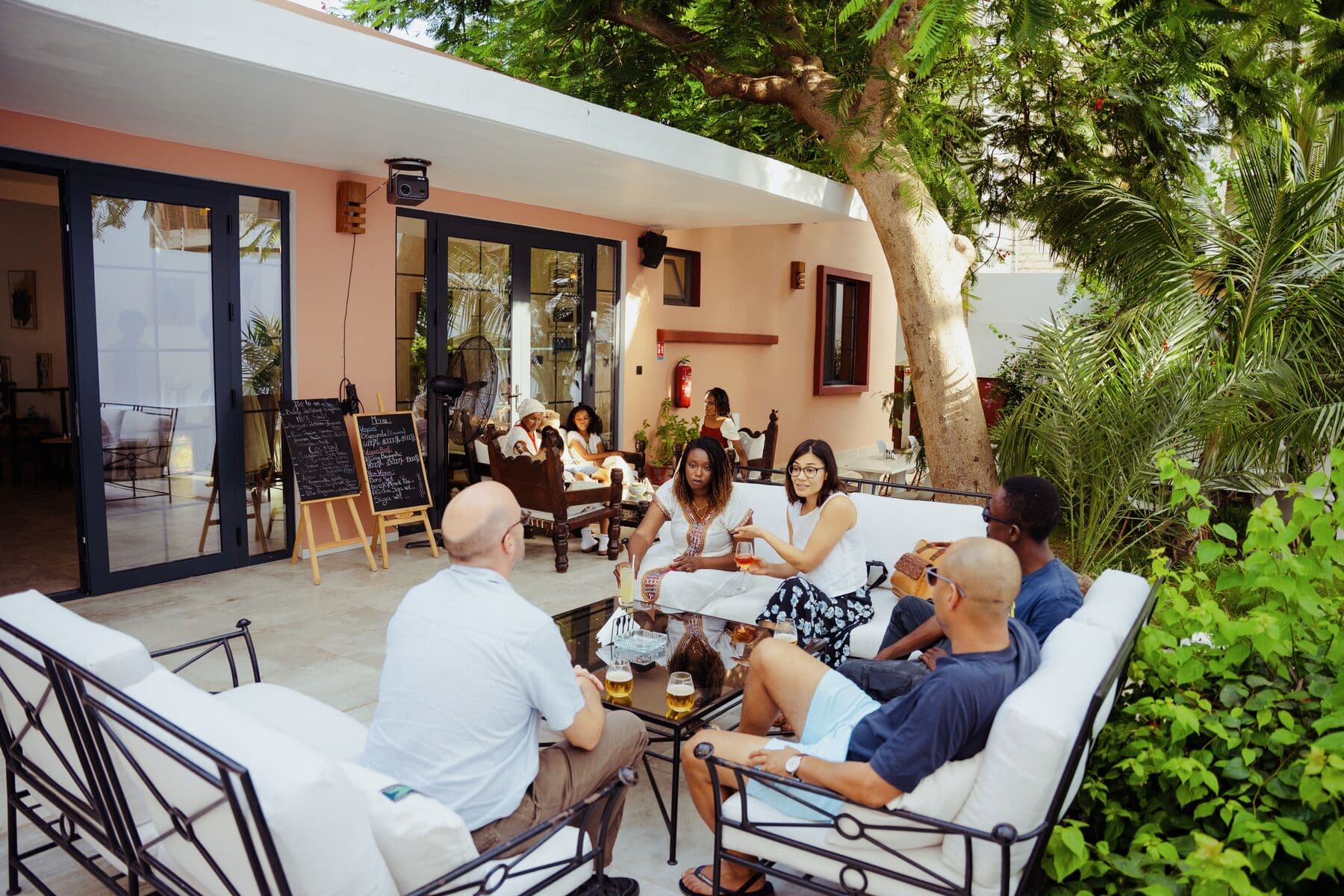
For a meal shared among several people, nothing stops drinks from varying by dish: tej for whoever ordered a siga wot, a bissap for someone with a milder alicha dish, and water for anyone who wants to keep it simple. The house, open Tuesday to Sunday, 8am to 10pm, at 656 Avenue Birago Diop in Point E, suits this kind of mixed table well. To book, especially for a group, write on WhatsApp at +221 78 660 07 07.
Frequently asked questions
What drink goes well with a very spicy dish?
Tej or birz, thanks to their honey sweetness, or a bouye juice, which is gentler than bissap or ginger.
Does tej contain alcohol?
Yes, it is a fermented honey wine, at 5,000 F. Birz, at 3,000 F, is its alcohol-free counterpart.
What drink suits a mild, alicha-style dish?
A house-made juice, bissap, ginger or bouye, for a fresh contrast rather than a response to spice.
What is good to drink after the meal?
An Ethiopian macchiato at 4,000 F, or the full coffee ceremony at 7,000 F per person for a longer moment.
Can you switch drinks during the meal?
Yes, it is even advisable with a beyaynetu platter, which brings several intensities together: the drink can follow whichever dish you are eating at the time.