
Food · 9 November 2026
How to Cook With Berbere at Home
Berbere bought at Ge'eza's concept store works well in lentils, a stew, a marinade or roasted vegetables. How to dose it at home, with no recipe or blend details attributed to the house itself.
To cook with berbere at home, add it gradually to lentils, a meat or vegetable stew, a marinade or roasted vegetables, frying it briefly in a little oil or butter first to bring out its aroma. Berbere bought at the fine food section of Ge'eza's concept store, in Point E, suits this kind of everyday use, though there is no single way to dose it: every household settles on its own balance.
Start with a small amount
Berbere is a hot spice blend, and its strength varies from one batch to another depending on who made it. Before following any recipe, the first rule is to use little and taste as you go. You can always add more partway through cooking, but it is harder to fix a dish that has already gone too hot. Half a teaspoon to start, in a sauce meant for four people, leaves room to adjust without ruining the dish.
Frying it in oil or butter
Berbere gives its best when briefly heated in fat before the rest of the ingredients join it. In a pan or a pot, cook the chopped onion until it turns translucent, then add the berbere and stir it over low heat for a moment: the heat releases its aroma without burning it. Only then add the liquid, water or stock, and the main ingredients.
In lentils
Lentils, green, brown or red, take up berbere well. Cook them in water or stock with the onion and berbere prepared as above, until tender, adding more water if the sauce thickens too fast. A drizzle of oil at the end rounds off the dish. It is a simple way to get close, at home, to the spirit of a lentil dish you might find on an Ethiopian menu, without trying to reproduce an exact recipe.
In a stew
For a meat or vegetable stew left to simmer slowly, add the berbere along with the base spices, right after the onion has softened. The slow cooking lets the meat or vegetables tenderise while the berbere spreads its colour through the whole sauce. Tomatoes, fresh or canned, pair well with this blend and bring a touch of acidity that balances the heat.
In a marinade
Mixed with a little oil, lemon juice or yoghurt, berbere makes a simple marinade for meat, fish or vegetables before grilling or roasting. An hour of resting is usually enough for the flavours to sink in, longer if you leave it overnight in the fridge. A little garlic and salt can be added to taste.
On roasted vegetables
Vegetables cut into pieces, carrots, courgettes, aubergines or potatoes, roast well when coated in oil and a pinch of berbere, in a moderate oven, until tender and lightly coloured. The berbere gives them a warm colour and a kick that reads differently on each vegetable, depending on its own natural flavour.
On eggs
A pinch of berbere stirred into scrambled eggs, or sprinkled over fried eggs just before serving, adds a spiced lift to breakfast or a simple evening meal. It is one of the quickest ways to try the blend without committing to a full dish.
A blend that varies from house to house
There is no single recipe for berbere: every family, every region, keeps its own balance between chilli heat and the aromatic spices that round it out. Ge'eza's concept store does not publish an ingredient list or a dosage for the blend it sells: it is a product meant to be discovered by tasting rather than described in advance. For more on the main Ethiopian spice families and how each is used, berbere, mitmita and niter kibbeh covers these preparations in detail.
Storing berbere
Like any spice blend, berbere keeps its aroma best in a sealed jar, away from light and heat. It loses intensity over time, so it is worth buying only as much as you expect to use over the coming months rather than a large stock that will lose its character before it is finished.
Taste it before you cook
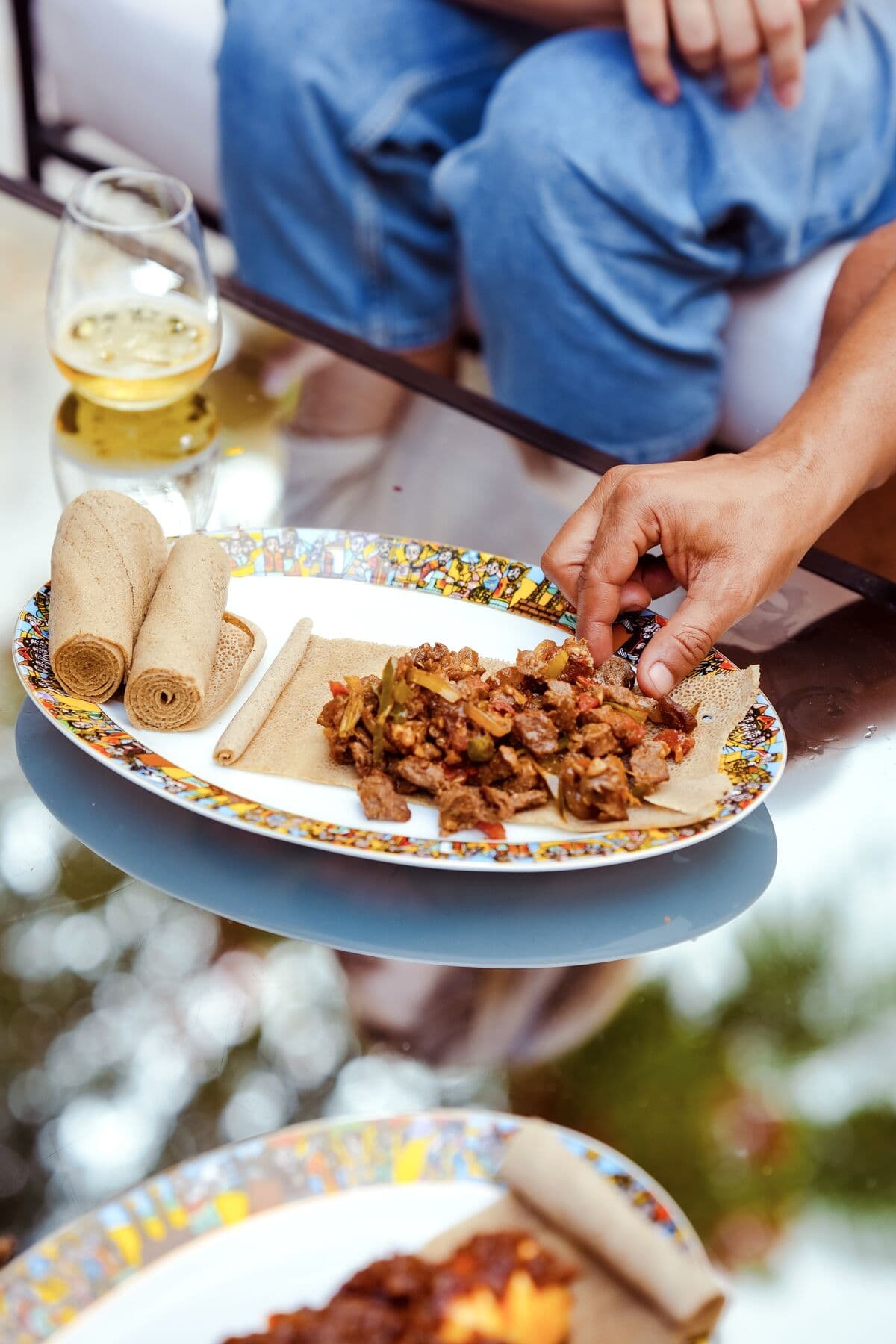
Before trying it at home, the best way to understand what berbere does in a dish is to taste it as cooked by a kitchen that has worked with it for years. At Ge'eza, siga wot, a beef stew simmered in berbere, is served at 9,000 F, and misir wot, made with lentils, is one of the vegan fasting dishes at 5,500 F. Both give a precise sense of the balance between chilli heat and the rounder spices that accompany it. What is wot? explains this family of stews more broadly, and how it differs from its milder version, alicha.
Buying berbere in Dakar
Berbere is sold at the fine food section of Ge'eza's concept store, in Point E, available on site during the restaurant's hours, Tuesday to Sunday, 8am to 10pm, or set aside with a message on WhatsApp at +221 78 660 07 07. Buying berbere in Dakar covers this in more detail.
Frequently asked questions
Can berbere be used in any dish?
Yes, in lentils, a stew, a marinade, roasted vegetables or eggs, added gradually to taste.
Should it be cooked before adding other ingredients?
It gives its best briefly fried in a little oil or butter with the onion, before the rest of the ingredients join it.
Does Ge'eza publish its own berbere recipe?
No, the concept store sells the blend without publishing its composition or dosage: every household adjusts it to taste.
Where can I taste a dish cooked with berbere before trying it at home?
At Ge'eza's restaurant, with siga wot at 9,000 F or misir wot at 5,500 F among the fasting dishes.