Food · 28 September 2026
Berbere, Mitmita and Niter Kibbeh: Ethiopia's Core Flavours
Berbere, mitmita and niter kibbeh are the base of Ethiopian cooking. What each is generally made of, how strong they are, and the dishes on the ge'eza menu where you will meet them.
Three preparations create the taste of Ethiopian cooking: berbere, a deep red spice blend, mitmita, sharper and hotter, and niter kibbeh, a clarified butter infused with herbs and spices. They give stews their colour, warmth and scent. Knowing them helps you choose a dish to your taste, from mildest to boldest.
Berbere, the base of colour and heat
Berbere is a spice blend whose main element is dried chilli. The recipe varies between families and regions, but it generally includes garlic, ginger, fenugreek and several aromatic spices. Each household keeps its own proportions. The result is a powder or paste of intense red, at once hot, smoky and faintly sweet.
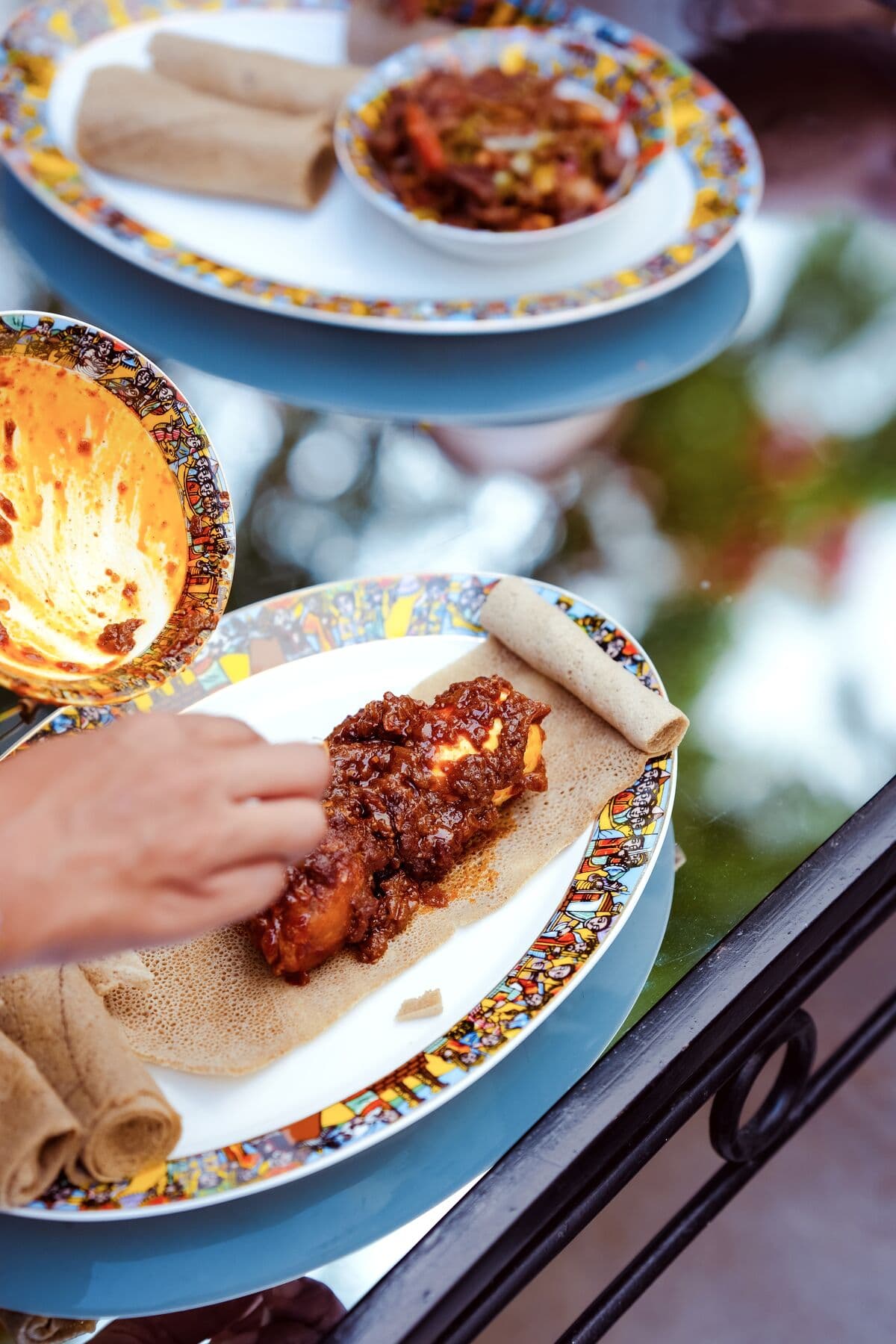
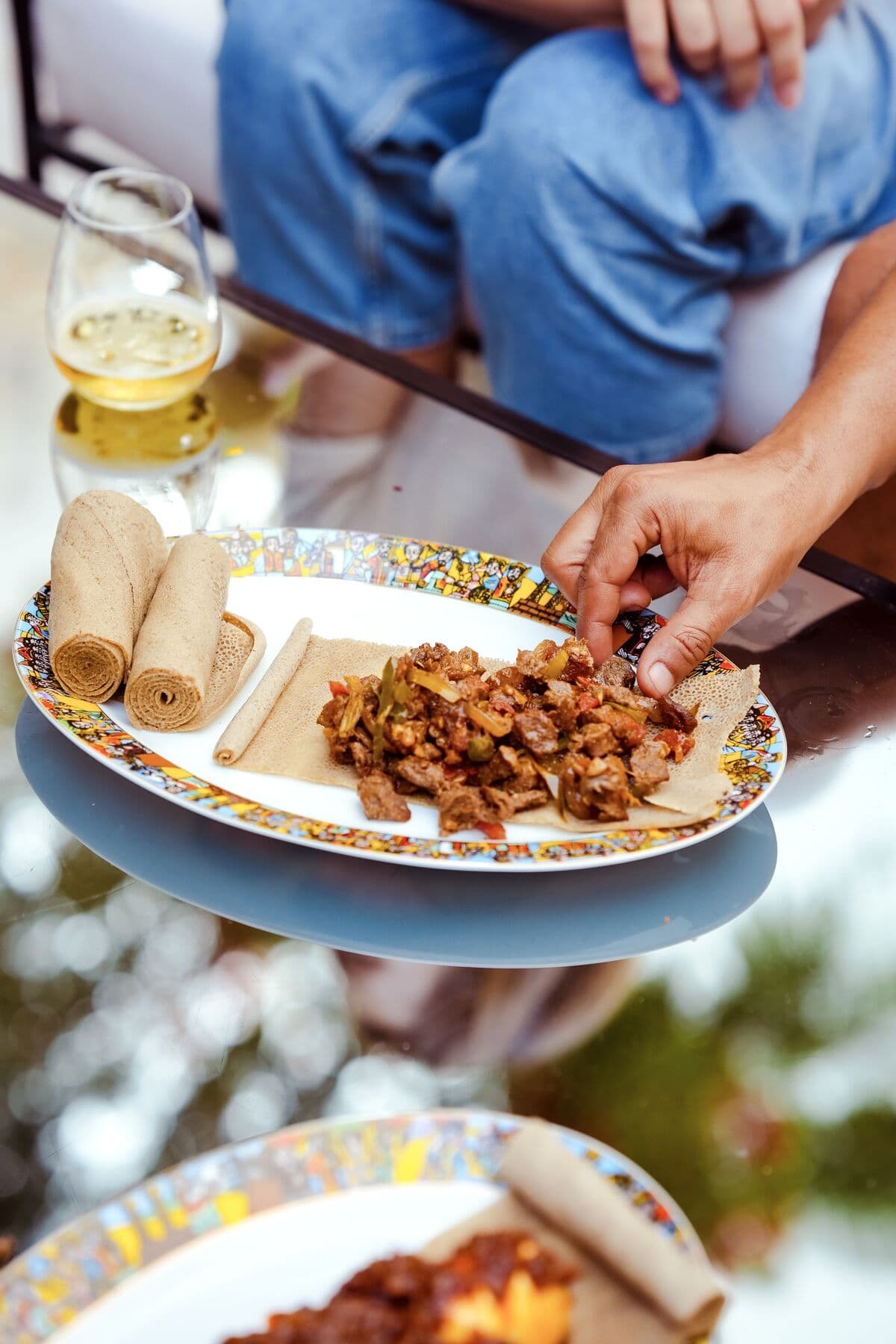
Berbere is the base of many wots, the Ethiopian stews. At ge'eza you find it in Shiro Wot, at 5,500 F, finely ground chickpeas simmered in a deep, fragrant berbere sauce, in Siga Wot, beef slowly simmered in an intense berbere sauce, at 8,000 F, and in Tibs Firfir, where injera is lifted with berbere spices, at 9,000 F. At breakfast, chechebsa, a crumbled flatbread, is tossed with berbere and spiced butter and finished with honey, at 4,500 F.
Mitmita, sharper
Mitmita is a stronger blend, built on a small, very hot chilli, often together with cardamom, clove and salt. It is placed on the side of a dish or added at the last moment. It is the classic seasoning for kitfo, the Ethiopian tartare. At ge'eza, kitfo is hand-minced, seasoned with mitmita and kibbeh, at 9,000 F. It has to be ordered 24 hours ahead.
Mitmita should be handled carefully: it is clearly hotter than berbere. If you are not used to spice, ask for it on the side.
Niter kibbeh, the butter that perfumes
Niter kibbeh is a clarified butter infused with herbs and spices, and the recipe is often handed down in families. It generally contains aromatic seeds and spices such as cardamom, turmeric or fenugreek. Heated gently, the butter takes up their aromas, then it is strained and stored. It gives dishes a characteristic roundness and scent.
At ge'eza it is used in doro wot, chicken slow-cooked in clarified butter (see doro wot), in kikil, a lamb broth with turmeric and kibbeh, and in the breakfast genfo, a barley porridge served with a well of niter kibbeh and berbere. The fasting dishes are prepared without butter, which is why they can be offered as vegan.
Mild or bold: how to choose
Not all Ethiopian cooking is hot. Alicha describes the mild preparations, generally cooked with turmeric and no berbere. At ge'eza, Alicha Siga Wot, beef gently simmered with turmeric, gives all the depth without the heat of berbere, at 9,000 F. Alicha Ater Kik, split peas cooked with turmeric, is a mild, comforting dish at 5,500 F. The question of strength has its own article: is Ethiopian food spicy?.
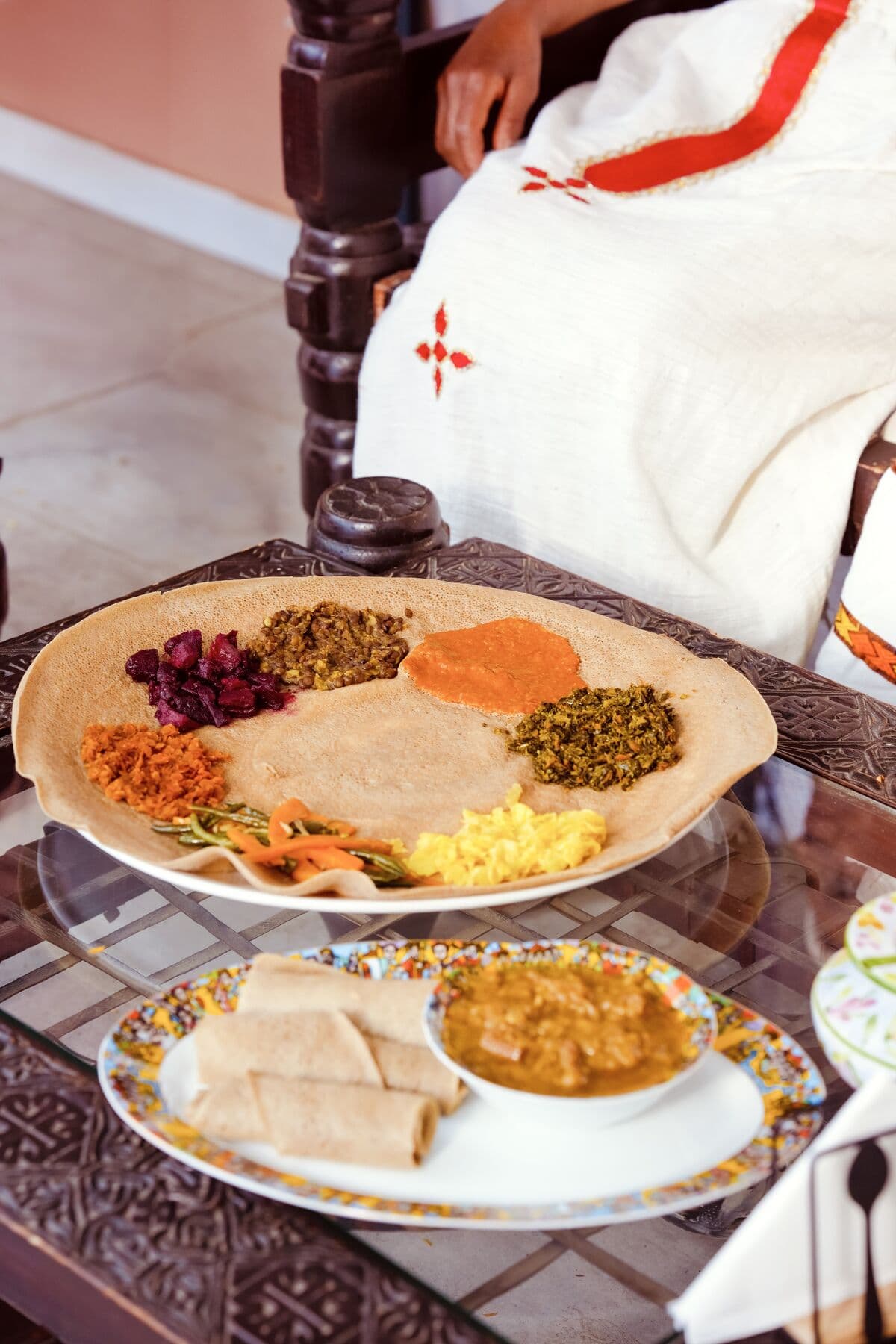
On a single platter you can alternate a mild dish and a bold one, which is exactly what the beyaynetu does, bringing together seven fasting dishes of different intensity.
Spices and blends: the local gesture
In Ethiopia, preparing the blends is often long domestic work. Spices are sorted, dried, pounded, then mixed in the proportions the family judges right. So there is no single berbere recipe: what counts is the balance between the fire of the chilli and the roundness of the aromatic spices. That is why the same name covers very different tastes from one kitchen to another.
Where to taste these flavours in Dakar
To taste these foundations in a gentle order, start with a beyaynetu, from 7,000 F for one person (see beyaynetu), then add a meat dish. Meals are served Tuesday to Sunday, 8am to 10pm. For an evening or a group, book online or write to +221 78 660 07 07.
Keeping and recognising them
A good berbere is recognised by its scent as much as its colour: it should smell of chilli, dried garlic and warm spices, with no whiff of dust. Blends lose their aroma over time, in light and in humidity. So they are kept in a closed jar, dry, away from heat. A well-kept blend holds its scent for several months, but it is better used fairly quickly.
Seasoning at the table
Ethiopian tables rarely add pepper or salt after cooking: the seasoning is done in the pot. What may be added is a spoonful of mitmita or a little niter kibbeh, but as a rule the cook has already balanced the dish. If you find a dish too hot, the answer is more injera and a milder dish beside it, not water.
A note for cautious eaters
If spice worries you, remember that heat in Ethiopian food comes in layers: berbere in the stew, mitmita on the side, and fresh chilli in some breakfast dishes. You can meet the flavours one at a time. Start with a mild alicha, add a taste of Shiro, and leave the mitmita for later.
Frequently asked questions
What is the difference between berbere and mitmita?
Berbere is a spice blend based on dried chilli, aromatic and deep. Mitmita is hotter, built around a small, very strong chilli, and is often used to season kitfo.
Does niter kibbeh contain lactose?
It is a clarified butter, so it contains little lactose, but it is not a vegan product. The fasting dishes at ge'eza are prepared without butter.
Can I buy berbere in Dakar?
Ethiopian spice blends are not always easy to find. Ask the ge'eza team, who can tell you what is available locally.
How do I ask for a milder dish?
Choose an alicha, a dish cooked with turmeric, or ask the team for advice when you order.