Food · 28 September 2026
Doro Wot: Ethiopia's Festive Chicken Stew Explained
Doro wot is Ethiopia's celebration dish: chicken slow-cooked in an onion and berbere sauce with a hard-boiled egg. Its history, how it is made, how to eat it, and where to try it in Dakar.
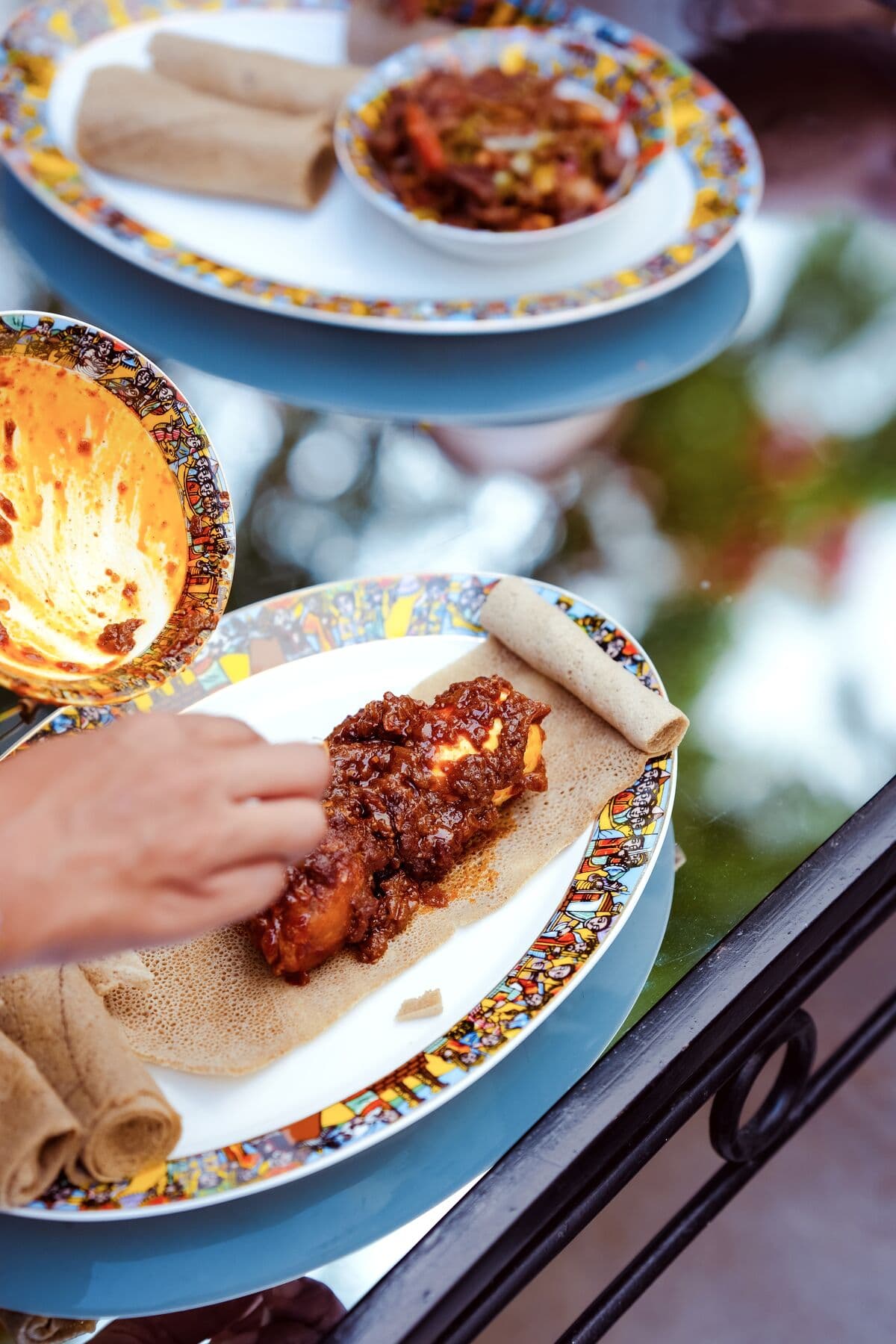
Doro wot is an Ethiopian chicken stew, simmered for a long time in a spiced sauce and served with a hard-boiled egg on injera. It is the dish of big occasions: it is prepared for religious holidays, weddings and family gatherings. At ge'eza it is served at 8,000 F, slow-cooked in clarified butter.
A dish for celebration
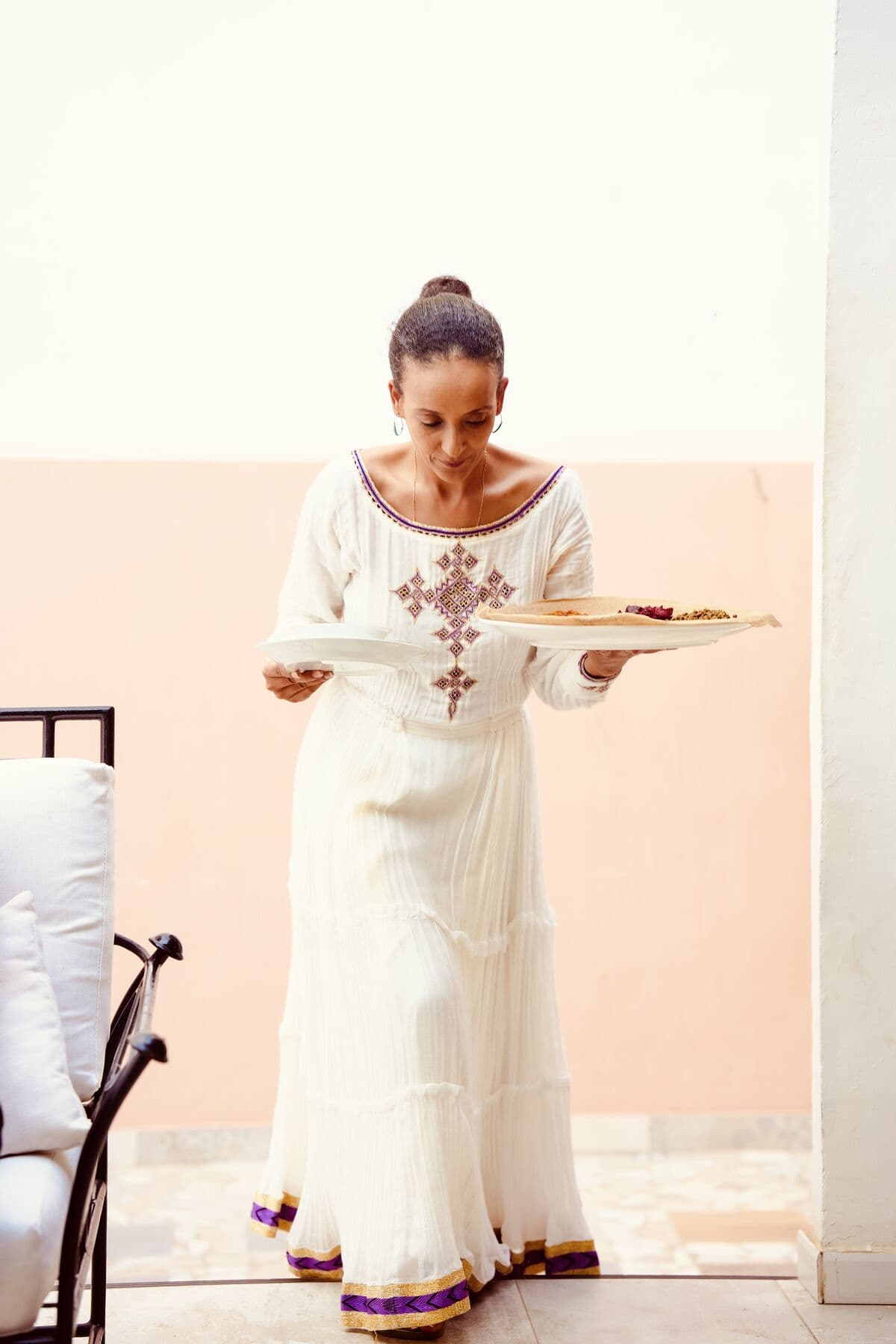
In Ethiopia, doro wot is not an everyday dish. It is prepared for holidays: the New Year Enkutatash, Genna, the Ethiopian Christmas, Timkat, Easter, and for big family meals. After the fasting periods, when meat, eggs and dairy are avoided, it marks the return of richer dishes. That is why it is so tied to the idea of celebration: to receive someone is to serve them doro wot.
Culturally, it is the dish a host prepares with the greatest care. The preparation is long and demands attention, which makes it a mark of respect for guests. See also the articles on Genna and Timkat and the Ethiopian calendar.
What goes into it
Doro wot is made of a few simple elements whose quality makes the difference. The chicken is cooked on the bone, most often in pieces. The onion, in large quantity, is cooked very slowly until it melts and forms the base of the sauce. Berbere, a chilli-based spice blend, gives the red colour and the heat (see berbere and Ethiopian spices). Niter kibbeh, spiced clarified butter, rounds out the sauce. Finally the hard-boiled egg, set in the sauce, is the signature of the dish.
The slow preparation
The difficulty of doro wot is time. The onion cooks for a long while, often with no other fat at the start, until it turns into a thick base. Berbere and butter are then added, followed by the chicken, which is left to simmer on low heat. The hard-boiled eggs are scored and dropped in the sauce to absorb it. The result is a deep, almost velvety sauce of dark red that coats the chicken.
There is no single recipe: the amount of chilli, the thickness of the sauce and the number of eggs vary by family. What is constant is patience.
How to eat it
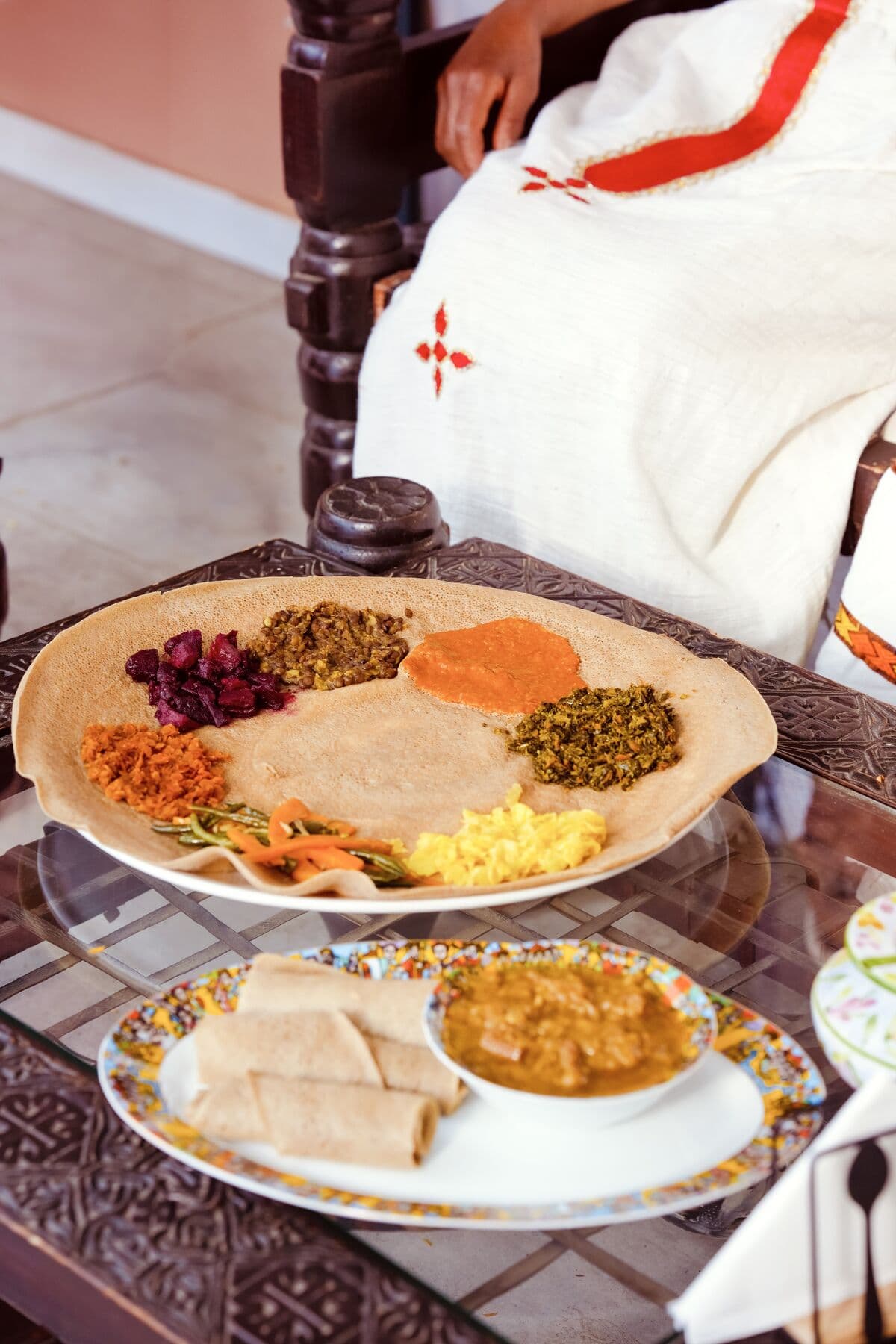
Doro wot is eaten like all Ethiopian dishes: with your right hand, tearing a piece of injera to pick up sauce, chicken and a bit of egg. The chicken comes away from the bone easily. The rich sauce pairs well with the light sourness of injera. See injera explained to understand why one calls for the other.
Doro wot is shared: it goes in the middle of the tray, with other dishes. It also makes an excellent contrast with the milder fasting dishes.
Doro wot at ge'eza
At ge'eza, doro wot is chicken slow-cooked in clarified butter, served with a hard-boiled egg, at 8,000 F. It is marked as a signature dish on the menu. The house meats come from Gourméa, a women-led farm in Dakar, and are prepared following traditional Ethiopian recipes with kibbeh.
To go with it, Ye Fisig Beyaynetu lets you taste fasting dishes and a meat stew of your choice at once: 7,000 F for one person, 10,000 F for two, 16,000 F for three. For a complete discovery you can also order a beyaynetu and add a doro wot.
What to drink with it
Tej, the traditional honey wine, at 3,500 F, is the classic pairing: its sweetness balances the spiced sauce. Birz, honey water, at 2,000 F, suits guests who prefer something lighter. To finish, a coffee ceremony at 5,000 F, or an Ethiopian macchiato at 2,500 F.
Coming to taste it
The house is open Tuesday to Sunday, 8am to 10pm, at 656 avenue Birago Diop in Point E. For a festive meal or a group, book online or by WhatsApp at +221 78 660 07 07. To host guests around this dish, the spaces page presents the private hire options.
Why it matters so much
Doro wot sums up what Ethiopian cooking says about hospitality: time given, richness shared, attention to the guest. Cooks readily say that a good doro wot is judged by its sauce, its depth and its patience, more than by the meat. It is also a dish made in quantity: it is prepared for many, which explains its place in collective meals.
Variations and pairings
Like most stews, doro wot exists in several household versions: more or less thick, more or less hot, with a different number of eggs. Some cooks add a squeeze of lemon or a little spiced butter at the end. On a table, it sits well next to a mild vegetable dish, such as Tikil Gomen or Alicha Ater Kik, which rest the palate between mouthfuls of berbere.
Frequently asked questions
Is doro wot very spicy?
It is seasoned with berbere, so it has character. If you are not used to chilli, tell the team. For a mild alternative, Alicha Siga Wot, beef with turmeric, is an option.
What does wot mean?
It is the Amharic word for stew. Doro wot is the chicken stew, siga wot the beef one, misir wot the lentil one.
Why a hard-boiled egg in the dish?
It is tradition: the egg is a sign of generosity and celebration, and it absorbs the sauce.
Do I need to order ahead?
Not for doro wot, but yes for kitfo, which is ordered 24 hours in advance.