Food · 28 September 2026
Injera Explained: Ethiopia's Fermented Bread, Plate and Fork
Injera is the fermented teff flatbread that carries the whole Ethiopian meal. How it is fermented, cooked and eaten, and what to expect from its texture before your first platter.
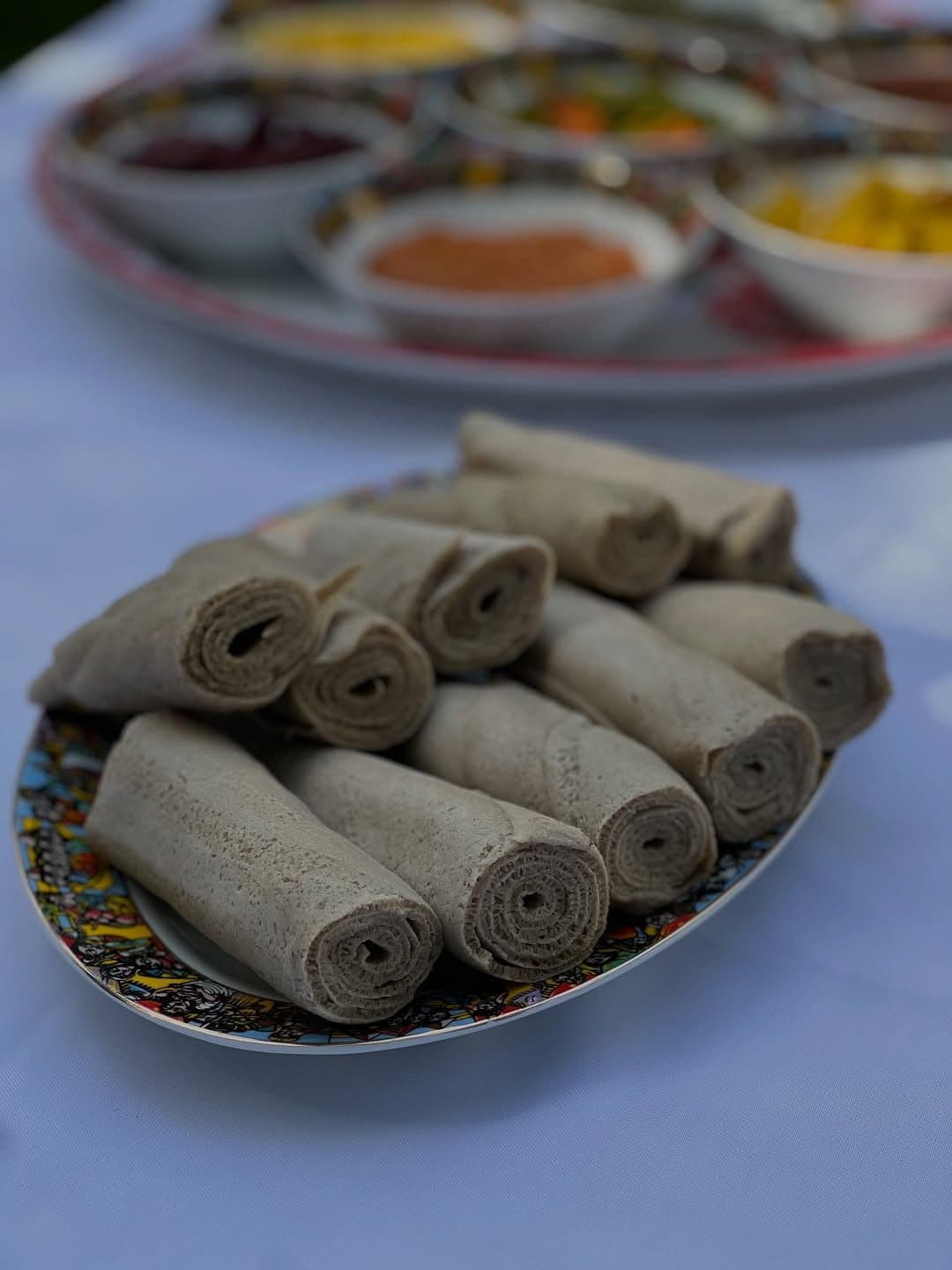
Injera is a soft, fermented flatbread traditionally made from teff flour, Ethiopia's staple grain. It works as plate, fork and side dish at once: stews are laid on top and you pick them up with a torn piece of injera. Its faintly sour taste and honeycombed texture set it apart from any other bread.
What injera is
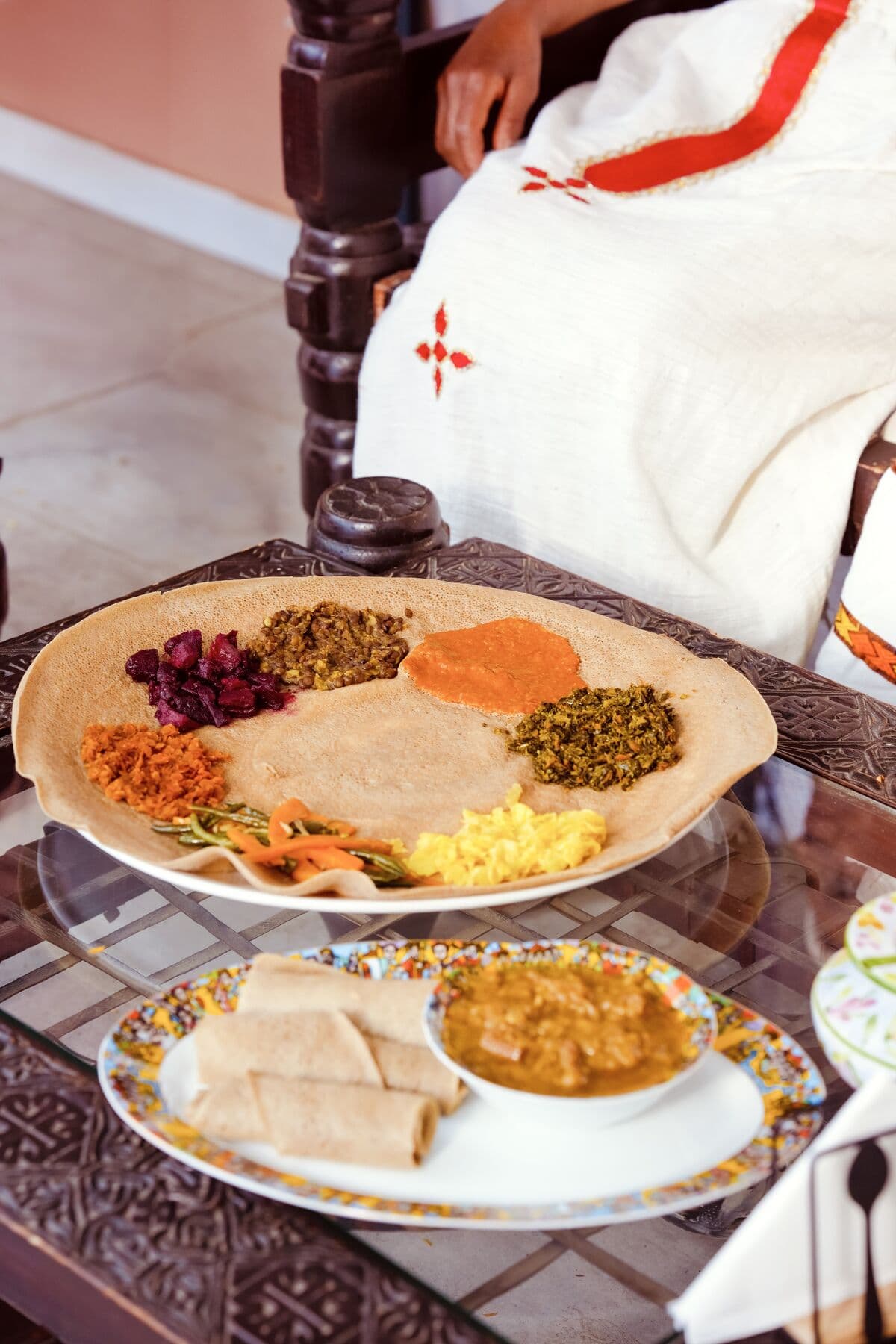
To the eye, injera looks like a large, thick, spongy crepe. The top side is covered in small regular holes, called eyes, formed by the bubbles of fermentation. The underside is smooth and slightly glossy. It is built to soak up sauces without falling apart, which is what makes it an edible plate.
It is served folded or rolled, usually in several sheets: one large injera spread at the bottom of the tray, and rolls on the side for serving. As the meal goes on, the injera underneath, soaked in the juices of the dishes, becomes one of the best moments of the meal.
Teff, the base of the recipe
The classic recipe rests on teff flour, a tiny grain grown for a very long time on the Ethiopian highlands. Teff is naturally gluten-free, which partly explains the particular texture of injera. It has its own article: teff, Ethiopia's ancient grain.
Depending on the region and the household, you will also find injera made with other grains, alone or mixed with teff. The ge'eza menu presents its injera as a traditional fermented bread, naturally gluten-free. With a severe allergy, tell the team: some breakfast dishes, such as foul, are served with French bread.
Fermentation, the decisive step
Flour and water are mixed, then the batter rests for several days at room temperature. Natural micro-organisms make it rise and give it its sour scent. This fermentation creates the bubbles, the elasticity and a taste no other bread reproduces. A batter that is too young gives a flat injera, one that is too advanced turns very sour: the cook's skill is to sense the right moment.
Cooking on the mitad
The batter, now fluid, is poured in a spiral onto a large round cooking plate, the mitad, made of clay or metal. It is covered straight away. Steam cooks the top, and injera is never flipped: only one side is cooked. In a few minutes the eyes appear and the sheet lifts off. The sheets are stacked in a woven basket, away from the air, before use.
How to eat it
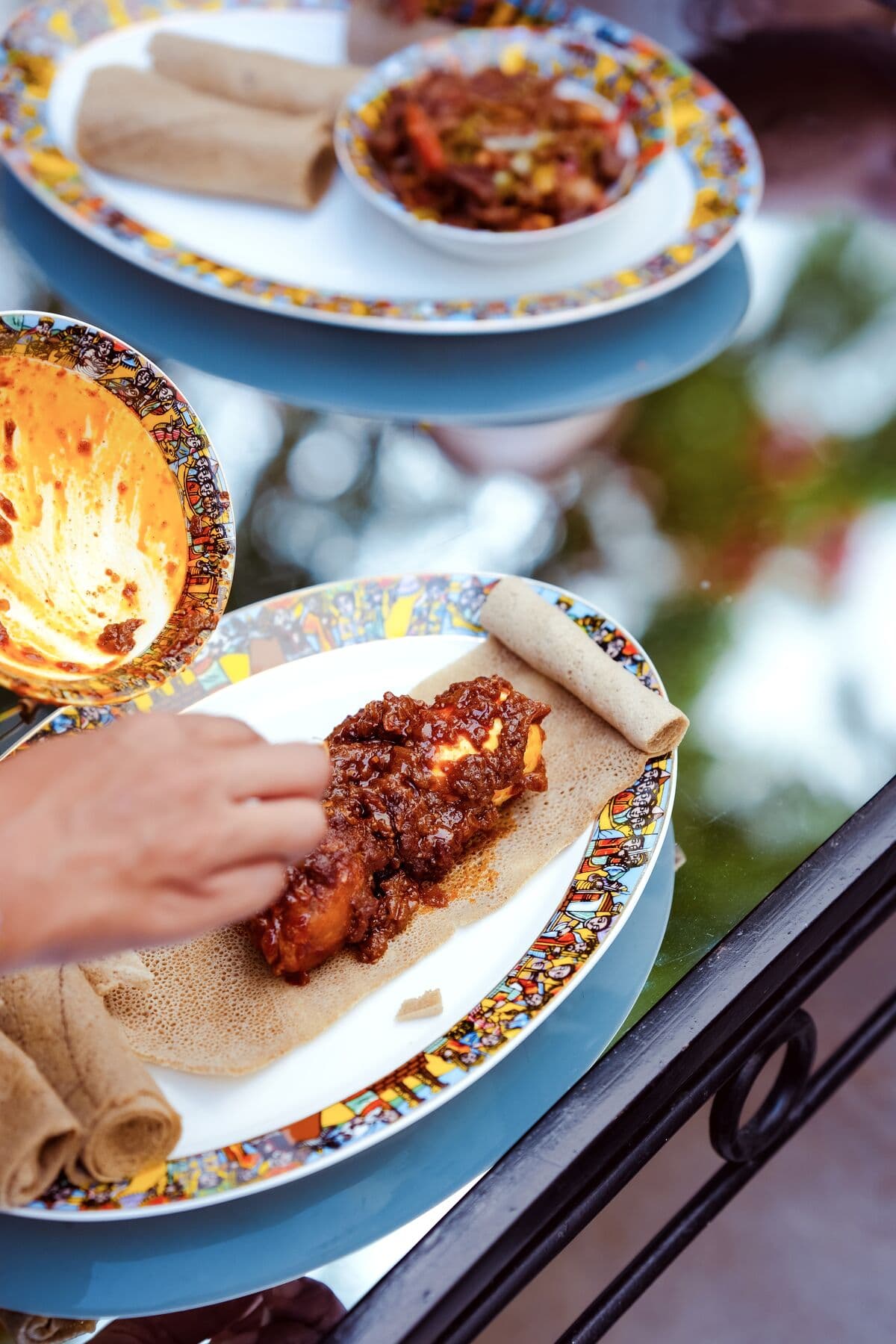
Eat injera with your right hand. Tear off a piece, pick up some sauce, vegetable or meat, and fold the bite into a small parcel. Do not stab it and do not cut it: injera is made to be torn. The gesture of sharing continues in the gursha, the mouthful you offer to someone close to you, described in gursha, eating with your hands.
One point of manners: do not put the leftovers of your piece back onto the shared tray. Everyone takes from the dish on the side nearest to them, without reaching across the table.
Dishes that use injera differently
Injera is not only the support of the meal. Firfir is injera torn into pieces and warmed in a spiced wot sauce: at ge'eza the vegetarian Firfir is 5,500 F and the Tibs Firfir, where injera is soaked in the juices of sautéed meat, is 9,000 F. Genfo at breakfast is a barley porridge, and chechebsa is a flatbread crumbled with berbere and spiced butter: other ways of putting Ethiopian breads to work.
Where to taste injera in Dakar
At ge'eza, injera comes with every Ethiopian dish on the menu. To discover it with the seven fasting dishes, order the beyaynetu, from 7,000 F for one person (see beyaynetu). The other dishes are built around it: tibs, doro wot, kitfo, kikil. The house is open Tuesday to Sunday, 8am to 10pm: book your table for evenings and weekends.
A place of its own in Ethiopian culture
Injera is not only a food: it shapes the way people gather. Around the large tray you sit close together, share the same dish and use the same gestures. Receiving someone means making room for them at that tray. This logic explains why the Ethiopian table suits family meals as well as more formal gatherings: nobody eats alone in front of a plate, and conversation naturally organises itself around the dish.
For visitors, the most disorienting thing is often the absence of a personal plate. You get used to it fast. A few minutes are enough to find the right movement, and the ge'eza team is used to guiding beginners: you only have to ask.
Buying or making injera abroad
Outside Ethiopia, injera is sold in African grocery stores and some restaurants, but quality varies widely. Some versions are made with wheat or a mix of flours to reduce cost, and taste blander. If you make it at home, expect to practise: the fermentation and the heat of the pan both take a few tries to master.
Frequently asked questions
Is injera gluten-free?
Traditionally yes, when it is made only from teff, and the ge'eza menu presents it as naturally gluten-free. Tell the team in case of allergy or coeliac disease.
Why is injera sour?
Because the batter ferments for several days. That acidity balances the spicy sauces, which are rich in butter or oil.
Can I eat injera with cutlery?
Yes, if you prefer. Tradition is to tear it with your right hand, and it is easier that way: the bread replaces the fork.
How long does injera keep?
It is best eaten the same day, rolled or folded so that it stays soft. Left to dry it turns brittle.