Food · 28 September 2026
Teff: Ethiopia's Ancient Gluten-Free Grain and What It Offers
Teff is a tiny grain grown in Ethiopia for centuries, the base of injera. What it is, what it brings nutritionally without exaggerated claims, and how to taste it in its home context.
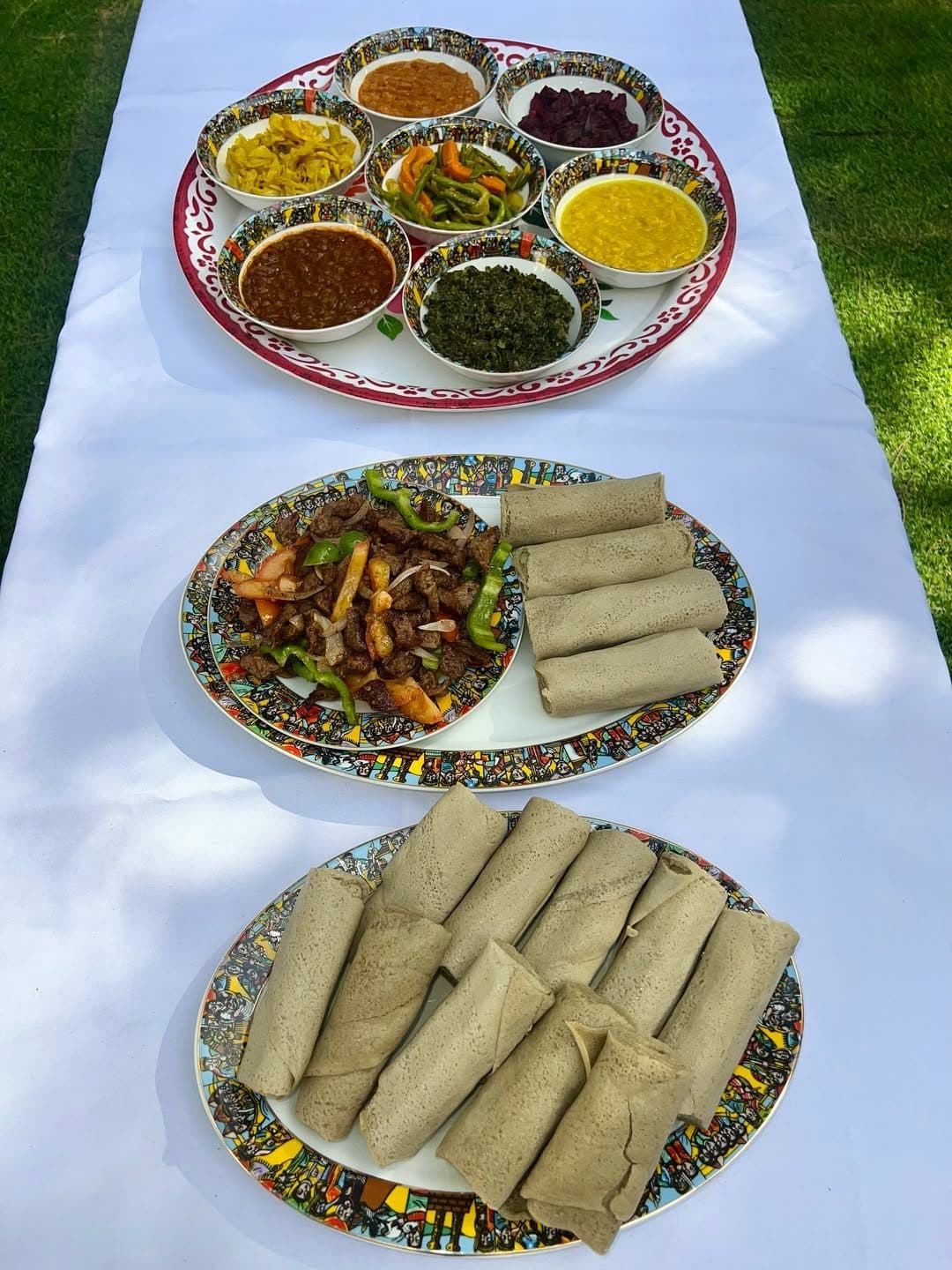
Teff is a tiny grain, grown for a very long time on the Ethiopian highlands, that is used to make injera. Naturally gluten-free and rich in fibre and minerals such as iron and calcium, it sits at the centre of Ethiopian eating. It has no miracle powers: it is a wholegrain, tasty, and fits well into a varied diet.
An ancient grain grown in Ethiopia
Teff is one of the oldest grains of the country. Its grains are minuscule, barely larger than poppy seeds, which is why it is nearly always eaten whole, ground very fine. The plant grows at altitude and tolerates varied soils, which makes it precious to families who have grown it for generations.
Once ground, these grains give the flour for injera: mixed with water and fermented, it becomes the flatbread that carries the whole meal. To see how that batter turns into a honeycombed crepe, read injera explained.
The colours of teff
There are several varieties, from the palest, almost ivory, to the darkest, reddish brown. Light teffs give a paler injera with a milder taste, dark teffs a stronger, earthier one. The choice depends on region, family and occasion. There is no hierarchy to speak of: every household has its preference.
What teff brings nutritionally
Teff is naturally gluten-free. That is useful information for coeliac readers, provided you check that the flour has not been mixed with other grains. It contains fibre, protein and minerals such as iron, calcium and magnesium. Fermentation, in the case of injera, generally makes it easier to digest for many people.
That said, caution is in order: teff is neither a medicine nor a magic food. What it brings depends on how much you eat, how it is prepared and what else is on the plate. A traditional Ethiopian meal pairs teff with pulses such as lentils or chickpeas and with vegetables: it is this combination, more than the grain on its own, that makes the meal balanced.
How it is cooked
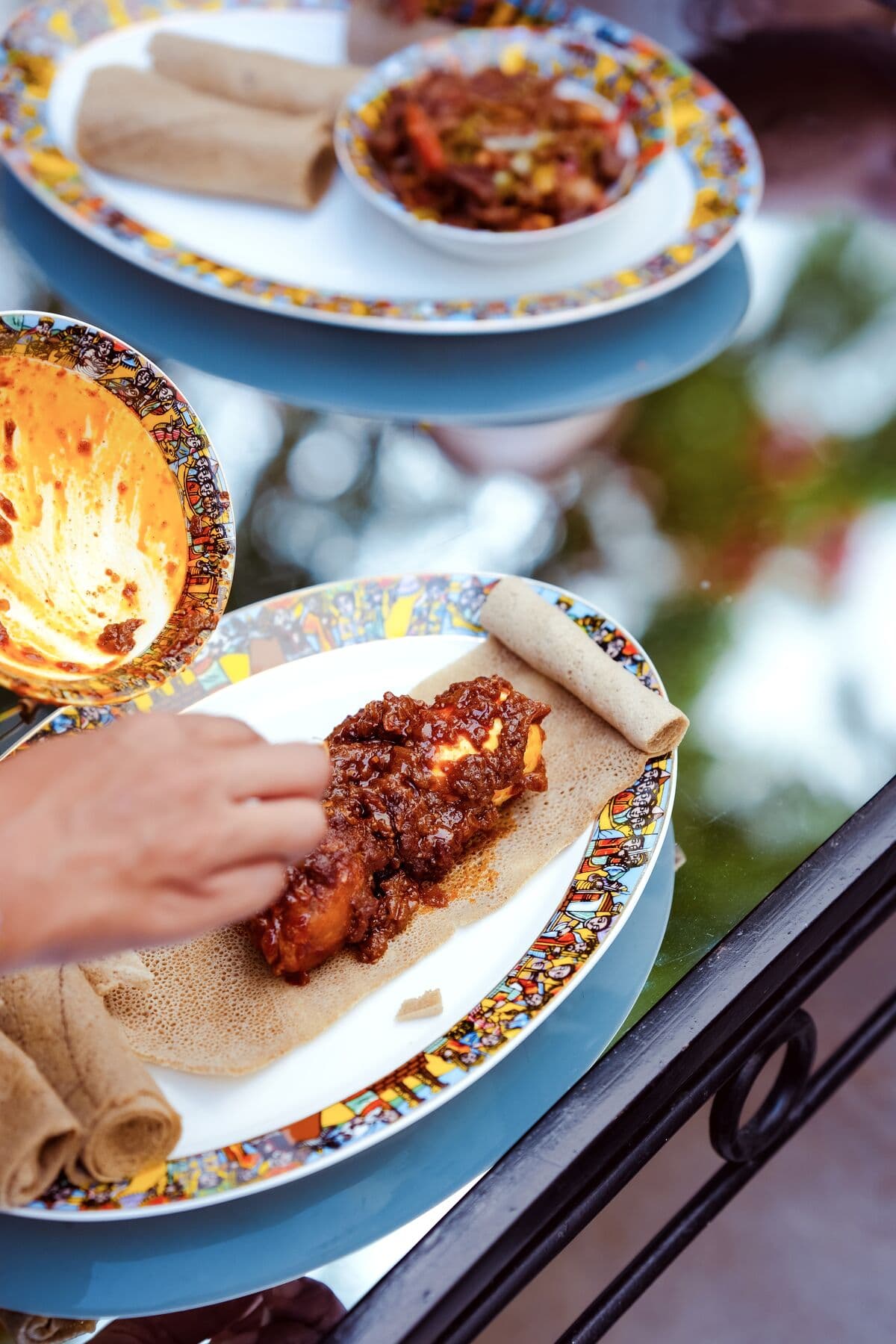
Injera remains the best-known use. Teff also appears as porridge, as flatcakes, as bread dough and as blended flour for baking. Worldwide, it has turned up in recent years on gluten-free shelves. To taste teff in an authentic setting, nothing beats injera served fresh with slow-cooked dishes.
Teff at the ge'eza table
At ge'eza, injera is the traditional bread for every Ethiopian dish, presented on the menu as naturally gluten-free. It comes with the vegan fasting dishes, all made from pulses and spices without butter, such as Shiro Wot or Misir Wot at 5,500 F, or the Beyaynetu from 7,000 F for one person (see beyaynetu). For the exact composition of the flour used, the proportion of teff and its origin, the team will answer on site. You can also ask on WhatsApp at +221 78 660 07 07.
Always mention any allergy or coeliac disease: some breakfast dishes, such as foul, are served with French bread.
Why teff interests the world
In recent years teff has drawn attention outside Ethiopia, both for being gluten-free and for its place in varied diets. It also reminds us that an old cuisine can inspire current habits. The view should stay level, though: teff's value lies first in being a staple, rooted in a culture, and not in a trend.
How to buy it and recognise it
If you want to cook teff at home, look for whole-grain teff or pure teff flour, and check the label: some flours sold as teff are blended with other grains. The grain keeps best dry and away from light. Cooked in two to three times its volume of water, it makes a dense porridge, close to polenta in texture, which can be eaten sweet or savoury. It is not injera, but it is a good way to get to know the taste.
Teff in Ethiopian life
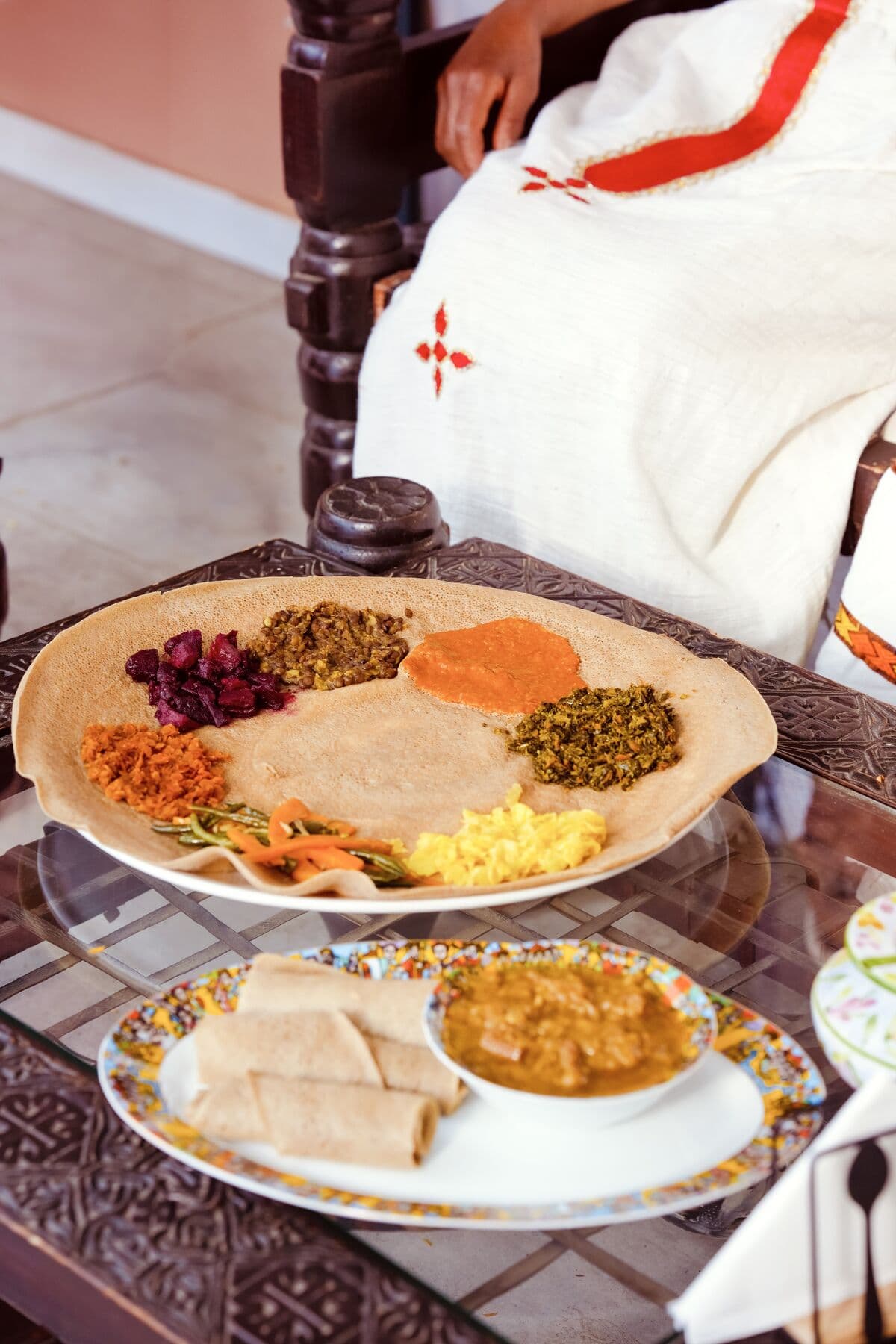
Teff is more than an ingredient: it is tied to the rhythm of the farming year, to family meals and to celebration. Injera is present at everyday lunches and at the festive tables of Enkutatash, Genna or Fasika. That constancy explains why the grain is so linked to national identity, and why the platter, more than any single dish, stands as the symbol of Ethiopian food when the cuisine is presented abroad.
If you would like to see the grain at work rather than read about it, the simplest thing is to sit down to a beyaynetu and pay attention to what is under the stews. That injera is the point of the whole meal.
A word on sustainability
Teff is often mentioned in discussions about resilient crops, because it grows in varied conditions and needs little water compared with some other cereals. Take such claims with the same caution as nutritional ones: they depend on the field, the climate and the farming method. What can be said safely is that teff is a long-established crop, tied to the food culture of the Ethiopian highlands.
Frequently asked questions
Is teff really gluten-free?
Yes, naturally. The vigilance is about preparation: an injera can be made with a blend of grains. At ge'eza the menu describes a naturally gluten-free injera, but always flag an allergy.
What does teff taste like?
Nutty and earthy, slightly sweet, turning tangy once fermented in injera.
Can I cook teff at home?
Yes, as whole grains cooked like porridge, or as flour. Injera, however, needs several days of fermentation and a particular skill.
Is teff good for your health?
It is a wholegrain, rich in fibre and minerals, within a balanced diet. It replaces neither medical advice nor a varied diet.