Question · 28 September 2026
Gursha: How to Eat With Your Hands the Ethiopian Way
The gursha is the mouthful you place in someone else's mouth, a gesture of affection at the Ethiopian table. How to eat with your right hand, when to offer a gursha and how to accept one.
A gursha is a bite of injera loaded with sauce that you place directly in the mouth of someone you care for. It is a gesture of affection, respect and hospitality at the Ethiopian table. It belongs to a shared way of eating: with the right hand, from one common dish, without cutlery.
What gursha means
Gursha names both the mouthful and the gesture. You prepare a piece of injera with a little sauce, vegetable or meat, fold it into a small parcel, then hold it towards the mouth of a close person, a guest or a friend. The other opens their mouth, and you place the bite. It is common between family members, between friends, or from a host to a guest, as a sign of attention.
It is said that the more generous the bite, the greater the attachment. There is no need to make a rule of it: what counts is the intention, not the size.
Eating with the right hand
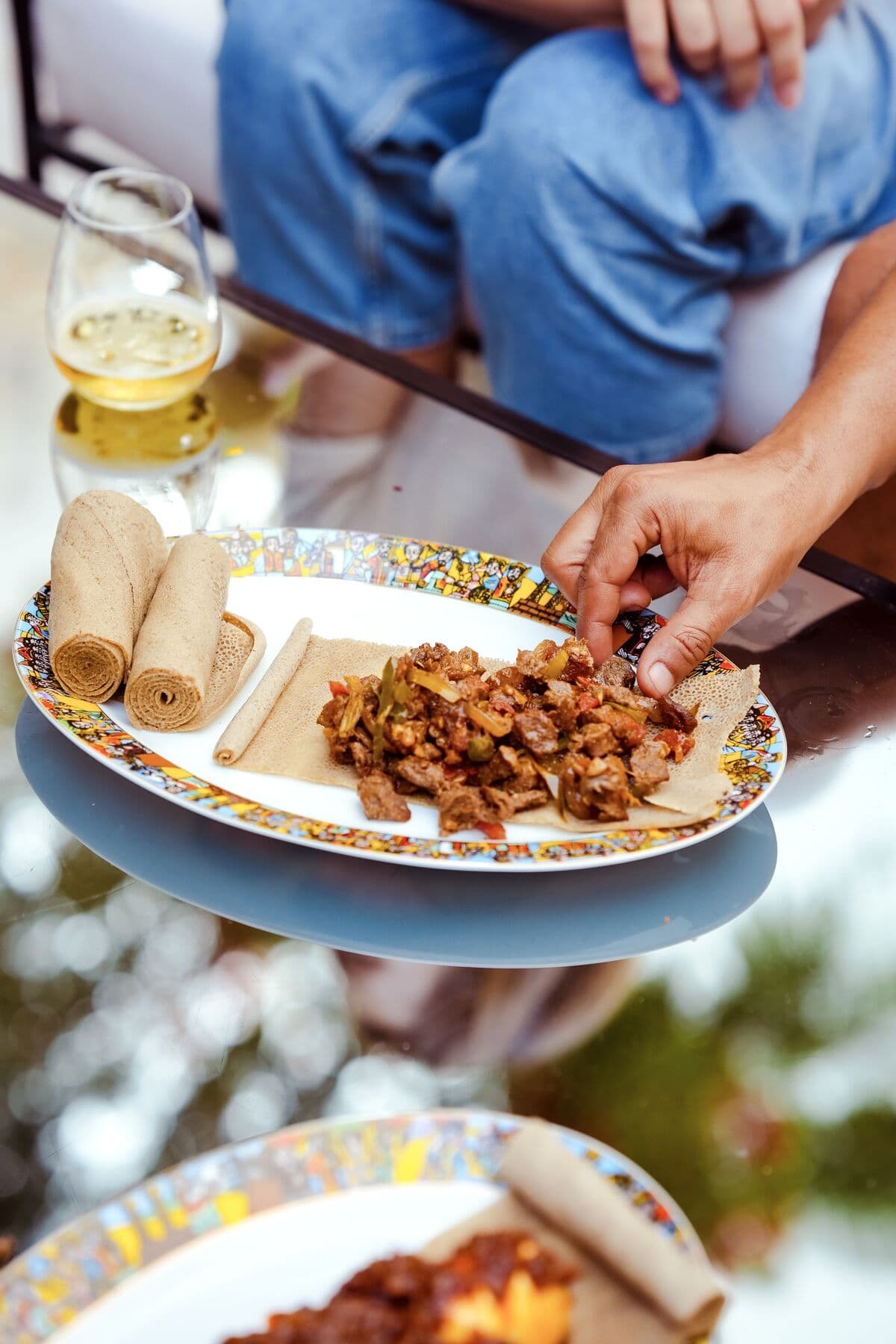
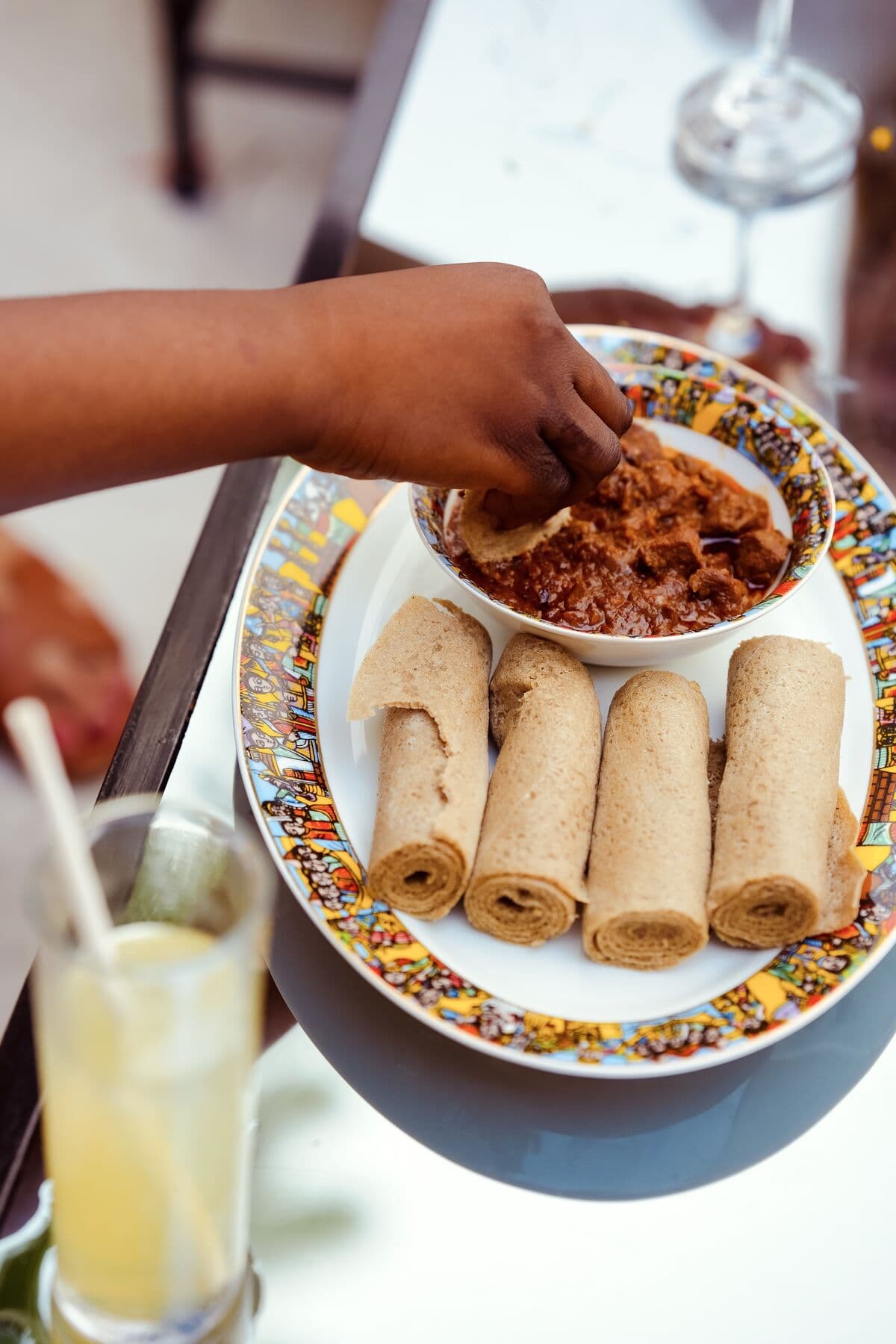
The whole Ethiopian table rests on the right hand. It tears the injera, takes the sauces, brings the bite to the mouth. The left hand stays out of the dish. The rule comes with a simple ritual: hands are washed before starting, and often after. The movement takes a little practice but comes quickly. The article injera explained tells why this bread is made to be torn.
A few steps
- Tear a bite-sized piece of injera on your own side of the tray.
- Pick up a little of a dish, sauce, vegetable or meat, by pinching the injera.
- Fold it into a small parcel and bring it to your mouth.
- To offer a gursha, prepare the bite for the other person and hold it towards their mouth, without letting go too early.
- To receive one, open your mouth and accept with a smile.
When and to whom to offer one
A gursha goes to those you care for: a partner, a friend, a guest of honour, a parent. It is not compulsory, and you can politely decline. If a fellow diner offers you one, accepting is a mark of appreciation. Between strangers or at a business meal, people generally wait for the host to set the tone. At a dinner with guests, it is often the host who begins.
Trying it in Dakar
At ge'eza, dishes arrive on a large tray of injera, which naturally invites sharing. The beyaynetu, for 1, 2 or 3 people, from 7,000 F, lends itself well: see beyaynetu. If you do not know where to start, the team will show you the gesture. To book a table, you can also write to +221 78 660 07 07.
Frequently asked questions
Is it rude to refuse a gursha?
No, if you do it with a smile. But accepting always pleases the one offering.
Can I use cutlery at ge'eza?
Yes, if you prefer. Tradition invites you to eat with your right hand, and the team guides you if you hesitate.
Why only the right hand?
By a convention of hygiene and politeness common to several cultures: the right hand touches the dish, the left stays aside.
What if I do not want spicy sauce in my gursha?
Choose a mild dish, such as Tikil Gomen or Alicha Ater Kik, to build a bite to offer or receive.