Event · 28 September 2026
Genna and Timkat: The Ethiopian Holidays of January
Genna, the Ethiopian Christmas on 7 January, and Timkat, Epiphany on 19 January: origins, traditions, festive dishes, and how to mark them in Dakar around an Ethiopian table.
Genna is the Ethiopian Christmas, celebrated on 7 January, and Timkat is Epiphany, celebrated on 19 January (20 January in some years). Both are festivals of the Ethiopian Orthodox Church and follow the Ethiopian calendar, which is why their dates differ from the Gregorian ones. They are lived with family, at church and at the table.
Why 7 and 19 January
The Ethiopian Orthodox Church follows the Ethiopian calendar, offset from the Gregorian one: Christmas falls on the 29th of the month of Tahsas, which corresponds to 7 January, and Epiphany on the 11th of the month of Tir, or 19 January. Our article on the Ethiopian calendar explains the gap.
Genna, the Ethiopian Christmas
Genna is preceded by a period of fasting. Worshippers go to church for a long vigil, often dressed in white. There are songs, prayers and processions. In the morning, the celebration continues with family.
Two elements come up often in descriptions of Genna:
- The festive meal, after the fast. Doro wot, chicken slow-cooked in clarified butter and served with a hard-boiled egg, is the festive dish par excellence, with injera.
- A traditional game, ganna, played with curved sticks, which according to several accounts gave the festival its name. Details vary between regions.
We keep to general terms on the rites, which differ from one community to another.
Timkat, Epiphany
Timkat commemorates the baptism of Christ in the Jordan. It is one of the most spectacular festivals in the Ethiopian calendar. Processions leave the churches carrying the tabot, a symbolic replica of the Ark of the Covenant, borne with pomp and wrapped in cloth. On the eve, a ceremony blessing the water takes place by a river or pool, and worshippers are sometimes sprinkled with blessed water in memory of baptism. Timkat was inscribed on UNESCO's intangible cultural heritage list in 2019.
Widely attended celebrations take place in Addis Ababa, Gondar and Lalibela, among others. White clothing, chanting and ceremonial umbrellas mark the spirit of the festival.
Festive dishes
Ethiopian festive meals gather family and friends around the injera. You will find doro wot, meat dishes such as tibs or kitfo, and, depending on the family, fasting dishes. People drink tej, honey wine, or birz, as well as coffee. At ge'eza, these dishes are on the menu: doro wot, tibs, kitfo (to be ordered 24 hours ahead), beyaynetu, tej, birz and the coffee ceremony.
Marking them in Dakar
In Dakar there is no large public procession, but these festivals are lived in small groups, among family or friends, around a meal. It is also an occasion for Dakarois to discover a tradition. Our article on the Ethiopian community in Dakar touches on these gatherings.
ge'eza, at 656 avenue Birago Diop in Point E, can host a festive meal: the villa can be booked out for lunches and dinners. We do not publish a programme or dates of upcoming events; write to +221 78 660 07 07 or check the events page. The house is open Tuesday to Sunday, 8am to 10pm, closed on Mondays. For a simple table, see the restaurant page.
The fast that precedes Genna
Before Christmas, Ethiopian Orthodox believers observe a period of fasting, often called the Advent fast, lasting several weeks. On fasting days, animal products are avoided, which explains the richness of Ethiopian fasting cuisine: shiro, misir wot, gomen, key sir, tikil gomen. These dishes are fully vegan. The Genna meal therefore has particular weight: it breaks the fast, with meat and clarified butter after weeks of restraint.
We deliberately stay general on the exact length and rules, which vary with the practice of each family and parish.
White clothing and the rhythm of the celebrations
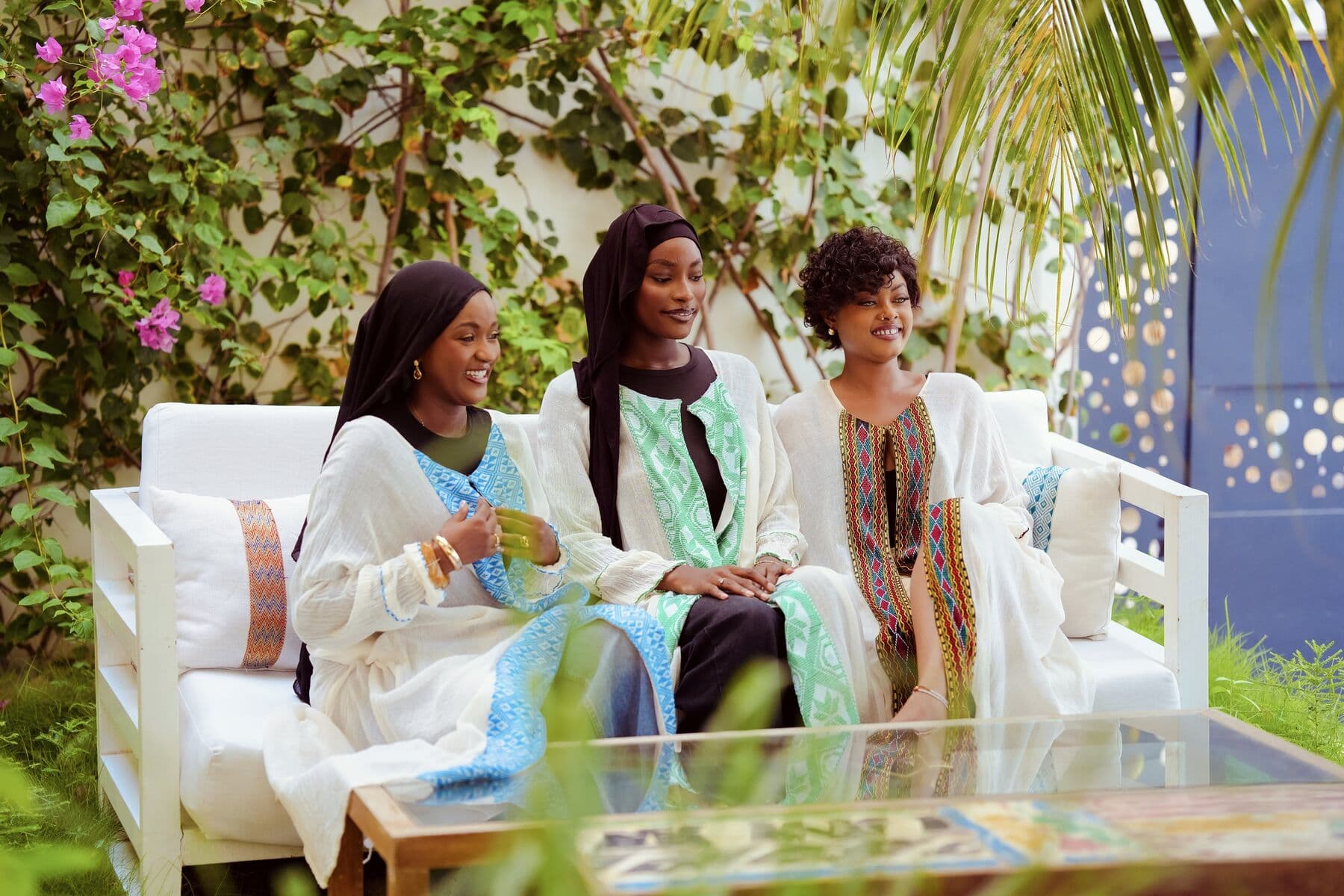
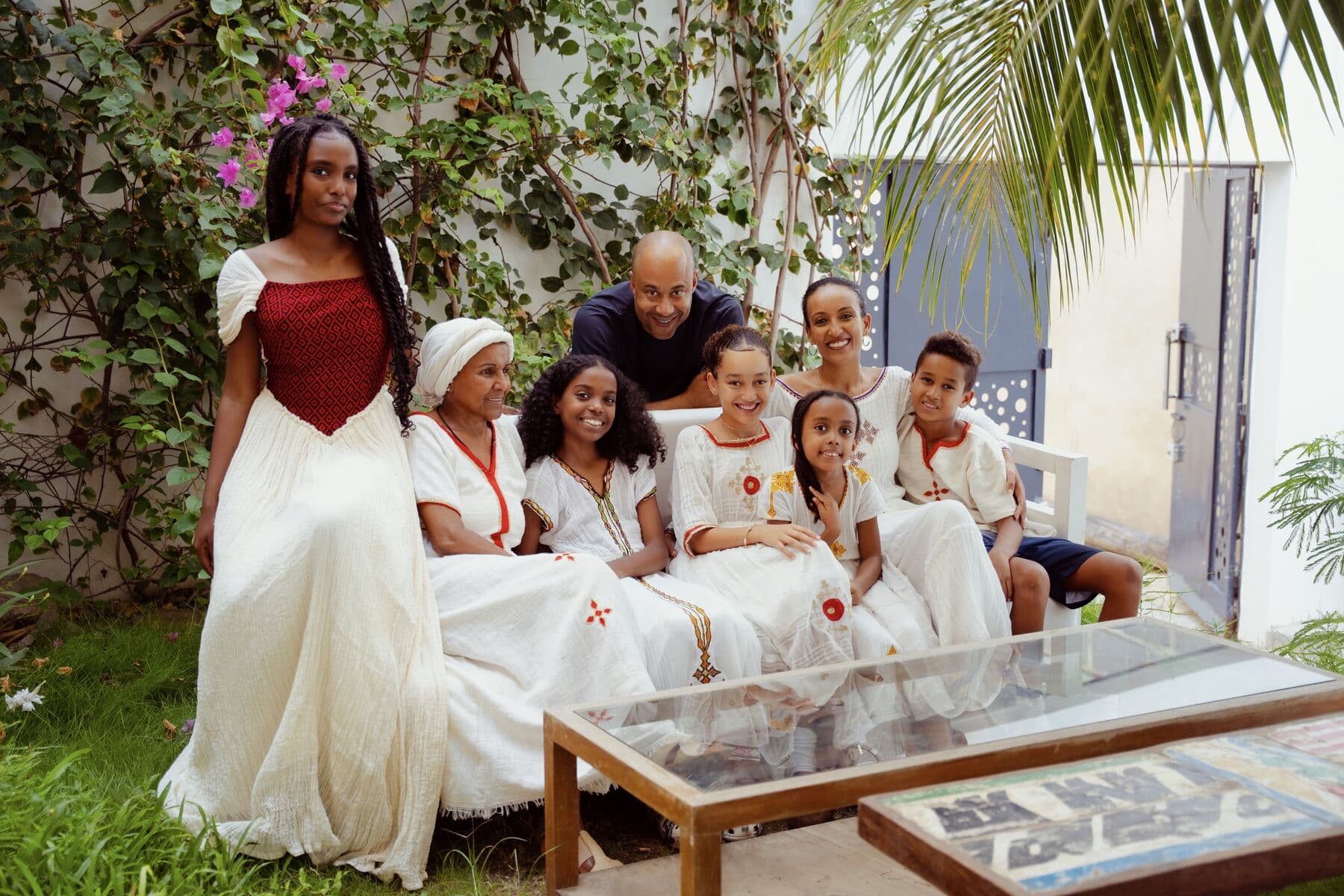
White dominates at both festivals. Many worshippers wear the netela, a white cotton shawl, or a traditional white outfit, sometimes embroidered. Services start early, sometimes before dawn, and run long. Children and families take part, then the celebration continues at home, with neighbours, friends and elders.
A festive meal to plan in Dakar
You can mark Genna or Timkat in Dakar without changing any of the principles: a large shared dish, injera, varied dishes, coffee. For a group, here is one possible sequence based on the ge'eza menu:
- to start, sambusas with meat (2,000 F for two pieces) or lentils (1,500 F);
- for the main course, a doro wot (8,000 F) and a beyaynetu (from 7,000 F), with tibs to round it out;
- to drink, tej (3,500 F) or birz (2,000 F);
- to finish, the coffee ceremony (5,000 F), about 45 minutes, with Abol, Tona and Baraka.
Prices are those of the current menu. Kitfo must be ordered 24 hours ahead.
The calendar, to avoid mixing up dates
Because the Ethiopian calendar differs from the Gregorian one, it is easy to get the day wrong. The safest habit is to check the date for the current year before inviting anyone. If you are organising a meal for a group, write to the team several weeks ahead, keeping the opening days in mind: Tuesday to Sunday, 8am to 10pm, closed on Mondays. If the festival falls on a Monday, the meal can move to Tuesday.
Why these holidays speak to non-Orthodox visitors too
Even without belonging to the Ethiopian Church, you can appreciate these festivals for what they show: the role of community, the weight of ritual, the taste for a shared table. They also offer a bridge to Senegalese traditions of family gathering, where the large shared dish plays a similar role.
Frequently asked questions
When is Christmas in Ethiopia?
On 7 January, according to the Ethiopian calendar. The festival is called Genna.
When is Timkat?
On 19 January, sometimes 20 January depending on the year. It celebrates Epiphany, the baptism of Christ.
What do people eat at Genna?
Doro wot, chicken stew with a hard-boiled egg, served with injera, is the classic festive dish.
Is Timkat recognised by UNESCO?
Yes, it was inscribed in 2019 on the intangible cultural heritage list.