
Event · 2 November 2026
Fasika, Ethiopian Orthodox Easter: What to Know Before 2027
Fasika, Ethiopian Orthodox Easter, is expected on 2 May 2027, after Abiy Tsom, the roughly 55 day great fast with no animal products. What the feast celebrates, and how to mark it in Point E with no event announced.
Fasika is Ethiopian Orthodox Easter, expected on 2 May 2027, after Abiy Tsom, the great fast that lasts roughly 55 days and during which the faithful avoid all animal products. The feast marks the end of that period and the return of meat dishes, doro wot chief among them, at 9,000 F on Ge'eza's menu. The house announces no event for Fasika: it is a feast lived at home or around a table, not a scheduled event in Point E.
Fasika, Ethiopian Orthodox Easter
Fasika is the name given to Easter in the Ethiopian Orthodox Church, one of the most important feasts on its liturgical calendar. As with other Orthodox churches, its date follows its own calculation, distinct from that of the Catholic and Protestant churches, which is why it rarely falls on the same day as Western Easter. For 2027, it is expected on 2 May. The feast is marked at church, during long vigils, and at home, around a meal that breaks several weeks of fasting.
Abiy Tsom, the great fast that precedes it
Before Fasika, Ethiopian Orthodox believers observe Abiy Tsom, the great fast, lasting roughly 55 days. During this period, meat, eggs and dairy are avoided, and the diet turns fully plant-based. It is one of the longest and most widely observed fasting periods on the Ethiopian calendar, alongside the usual Wednesday and Friday fasts. This practice has shaped a whole repertoire of vegan dishes, covered in detail in Ethiopian fasting dishes: shiro wot, misir wot, fosolia tibs, gomen, key sir, tikil gomen and alicha ater kik, all prepared without butter.
Breaking the fast and doro wot
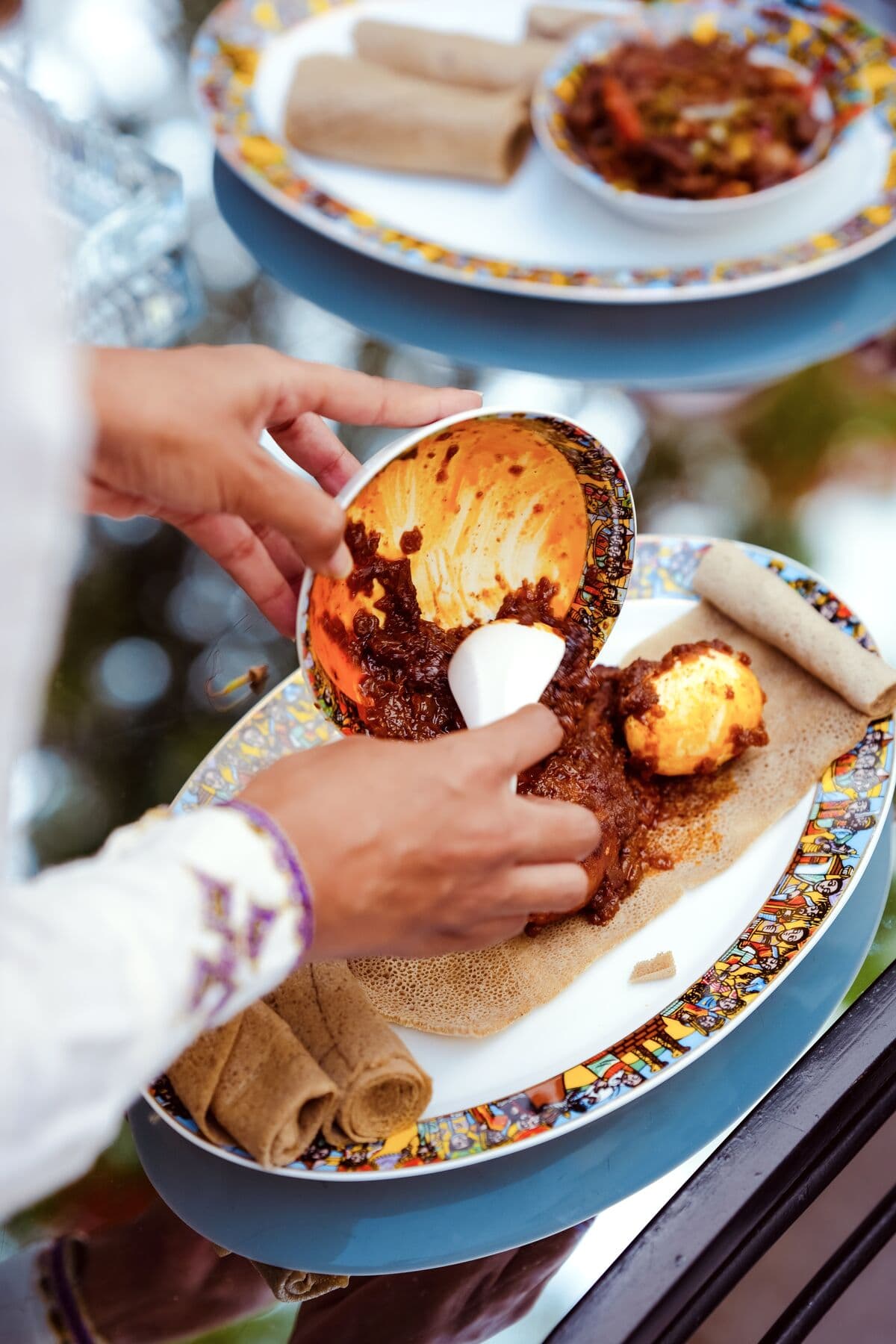
Once the great fast ends, the Fasika meal marks a clear contrast with the weeks before it: meat, clarified butter and eggs return to the table. Doro wot, the slow-cooked chicken stew served with a hard-boiled egg, is the dish most associated with the feast, much as it is with Genna or a wedding. At Ge'eza it is served at 9,000 F, with an article of its own: doro wot. Other Ethiopian holidays follow a similar fast then feast rhythm: Genna and Timkat covers the ones in January.
Ge'eza during Lent and after
Ge'eza announces no event, no date and no particular programme for Fasika. The house runs year round on the same menu, which happens to bring together both sides of this Ethiopian rhythm: on one hand, the vegan fasting dishes, available all year and not only during Abiy Tsom, and on the other, meat dishes such as doro wot, for anyone who wants to mark the end of the fast with a richer meal. It is therefore entirely possible to build your own version of this rhythm: fasting dishes during the weeks of Lent, then a meat dish once the period ends, with no special offer needed for either.
Putting together a Lenten meal and a festive one
For anyone who wants to follow this rhythm in Point E, the weeks of Abiy Tsom suit the beyaynetu, the platter that brings the fasting dishes together, or a single fasting dish on its own. Once Fasika has passed, a doro wot or a Ye Fisig Beyaynetu, which pairs fasting dishes with a meat sauce, marks the shift to richer cooking. In between, nothing stops you coming back several times: the menu does not change with the religious calendar, it stays the same year round, with both repertoires available side by side.
A feast marked in small company
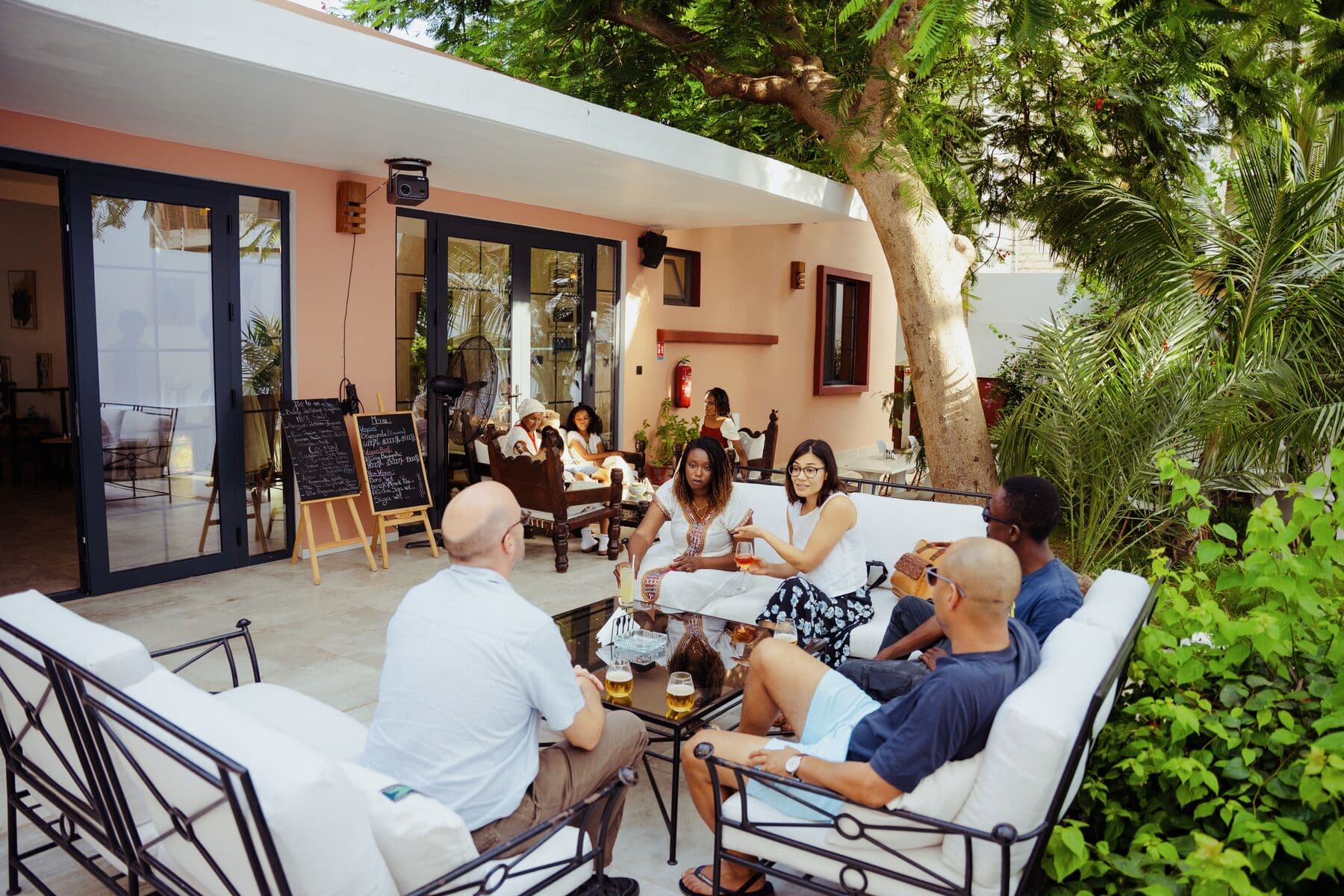
In Dakar, Fasika does not bring the large public processions seen in Ethiopia, where celebrations in Addis Ababa, Lalibela or Gondar draw large crowds. It is instead marked in small company, among family and friends, around a meal. For a group wanting to mark the occasion in Point E, there is no festive menu to ask for: it is the regular menu, with its fasting dishes and its meat dishes, that lets anyone build a meal that fits.
Booking a table
For a group meal around Fasika, it is best to book ahead, especially if the date falls on a weekend. Book online or write on WhatsApp at +221 78 660 07 07, stating the number of guests. The house is open Tuesday to Sunday, 8am to 10pm, closed Monday.
Why the fast and feast rhythm matters
Understanding Abiy Tsom helps explain why doro wot carries so much weight at Fasika. After nearly two months without meat, butter or eggs, a dish built on all three stands out far more than it would on an ordinary day. The length of the fast is part of what makes the feast feel significant, not just the dish itself. Visitors unfamiliar with this rhythm sometimes expect a single festive meal detached from any build-up, when in practice the meal's meaning comes largely from the weeks of fasting that precede it.
Checking the date each year
As with other feasts on the Ethiopian calendar, it is best to check the exact date of Fasika as the relevant year approaches, rather than relying on an estimate given far in advance. The calculation follows rules specific to the Ethiopian Orthodox Church, which can shift the date by several weeks from one year to the next.
Frequently asked questions
When is Fasika in 2027?
On 2 May 2027, according to the Ethiopian Orthodox Church calendar.
What is Abiy Tsom?
The great fast before Fasika, roughly 55 days with no meat, eggs or dairy.
What dish is eaten at Fasika?
Doro wot, chicken stew served with a hard-boiled egg, is the dish most associated with the feast.
Does Ge'eza hold an event for Fasika?
No, the house announces no event or special menu for this feast.