Food · 28 September 2026
Ethiopian Fasting Dishes: The Vegan Food Born of Lent
Why does Ethiopian cuisine include so many vegan dishes? The Orthodox fast, Wednesdays and Fridays, the Lents, and the seven fasting dishes served at ge'eza in Dakar.
Ethiopian cuisine has so many vegan dishes because the Ethiopian Orthodox Church prescribes many days of fasting, during which people eat no meat, no dairy and no eggs. These dishes, built on pulses, vegetables and spices, have become a full part of the country's table, whatever the faith of those who cook or eat them.
Fasting in Ethiopian life
In the Ethiopian Orthodox tradition, fasting is frequent. Wednesdays and Fridays are fasting days, to which are added the great Lent before Easter and other periods of the year. In total, a large part of the calendar is concerned for believers who follow the rule closely. On these days, animal products are avoided. The rhythm of fasting is also part of the Ethiopian calendar, presented in the Ethiopian calendar explained.
This rule produced a very rich fasting cuisine: rather than going without, cooks built a complete repertoire, designed to be nourishing, tasty and varied.
What people eat when fasting
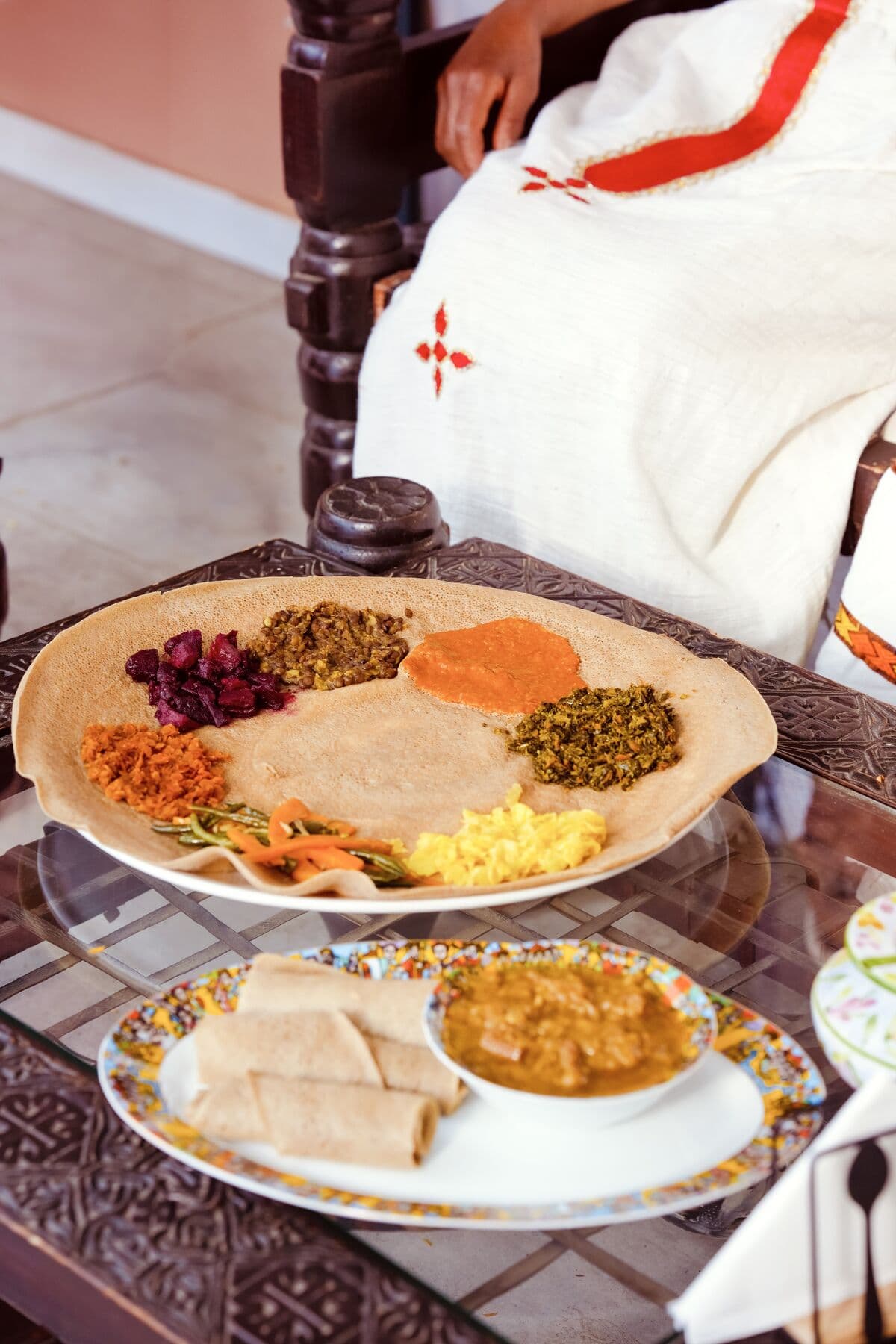
The foundations are pulses, such as chickpeas, lentils or split peas, and vegetables, cooked with garlic, onion and spices. Dishes are served on injera, often gathered on one tray. Nothing is cooked with butter: oil replaces niter kibbeh, which gives the dishes a more vegetal flavour.
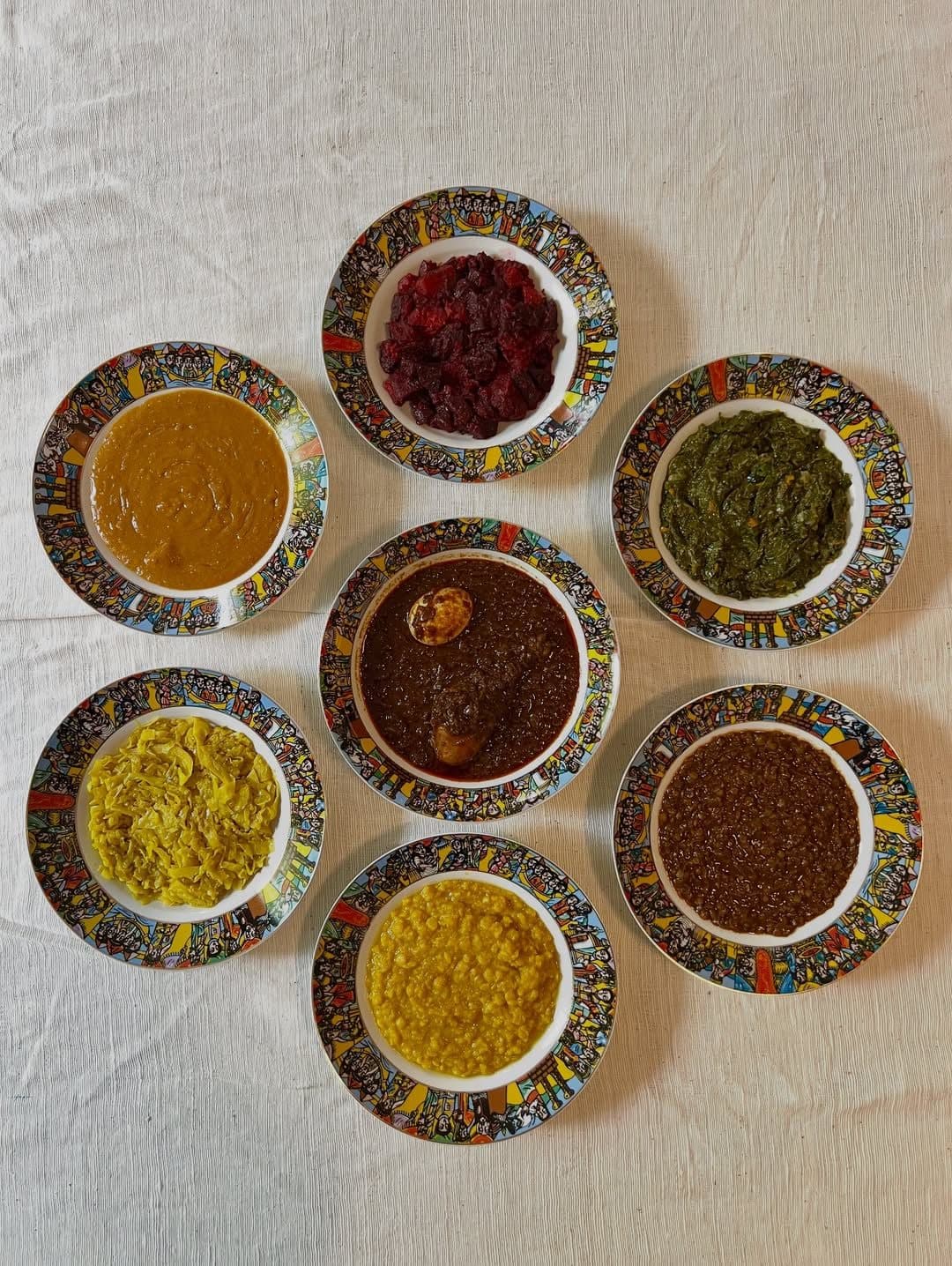
At ge'eza the fasting dishes are all vegan, made from pulses and selected Ethiopian spices, without butter:
- Shiro Wot, finely ground chickpeas in a berbere sauce, 5,500 F
- Misir Wot, red lentils with turmeric, garlic and spices, 5,500 F
- Fosolia Tibs, green beans and carrots sautéed with spices, 5,000 F
- Gomen, collard greens sautéed with garlic and onion, sourced from Growing Life Farm, a women-led farm in Dakar, 5,000 F
- Key Sir, slow-cooked Ethiopian beetroot, 5,000 F
- Tikil Gomen, cabbage with turmeric, garlic and olive oil, 5,500 F
- Alicha Ater Kik, split peas gently cooked with turmeric, 5,500 F
To these is added Firfir, torn injera soaked in a spiced wot sauce, at 5,500 F.
The beyaynetu, showcase of fasting
Beyaynetu roughly means "of several kinds". It is the platter that brings the fasting dishes together at once: Shiro, Misir, Fosolia, Gomen, Key Sir, Tikil Gomen and Alicha Ater Kik on one large injera. It comes for 1, 2 or 3 people, from 7,000 F for one. It is the dish we recommend for discovering Ethiopian food: see beyaynetu.
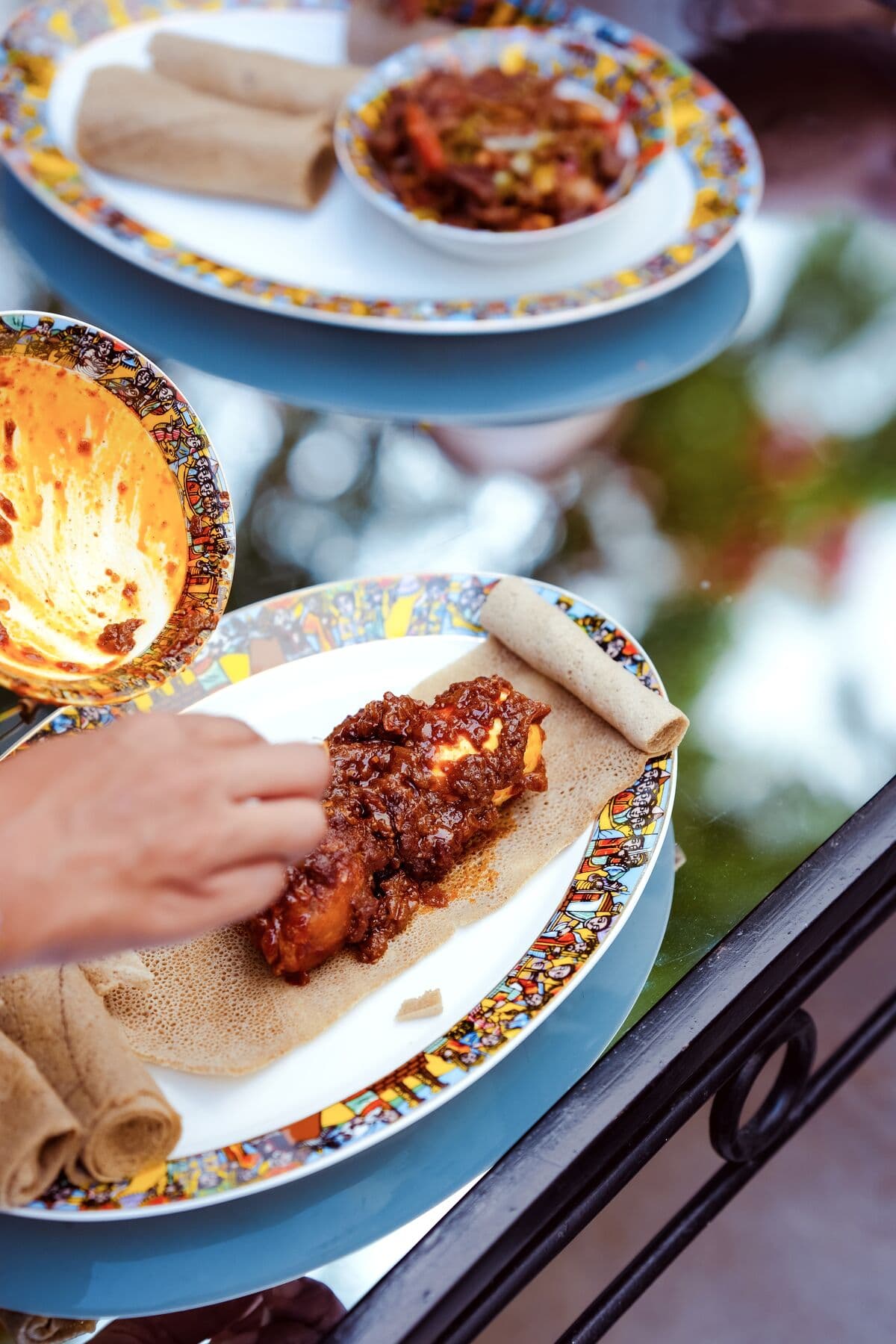
For those who want both worlds, Ye Fisig Beyaynetu combines three fasting stews with one meat stew of your choice. The menu describes it as the bridge between fast and feast.
Vegan cooking before the word existed
Many vegetarian and vegan travellers discover in Ethiopia a cuisine where they do not have to adapt: a meal without meat is an ordinary meal there, complete and festive. That is a real asset in Dakar, where vegan options are rarer. The question is treated from a Dakar reader's view in the article on vegan restaurants in Dakar.
What not to confuse
Vegan does not mean unspiced: Shiro Wot is simmered in a deep berbere, and Misir Wot is well seasoned. Vegan does not mean light either: these dishes are rich in plant protein and fibre, and fill you up. Finally, not every dish on the menu is a fasting dish: meats are offered alongside, and it is entirely possible to share a fasting platter and a meat dish at the same table.
Coming to taste
ge'eza is open Tuesday to Sunday, 8am to 10pm. For a meal with several people, book online, or look first at the restaurant page.
A culinary heritage in its own right
Ethiopian fasting cuisine is often cited by vegetarian and vegan travellers as one of the richest in the world, because it does not make up for an absence: it rests on skill in cooking pulses, dosing spices and balancing textures. The same dish of chickpeas can be served as a thick purée, a fluid sauce or drier bites. Vegetables are sautéed, simmered or steamed, with garlic, onion and ginger.
This cuisine also has a social dimension: during Lent, people gather around the same tray of meat-free dishes, among families and neighbours. The fasting table is therefore not a solitary diet but a way of sharing.
Fasting food and the calendar of celebrations
Fasting also gives meaning to the feast that follows. When a long fast ends, the return of meat dishes such as doro wot is the joyful part of the celebration (see doro wot). Understanding this rhythm, fast then feast, helps make sense of the two halves of the ge'eza menu and of the Ye Fisig Beyaynetu that links them.
Vegan travellers in Dakar
For vegan visitors to Dakar, the fasting dishes are a reliable answer to a common problem: many menus offer only a salad. Here a whole side of the menu is plant-based by design. Mention any allergy when ordering, and remember that some breakfast and side dishes, such as Special Foul or sambusa with meat, are not vegan.
Frequently asked questions
Are all the fasting dishes vegan?
Yes, at ge'eza all fasting dishes are vegan and prepared without butter. Other dishes on the menu, notably the meats and some breakfast items, are not.
Which days does the Ethiopian Orthodox Church fast?
Wednesdays and Fridays, plus the great Lent before Easter and other periods of the year. Details can vary between believers.
Can I eat a fasting dish without being Orthodox?
Of course. These dishes belong to the cuisine of the whole country, and many people choose them for their taste.
Is a beyaynetu enough for a meal?
Yes, it is designed as a complete meal for 1, 2 or 3 people.