Food · 28 September 2026
Vegan restaurants in Dakar: eating vegan with Ethiopian food
Eating vegan in Dakar is easier than it looks. Ethiopian cuisine offers seven fully vegan fasting dishes, made without butter and served on gluten-free injera, in Point E.
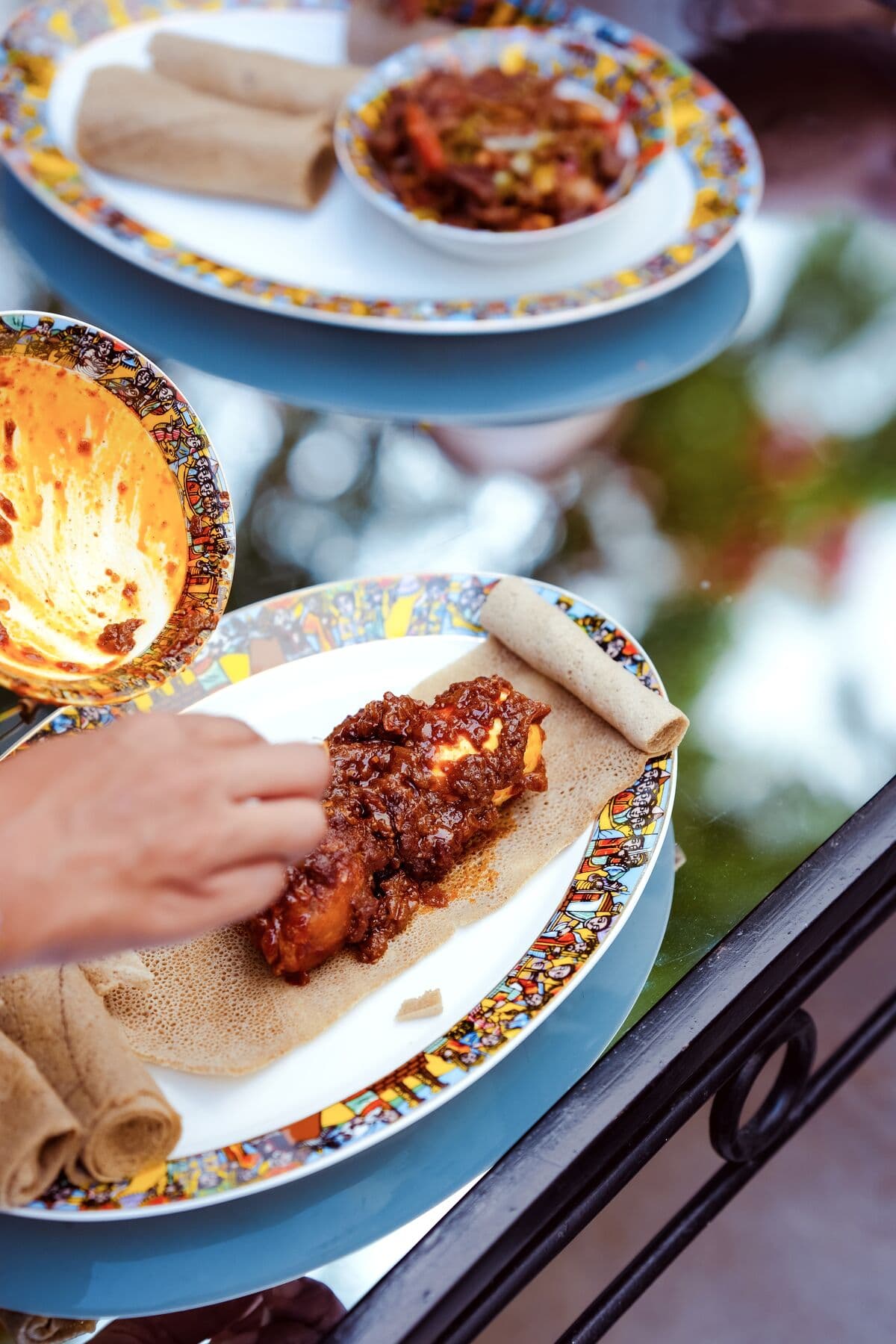
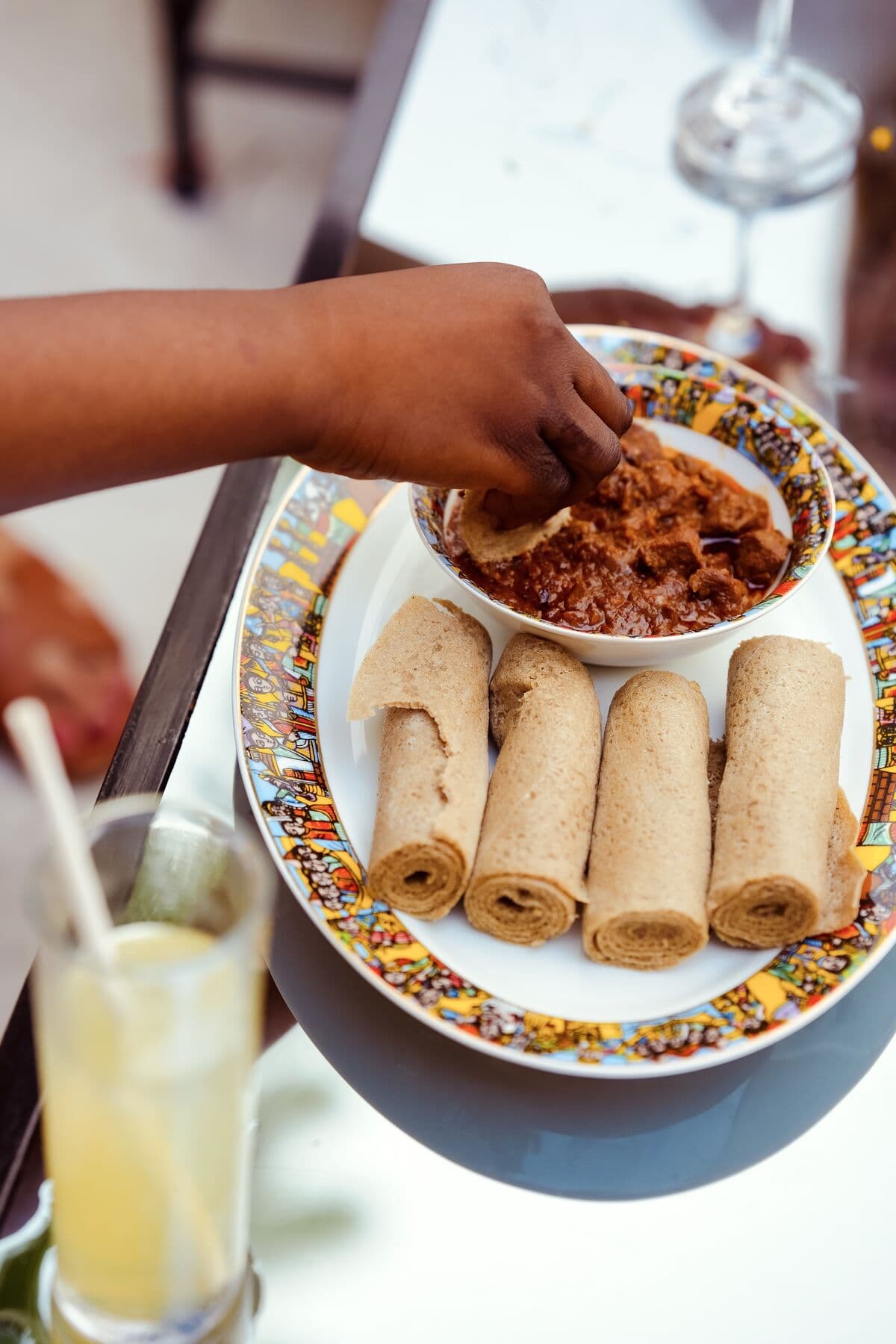
To eat vegan in Dakar, Ethiopian cuisine is one of the simplest options: its fasting dishes, built on pulses, vegetables and spices, are vegan by tradition. At ge'eza in Point E, seven fasting dishes are prepared without butter and served on injera, a fermented flatbread that is naturally gluten-free, either on their own or gathered on a beyaynetu.
Eating vegan in Dakar: what to expect
Senegalese cuisine leans heavily on fish, meat and animal-based stocks: thieboudienne, yassa and mafé are meat or fish dishes. Vegetarian options exist in most restaurants (vegetables, rice, salads, fruit), but a menu designed around vegan eating is rarer. For a traveller, an expat or a resident who avoids animal products, the safest approach is to ask how a dish is prepared, especially regarding stocks, butter and dried fish.
Ethiopian cooking offers a natural answer. The Orthodox calendar has many fasting days, including whole weeks without meat or dairy, and dishes developed for those periods. They became classics eaten all year round. Our article on Ethiopian fasting dishes explains the tradition.
The seven fasting dishes at ge'eza
On the menu, these dishes are fully vegan, made from pulses and Ethiopian spices, without butter:
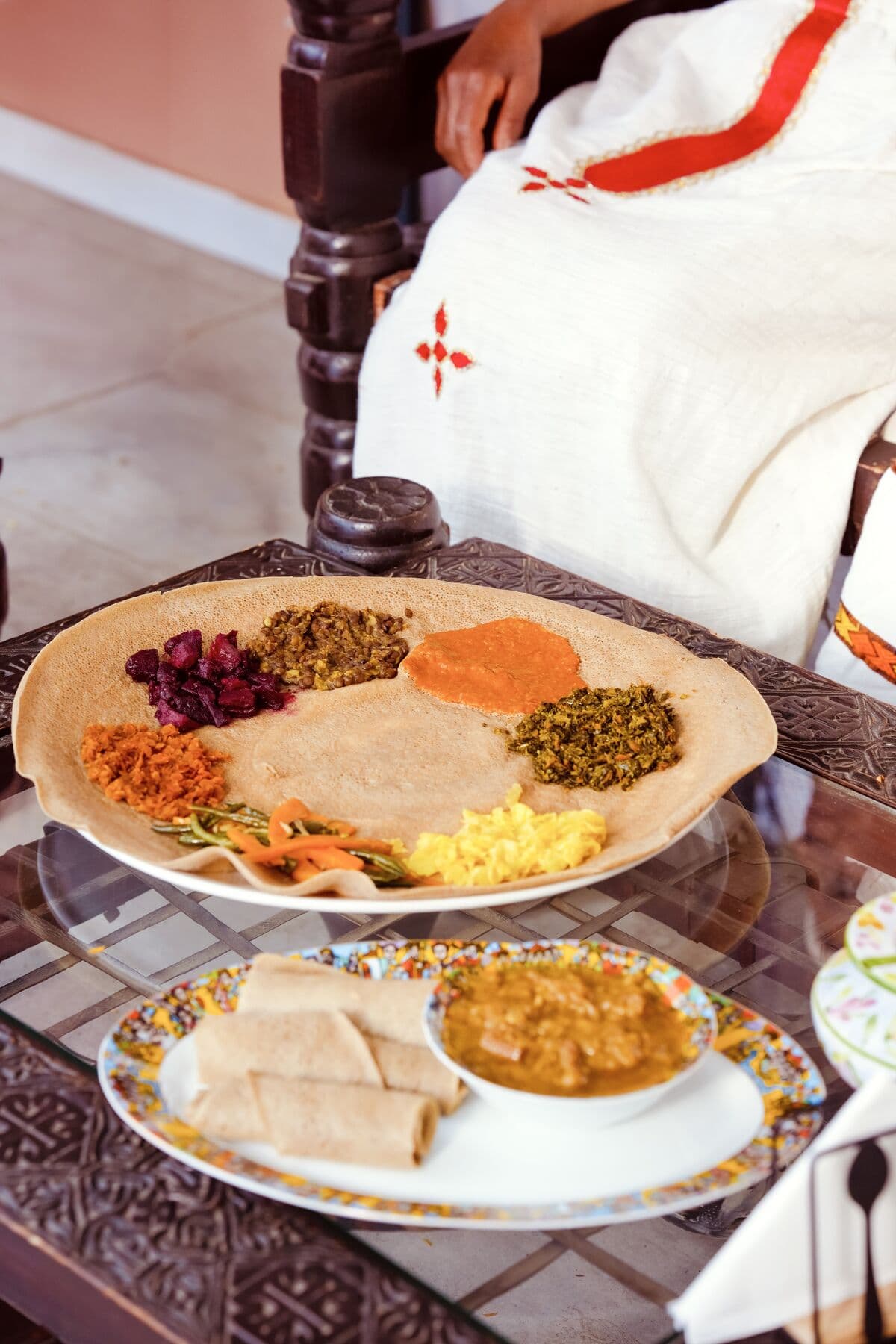
- Shiro Wot (5,500 F): finely ground chickpeas simmered in a berbere sauce.
- Misir Wot (5,500 F): red lentils with turmeric, garlic and spices.
- Fosolia Tibs (5,000 F): green beans and carrots sautéed with spices.
- Gomen (5,000 F): collard greens sautéed with garlic and onion, sourced from Growing Life Farm, a women-led farm in Dakar.
- Key Sir (5,000 F): Ethiopian beetroot, slow-cooked, earthy and naturally sweet.
- Tikil Gomen (5,500 F): cabbage with turmeric, garlic and olive oil.
- Alicha Ater Kik (5,500 F): split peas gently cooked with turmeric.
Firfir (5,500 F), torn injera soaked in a spiced wot sauce, is also vegan. Among the snacks, the lentil sambusas (1,500 F for two pieces) contain no animal fat.
The beyaynetu: everything on one platter
The beyaynetu gathers the seven fasting dishes on a large injera platter: Shiro, Misir, Fosolia, Gomen, Key Sir, Tikil Gomen and Alicha Ater Kik. It is ordered for 1, 2 or 3 people, from 7,000 F for one person. It is the best way to discover Ethiopian food, and a simple solution for a group mixing vegans and non-vegans: everyone shares the beyaynetu, and those who wish add a meat dish. For more detail, see our article on the beyaynetu.
One point of caution
Not every dish on the menu is vegan. The meat dishes are prepared with kibbeh, a herb-infused clarified butter, and the breakfast menu includes eggs and feta in some dishes. Tell the team about your diet when you order: they will guide you, and you can also write before you come. If you have a severe allergy, say so clearly and confirm the ingredients with the team rather than relying on an article.
Gluten-free: a useful note
Injera is traditionally made from teff, a naturally gluten-free grain. The ge'eza menu describes its injera as naturally gluten-free. With coeliac disease or a severe intolerance, confirm the composition of the injera and of each dish with the team, and remember that French bread accompanies some breakfast dishes.
Drinks and coffee
To go with the meal: bissap, ginger juice, bouye, birz (honey water) or an Ethiopian coffee. Specialty coffee and the ceremony round off a fasting meal well. If you want plant milk or cow's milk in a milky coffee, say so, as the menu does not specify it.
Coming to eat
ge'eza is a villa with a garden and terrace at 656 avenue Birago Diop, in Point E. Open Tuesday to Sunday, 8am to 10pm, closed on Mondays. Book online or message +221 78 660 07 07 on WhatsApp, especially in a group.
Tips for eating vegan in Dakar in general
Beyond a single address, a few habits help across the city. Learn to phrase your request simply: "no meat, no fish, no milk, no egg". Ask whether sauces and stocks are fish- or meat-based, which is common in West African cooking. Markets offer fresh fruit, vegetables, peanuts and grains, perfect for cooking at home. Finally, warn friends in advance when you are invited to their home: teranga pushes the host to receive well, and they will be happy to prepare something if given time.
A cuisine that has already thought about these constraints, such as Ethiopian fasting food, remains the most comfortable solution when you want a proper table rather than a compromise.
A good option for mixed groups
A group that includes vegetarians, vegans and meat eaters is often hard to satisfy. An Ethiopian meal solves the problem: everyone helps themselves from the same platter, and the fasting dishes, with no meat or butter, are open to all. Those who want meat add a tibs or a doro wot to the middle of the table, without anyone needing to order separately.
Frequently asked questions
Are Ethiopian fasting dishes really vegan?
Yes. At ge'eza, the seven fasting dishes are made from pulses, vegetables and spices, without butter.
Is the beyaynetu vegan?
Yes, it gathers the seven fasting dishes on an injera platter. Note that the Ye Fisig Beyaynetu adds a meat stew.
Can I eat vegan at breakfast?
Yes, the foul is vegan, served with French bread.
Is injera gluten-free?
It is described as naturally gluten-free. With a severe intolerance, confirm with the team before ordering.