Food · 28 September 2026
African Culinary Soft Power: Injera, Coffee and Thieboudienne
Food as a tool of influence: the Ethiopian example (injera, coffee) and the Senegalese one (thiéboudienne, added to UNESCO's intangible heritage list in 2021), and what it means in Dakar.
Culinary soft power is a country's ability to attract, to make its culture known and to build goodwill through its food. Ethiopia and Senegal give two telling examples: injera and the coffee ceremony on one side, thiéboudienne, added to UNESCO's intangible cultural heritage list in 2021, on the other. In Dakar, ge'eza puts both at the same table.
Why food is a tool of influence
A dish is understood without translation. It evokes a country, a landscape, gestures, a way of welcoming. That is why states and institutions increasingly look at gastronomy as a vehicle for image: it is accessible, it creates memories, and it makes people want to know the rest.
Food has an advantage over other forms of communication: you take part with all your senses, and you share it. It turns a visitor into a guest.
The Ethiopian example: injera and coffee
Ethiopian cooking is recognisable from the first bite. Three elements carry it abroad:
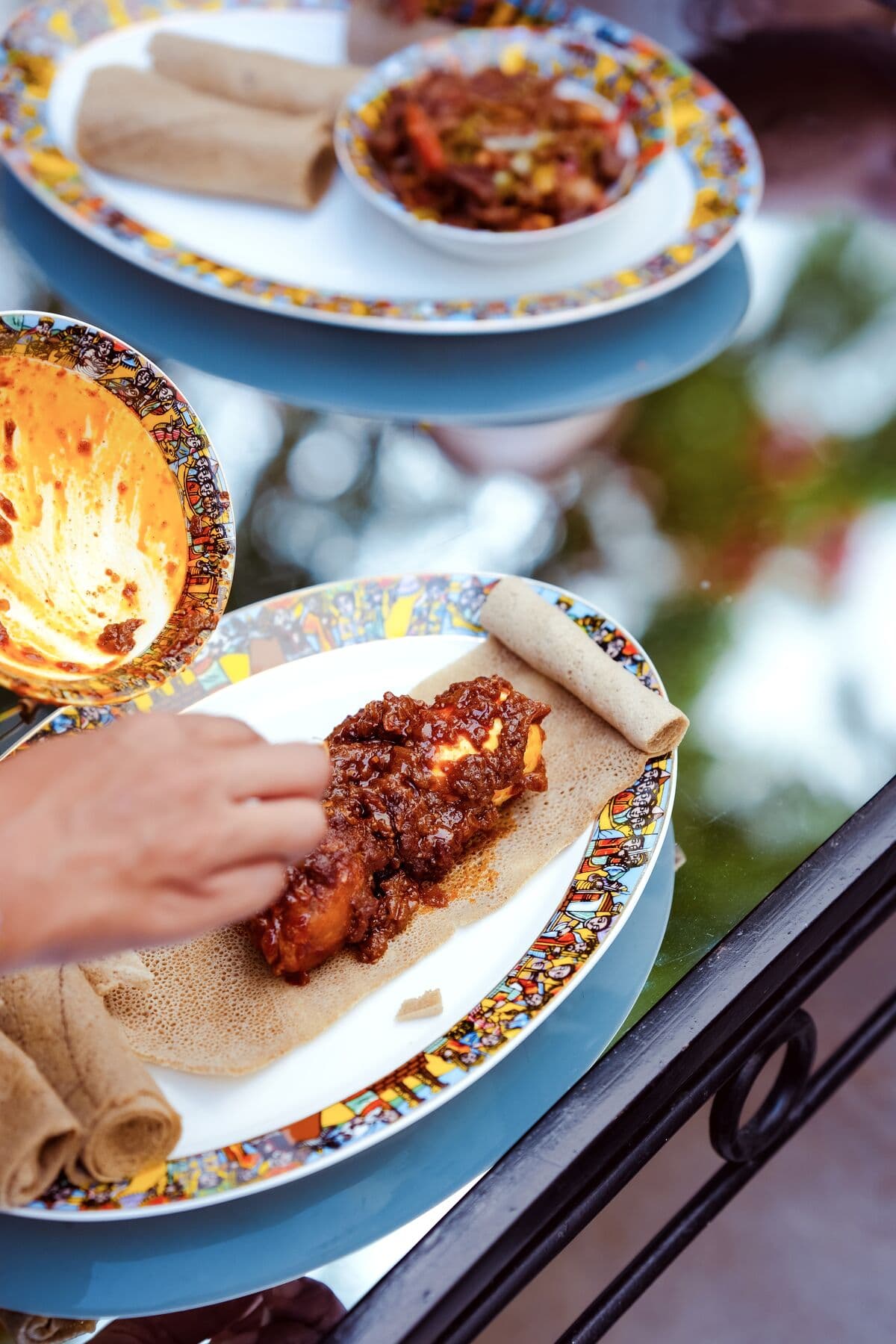
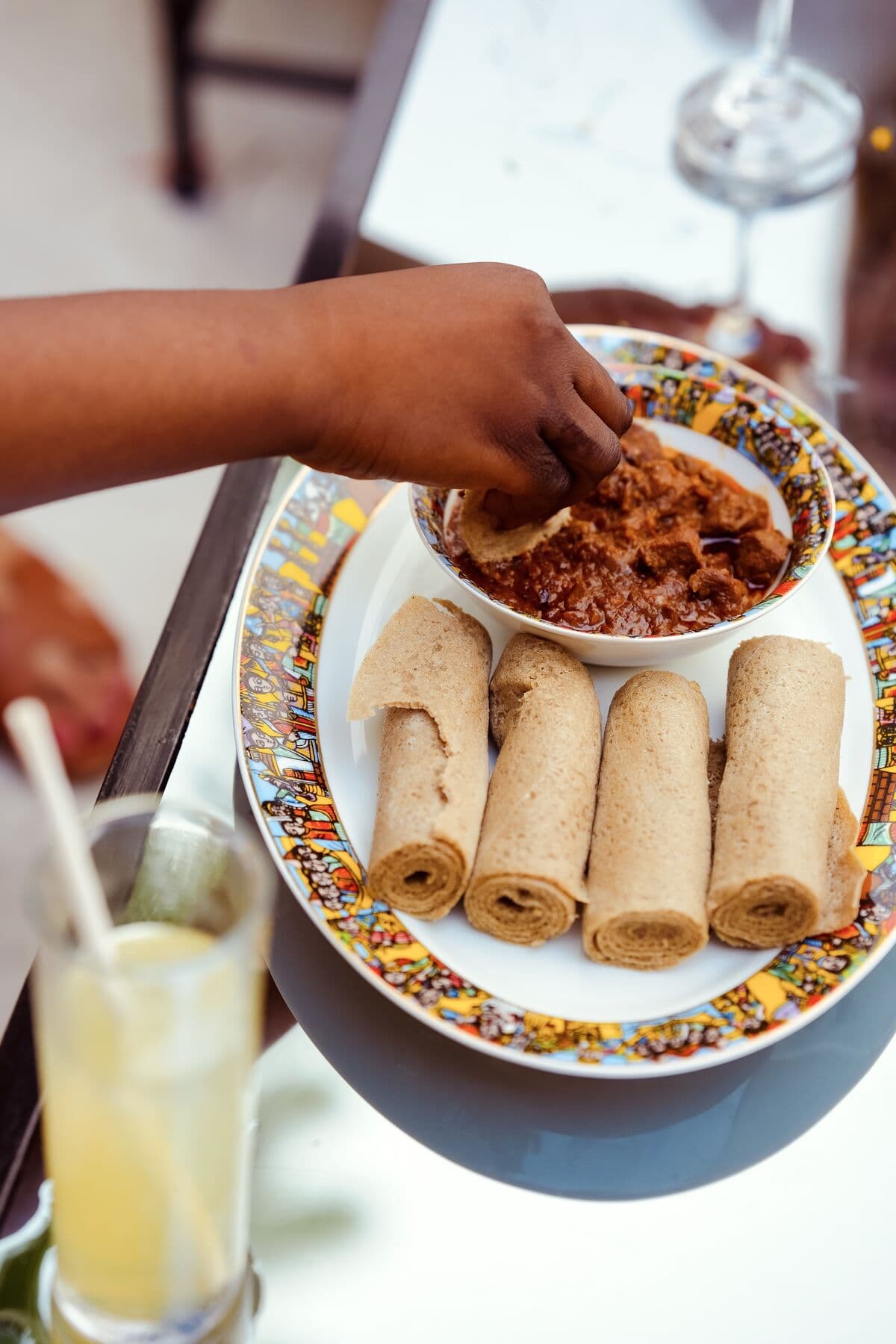
- Injera, a fermented flatbread that is both plate and cutlery. You place several stews on it, tear, share. The meal becomes collective.
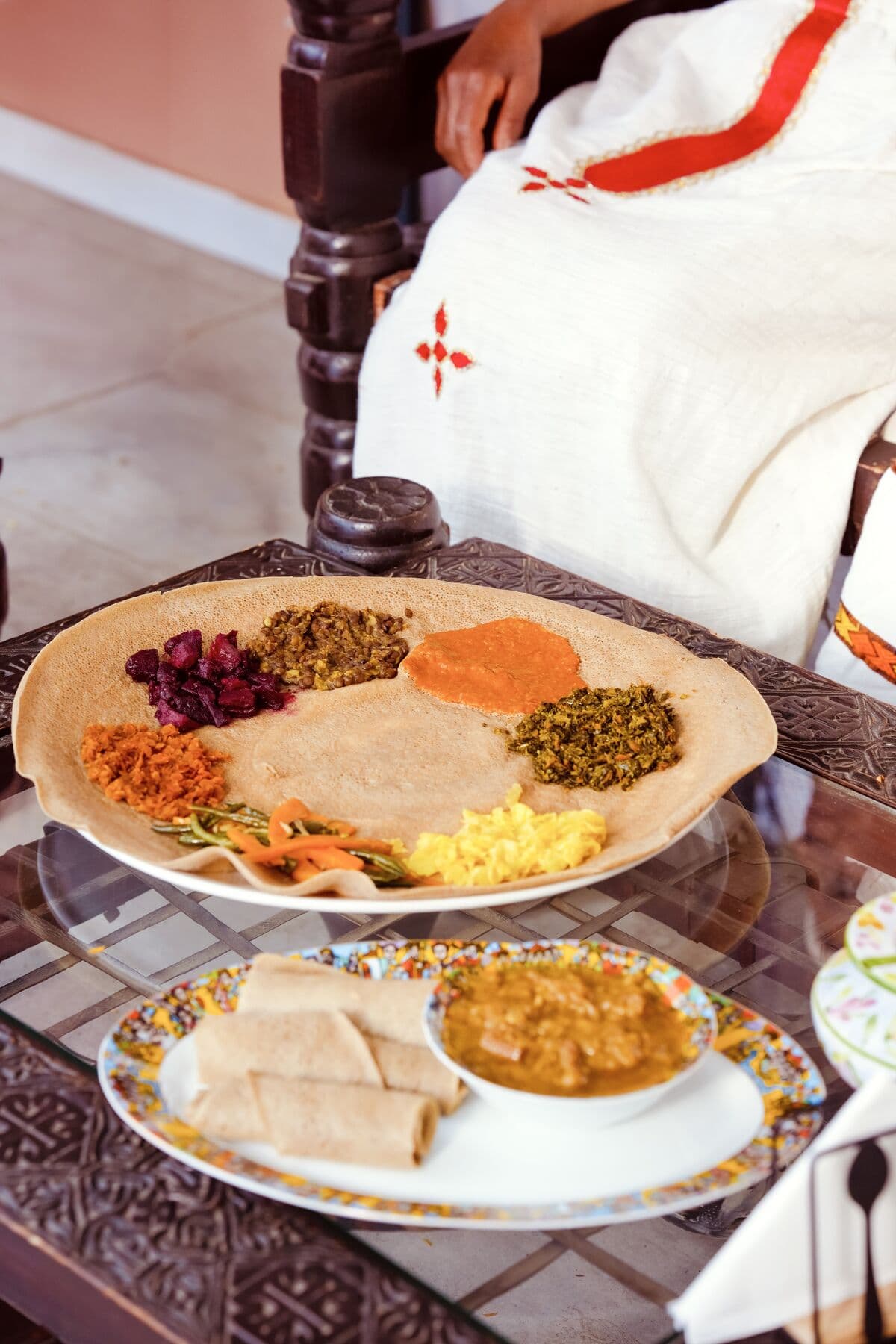
- Beyaynetu, a platter of seven vegan fasting dishes, an easy way into the country's cuisine, including for vegan guests.
- The coffee ceremony, a welcome ritual in three rounds, Abol, Tona, Baraka, which we present in our article on the coffee ceremony as a language of hospitality.
Together these form a coherent whole, with its own gestures and vocabulary, that leaves a lasting impression.
The Senegalese example: thiéboudienne
Thiéboudienne, rice cooked in a fragrant tomato sauce and served with fish and vegetables, is Senegal's national dish. In 2021 it was inscribed on UNESCO's Representative List of the Intangible Cultural Heritage of Humanity. The recognition gave the dish, and Senegalese table culture, international visibility. Teranga, Senegalese hospitality, is visible in the very act of eating from one large shared dish.
Other emblematic dishes: mafé, a stew in peanut sauce; supou kanja, a thick okra soup; chicken yassa, marinated in lemon and caramelised onions.
What the two traditions share
Ethiopian and Senegalese cooking do not resemble each other in flavour. Yet they share the same logic: the meal is taken together, around a common dish, and welcoming is a duty. That common ground explains why they answer each other so well at the table.
Food that serves dialogue between countries
For an embassy, an organisation or a company, offering a meal that introduces a culture is a simple way of doing soft diplomacy. Our articles on the diplomatic dinner in Dakar and on embassy receptions show how to organise it.
What ge'eza does
ge'eza serves Ethiopian cooking in Point E, at 656 avenue Birago Diop: Ethiopian breakfast from 8am to 11am, vegan fasting dishes, doro wot, tibs, kitfo to order 24 hours ahead, tej and birz, Ethiopian specialty coffee. From Tuesday to Friday at lunch, a Senegalese dish of the day: mafé, thiéboudienne, supou kanja, chicken yassa. The gomen is sourced from Growing Life Farm, a women-led farm in Dakar.
Open Tuesday to Sunday, 8am to 10pm. To visit: book or write to +221 78 660 07 07.
How a dish becomes an ambassador
A dish does not travel alone. For it to make a country known, you need places that serve it well, people who explain it and occasions to taste it. The Ethiopian meal is a good example: you do not simply consume it like a menu, you step into a ritual. You wash your hands, share one large platter, and receive a mouthful from a neighbour's hand, a gesture called gursha. Every detail says something about how guests are received.
The same goes for a Senegalese meal around a common dish: everyone's place, serving the guest first, the conversation that settles in. These gestures are not learned from a brochure; they are passed on at the table.
What institutions take from it
Several countries and cultural bodies now recognise cooking as an integral part of their heritage. UNESCO's 2021 inscription of thiéboudienne is an example: it is not only a recipe but a set of skills, gestures and social practices around the dish. It recognises cooking as living culture, not as a mere gastronomic curiosity.
On the Ethiopian side, the coffee ceremony and the holidays that mark the year, presented in our article on the Ethiopian calendar or the one on Meskel, show the same logic: the table is where a society passes on its values.
Local produce for a cuisine from elsewhere
Introducing a foreign cuisine in Dakar does not mean importing everything. At ge'eza, the gomen is sourced from Growing Life Farm, a women-led farm in Dakar, and birz, Ethiopian honey water, is made with Senegalese honey. The recipes stay Ethiopian and the produce is local: a concrete example of dialogue, which is tasted more than demonstrated.
A few pointers for a meal that builds bridges
If you want to use food to bring counterparts closer, a few simple principles are enough:
- Choose a dish that is shared, so that conversation grows out of the meal itself.
- Plan options for every diet: since the Ethiopian fasting dishes are vegan, everyone can eat the same meal.
- Explain without overdoing it: a sentence on the origin of the dish is enough, curiosity does the rest.
- End on a slow moment, such as coffee, which lets the conversation run on.
Frequently asked questions
What is culinary soft power?
It is a country's cultural influence through its food: it builds goodwill and curiosity about its culture.
Is thiéboudienne recognised by UNESCO?
Yes, it was inscribed in 2021 on the intangible cultural heritage list.
What should I try to discover Ethiopian food?
Beyaynetu, which brings seven fasting dishes together on one injera platter, is the ideal entry point.
Can I try both cuisines in the same meal?
From Tuesday to Friday at lunch, you can order the Senegalese dish of the day and an Ethiopian dish to share.