Guide · 28 September 2026
The Ethiopian Coffee Ceremony as a Language of Hospitality
The Ethiopian coffee ceremony, a hospitality ritual that suits official meetings: the Abol, Tona, Baraka sequence, its 45-minute length, and how to arrange one in Dakar.
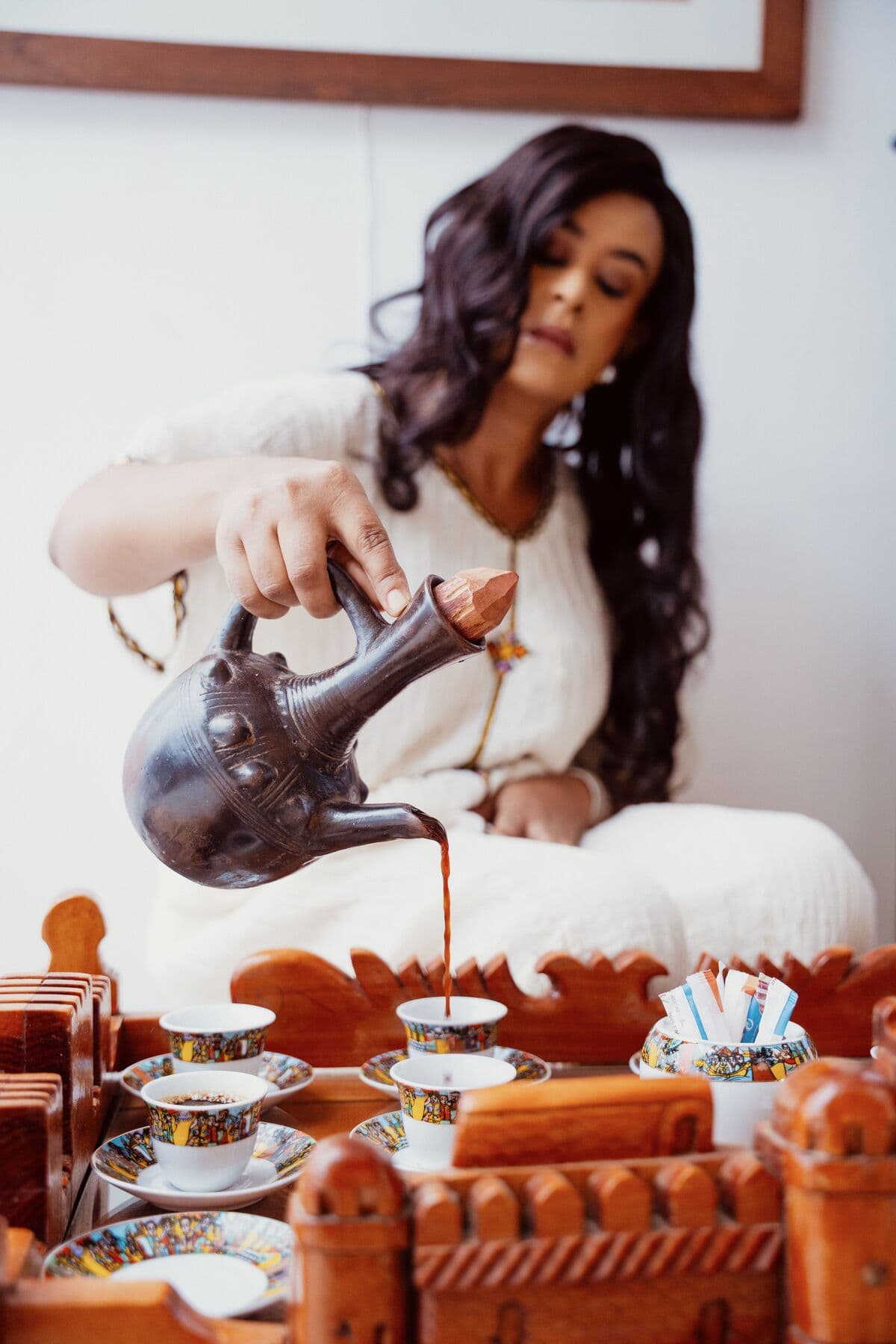
The Ethiopian coffee ceremony is a welcome ritual: the coffee is roasted in front of the guests, ground by hand, brewed in a clay jebena, then served in three rounds, Abol, Tona and Baraka, from the strongest to the gentlest. It lasts about 45 minutes and suits official meetings well, because it sets a calm pace, puts everyone on equal footing and invites conversation.
A ritual before it is a drink
In Ethiopia, you do not simply serve a coffee: you invite someone to sit and take their time. The ceremony is a moment of sharing where people trade news, welcome a visitor, mark an occasion. It is not rushed. That is what makes it valuable when the agenda is tight.
The sequence at ge'eza
The sequence follows tradition:
- Roasting: green beans are roasted on the spot. The aroma fills the room, and the wait is part of the ritual.
- Grinding: the coffee is ground by hand.
- Brewing: it is prepared in a jebena, a clay coffee pot.
- Incense: it burns during the ceremony and accompanies the moment.
- Service in three rounds: Abol, Tona, Baraka.
- Dabo: homemade Ethiopian bread, served with honey.
Abol, Tona, Baraka
Each of the three rounds has its own meaning and character.
- Abol, the first round: the strongest, most robust cup. According to the house's description, it draws out about 65 to 70% of the available aromas.
- Tona, the second round: the more nuanced cup, capturing another 20 to 25% and revealing subtler notes.
- Baraka, the third round: the cup of blessing, the gentlest, closing the ceremony in gratitude and calm.
Accepting all three cups is a mark of attention towards the host.
Why it suits official meetings
Several reasons explain its use in diplomatic and institutional settings:
- It slows things down: in a busy day, it imposes a pause.
- It puts everyone on the same level: each person receives the same cup at the same time.
- It gives people something to talk about: the ritual, the coffee, Ethiopia, the origins of the drink.
- It is short and structured: about 45 minutes, easy to fit into a programme.
- It needs no prior knowledge: guests simply follow the host.
It follows naturally from a shared meal, such as a diplomatic dinner, or can welcome a delegation at the start of a visit.
Price and booking
At ge'eza, the full ceremony is 5,000 F, with the three rounds, incense and dabo. The rounds can also be ordered separately: Abol 2,500 F, Tona 2,000 F, Baraka 1,500 F, and house dabo 1,000 F. It is booked in advance: see the coffee ceremony page and the reservation page. For a group or delegation, message +221 78 660 07 07 on WhatsApp with the date and number of guests.
A tip for guests
If you have never attended a ceremony, let yourself be guided. Stay for all three rounds if you can, take time to enjoy the incense and the coffee, and feel free to ask questions: it is a moment made for conversation. To host a group at the villa, see also our guide to hosting a delegation in Dakar.
Where and when
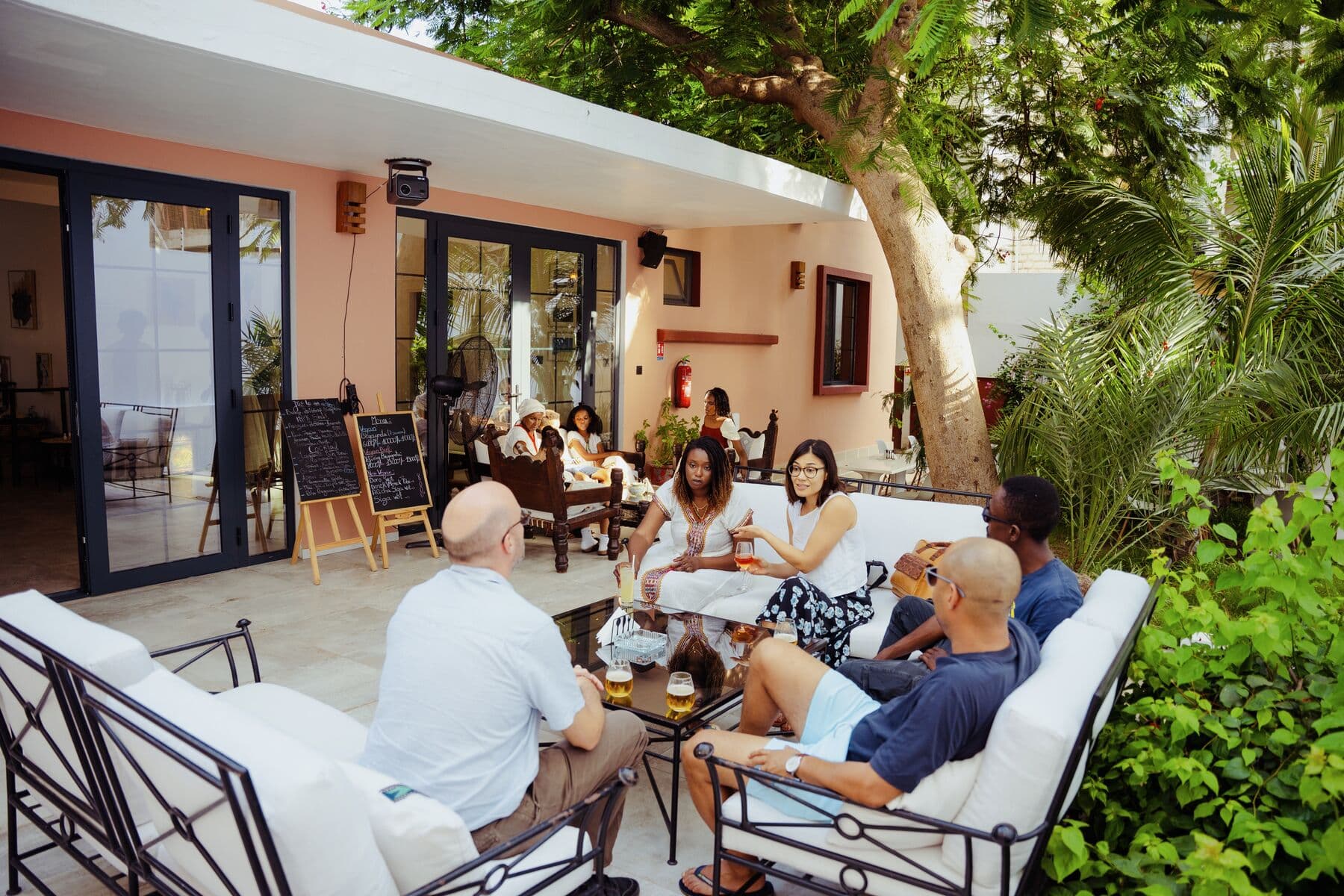
ge'eza is at 656 avenue Birago Diop in Point E, Dakar. The house is open Tuesday to Sunday, 8am to 10pm, and closed on Mondays.
What you see, smell and hear
The ceremony is a sensory experience as much as a ritual. Roasting gives off a dense aroma that fills the whole room. The sound of hand grinding, then the gentle simmer of the jebena over the heat, sets up a calm anticipation. The incense adds a note that separates the moment from the rest of the day. When the coffee is served, it is drunk slowly, in small cups, with no hurry.
This sensory side partly explains why guests remember it: it depends on no shared language and speaks to everyone in the same way.
Dabo and honey
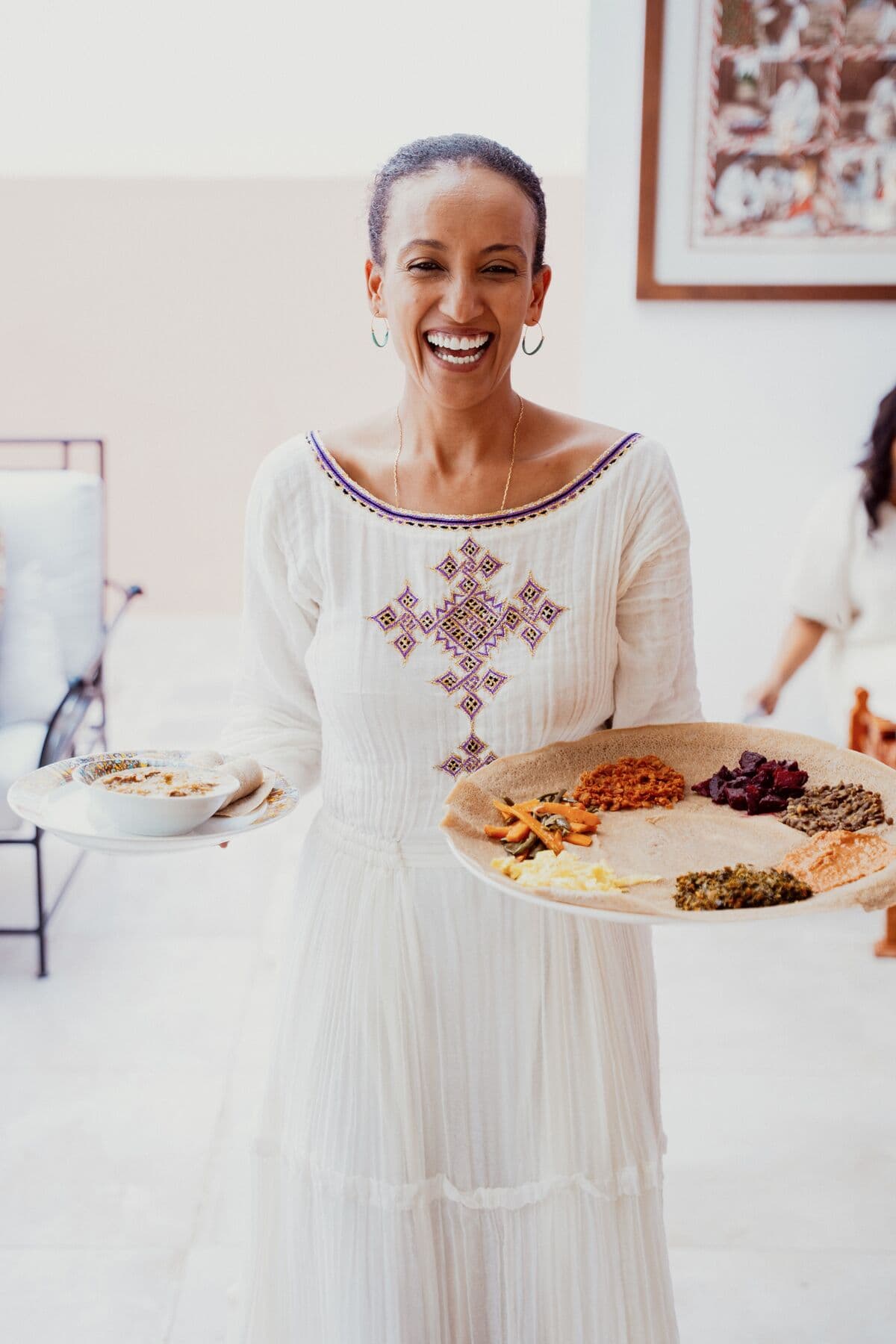
Dabo, the homemade Ethiopian bread, accompanies the ceremony with honey. It extends the moment gently and gives guests something to nibble on between rounds. On the menu, it costs 1,000 F.
Adapting the ceremony to a group
For a group or a delegation, a few points are worth settling in advance:
- Timing: after a lunch or dinner, or as an opening to a meeting, depending on the goal.
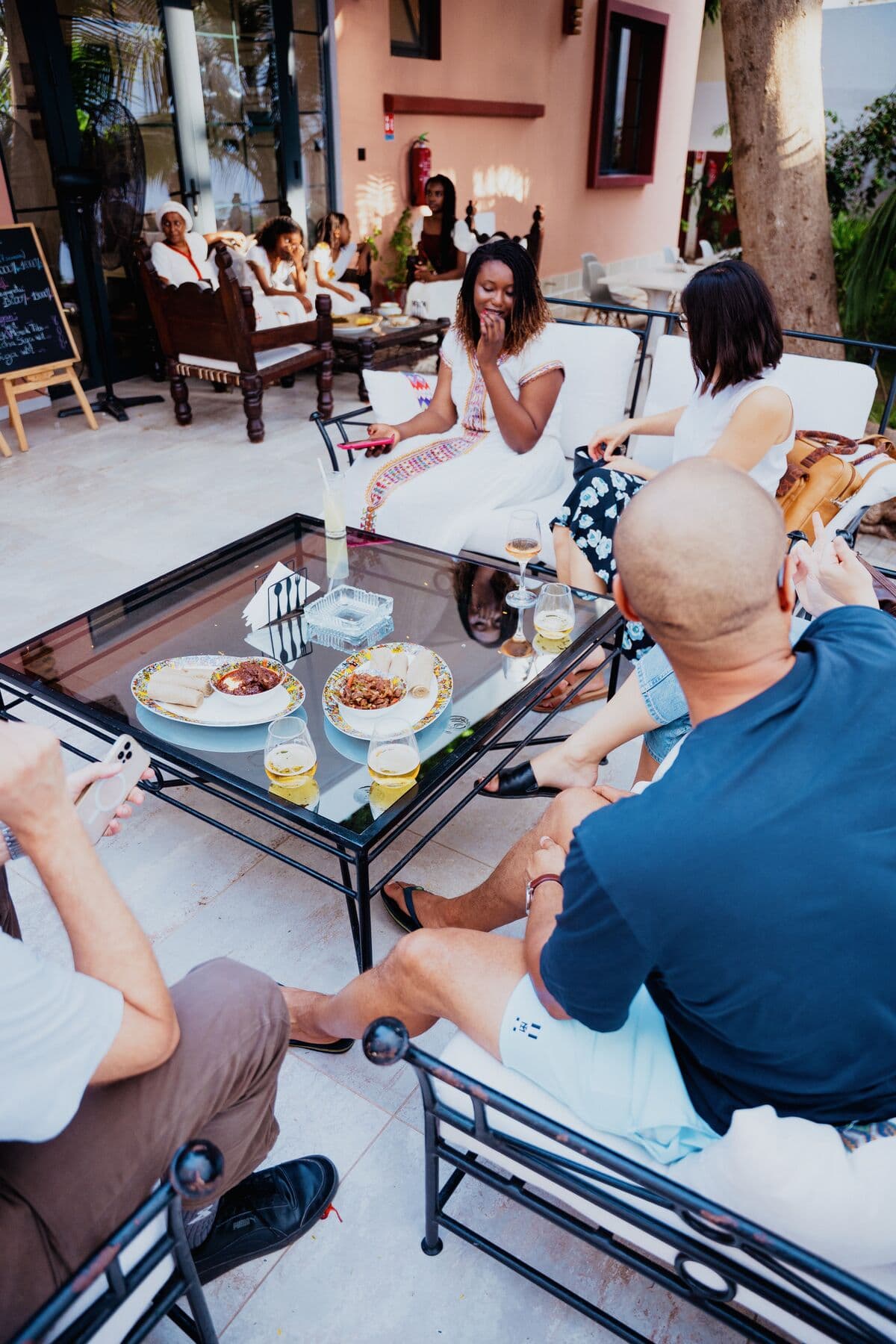
- Layout: guests sit around the serving area so they can watch the preparation.
- Explanations: a short introduction on the meaning of the three rounds helps guests who are discovering the ritual.
- Duration: about 45 minutes, to be built into the programme without squeezing it.
Each person can taste all three rounds or stop earlier, according to their habits. For those who avoid caffeine, it is best to tell the team beforehand.
A ritual that builds ties
In official meetings, people often swap business cards before they swap words. The coffee ceremony reverses the order: first a shared moment, then the conversation. That is why it is appreciated in contexts where trust has to be built without anyone forcing the pace.
A note on the word hospitality
Hospitality is easy to claim and harder to show. The ceremony makes it visible: the host prepares everything in front of the guests, serves each person in turn and gives the moment the time it takes. Nothing about it is hidden or hurried. For a visitor to Dakar who is used to formal receptions, it is a change of register, and often the part of the visit they talk about afterwards.
If you are planning a visit for guests from abroad, it can be worth placing the ceremony early in the programme, so that its calm sets the tone for what follows.
Frequently asked questions
How long does the coffee ceremony last?
About 45 minutes for the three rounds, including roasting and service.
What do Abol, Tona and Baraka mean?
They are the three rounds of the ceremony: Abol is the strongest, Tona more nuanced, Baraka the gentlest, called the blessing.
How much does the full ceremony cost?
5,000 F, with the three rounds, incense and dabo.
Do I need to book?
Yes, the ceremony is booked in advance, especially for a group.