Guide · 28 September 2026
Diplomatic Dinner in Dakar: Menu, Diets and Protocol
How to organise a diplomatic dinner in Dakar: a shared menu around injera, dietary needs (vegan fasting dishes, religious requirements), table protocol and booking out the villa.
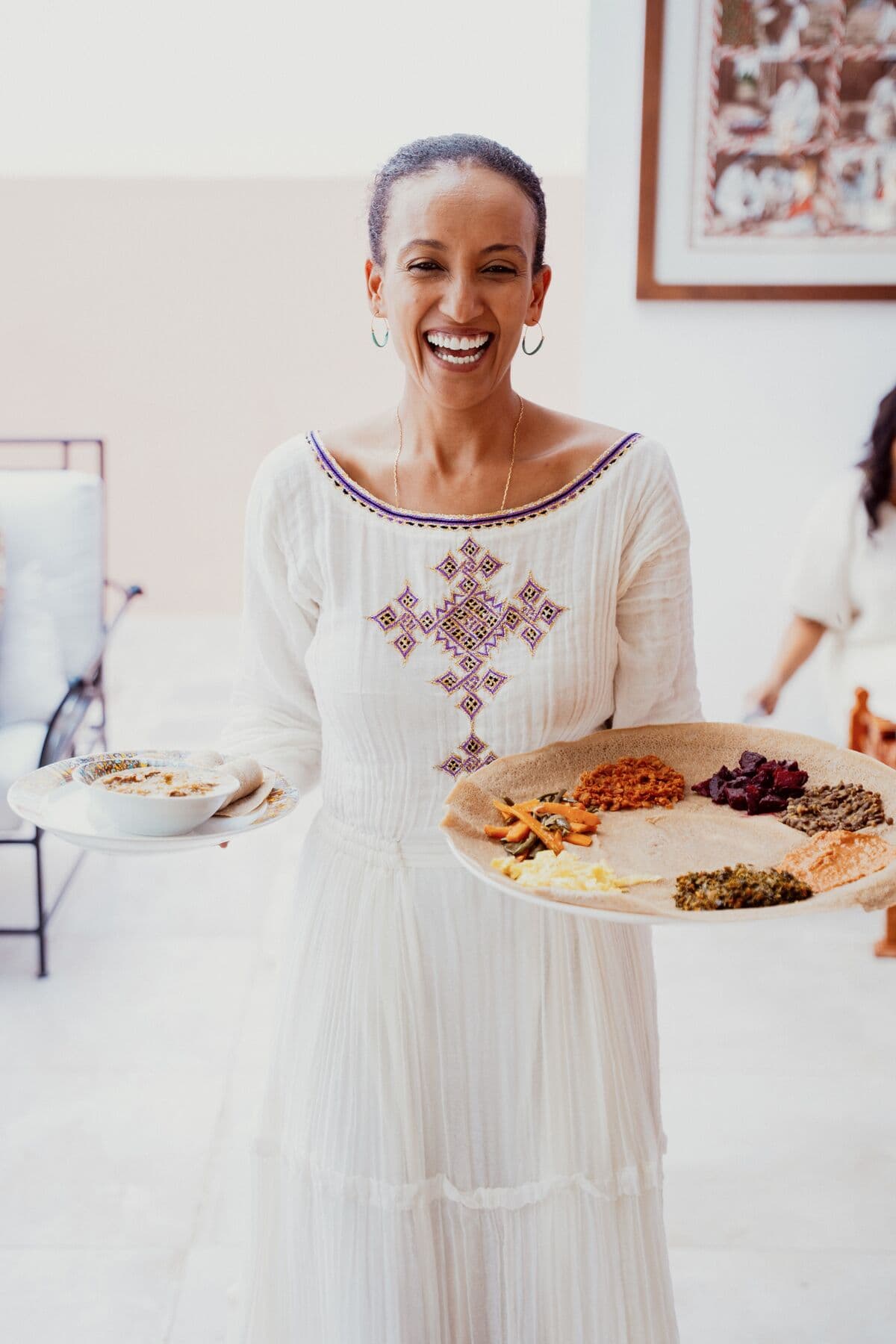
A successful diplomatic dinner in Dakar rests on three choices: a venue with character, a menu that suits every diet, and table protocol suited to the format. An Ethiopian meal shared around injera is an original option: it draws guests together, adapts to plant-based diets through the fasting dishes, and leads naturally into a coffee ceremony.
The venue
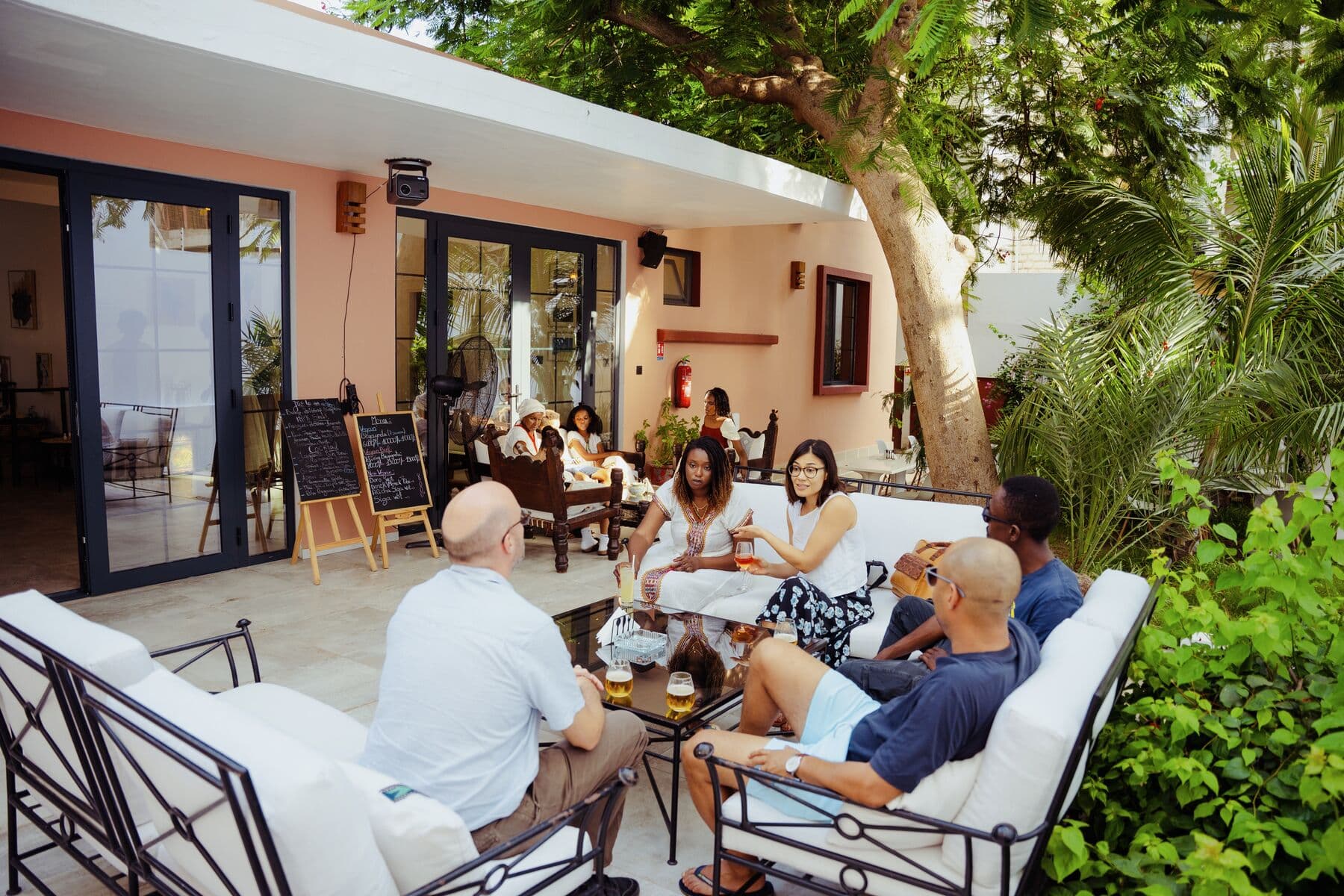
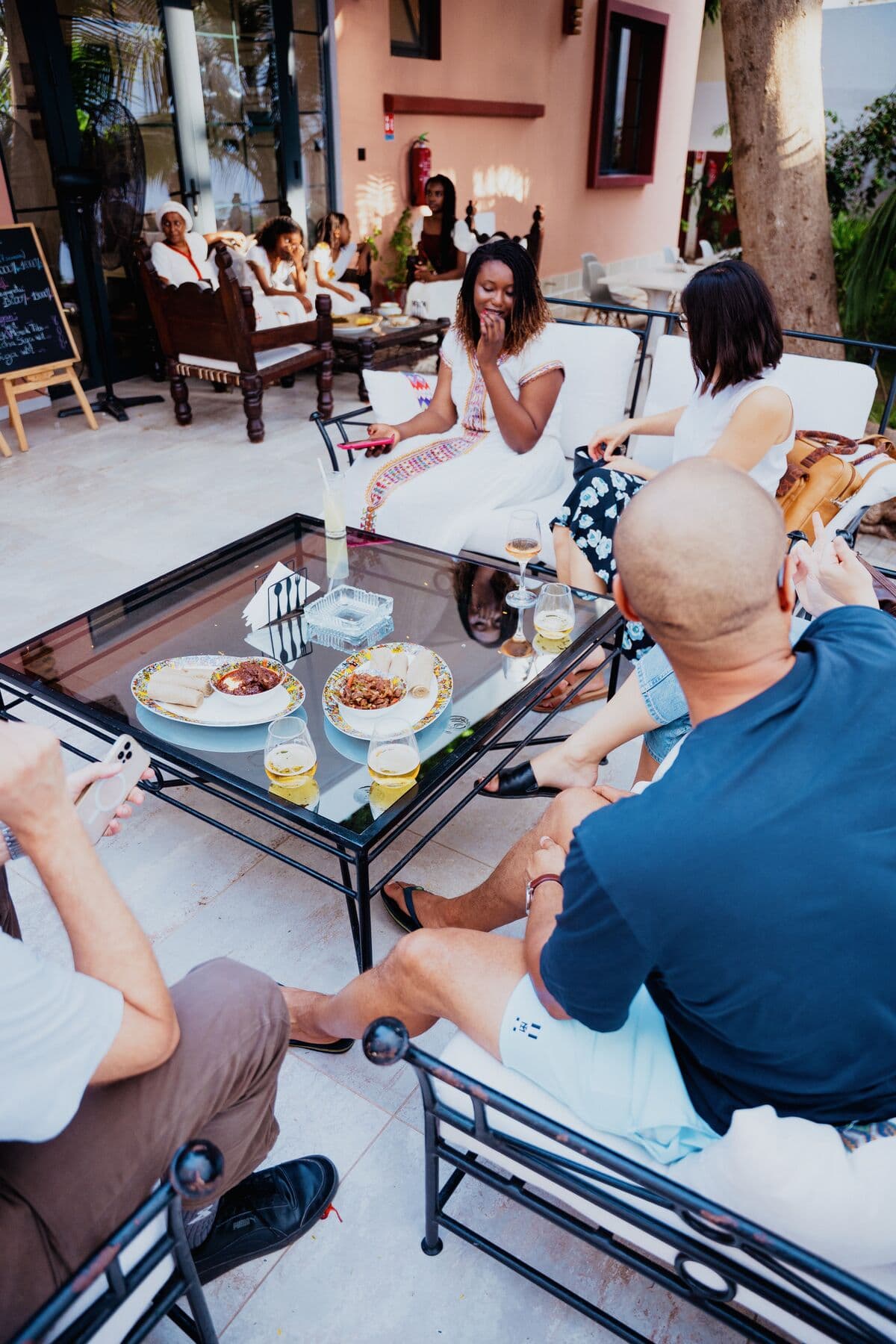
The setting matters as much as the menu. A garden villa offers several spaces: a welcome outdoors, dinner inside or on the terrace, a lounge to extend the evening. In Point E, ge'eza can be booked out in whole or in part for dinners, at 656 avenue Birago Diop. The spaces page presents the rooms. No seating number is given here: capacity depends on the layout, to be confirmed with the team.
A shared menu around injera
Injera is a soft, fermented flatbread, naturally gluten-free according to the house menu. It serves as both plate and cutlery: you tear off a piece to pick up the stews. The meal is therefore shared from large platters.
Three ways to build a dinner:
- Beyaynetu: seven fasting dishes on one large injera platter (Shiro, Misir, Fosolia, Gomen, Key Sir, Tikil Gomen, Alicha Ater Kik), for 1, 2 or 3 people. Everything is vegan.
- Ye Fisig Beyaynetu: three fasting stews and one meat stew of your choice, for those who want both worlds.
- Meat dishes to share: doro wot (chicken slow-cooked in clarified butter with a hard-boiled egg), tibs, siga wot. Kitfo, the Ethiopian tartare, must be ordered 24 hours ahead.
For drinks, you can offer tej, a traditional honey wine, or birz, an alcohol-free honey water, along with homemade juices such as bissap. The Senegalese dish of the day is served only at lunch, Tuesday to Friday, so it suits lunches rather than dinners.
Diets and guests' requirements
A delegation dinner often brings together different habits. The safest approach is to collect needs upfront:
- Vegans and vegetarians: the fasting dishes are fully vegan, so everyone can eat the same meal.
- Religious requirements: do not assume. Ask the team, before confirming, what it can guarantee about the origin and preparation of the meat. The meat on the menu comes from Gourméa, a women-led farm in Dakar.
- Allergies: flag them in writing ahead of time.
- Alcohol: decide according to the guests. Birz gives an alcohol-free alternative to tej.
Table protocol
Eating with your hands surprises some guests. You eat with the right hand, tearing the injera. A typical gesture is the gursha: offering a mouthful to a neighbour at the table, a mark of attention. Brief guests beforehand and offer cutlery to those who prefer it.
For seating, a large platter is shared by three or four people: a chance to mix nationalities and roles. The logic of plated service does not apply in the same way; adjust to the level of formality you want, and talk through the flow with the team.
Ending with the coffee ceremony
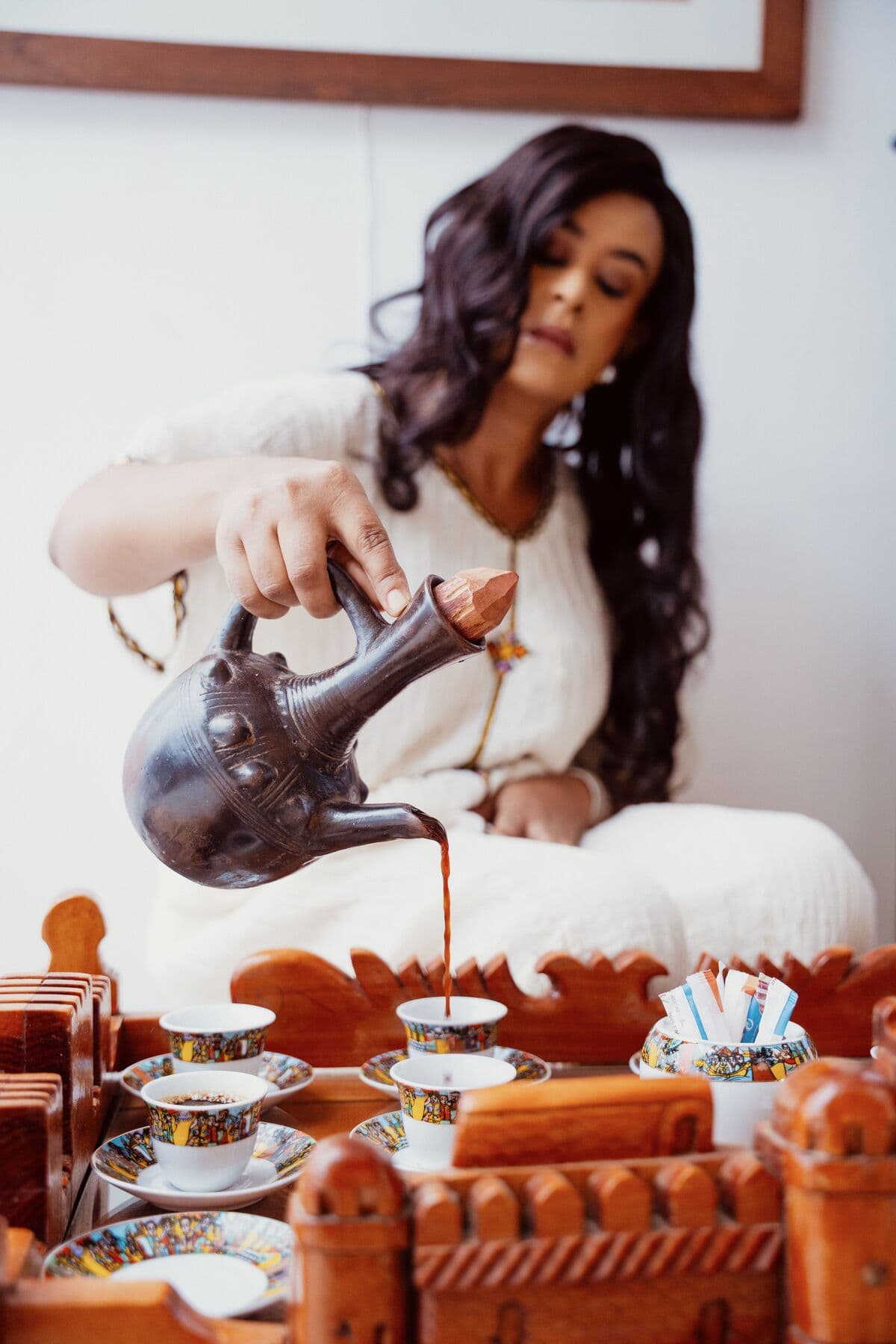
After the meal, the Ethiopian coffee ceremony takes about 45 minutes: roasting in front of the guests, hand-ground coffee, three rounds (Abol, Tona, Baraka), incense and dabo. The full ceremony is 5,000 F. We cover it in the article on the coffee ceremony as a language of hospitality.
Organising the dinner
For other meeting formats, see our guide to hosting a delegation in Dakar. To start a request, write to +221 78 660 07 07 (phone and WhatsApp) with the date, number of guests and dietary constraints. The house is closed on Mondays and closes at 10pm on other days.
A sample evening running order
A diplomatic dinner benefits from a clear thread, even a light one. Here is a simple outline, to adapt:
- The welcome: guests arrive and are served a homemade juice (bissap, ginger juice, bouye) or a glass of tej. This is the time for introductions, standing, in the garden or on the terrace.
- A word of welcome: the host says a few words before the platters arrive.
- The meal: the dishes are placed at the centre of the table and everyone helps themselves by tearing injera. The pace is slow: people talk between mouthfuls.
- The coffee ceremony: it closes the evening and lets conversation carry on.
It helps to leave a stretch of the evening unscheduled, so that informal exchanges, often the most useful ones, can happen.
Tips for the host
- Brief your guests on the format: a shared meal eaten by hand is unusual for some, and telling them ahead avoids hesitation.
- Seat with care: mix nationalities and roles, without isolating people who do not share a language.
- Confirm the menu several days ahead: this leaves time to order kitfo, which needs 24 hours, and to adapt dishes to the diets you have flagged.
- Confirm timings: the house closes at 10pm and is closed on Mondays, which frames the evening.
- Think about the end of the night: guests' transport, and possibly handing over a gift, for example a work from the gallery.
These details can look minor, but they are what separates a decent dinner from one people remember.
Whatever the size of the group, the same principle holds: a shared table lowers the temperature of a formal encounter, and a well-prepared host lets the setting do the rest of the work.
Frequently asked questions
Can a diplomatic dinner be held at ge'eza?
Yes, the villa can be booked out for dinners and receptions. Contact the team with the date and format.
Does the menu suit vegan guests?
Yes, the Ethiopian fasting dishes are fully vegan. Beyaynetu brings them together on one platter.
How does a meal without cutlery work?
You eat with the right hand, tearing the injera. Cutlery can be requested for guests who prefer it.
Do any dishes need to be ordered ahead?
Yes, kitfo must be ordered 24 hours in advance. For a group dinner, it is best to confirm the menu beforehand.