
Food · 6 October 2026
Shiro Wot: Ethiopian Chickpea Stew in Dakar
Shiro wot is an Ethiopian stew of finely ground chickpeas simmered in berbere sauce. What is in it, how to eat it, and how to order it at 5,500 F at Ge'eza in Point E, Dakar.
Shiro wot is an Ethiopian stew of finely ground chickpeas, simmered in a thick, fragrant berbere sauce. It is one of the most common dishes in Ethiopian cooking, made at home on an ordinary day as well as during fasting periods. At Ge'eza it is vegan, prepared without butter, served on injera for 5,500 F, and it also appears in the beyaynetu platter. The house is at 656 avenue Birago Diop in Point E, Dakar, open Tuesday to Sunday, 8am to 10pm.
What is on the plate
Shiro is a thick purée. The chickpeas are ground into a fine flour, stirred into water with onion, garlic and berbere, then cooked slowly until the texture sits somewhere between cream and paste. The Ge'eza menu describes it as finely ground chickpeas simmered in a deep, fragrant berbere sauce.
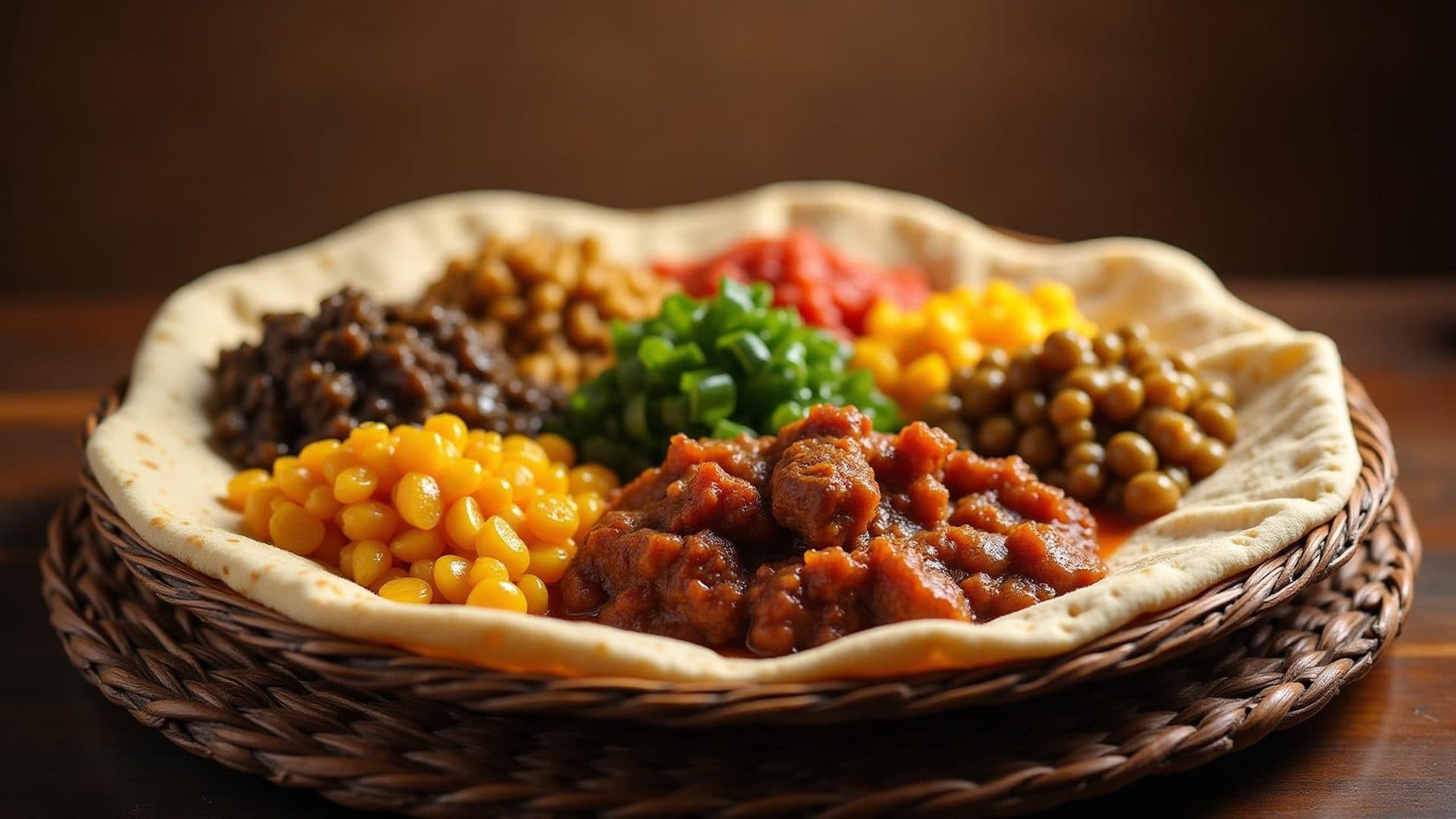
The colour runs from brick red to deep ochre depending on how much spice goes in. The taste is round and earthy, with a warmth that builds gradually rather than a sharp first burn. The dish arrives on injera, the soft, slightly sour fermented flatbread that serves as plate and cutlery at once. To understand that bread properly, read injera explained.
An everyday dish
In Ethiopia, shiro is a pantry dish in the best sense: chickpea flour keeps well, cooks quickly and feeds a whole table. Many families eat it as an ordinary meal. Because the fasting version contains neither meat nor dairy, it also has a big place on the days when the Ethiopian Orthodox Church asks believers to abstain from animal products.
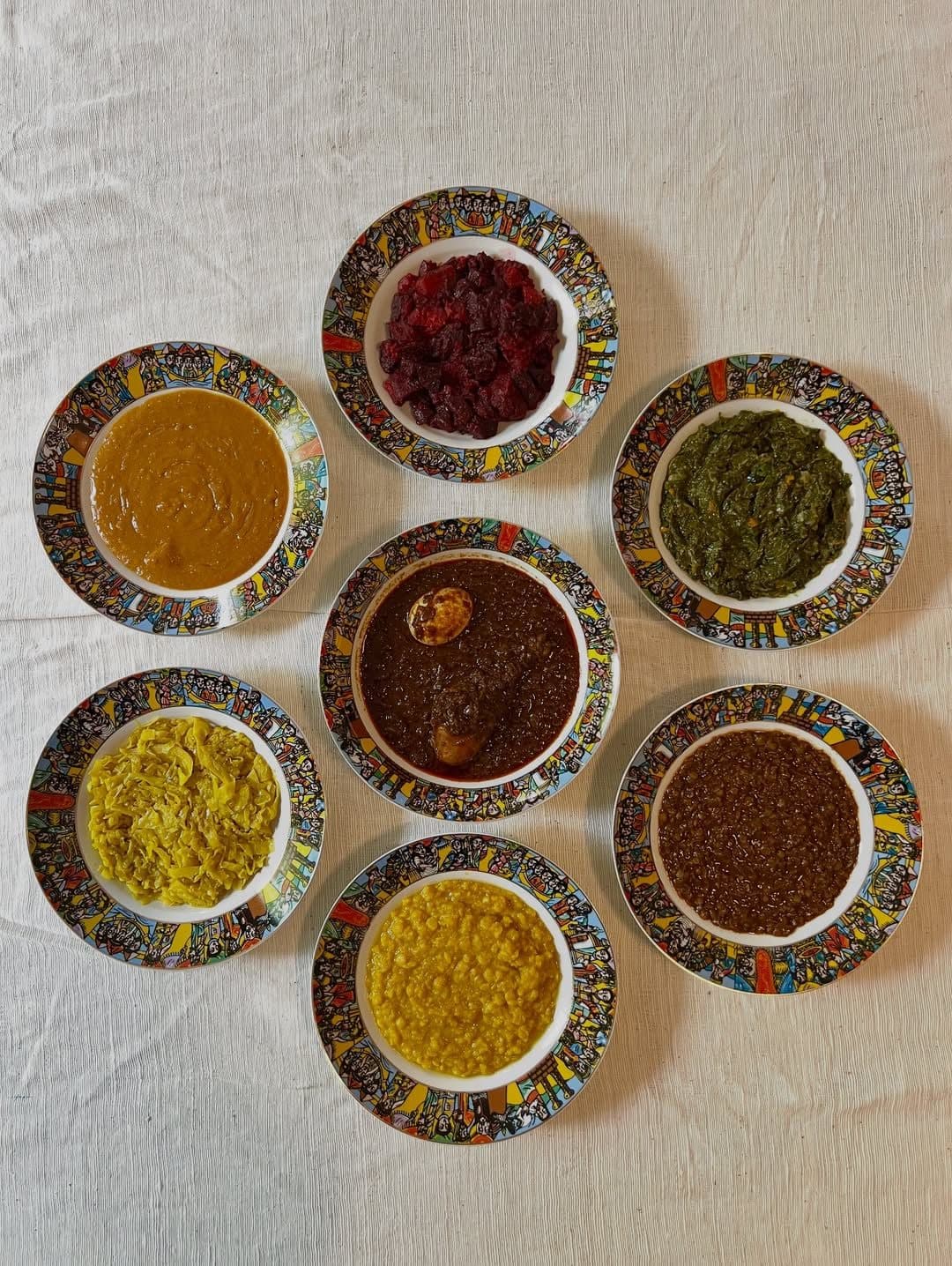
That is why it belongs to fasting cuisine, a whole repertoire of dishes built on pulses and vegetables, described in Ethiopian fasting dishes. Ge'eza serves seven of these dishes, all vegan and butter-free, shiro among them.
Berbere, the spice behind the character
Berbere is the foundation spice blend of Ethiopian cooking: dried chilli and several aromatic spices, with a recipe that changes from one household to the next. It gives shiro its colour and depth. You taste more than chilli, a fragrant warmth that is almost sweet at moments.
If you are wary of heat, know that you control it with the bread: a small dab of sauce on a large piece of injera tastes mild, a generous scoop tastes bolder. The spices have their own article, berbere, mitmita and niter kibbeh, and the heat question is covered in is Ethiopian food spicy?.
How to order it at Ge'eza
Shiro wot is on the menu at 5,500 F, in the vegetarian section. There are three ways to have it.
- As a single dish on injera, 5,500 F. The simplest choice for lunch.
- Inside the beyaynetu, the platter that gathers the seven fasting dishes on one large injera, from 7,000 F for one person. Shiro sits there beside the misir, the gomen, the beetroot and the others. Everything is in beyaynetu.
- To share, by ordering two or three different dishes for the table, for example a shiro, a misir wot at 5,500 F and a gomen at 5,000 F, so everyone tastes everything.
The menu states that these dishes are made from pulses and selected Ethiopian spices, without butter. So there is no animal product in the house shiro.
How to eat it
You eat it by hand, with the injera. Tear off a piece with your right hand, pinch up a little shiro, fold, bring it to your mouth. If several of you share a dish, take from your own side of the platter and do not reach across. The kindest gesture is to feed someone a mouthful: that is the gursha, explained in gursha, eating with your hands.
One practical tip: shiro is thick and stays in a mound on the injera. Do not try to dip it like a soup, take it in small amounts. The injera underneath, soaked in sauce, is eaten at the end, and many people find it the best part of the meal.
What to pair it with
Shiro is rich and dense, so it likes contrast. A few ideas taken from the menu:
- A gomen at 5,000 F, collard greens sautéed with garlic and onion, for freshness and a green note.
- A key sir at 5,000 F, slow-cooked beetroot, naturally sweet, which soothes the palate between bites of sauce.
- A misir wot at 5,500 F, red lentils with turmeric and garlic, milder. The dish has its own page: misir wot.
- To drink, a bissap at 1,500 F, a tart hibiscus juice, or a birz at 2,000 F, Ethiopian honey water, to cool the berbere.
To finish, an Ethiopian macchiato at 2,500 F, or the full coffee ceremony at 5,000 F per person, which lasts about 45 minutes.
Who it suits
Shiro works for a meatless meal, whether you are vegetarian, vegan or simply curious. It is also a good first Ethiopian dish: the smooth texture is familiar, there are no surprising pieces, and the taste is easy to approach step by step. At a mixed table you can put it in the centre and add a meat dish to one side.
For people who avoid gluten, the menu presents the injera as naturally gluten-free. If you have coeliac disease or a severe allergy, tell the team when you order so they can tell you exactly how the dish is prepared.
Coming to Ge'eza
Ge'eza is an Ethiopian restaurant, an art gallery and a cultural venue in a villa in Point E, with a gallery lounge, a glass-roofed room and a terrace under the trees. You can see the restaurant page for the whole menu, or book a table online. For a question, phone and WhatsApp are +221 78 660 07 07.
Frequently asked questions
Is shiro wot vegan?
Yes. At Ge'eza the fasting dishes, shiro included, are vegan and made without butter.
How much does shiro wot cost?
5,500 F as a single dish on injera. It is also part of the beyaynetu, from 7,000 F for one person.
Is shiro very spicy?
It is lifted by berbere, but the heat depends on how much sauce you take on the injera. Ask the team for advice if you are sensitive to chilli.
What does wot mean?
The word means a sauced stew in Ethiopian cooking. There are plant-based wots, like shiro and misir, and meat wots, like doro wot.