
Food · 27 October 2026
Ethiopian Gomen: Collard Greens Sauteed With Garlic
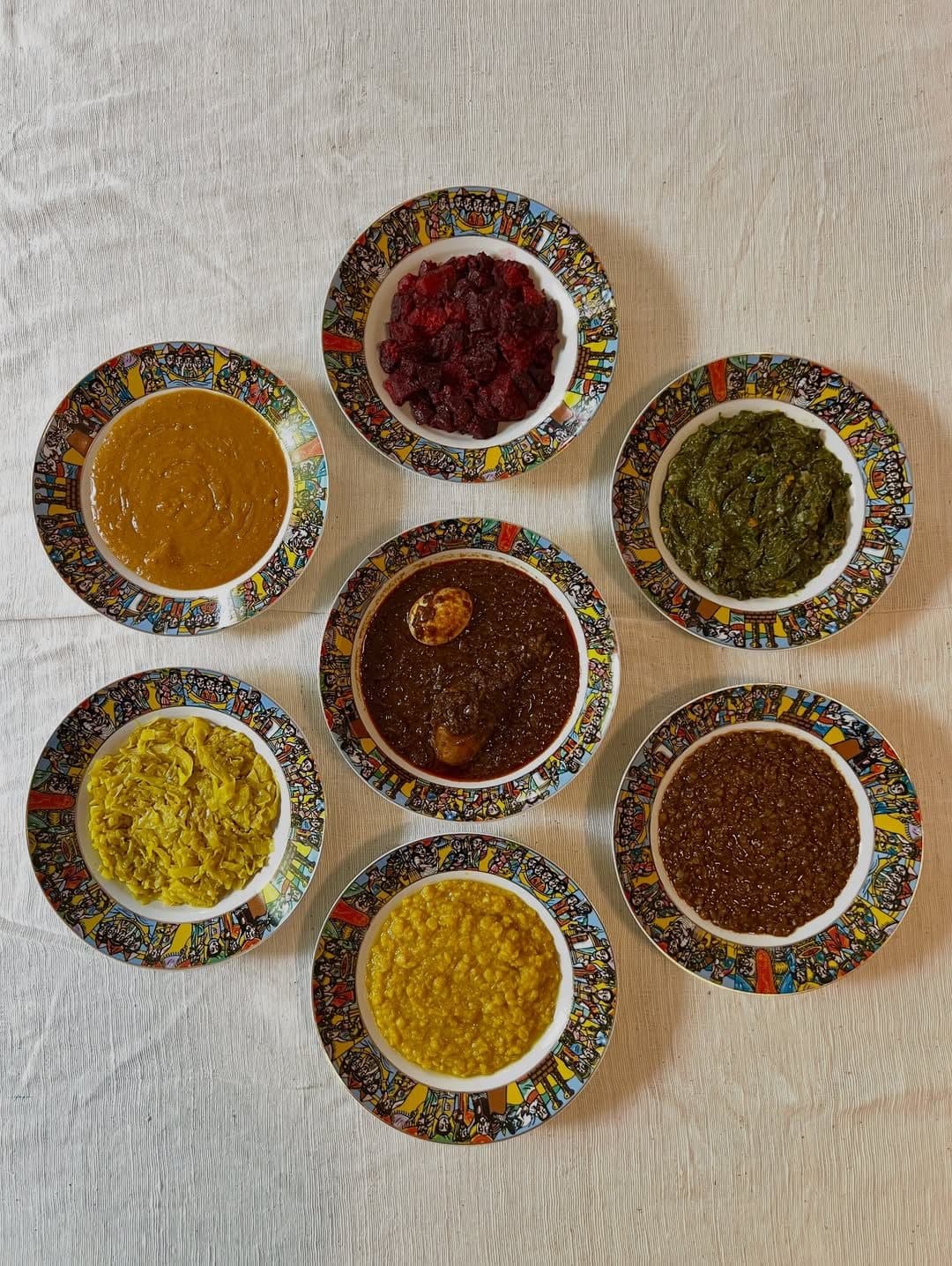
Gomen is an Ethiopian dish of collard greens sauteed with garlic and onion, vegan, at 6,000 F at Ge'eza in Point E, Dakar. One of the seven dishes in the beyaynetu, worth trying on its own or shared.
Gomen is an Ethiopian dish of collard greens sauteed with garlic and onion. Vegan and made without butter, it costs 6,000 F at Ge'eza in Point E, Dakar, and it is one of the seven dishes in the beyaynetu, the Ethiopian fasting platter. Order it on its own on injera, or as part of a shared plate with other dishes from the menu.
Why greens matter in fasting cuisine
Ethiopian fasting cooking leans heavily on pulses and vegetables, since the fasting days of the Ethiopian Orthodox Church rule out meat, dairy and eggs. Green vegetables hold a special place in that repertoire: they bring a fresh, lively note to a table that otherwise runs on thicker sauces built from chickpeas, lentils or split peas. Gomen is the clearest example of this, since it keeps the texture and flavour of the greens, barely transformed by the cooking.
This wider world of dishes made without any animal product is covered in Ethiopian Fasting Dishes, which explains the rhythm of fasting across the Ethiopian calendar. Gomen appears there as one of the simplest dishes to prepare, and also one of the easiest to enjoy for anyone trying Ethiopian food for the first time.
What the Ge'eza menu says
At Ge'eza, gomen is made of collard greens sauteed with garlic and onion, bought fresh in Dakar. The preparation stays plain: no thick sauce, no added chilli, just a quick cook in oil that softens the leaves without stripping their colour or their bite. It is a vegan dish, priced at 6,000 F, served on injera like everything else on the menu.
That plainness sets gomen apart from its closest relative on the menu. Tikil gomen also uses cabbage, but cooks it with turmeric and olive oil, which gives it a golden colour and a rounder flavour. Gomen stays firmly in the green register, with the straightforward bite of garlic and onion.
A fixture of the beyaynetu
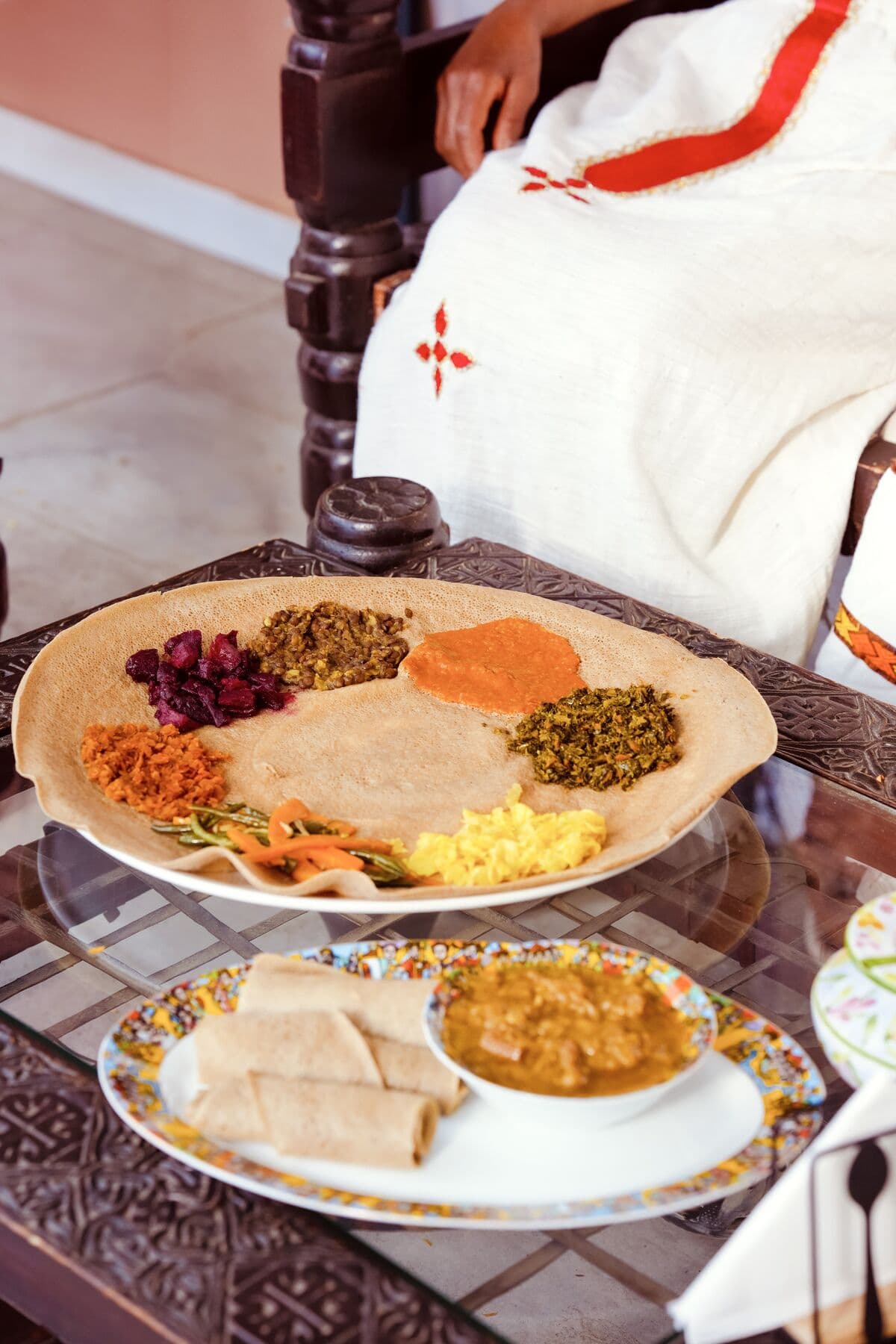
Gomen is one of the seven dishes that make up Ge'eza's beyaynetu, alongside shiro wot, misir wot, fosolia, key sir, tikil gomen and alicha ater kik. On the large injera, it forms a small, bright green mound that stands apart from the red of the shiro, the yellow of the split peas or the deep purple of the beetroot. Beyaynetu starts at 7,000 F for one person, and it remains the best way to taste gomen alongside the other fasting dishes: see beyaynetu for the full platter.
Ordered on its own, gomen makes a more modest dish, built to sit next to something richer, or to serve as a light lunch. Many guests choose it for exactly that balancing role, placed beside a spicier or heavier plate.
How to eat it, and what to pair it with
Like every Ethiopian dish, gomen is eaten with the right hand and a piece of injera, torn off and folded to scoop up the sauteed greens. Its texture, soft but still slightly firm, works well against the thicker, wetter dishes on the menu.
To build a meal around gomen, pair it with a milder dish such as alicha ater kik or tikil gomen for an all-light plate, or with something bolder such as shiro wot, so that gomen acts as a breather between spicier bites. A house juice, bissap or ginger, suits this kind of light meal well, and a cup of Ethiopian coffee rounds it off nicely.
A small group that wants to taste gomen on its own terms, rather than as one of seven dishes in a beyaynetu, might order two or three greens and legumes dishes together, gomen among them, and share them straight from the plate. It is an easy way to try several textures in one sitting without committing to a single large dish.
Who it suits, and when to order it
Gomen suits guests looking for a vegan, light, mild dish, whether by diet or simply by taste. It works just as well for a quick lunch as for a dinner where everyone orders a few dishes to share across the table. Tables mixing different diets find common ground here, since it is entirely vegan and made without any animal product.
It is also a good entry point for anyone new to Ethiopian food who worries about chilli: gomen contains none, and its flavour stays close to a familiar sauteed vegetable, which makes it an easy way to get used to injera before moving on to bolder dishes.
Coming to taste it
The full menu, gomen and the other fasting dishes included, is on the restaurant page. Ge'eza is open Tuesday to Sunday, 8am to 10pm, at 656 avenue Birago Diop, in Point E, Dakar. For a group or an evening table, it helps to book ahead or write to +221 78 660 07 07 on WhatsApp, so the team can prepare the room accordingly.
Frequently asked questions
Is gomen spicy?
No. It is a mild dish, built on collard greens sauteed with garlic and onion, with no chilli or berbere.
How much does gomen cost at Ge'eza?
6,000 F as a single dish on injera. It is also one of the seven dishes in the beyaynetu, from 7,000 F for one person.
What is the difference between gomen and tikil gomen?
Gomen is collard greens sauteed with garlic and onion. Tikil gomen is a different cabbage dish, cooked with turmeric and olive oil, which gives it a golden colour and a milder taste.
Is gomen vegan?
Yes, like all the fasting dishes on the menu, it is made without butter or any animal product.