
Food · 27 October 2026
A Vegan Holiday Meal in Dakar: A Table Without Meat or Butter
For a fully vegan holiday meal in Dakar, Ge'eza brings together the seven Ethiopian fasting dishes made without butter, the beyaynetu, firfir, lentil sambusas and house juices, in Point E, at the menu's exact prices.
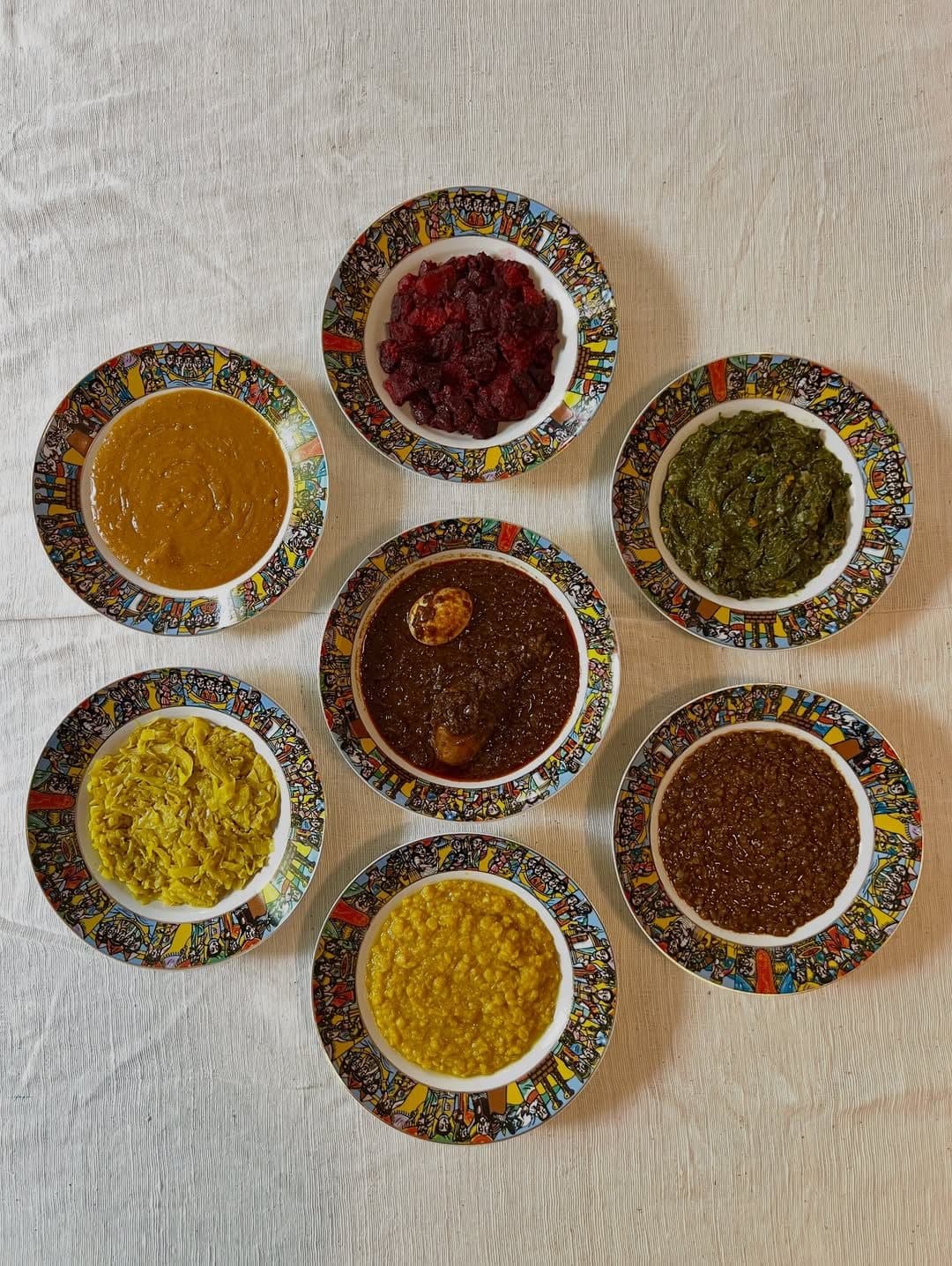
For a fully vegan holiday meal in Dakar, Ethiopian food already offers a ready-made table: the seven fasting dishes, prepared without butter, brought together on the beyaynetu from 7,000 F for one person, rounded out with firfir, lentil sambusas at 1,500 F for two pieces, and house juices at 2,000 F. At Ge'eza, in Point E, this fasting menu runs year round, with no need for a special occasion, which makes it a simple option for a fully vegan table.
A menu that needs no special request
One advantage of this menu is that nothing on it needs to be specially arranged ahead of a holiday meal: every fasting dish is already part of the regular offering, prepared the same way throughout the year. That means a fully vegan table can be put together on short notice, without waiting for a particular season or asking the kitchen to adapt a dish that normally includes butter or meat.
A festive cuisine born of fasting
What often strikes guests trying these dishes for the first time is that they are not built as a restrictive diet, but as a cuisine in its own right, full of flavour, born of a specific religious practice. The Ethiopian Orthodox Church prescribes many fasting days throughout the year, during which the faithful avoid meat, dairy and eggs. Among these periods, the fast that precedes Genna, the Ethiopian Christmas marked on January 7, is called Tsome Nebiyat, the fast of the prophets, and traditionally lasts about forty days. These are the roots of the dishes now found on a restaurant menu, regardless of the faith of the guests who order them.
The seven dishes that make up the beyaynetu
The beyaynetu brings together, on one injera, the menu's fasting dishes: shiro wot and misir wot, built on legumes, at 5,500 F each as a single dish, fosolia tibs, sautéed green beans, at 5,000 F, gomen, collard greens, at 6,000 F, key sir, slow-cooked beetroot, at 5,000 F, tikil gomen, turmeric cabbage, at 5,500 F, and alicha ater kik, turmeric split peas, at 5,500 F. Brought together on a beyaynetu, they form a full plate, starting at 7,000 F for one person; prices for two or three people are not listed and should be asked of the team directly.
Firfir, for a change of texture
Beyond the seven classic dishes, firfir, torn injera mixed into a sauce, brings a different texture to the table, at 5,500 F. It can be ordered on its own or alongside the beyaynetu, to vary the mouthfeel across the meal. Our broader article on Ethiopian fasting dishes covers each of these dishes and explains why Ethiopian cooking carries so many of them.
Sambusas and juices, to round out the table
For a more generous festive table, lentil sambusas, at 1,500 F for two pieces, add a crisp bite as a starter or a side. On the drinks side, house juices, hibiscus, ginger or baobab, are served at 2,000 F each, a fully vegan option that pairs well with the spiced sauces of the fasting dishes.
Why this menu suits a group meal
One of the biggest advantages of a vegan festive table built around these dishes is that it leaves no one out: meat-eating guests can add a dish on the side without complicating the order, while vegan guests find a whole menu already built for them, with no last-minute adjustment needed. Our article on vegan restaurants in Dakar covers more broadly why Ethiopian food is one of the simplest ways to eat vegan in the city.
Booking a table for this kind of meal
The full menu can be checked on the restaurant page, and a table can be booked Tuesday to Sunday, 8am to 10pm, closed on Mondays. For a festive meal shared among several fully vegan guests, it helps to let the team know when booking, so they can prepare the right number of beyaynetu plates or individual dishes.
Planning portions for an all-vegan group
For a table made up entirely of vegan guests, it is usually better to order several beyaynetu plates rather than one for the whole group, so that everyone can reach all seven dishes without repeatedly dipping into the same plate. Adding one or two lentil sambusas and a firfir on the side helps vary the textures without overloading the order, leaving room for a light dessert or a house juice at the end of the meal rather than another full dish.
A meal shared like any other
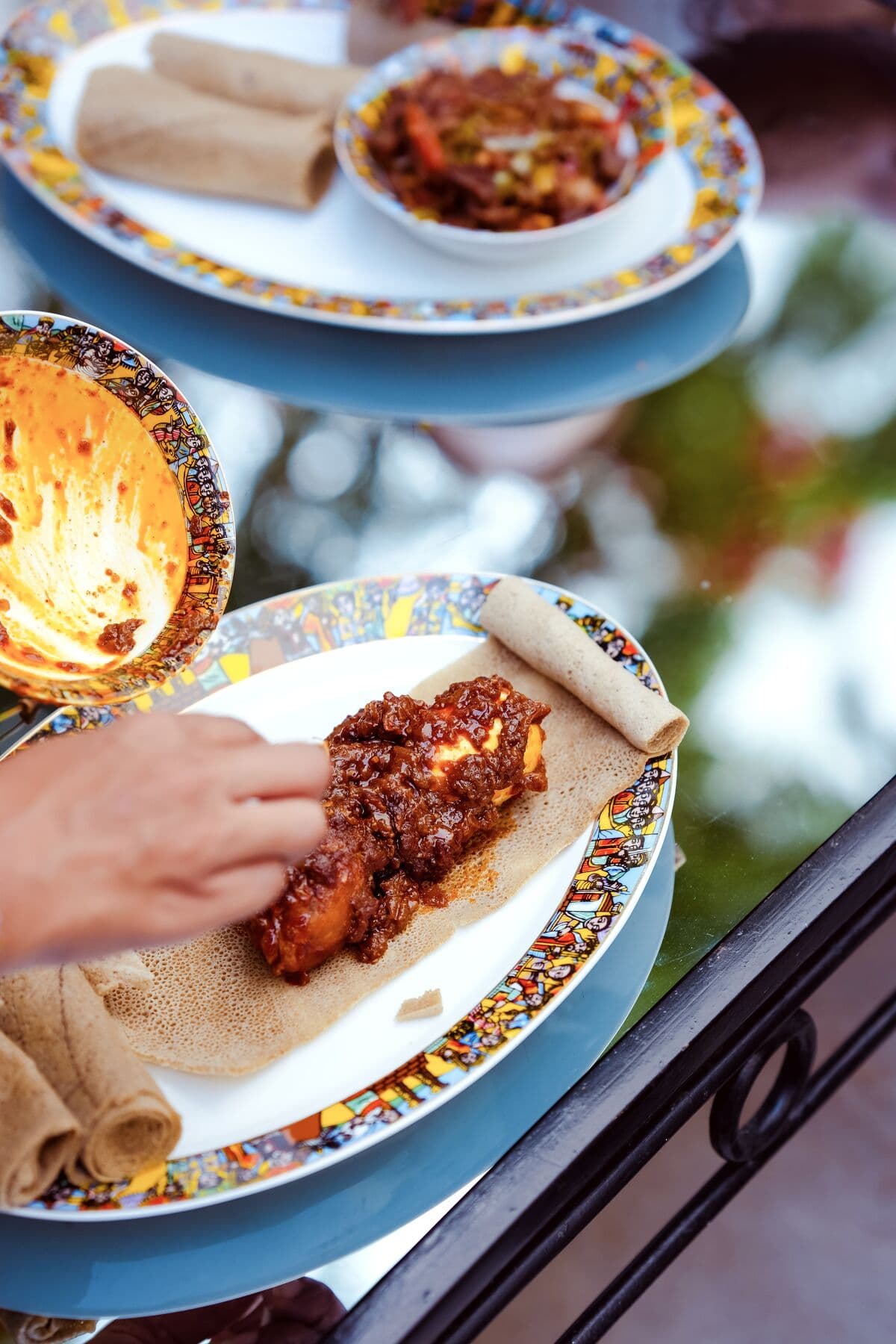
Even fully vegan, this meal keeps the spirit of the Ethiopian table: everything lands on the injera, and everyone helps themselves by hand, without cutlery. For a festive table, that way of sharing strengthens the connection between guests as much as what is on the plates themselves.
Frequently asked questions
What are the seven dishes that make up the beyaynetu?
Shiro wot, misir wot, fosolia tibs, gomen, key sir, tikil gomen and alicha ater kik, all vegan and made without butter.
How much does a beyaynetu cost for one person?
7,000 F; prices for two or three people are not listed and should be asked of the team.
Why does Ethiopian cooking include so many vegan dishes?
Because of the many fasting days prescribed by the Ethiopian Orthodox Church, including the forty day fast that precedes Genna.
Can meat be added to a mostly vegan festive table?
Yes, meat-eating guests can order a separate dish without complicating the rest of the table's order.
Should a fully vegan festive meal be booked ahead?
Yes, check the menu on /en/restaurant, then book a table Tuesday to Sunday, 8am to 10pm.