
Food · 6 October 2026
Gluten-Free Restaurant in Dakar: Injera and Precautions
Eating gluten-free in Dakar at Ge'eza: the menu presents injera as naturally gluten-free. Which dishes suit, which to avoid, and why to tell the team if you have coeliac disease.
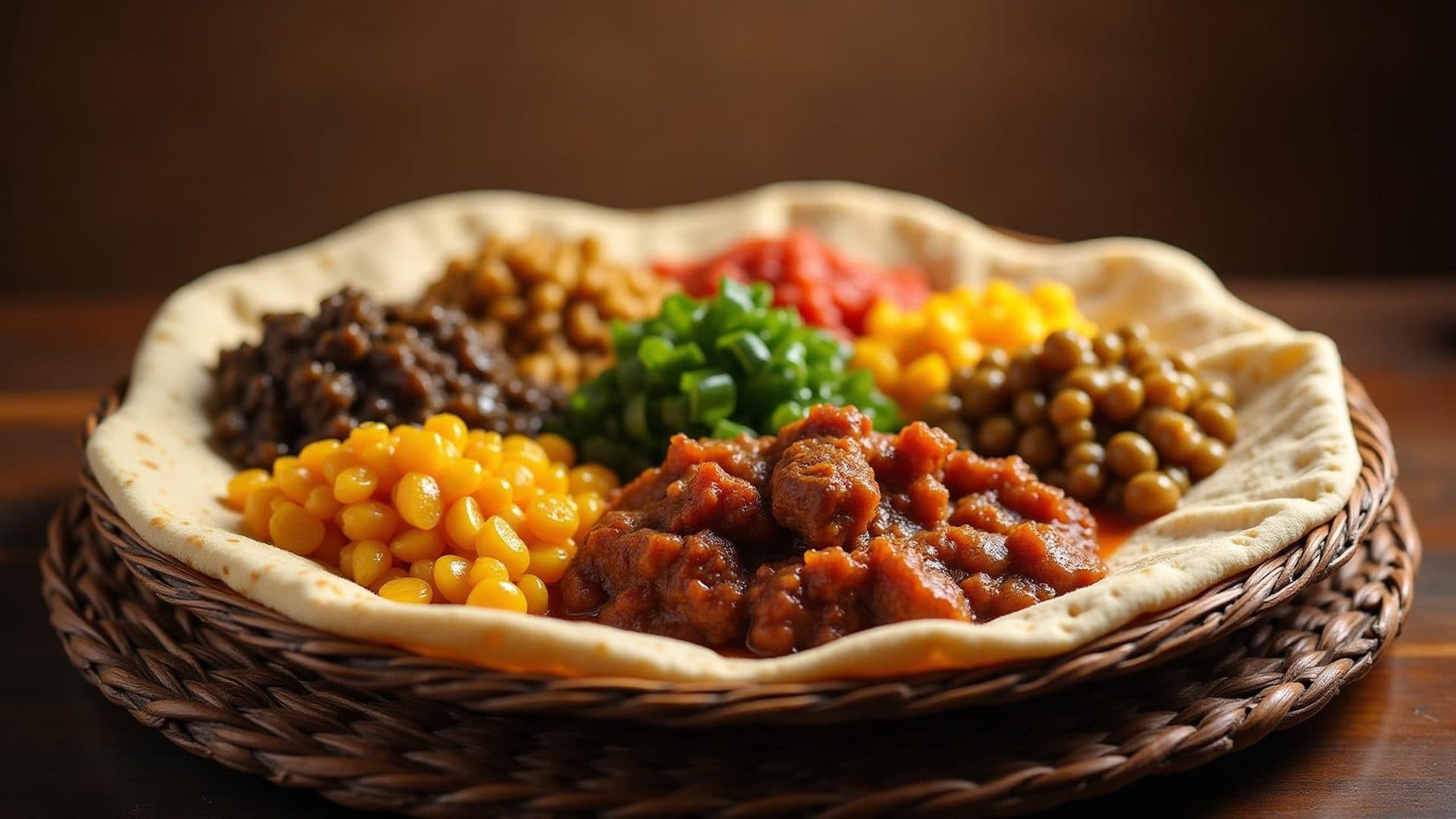
At Ge'eza the menu presents injera, the Ethiopian flatbread on which dishes are served, as naturally gluten-free. That makes Ethiopian food more accessible to people who avoid gluten than many menus. But "naturally gluten-free" is not a medical guarantee: if you have coeliac disease or a severe allergy, tell the team before ordering. The restaurant is at 656 avenue Birago Diop in Point E, Dakar, Tuesday to Sunday, 8am to 10pm.
What the menu says, and what it does not
The menu states that the vegetarian dishes, the fasting dishes, are served on injera, "our traditional fermented flatbread, naturally gluten-free". That is the only mention of its kind. The menu does not speak of a dedicated kitchen, separate utensils or certification: it describes a characteristic of the bread.
In practical terms, here is what to keep in mind.
- The menu presents the injera as naturally gluten-free.
- The menu does not guarantee the absence of gluten traces in every dish or preparation.
- For someone with coeliac disease or an allergy, the only reliable step is to tell the team, who can answer precisely about what they prepare.
Why injera is associated with gluten-free eating
Injera is traditionally made from teff, a very small ancient grain grown in Ethiopia, which contains no gluten. The batter ferments for several days, which gives the bread its light acidity and soft texture. To understand this grain, read teff, Ethiopia's ancient grain.
However, in some kitchens injera is made with other flours for reasons of cost or availability. That is why it helps to rely on what the menu states and to put your questions on the spot.
Dishes that suit most naturally
Ge'eza's vegan fasting dishes rest on pulses, vegetables and spices, served on injera. They stray furthest from gluten-bearing grains.
- Shiro Wot, 5,500 F: ground chickpeas in berbere sauce.
- Misir Wot, 5,500 F: red lentils with turmeric and garlic.
- Gomen, 5,000 F: collard greens sautéed with garlic and onion.
- Key Sir, 5,000 F: slow-cooked beetroot.
- Fosolia Tibs, 5,000 F: green beans and carrots with spices.
- Tikil Gomen, 5,500 F: cabbage with turmeric, garlic and olive oil.
- Alicha Ater Kik, 5,500 F: split peas with turmeric.
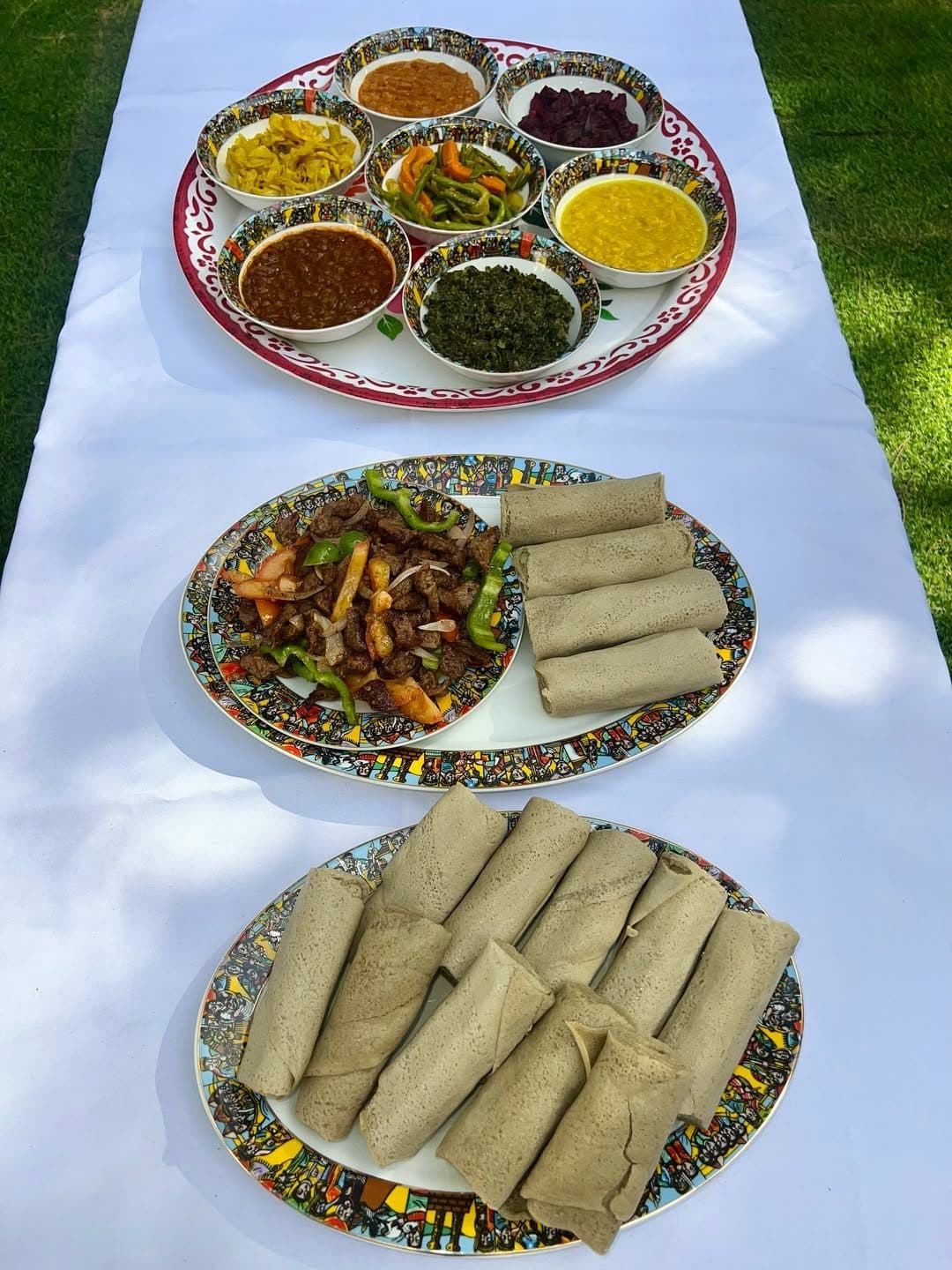
- Beyaynetu, from 7,000 F for one person: the seven fasting dishes on one large injera.
The meat dishes, such as doro wot (8,000 F), siga wot (8,000 F), tibs (8,000 F) or kitfo (9,000 F), are also served on injera. Their composition depends on seasonings and sauces that the menu does not detail from a gluten point of view: ask the team.
Dishes to look at closely
Some items on the menu are not presented as gluten-free. It is better to treat them with caution.
- Foul, at breakfast, is served with French bread.
- Chechebsa is made from crumbled flatbread.
- Genfo is a barley porridge, and barley is a grain that contains gluten.
- Sambusas are pastries, fataya a fritter, baklava a sweet pastry: their doughs are preparations the menu does not detail.
- Dabo, the homemade Ethiopian bread served with honey, is a bread.
- The international menu (pizzas, burgers, sandwich) is built on breads and doughs.
This list is not an ingredient analysis, just a signal of caution. If a dish interests you, it is for the team to answer.
The coffee ceremony and drinks
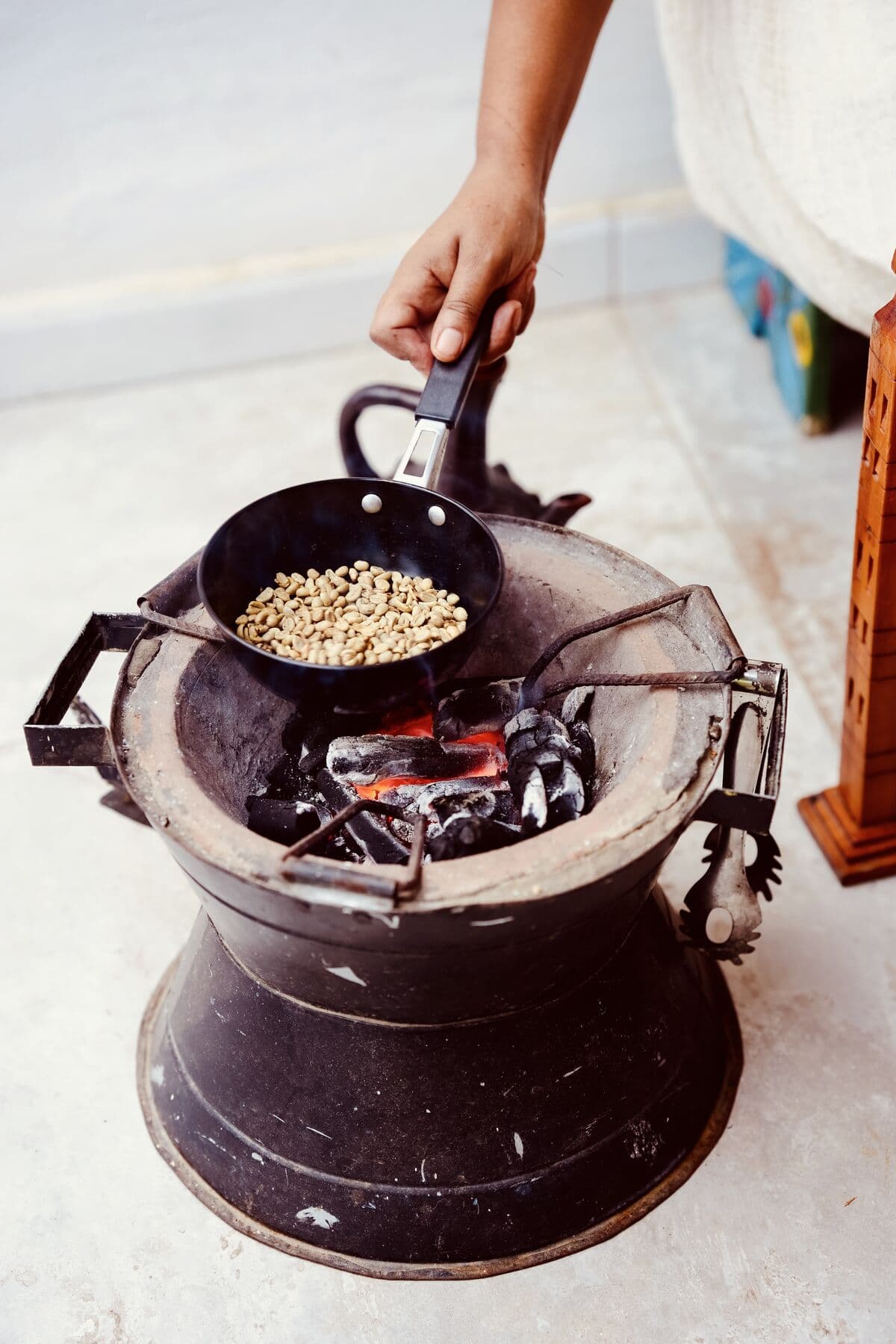
Drinks are simpler: coffee, tea, homemade juices (bissap, bouye, ginger), tej and birz are drinks for which the menu mentions no gluten. If it is an allergy, though, confirm with the team. For the coffee ceremony, at 5,000 F per person, the dabo that goes with it is bread: you can ask not to have it.
How to order with peace of mind
A few simple steps.
- Tell the team when you book or on arrival, for example on WhatsApp at +221 78 660 07 07.
- Say whether it is a choice or coeliac disease or an allergy, so the answer fits.
- Ask how the dish is made up: sauce, sides, bread.
- Avoid eating from a shared dish if someone at the table must avoid all contact with gluten: ask for a separate plate.
For a group, the beyaynetu is practical: it is vegan, made without butter, and ordered for 1, 2 or 3 people. All the details on this dish are in beyaynetu.
Coming to Ge'eza
Ge'eza is an Ethiopian restaurant, an art gallery and a cultural venue in a villa in Point E. To see the whole menu with prices, visit the restaurant page. To book, here: book a table.
A word on shared tables
Ethiopian meals are shared: a large injera in the middle, dishes set on it, and several hands reaching in. For someone who must avoid all contact with gluten, this matters. If you are in a group, ask for your own plate or your own section of injera, and say so before the meal begins rather than in the middle of it. The team can then organise the service for the whole table. This is not a complication: it is the kind of request a restaurant expects.
Frequently asked questions
Is Ge'eza's injera gluten-free?
The menu presents it as naturally gluten-free. If you have coeliac disease or an allergy, tell the team to get details on the preparation.
Which dishes should I choose if I avoid gluten?
The vegan fasting dishes served on injera, such as shiro, misir or the beyaynetu, are closest to this need. Ask the team to confirm.
Which dishes should I avoid?
Those built on bread, pastry or barley: foul with French bread, chechebsa, genfo, sambusas, baklava, dabo, and the international menu.
Can total absence of gluten be guaranteed?
The menu does not state it. That is why you should speak to the team, especially in case of coeliac disease.