
Food · 6 October 2026
Firfir: Injera Soaked in Wot, Vegan or With Tibs
Firfir is torn injera soaked in a spiced wot sauce. The vegan version is 5,500 F, the Tibs Firfir 9,000 F at Ge'eza: how they differ and how to eat them.
Firfir is an Ethiopian dish made of injera torn into pieces and soaked in a spiced wot sauce. The Ge'eza menu calls it comfort food at its finest. It comes in two versions: the vegan Firfir at 5,500 F and the Tibs Firfir, with sautéed meat, at 9,000 F. The restaurant is at 656 avenue Birago Diop in Point E, Dakar, open Tuesday to Sunday, 8am to 10pm.
The principle: bread turned into a dish
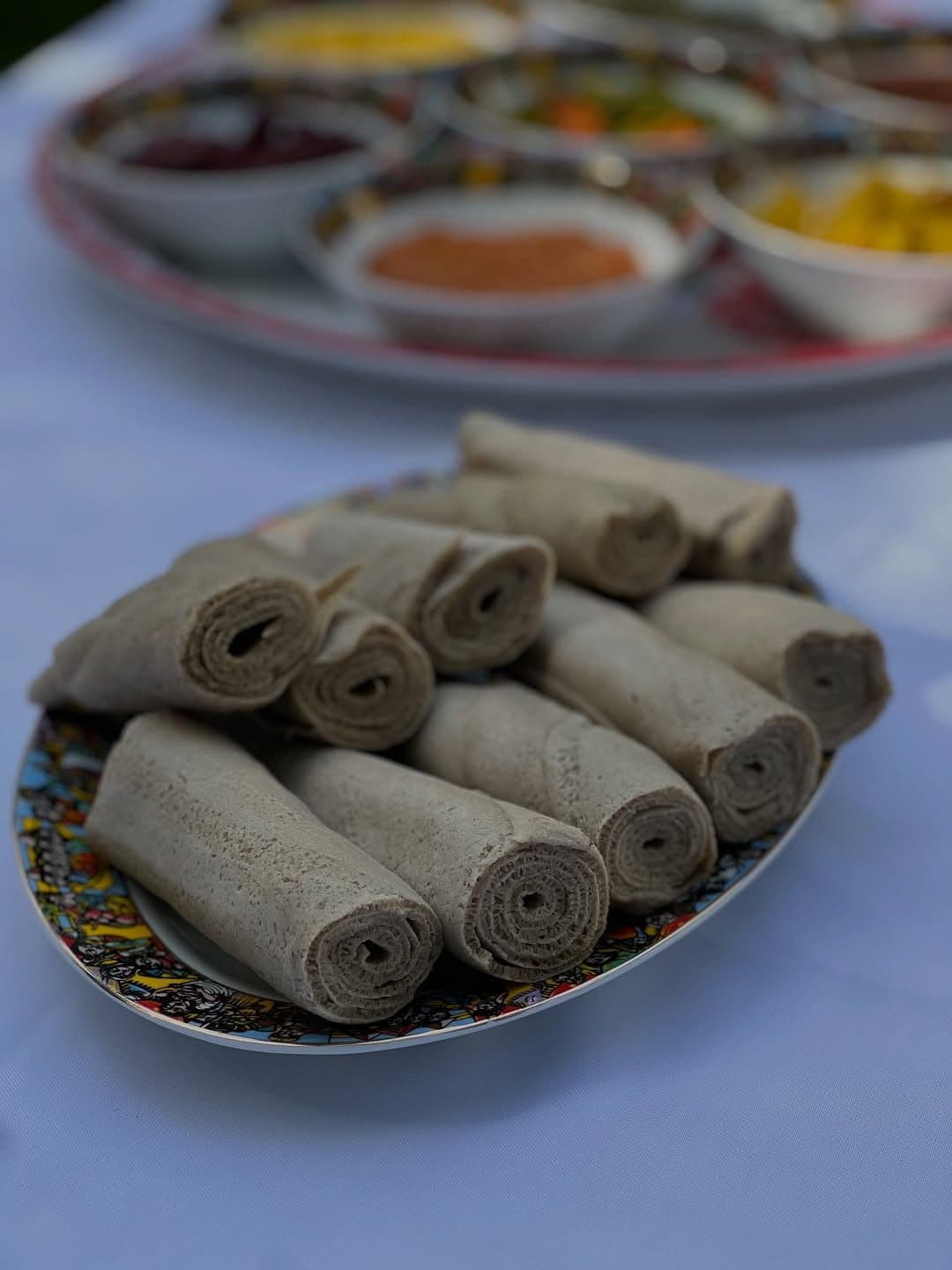
Injera is that large fermented flatbread, soft and spongy, that serves as plate and cutlery. Firfir makes it the main ingredient. The injera is torn into small pieces, simmered or soaked in a spiced sauce, and the bread drinks the sauce until it turns tender, fragrant, almost melting.
A commonly given explanation is that it uses up the previous day's injera: the bread has stiffened slightly, and the sauce gives it a second life. Whether or not that origin holds in every household, the idea has stuck: nothing is wasted, and the result is better than you might expect. To understand the bread itself, see injera explained.
The vegan Firfir, 5,500 F
In the vegetarian section of the menu, Firfir is described as torn injera soaked in a spiced wot sauce, a comfort dish. It is one of the house's vegan dishes, which are made without butter.
What you find on the plate: a hot mass, brown to reddish, in which you can pick out pieces of bread. The taste is that of the wot soaking it, with the slight acidity of injera in the background. The texture sits between soaked crumb and savoury pudding, which can surprise the first time, then wins you over. The dish suits anyone who likes deep flavours and soft textures.
Tibs Firfir, 9,000 F
Tibs Firfir goes further: the injera is soaked in the juices of the sautéed meat, lifted with berbere spices. The menu calls it a dish that brings everything together, and lists it among the house signatures. You get the seared meat, onions, tomatoes and herbs of tibs, together with the softness of the soaked bread. For the sautéed side, see the page on Ethiopian tibs.
The price gap between the two versions is 3,500 F. Tibs Firfir is a complete, generous dish that shares well between two with a starter or a drink.
Firfir at breakfast?
Ethiopian cuisine has a whole family of crumbled-bread dishes. At breakfast, Ge'eza's menu offers chechebsa at 4,500 F, flatbread crumbled and tossed with berbere and spiced butter, finished with honey. The principle is close to firfir, but chechebsa is eaten in the morning, from 8am to 11am. For the rest of the Ethiopian breakfast, read Ethiopian breakfast.
How to eat firfir
Firfir is eaten by hand with injera, or straight with the fingers, depending on its consistency. Most often you pick up a mouthful with a piece of fresh injera that acts as a spoon. The contrast between the fresh, slightly elastic bread and the soaked bread is the whole point of the dish.
In a group, you take from your own side and offer each other mouthfuls, the gursha gesture. If the dish is hot, wait a second before biting: it holds its heat a long time.
What to pair it with
A few ideas from the menu.
- A gomen at 5,000 F, collard greens sautéed with garlic and onion, to refresh a dense dish.
- A key sir at 5,000 F, slow-cooked beetroot, for sweetness.
- A clear drink: bissap at 1,500 F or ginger juice at 1,500 F.
- An Ethiopian macchiato at 2,500 F to finish.
If you come with others, a firfir and a beyaynetu from 7,000 F give a nice variety: one is a single deep dish, the other a colourful sample of seven fasting dishes. Everything on the second is in beyaynetu.
For whom, and when
Firfir is comfort food. It suits a cool day by Dakar standards, a long lunch, a meal where you want something hot and reassuring. The vegan version helps mixed tables: vegetarians and vegans can order it without asking for adjustments, since the menu says the fasting dishes are vegan and butter-free.
The menu presents the injera as naturally gluten-free. If you have coeliac disease or an allergy, tell the team when you order and ask for details on the preparation, especially the sauce.
Coming to Ge'eza
Ge'eza is an Ethiopian restaurant, a contemporary art gallery and a cultural venue in a villa, with a gallery lounge, a glass-roofed room and a terrace under the trees. See the restaurant page for the full menu, or book a table for evenings and weekends.
A word on portions and sharing
Firfir is a dense dish: the bread absorbs the sauce, so a little goes a long way. For one person, a Firfir at 5,500 F can be a full meal. For two, one Firfir and a lighter dish such as a gomen at 5,000 F, which makes 10,500 F, balance each other well. If you want to taste the meat version, Tibs Firfir at 9,000 F is comfortable between two people alongside a starter of sambusas.
Frequently asked questions
What is firfir?
Injera torn into pieces and soaked in a spiced wot sauce. It is a comforting dish of Ethiopian cooking.
Is firfir vegan?
The Firfir on the menu is listed among the house's vegan dishes, at 5,500 F. Tibs Firfir, at 9,000 F, contains meat.
What is the difference with Tibs Firfir?
Tibs Firfir soaks the injera in the juices of sautéed meat, lifted with berbere spices. The vegan Firfir uses a spiced wot sauce with no meat.
Is firfir spicy?
It is as hot as the sauce that soaks it, with berbere in the case of Tibs Firfir. Ask the team for advice if you want less chilli.