
Art · 22 October 2026
The Dakar School: Background on This Senegalese Painting Movement
The Dakar School refers to a generation of painters encouraged in the years after Senegal's independence, under President Leopold Sedar Senghor, around a painting style mixing abstraction and local signs.
The Dakar School refers to a generation of Senegalese painters encouraged in the years after the country's independence in 1960, under President Leopold Sedar Senghor, who pursued a deliberate cultural policy treating art as a field for national self-definition. The term covers artists whose work often blends abstraction with signs and symbols drawn from local culture, in a search for a visual language specific to the newly independent country.
A cultural policy built around art
After 1960, the Senegalese state actively supported the arts, treating culture as a pillar of the young country's construction. That period saw the emergence of a generation of painters looking for a visual language that did not simply replicate Western schools, but drew on local references reworked into a resolutely modern kind of painting. Abstraction, graphic signs and symbols became tools for building this new visual identity.
The 1966 World Festival of Black Arts
The movement reached a high point with the World Festival of Black Arts, held in Dakar in 1966, which brought together artists, writers and intellectuals from across the continent and its diaspora. The event positioned Dakar as a cultural hub for Africa and helped bring this generation of painters to wider attention beyond Senegal. The guide on the 1966 World Festival of Black Arts covers the event and the place it still holds in Dakar's cultural memory.
A legacy that reads in today's painting
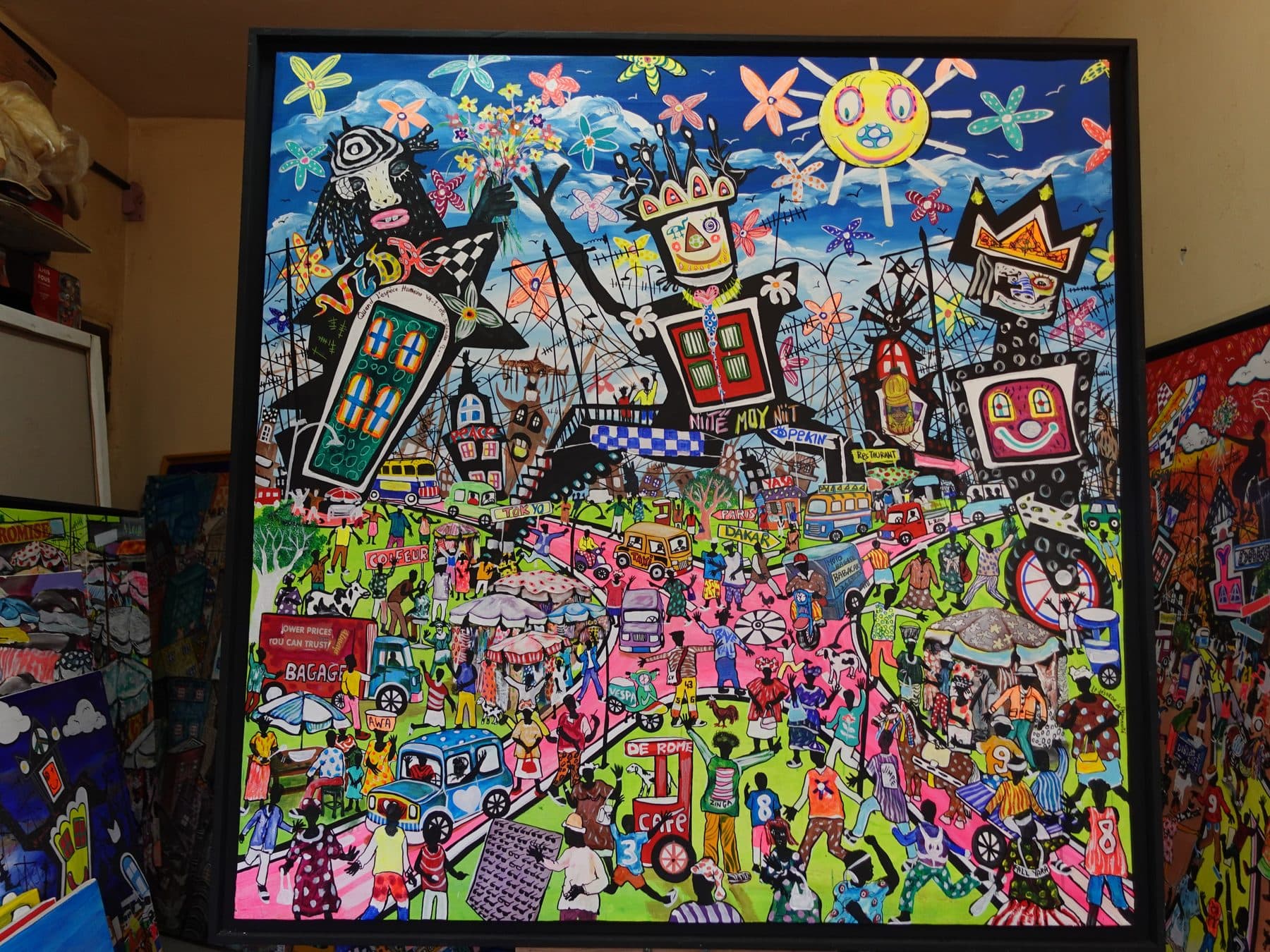
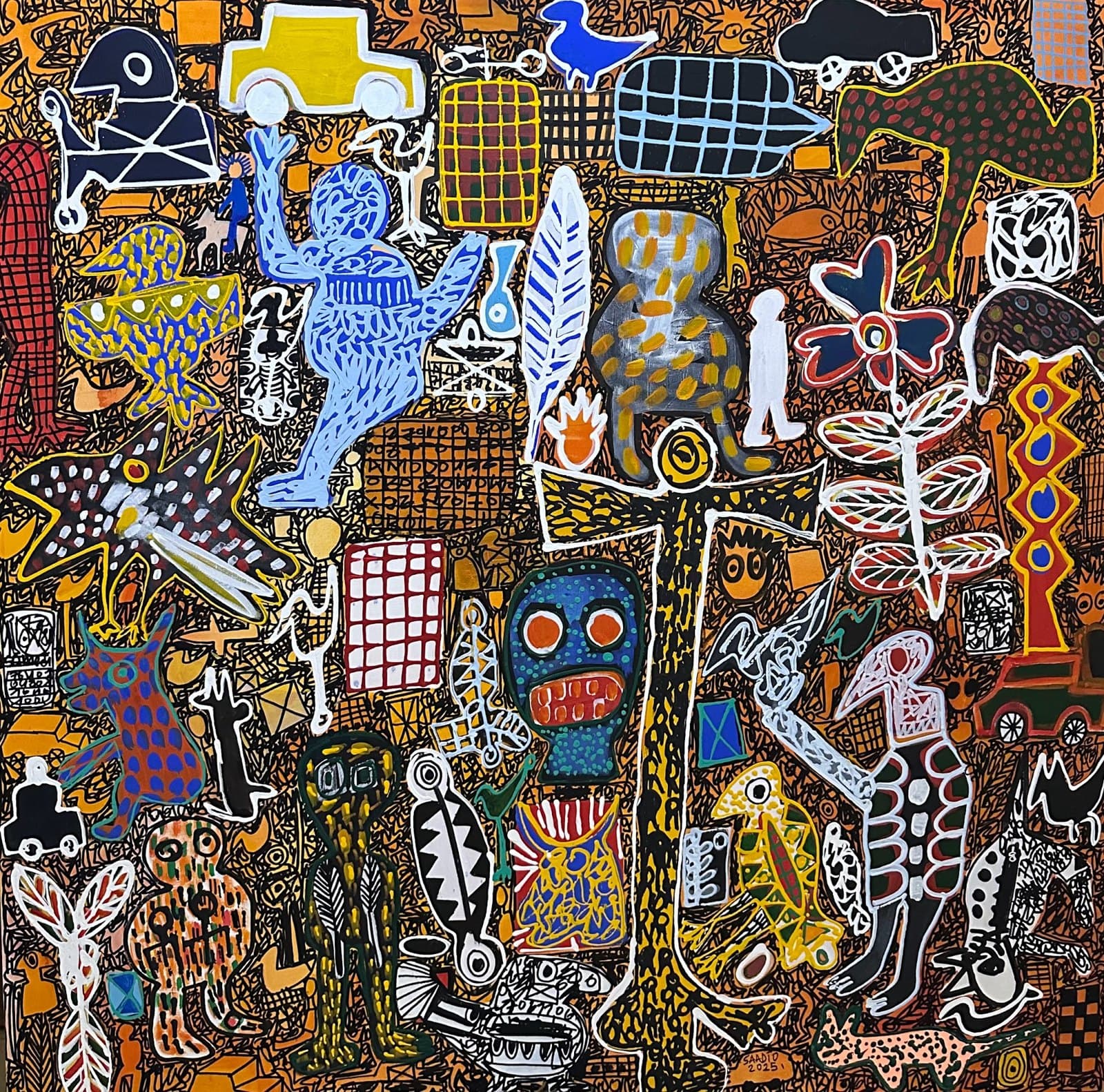
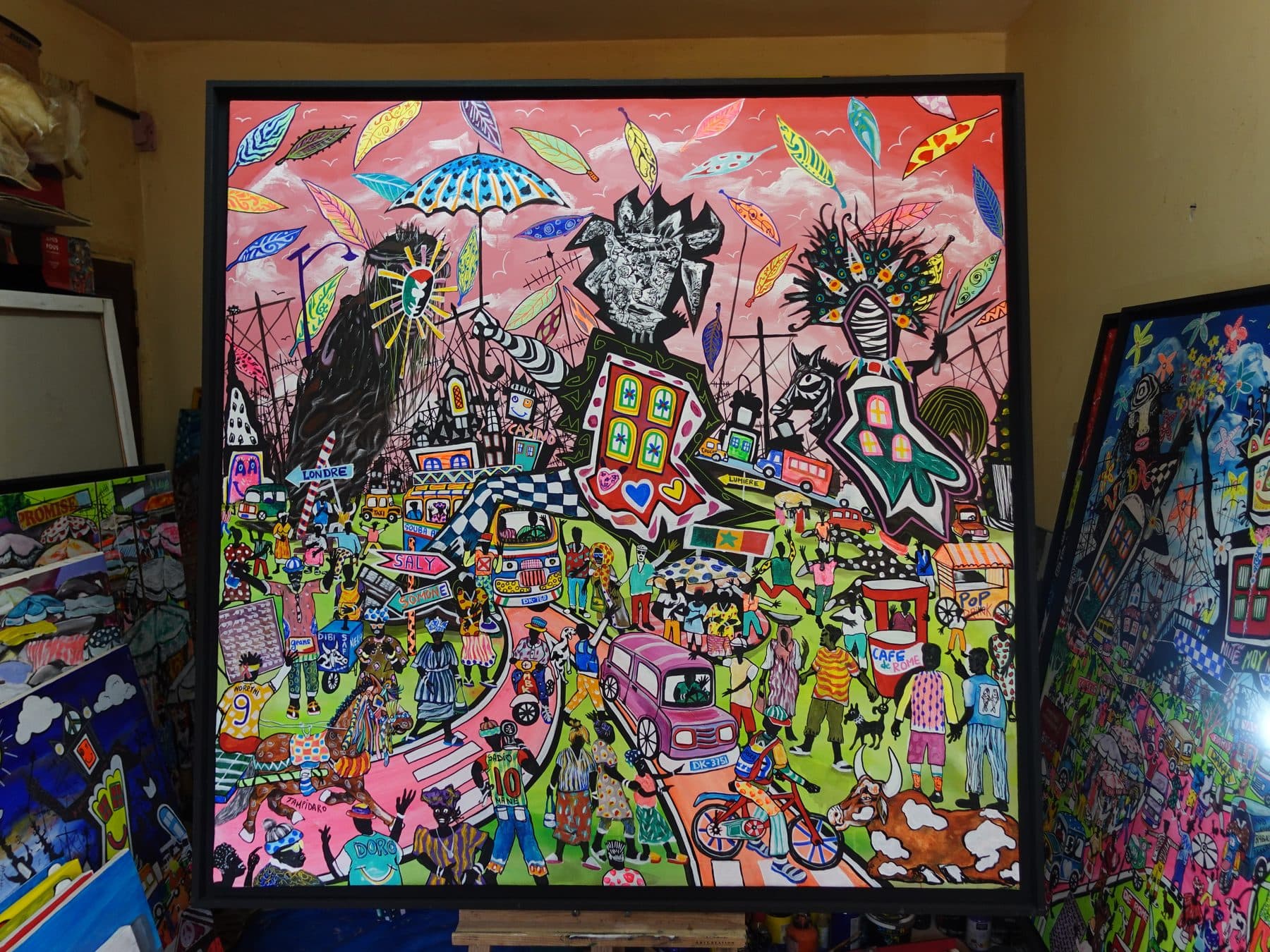
Today's Senegalese painters do not necessarily claim the Dakar School label in a strict sense, but the period left a lasting mark: the idea that Senegalese painting can explore its own language, between figuration, abstraction and graphic signs, without simply following a single imported tradition. That same freedom of language shows up, each in their own way, in the artists currently shown at Ge'eza's gallery. Saadio builds a dense graphic language, mixing signs and figures in mixed media, acrylic and Posca. Tampidaro builds his compositions in mixed acrylic around urban Dakar. Ibou Diagne works in oil and acrylic around scenes of everyday life. Three different approaches, showing the diversity of a scene that keeps renewing itself.
Part of a wider continental conversation
The Dakar School also fits within a broader reflection on African identity and culture in the decades following independence across the continent, a current that shows up elsewhere in different forms. The guide on pan-Africanism and contemporary art looks at this dialogue between East and West Africa through artistic creation.
Seeing this legacy at the gallery
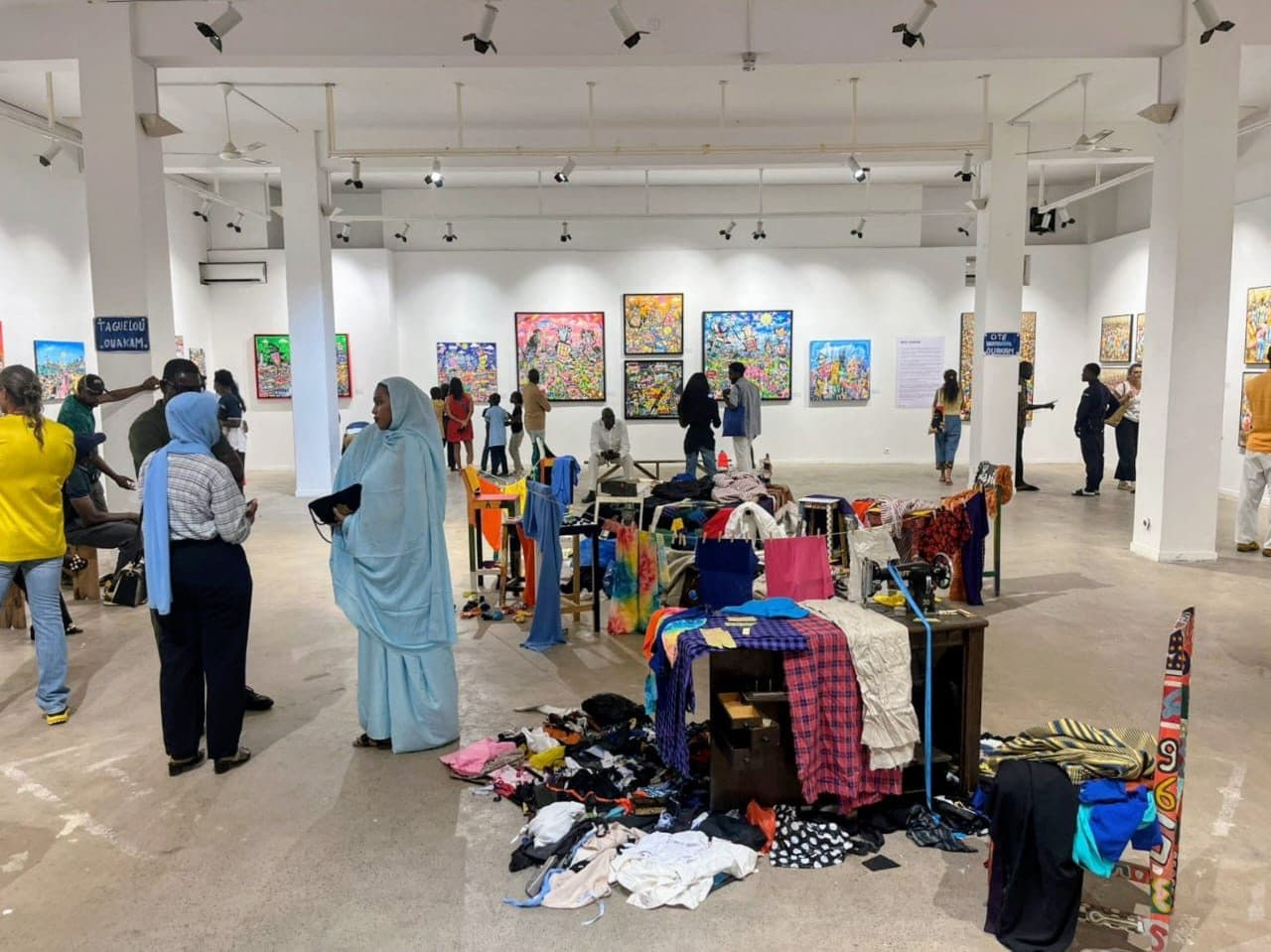
For anyone curious to see how this freedom of language continues today, Ge'eza's gallery, at Point E, shows work by Ibou Diagne, Saadio and Tampidaro, three artists brought together for the exhibition "Lien commun" at the IFAN Théodore Monod Museum in October 2025. The guide on buying Senegalese contemporary art covers how to take home a piece from this generation, from choosing the canvas to receiving it.
A movement, not a school in the strict sense
The term "Dakar School" can be a little misleading, since it does not describe a specific teaching institution, but rather a generation of artists grouped together by an era and by the political context in which they worked. That distinction matters: it explains why painters associated with this period did not all follow the same path, but share the fact of having created work in a Senegal that was, at the end of colonial rule, looking to define its own cultural place on the international stage. Understanding that nuance helps place the term without turning it into a stricter label than it really is.
Why this reference point still matters today
Even for someone discovering contemporary Senegalese painting with no knowledge of this history, the Dakar School offers a useful starting point: it is a reminder that this scene did not emerge from nowhere, and that it carries forward an already long-running reflection on what modern African painting can be, freed from relying solely on Western references. Keeping that reference in mind, without treating it as a required lens for appreciating a piece, makes it possible to approach today's artists with a bit more context, without trying to force their work into a category inherited from another era.
A diversity visible in dimensions and years
Looking at today's artists through the dimensions and years of their work, rather than through a biographical narrative, gives a concrete sense of this inherited freedom: formats ranging from 50 by 50 cm to 180 by 120 cm, production years spanning from 2021 to 2025 for some pieces, and techniques running from classic oil painting to mixed media on kraft paper. That range, visible directly on the pages online, says a lot about what it means today to explore a language of one's own, free from a single required style.
Taking it further
For any question about an artist or about this chapter of Senegalese painting history, Ge'eza's team answers over WhatsApp at +221 78 660 07 07 or by email at geezacultures@gmail.com. The gallery is open during restaurant hours, Tuesday to Sunday, 8am to 10pm.
Frequently asked questions
What is the Dakar School?
A generation of Senegalese painters encouraged after the country's 1960 independence, under President Leopold Sedar Senghor, around a painting style mixing abstraction and local signs.
How does the Dakar School connect to the 1966 World Festival of Black Arts?
The festival, held in Dakar that year, helped bring this generation of painters to wider attention beyond Senegal and established the city as a cultural hub.
Do the artists shown at Ge'eza claim the Dakar School label?
They do not claim the name itself, but their work carries forward, each in their own way, that same freedom of language between figuration, abstraction and graphic signs.
Where can I see work from this current generation in Dakar?
At Ge'eza's gallery, at Point E, which shows work by Ibou Diagne, Saadio and Tampidaro.