
Art · 22 October 2026
What Is Contemporary African Art?
Contemporary African art covers living artists from the continent and its diasporas, moving past the old label of tribal art. A plain explanation of the term, with examples from Ge'eza's gallery.
Contemporary African art refers to the current work of living artists from the continent or its diasporas, across every medium: painting, sculpture, photography, video, installation, textile, performance. The term took hold to move past an older label, "tribal art," which reduced African production to anonymous, timeless objects rather than work signed by artists of their own era.
Moving past the "tribal art" label
For a long time, outside the continent, African art was mostly seen through the lens of ritual or ceremonial objects, often shown without an artist's name, as if belonging to a fixed, undated past. The term "tribal art," now widely rejected, reflected that approach. Contemporary African art flips that view: it foregrounds named artists, working today, with their own intent and practice, the same way any contemporary artist elsewhere in the world would be treated.
Artists from the continent and the diaspora
Contemporary African art is not limited to artists living on the continent. It also includes diaspora artists, born or based outside Africa, who often keep a connection to their family or cultural history while working across very different contexts. That dual belonging, continent and diaspora, is one of the most striking features of the scene today, and it explains the sheer range of styles found within it.
A wide range of techniques and subjects
There is no single style of contemporary African art, despite what the old label sometimes implied. Themes such as memory, the city, identity, the environment, and movement between regions of the continent are explored through very different techniques: oil or acrylic painting, mixed media, sculpture, photography and more. Our article on pan-Africanism and contemporary art looks at how artists from different parts of the continent are in dialogue with one another today.
Concrete examples from Dakar
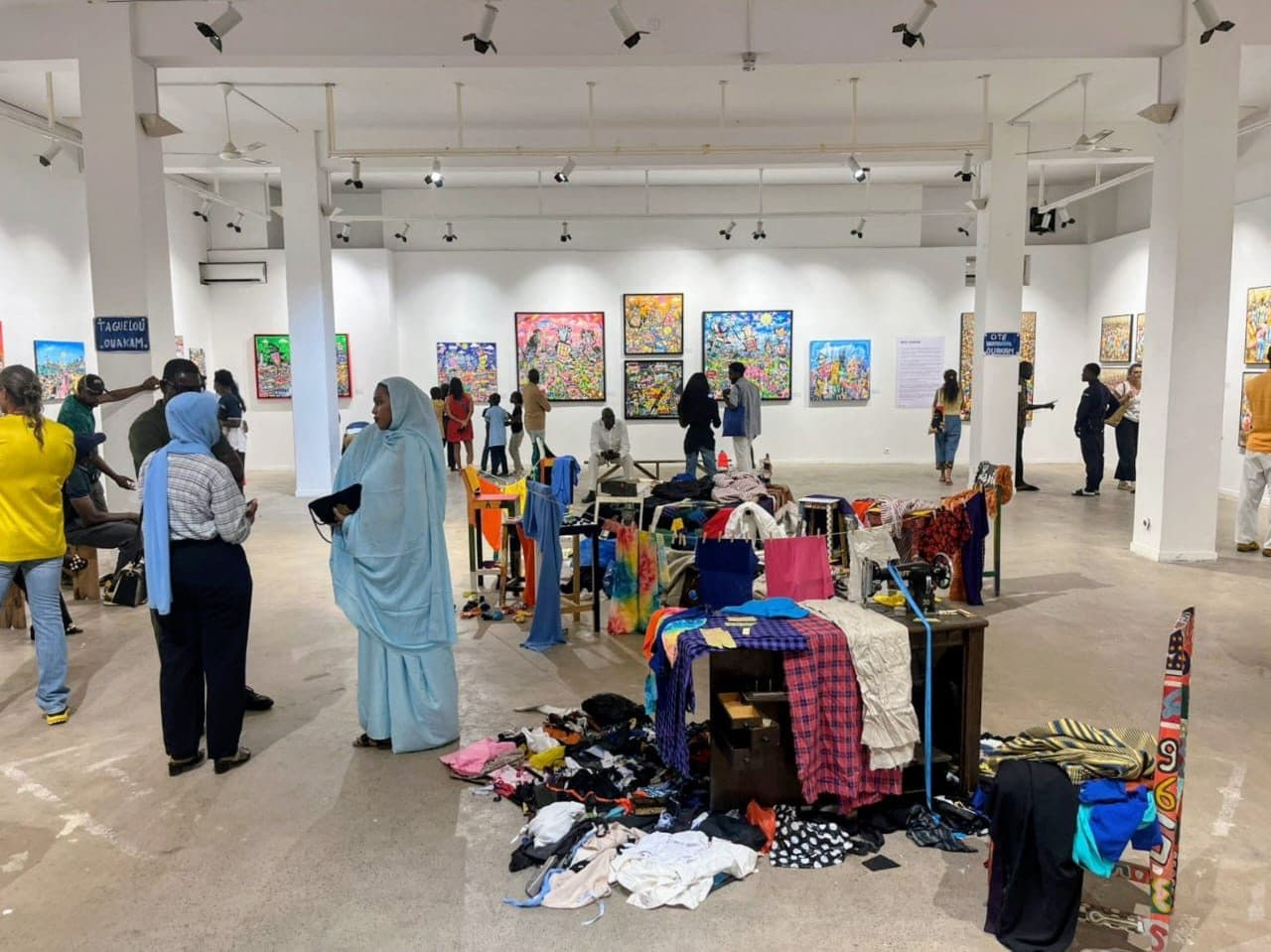
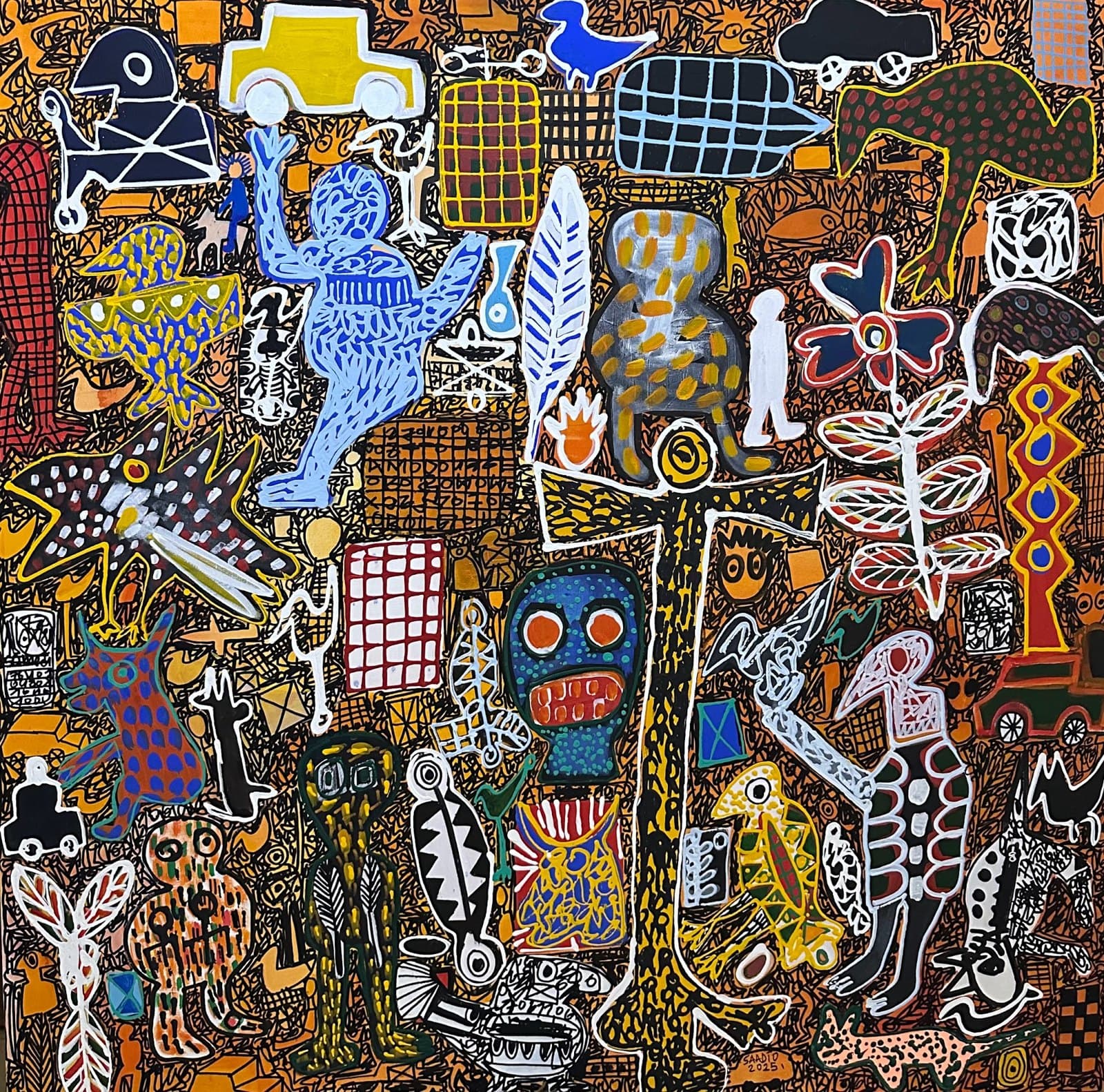
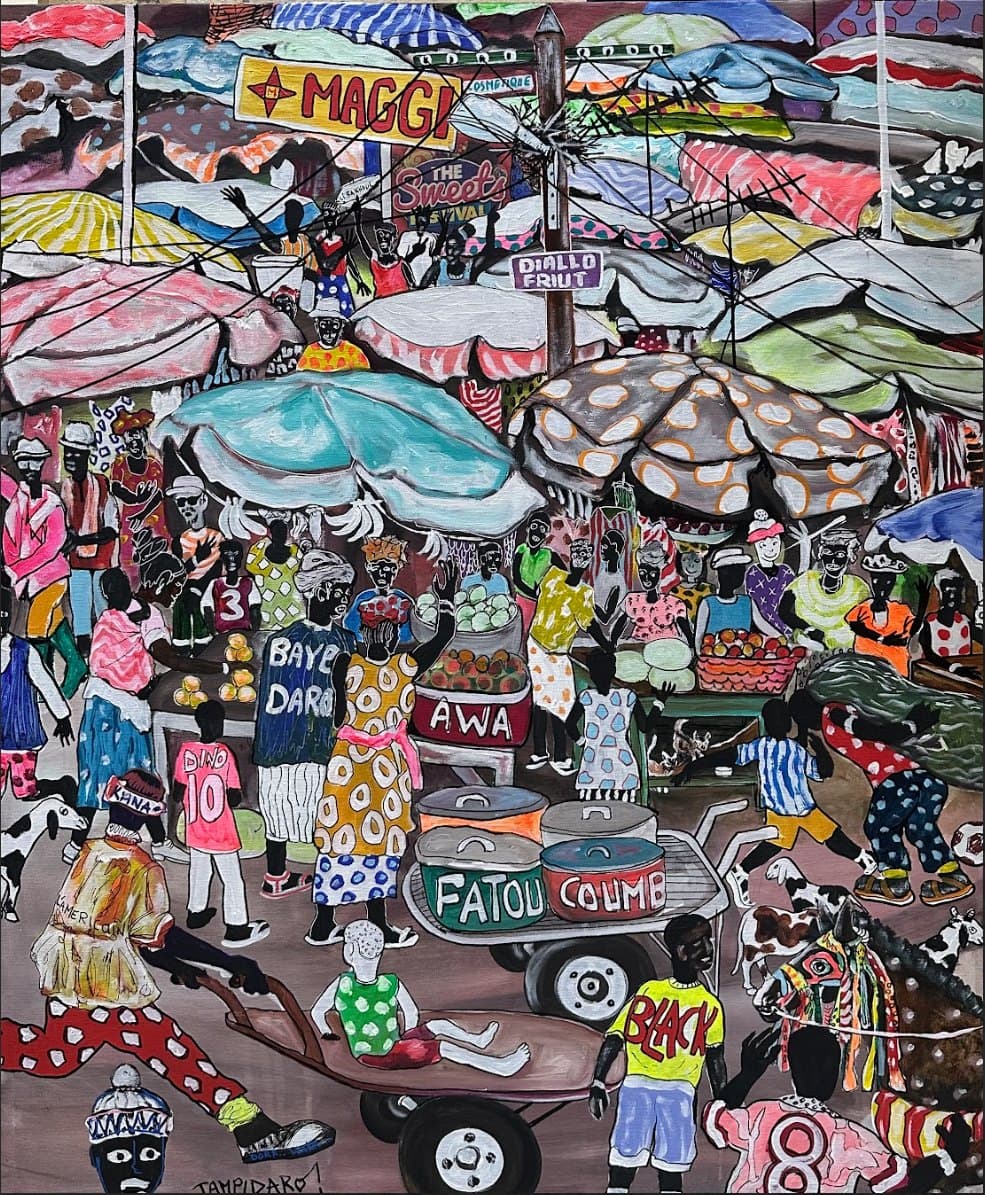
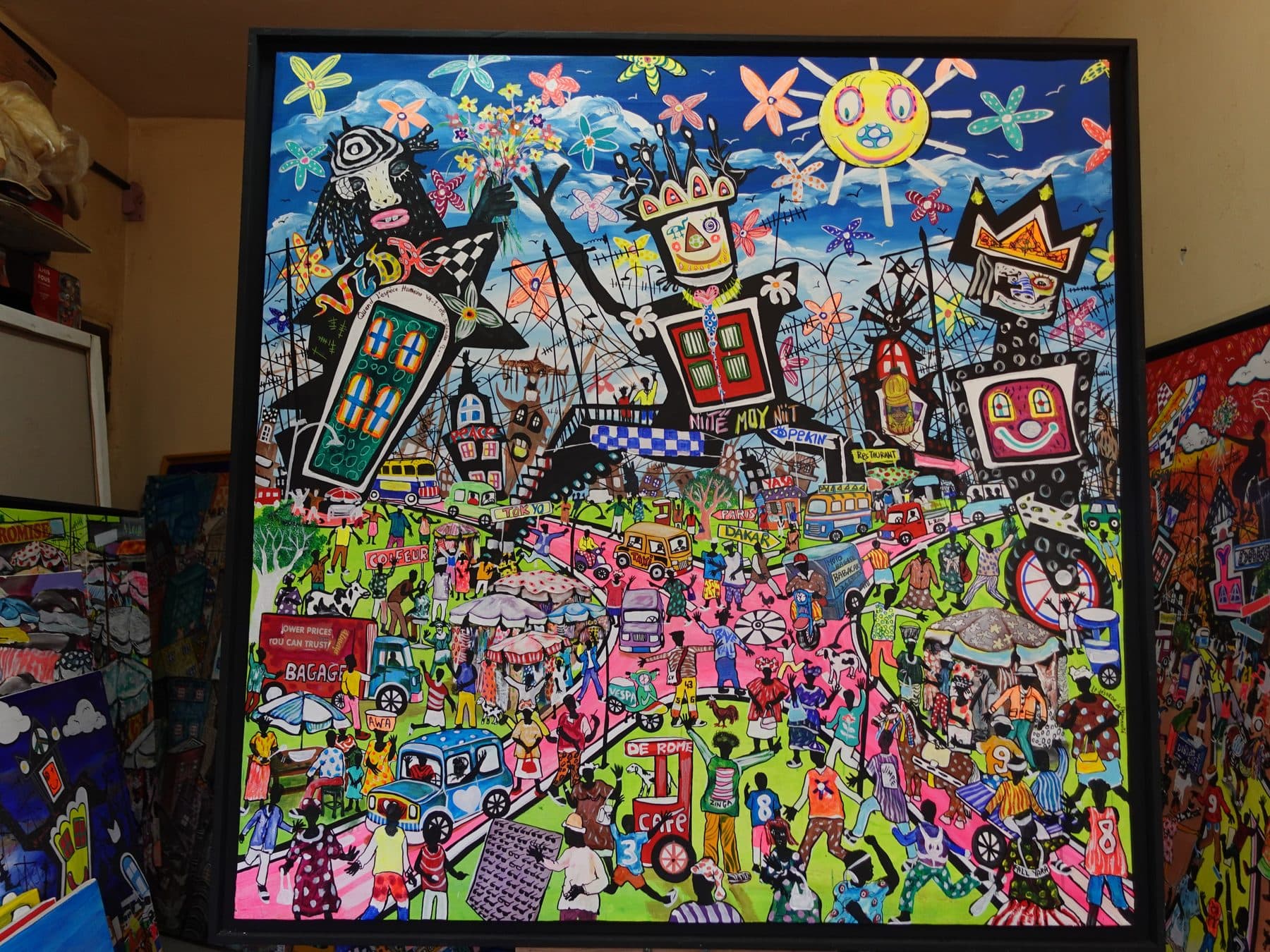
Nothing makes a term clearer than a concrete example. In Point E, Ge'eza's gallery shows work by Ibou Diagne, Saadio and Tampidaro, three living Senegalese artists, all three shown as part of "Lien commun" in October 2025. Ibou Diagne works in oil and acrylic around market scenes. Saadio works in mixed media, acrylic and Posca, on canvas or kraft paper. Tampidaro works in mixed acrylic around the urban side of Dakar. These three very different practices show the range that contemporary African art covers, even within one country and one generation. Our article on artists shown at Ge'eza presents the wider group of creators the gallery has hosted.
A term that keeps evolving
Like many terms used to describe a living artistic field, "contemporary African art" is not fixed once and for all. It keeps widening as new generations of artists emerge, as new techniques join existing practices, and as the dialogue between the continent and its diasporas keeps deepening. That is not a weakness of the term, but a sign of a scene that stays active rather than settling into a single, closed definition.
Why the term matters for a collector
Understanding what contemporary African art covers makes it easier to place what you are looking at and buying. It also helps avoid reducing an artist to their geographic origin rather than their work: a contemporary Senegalese artist is not defined by a fixed tradition, but by a personal practice rooted in their own time. That distinction is useful when talking with a gallery or an artist, and for asking the right questions about a piece that interests you.
Do not confuse technique with origin
One last useful point: a contemporary African artist's technique says nothing by itself about their origin. A Senegalese painter can work in oil like any painter anywhere else in the world; a diaspora artist can use traditional materials without that making their work a piece of "tribal art." It is always better to look at what the artist says about their own practice, through titles, techniques and the context of their exhibitions, rather than assuming a category from a supposed origin.
Seeing the work in person
The best way to understand this term is still to see work in person. Ge'eza's gallery, at 656 avenue Birago Diop in Point E, is open at the restaurant's hours, Tuesday to Sunday, 8am to 10pm, closed Mondays. Works on show are available to buy, with a price given on request from each artwork's page.
Taking the discovery further
If this term interests you more broadly, our article on artists shown at Ge'eza and our guide to pan-Africanism and contemporary art offer other names and reference points, Senegalese and beyond, for exploring the scene further.
Any questions
For more on a piece or an artist shown at the gallery, write on WhatsApp to +221 78 660 07 07 or email geezacultures@gmail.com.
Frequently asked questions
What is contemporary African art?
The current work of living artists from the continent or its diasporas, across every medium, as opposed to the old label of "tribal art."
Does contemporary African art include diaspora artists?
Yes, that is one of its defining features: artists based outside the continent who often keep a connection to their family or cultural history.
Which artists are a good first look at Ge'eza's gallery?
Ibou Diagne, Saadio and Tampidaro, three living Senegalese artists with very different practices, all three shown as part of "Lien commun" in October 2025.
Do you need to book to visit the gallery?
No, it is open freely Tuesday to Sunday, 8am to 10pm.