
Art · 22 October 2026
West African Art Scenes: Dakar, Abidjan, Lagos, Accra
Dakar, Abidjan, Lagos and Accra each have a distinct contemporary art scene, carried by biennales and regular fairs. What sets them apart, and why Dakar is a good place to actually buy a piece.
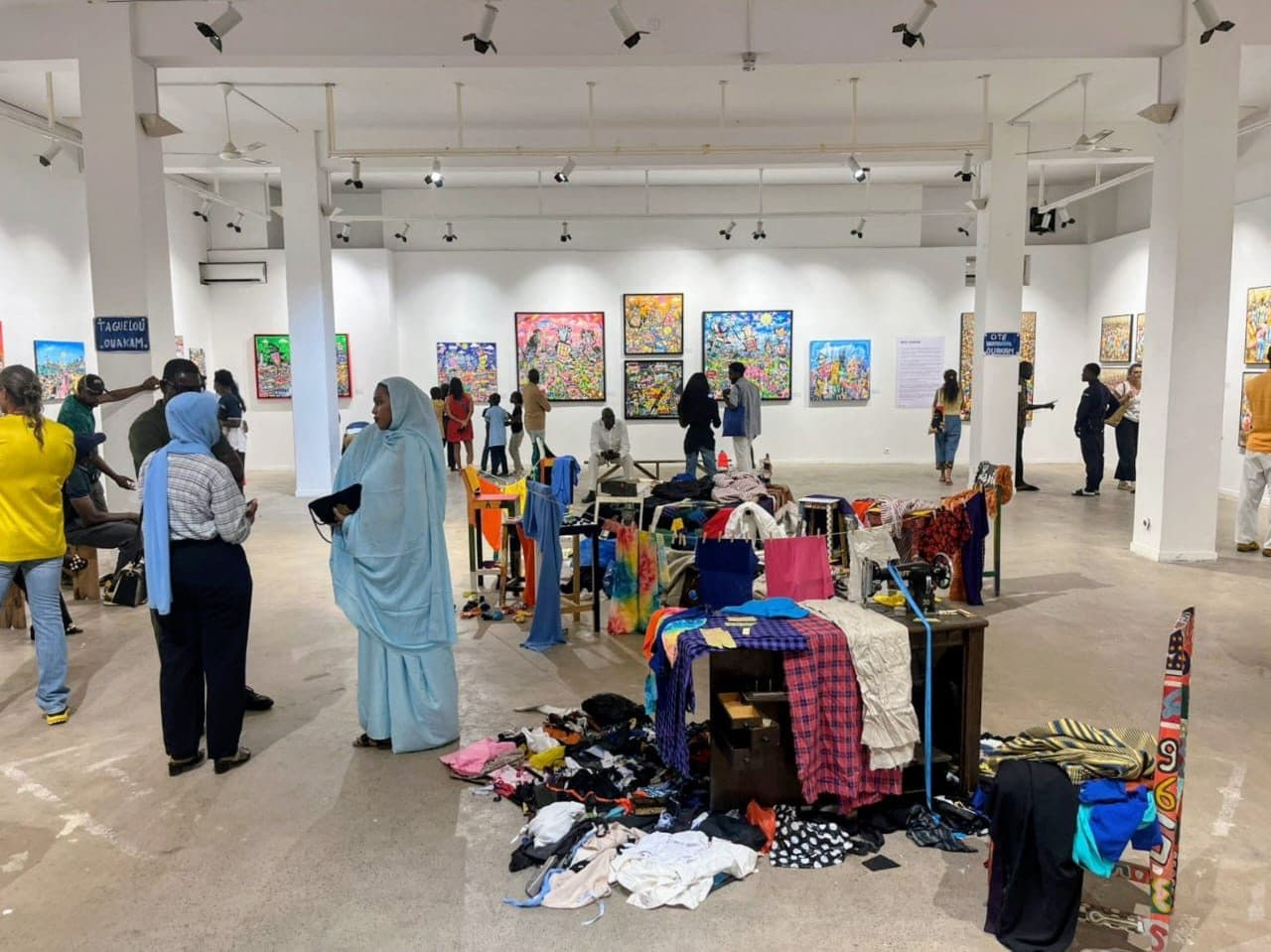
Dakar, Abidjan, Lagos and Accra are four West African capitals or major cities whose contemporary art scenes are now followed well beyond the continent, each with its own history, institutions and calendar. For a collector interested in the region, telling them apart helps make sense of what you are looking at, and Dakar holds a particular place: a city where you can both see and buy art all year round.
Dakar: an old scene, carried by a biennale
Senegal hosted the World Festival of Black Arts in 1966, a founding moment for Dakar's place on the continent's cultural map. The city now holds Dak'Art, the Biennale of contemporary African art, every two years, with its 16th edition announced by the organisers for 19 November to 19 December 2026, under the theme (Anti)fragility. Between editions, the Dakar scene runs on its galleries, artist studios and venues such as Ge'eza's gallery in Point E. Our guide to the Dak'Art Biennale covers the event in more depth and how to experience it as a visitor.
Abidjan: a scene on the rise
Abidjan has seen a growing number of private galleries, artist residencies and active collectors over recent years. The city has established itself as an economic hub for West Africa, and that momentum shows up in its cultural life too, with a scene that draws artists from across the sub-region.
Lagos: the region's biggest marketplace
Lagos, Nigeria's largest city, has one of the densest art scenes in the region, carried by the sheer number of artists, galleries and collectors based there. ART X Lagos, one of the reference contemporary art fairs for West Africa, is held there every year and brings together galleries and artists from several countries on the continent. For a buyer, Lagos often works as a barometer for the contemporary African art market as a whole, alongside major international fairs devoted to the continent, such as 1-54 in London, Marrakech and New York.
Accra: a scene asserting itself
Accra, Ghana's capital, has seen its art scene take shape around a growing number of exhibition spaces and independent initiatives led by younger artists and curators. The city benefits from growing movement of artists and visitors between the region's capitals, carried in part by the fairs and biennales that punctuate the West African calendar.
How these scenes talk to each other
These four cities are not isolated from one another. Artists, curators and collectors move between them more than a map might suggest, following the region's fairs and biennales from one stop to the next. A gallery in Dakar might show an artist who studied or exhibited in Abidjan; a collector based in Lagos might make a point of visiting Accra during a fair week there. That circulation is part of what makes West Africa's art scene feel regional rather than a set of separate national markets, even as each city keeps its own character.
What sets these four scenes apart
Each of these cities has built its identity on a different story: Dakar around an established biennale and a legacy going back to the 1966 Festival, Abidjan around regional economic momentum, Lagos around the sheer size of its market and its fairs, Accra around more recent independent initiatives. For a collector, following several of these scenes at once makes it easier to compare prices, techniques and generations of artists, rather than sticking to a single city.
Why Dakar is a good entry point for buying
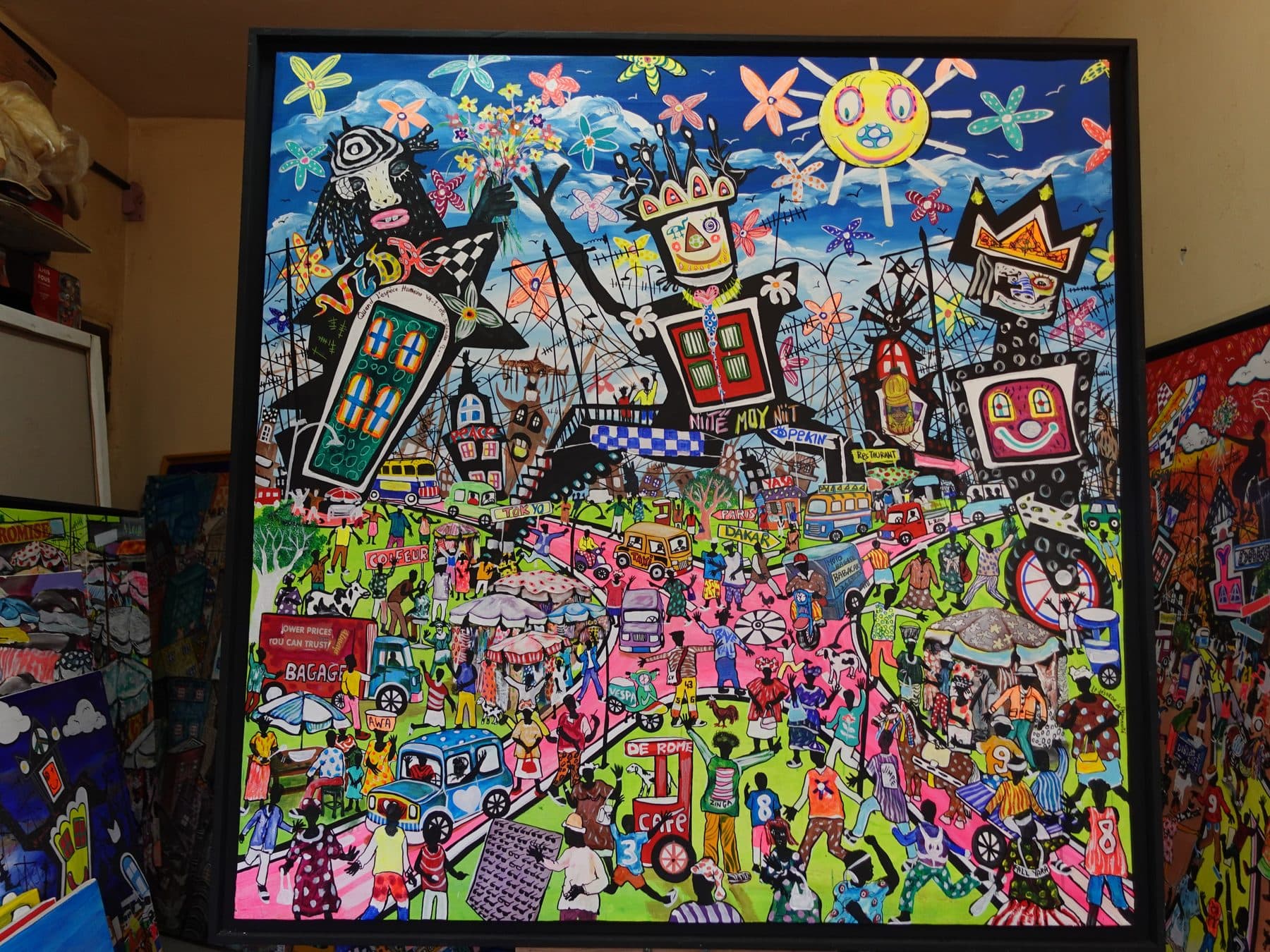
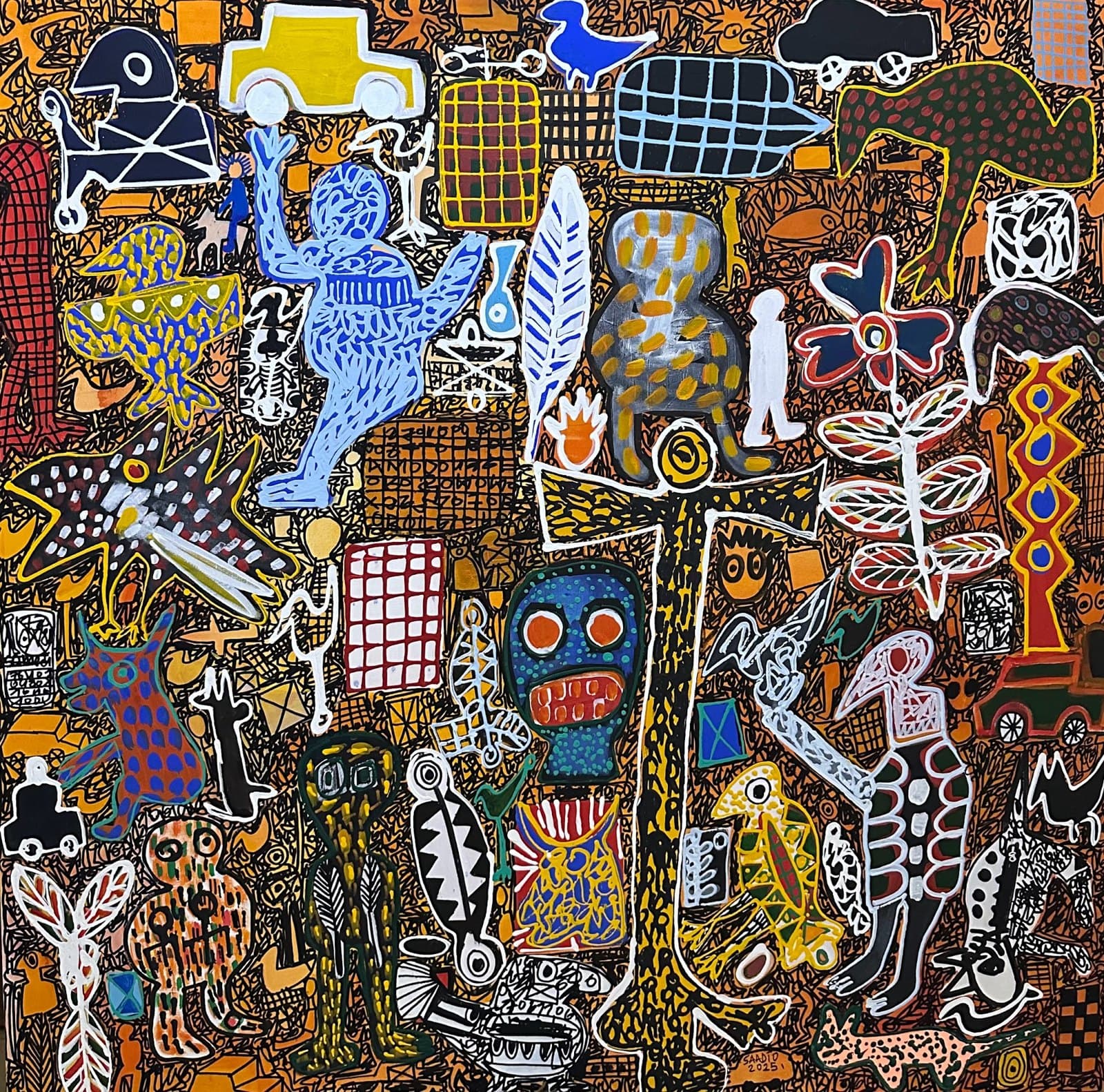
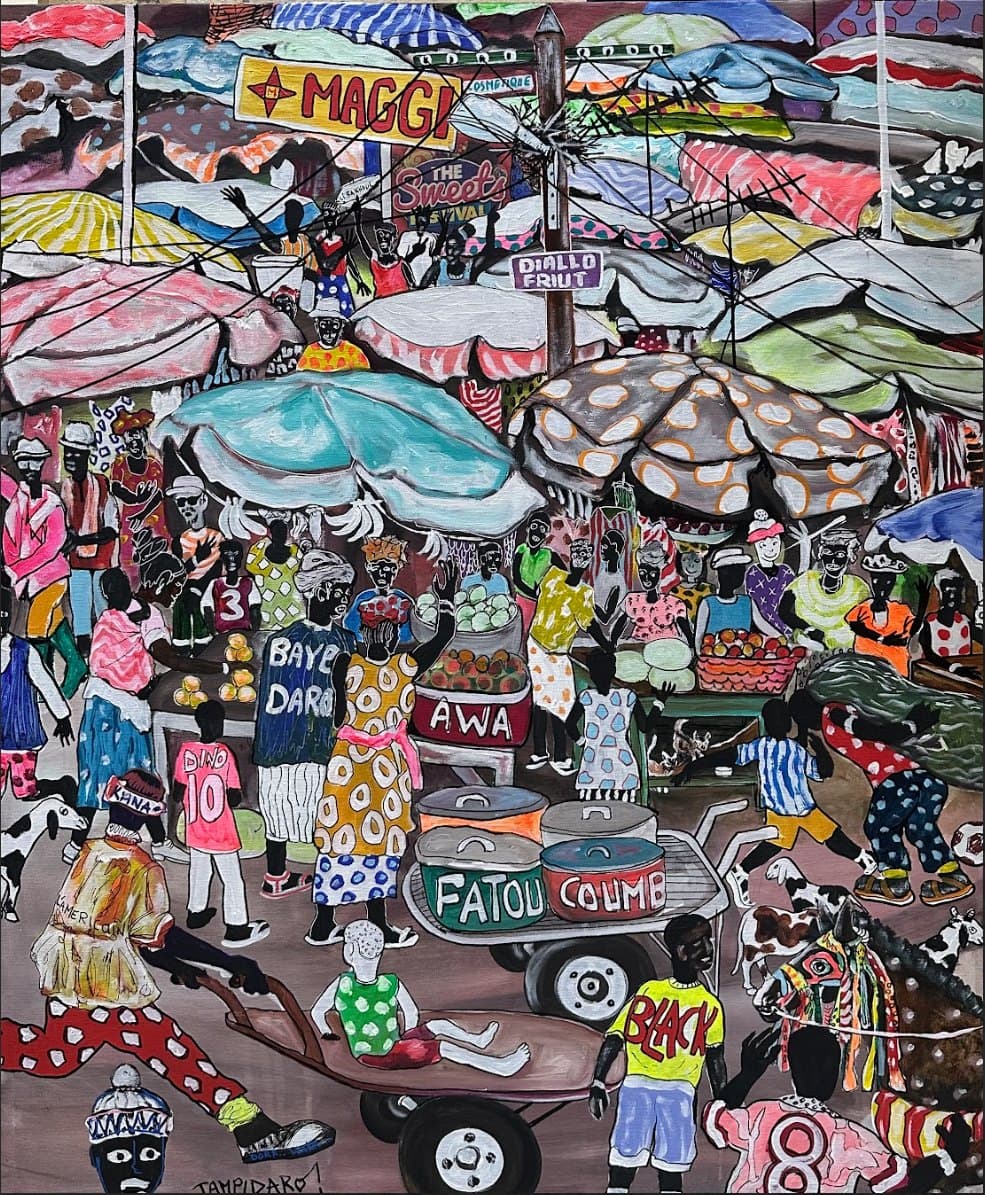
Dakar has a practical advantage for a first purchase in the region: a scene you can access year round, not just during a biennale or a fair. Ge'eza's gallery, in Point E, shows Senegalese artists such as Ibou Diagne, Saadio and Tampidaro, with pieces available to buy and a price given on request from each artwork's page, outside any event calendar. To discover these artists, the artists page gathers the profiles currently available.
Following several scenes remotely
For a collector based abroad, following Dakar, Abidjan, Lagos and Accra in parallel mostly takes consistency: follow galleries' and fairs' accounts, track each city's biennales and fairs on a single calendar, and keep a running list of artists you are interested in, city by city. It is also a good way to plan a future trip: a stop in any one of these cities pairs easily with a gallery visit and a first purchase.
Taking it further
The dialogue between the continent's art scenes is not limited to West Africa: our article on pan-Africanism and contemporary art widens the lens to East Africa, which Ge'eza's gallery also showcases in Dakar.
Coming to see the work in Dakar
If your next trip through West Africa takes you to Dakar, Ge'eza's gallery is open at the restaurant's hours, Tuesday to Sunday, 8am to 10pm, closed Mondays. For any question about a piece, write on WhatsApp to +221 78 660 07 07 or email geezacultures@gmail.com.
Frequently asked questions
What is the biggest contemporary art fair in West Africa?
ART X Lagos, held every year in Lagos, is one of the reference fairs for the region, alongside international fairs such as 1-54.
Why does Dakar have such a long-standing art scene?
Senegal hosted the World Festival of Black Arts in 1966, and the city has held the Dak'Art Biennale every two years since the 1990s.
Can you buy art in Dakar outside biennale periods?
Yes, galleries such as Ge'eza's, in Point E, show pieces available to buy all year round, at the restaurant's hours.
Should a new collector focus on just one West African scene?
Not necessarily. Following several cities at once makes it easier to compare artists, techniques and prices before a first purchase.