Art · 28 September 2026
The 1966 World Festival of Black Arts and Its Legacy in Dakar
The 1966 World Festival of Black Arts in Dakar: context, reach, legacy for contemporary African art, and Ethiopia's place in this pan-African moment.
The World Festival of Black Arts took place in Dakar in 1966, at the initiative of President Léopold Sédar Senghor and with UNESCO's support. It brought together artists, writers, musicians and thinkers from Africa and its diaspora, and remains a milestone in the continent's cultural history: it asserted that African arts deserved a world stage, and it left Dakar with a reputation as a cultural capital.
A festival driven by Senghor
Senegal had been independent since 1960. A poet and theorist of négritude, Senghor wanted the country to assert itself through culture. The 1966 festival made that vision concrete: show the world the vitality of African arts, and bring them into conversation with those of the diaspora.
This ambition belongs to the wider post-independence movement discussed in our article on the historic ties between Ethiopia and Senegal.
What the festival brought together
The festival gathered several disciplines: visual arts, literature, music, theatre, dance, film. The event ran for several weeks and drew participants from many countries in Africa and beyond. We do not cite exact figures or participant lists here, as we cannot verify them in this article; publications from the period and the work of art historians detail the programme.
Ethiopia's place
Ethiopia holds a symbolic place in 1960s pan-Africanism: Addis Ababa hosted the founding of the Organisation of African Unity in 1963, three years before the Dakar festival. The two moments belong to the same period of African self-assertion. We offer no details of Ethiopian participation in the festival, so as not to invent anything; our article on Addis Ababa and Dakar places the two cities in this context.
A legacy for contemporary art
The festival had several lasting effects:
- It put Dakar on the world cultural map, with a tradition of artistic events.
- It legitimised African art as a subject of exhibition and discourse, with its own criteria.
- It fed institutions, such as the Museum of Black Civilisations, opened in Dakar much later but in the continuation of this history.
- It inspired later gatherings, including the Dak'Art Biennale, presented in our Biennale guide.
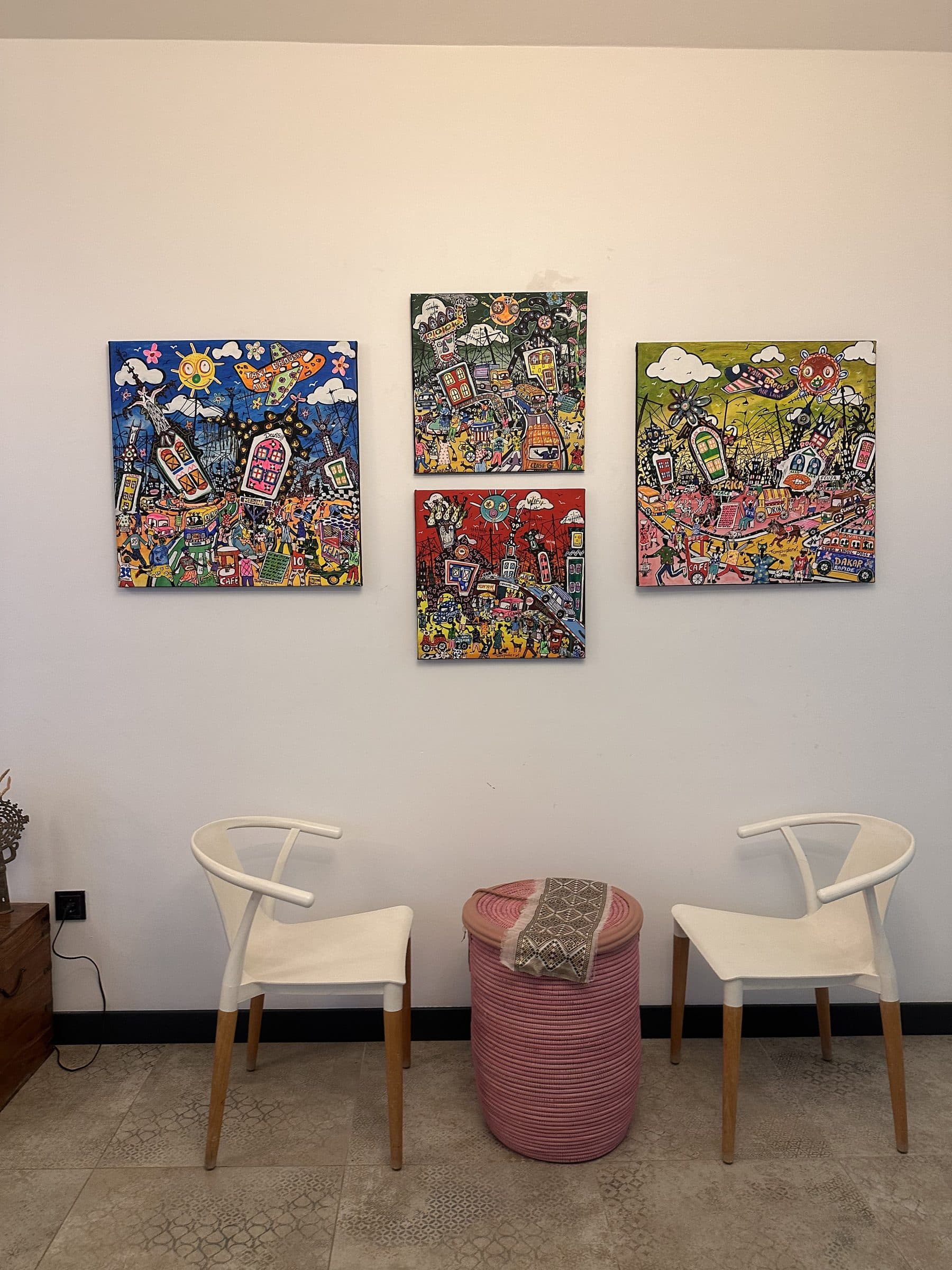
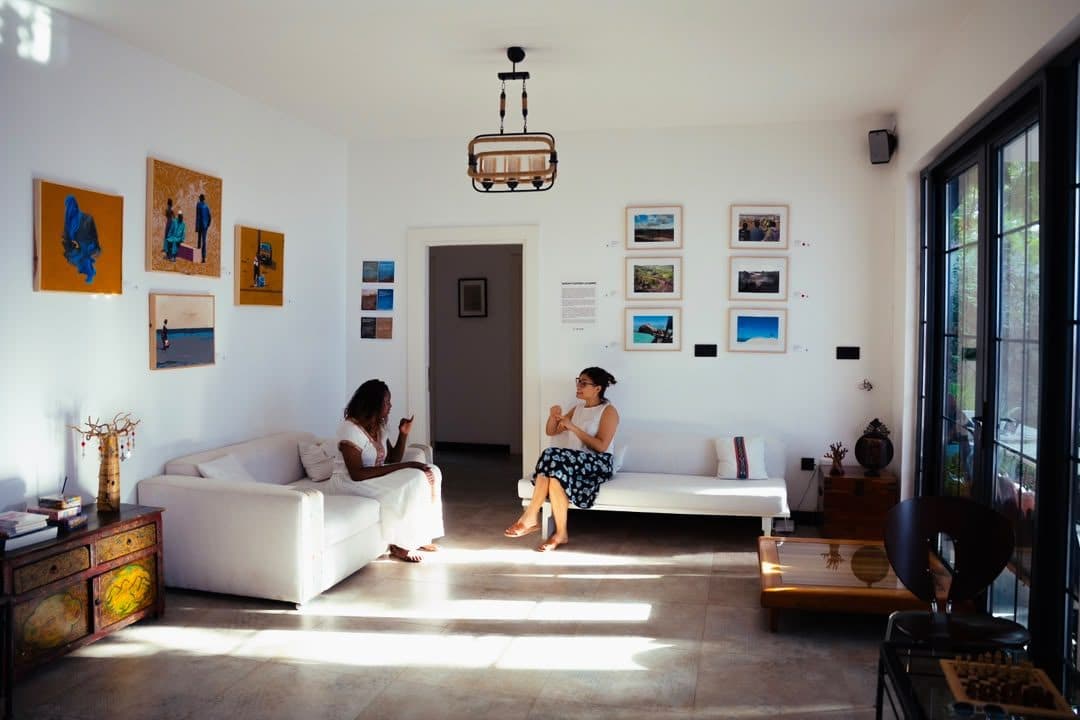
This legacy shows in the way Dakar presents itself today: galleries, studios, independent art spaces, exhibitions in villas.
What it says about today's scene
Today's artists work in a very different world, but the question posed in 1966, the place of African arts in the world, is still alive. It takes new forms: circulation of works, the art market, dialogue between regions of the continent. Our article on pan-Africanism and contemporary art continues this thought.
Seeing art in Dakar today
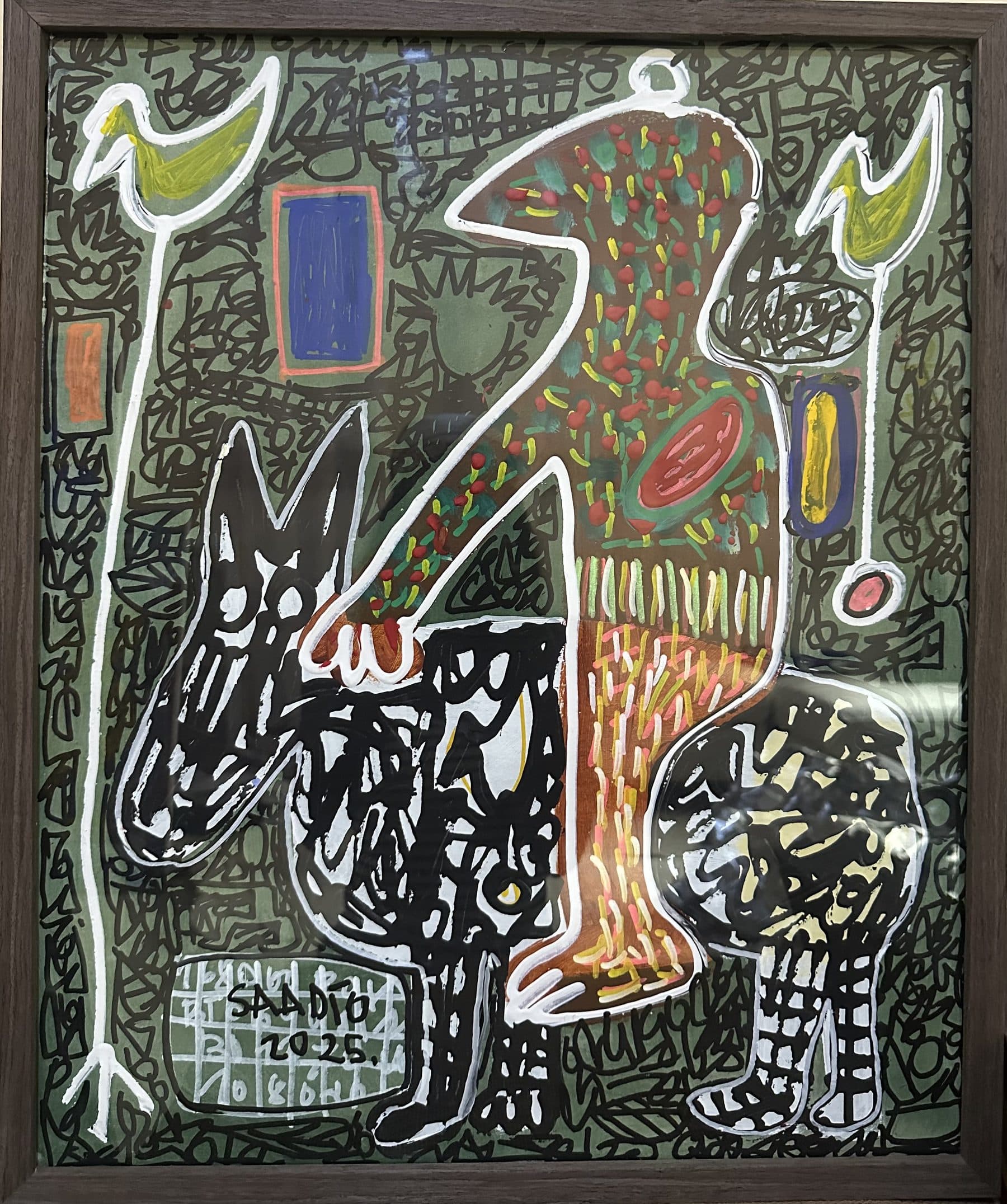
In Point E, the ge'eza gallery shows artists from East and West Africa, with works available to buy and a certificate of authenticity. The villa, at 656 avenue Birago Diop, is also an Ethiopian restaurant and events venue: openings, workshops, coffee ceremonies. Open Tuesday to Sunday, 8am to 10pm. See the gallery page.
The context of the time
The festival took place six years after Senegal's independence, at a moment when many African countries were gaining sovereignty. The stakes went beyond aesthetics: the aim was to say, through the arts, that these new states had a culture to put forward, and that this culture could not be reduced to what others had written about them. For Senghor, culture was both a cement of the nation and a way to speak on equal terms with the rest of the world.
UNESCO's support gave the event an international dimension. The festival did not turn in on the continent: it brought Africa into conversation with its diaspora, and with the other cultures of the world that took an interest in it.
Why it is still talked about
The festival is still discussed because it poses a question that has not aged: how does a continent present itself, with what words, images and institutions? That question runs through current debates on the restitution of works, on the place of African artists in the art market, and on how to exhibit.
The festival is also a shared memory. Artists, critics and families in Dakar still refer to it as a moment when the city was, for a few weeks, the centre of the global Black cultural scene. We leave it to those who lived it, and to historians, to tell the details.
How to find out more
To go further, a few general leads:
- Senghor's writings on négritude and the civilisation of the universal.
- UNESCO publications on the festival.
- Catalogues and art-history research on African arts in the twentieth century.
- Visits to museums and art venues in Dakar, which keep the memory of that period.
These sources let you check and complete what this article summarises. We prefer to point to them rather than put forward programme details we cannot confirm.
From the festival to today's art venues
The festival's legacy is not found only in institutions. It can be read in small places: artists' studios, neighbourhood galleries, villas where works hang in the lounge. Each time, it is a way of continuing the 1966 idea: giving African artists a place to be seen. These venues are also meeting points for audiences of every origin, which extends the spirit of openness intended at the time.
A visitor passing through Dakar, on a mission or a trip, can thus make a small crossing: a museum in the morning, a gallery in the afternoon, a dinner in a place where you can talk about what you have seen. That is what ge'eza offers in Point E, with its gallery, its Ethiopian table and its coffee ceremony.
Frequently asked questions
When did the World Festival of Black Arts take place?
In 1966, in Dakar, at the initiative of President Léopold Sédar Senghor.
Who supported the festival?
It was organised by Senegal with UNESCO's support.
Which disciplines were represented?
Visual arts, literature, music, theatre, dance and film, among others.
Where can I see contemporary African art in Dakar today?
In the city's galleries and museums, including the ge'eza gallery in Point E.