
Guide · 6 October 2026
Specialty Coffee in Dakar: Ethiopian Origin and Methods
Drinking specialty coffee in Dakar: what the term covers, why Ethiopian origin is a benchmark, which methods to try, and the Ge'eza coffee menu, from the macchiato to the full ceremony.
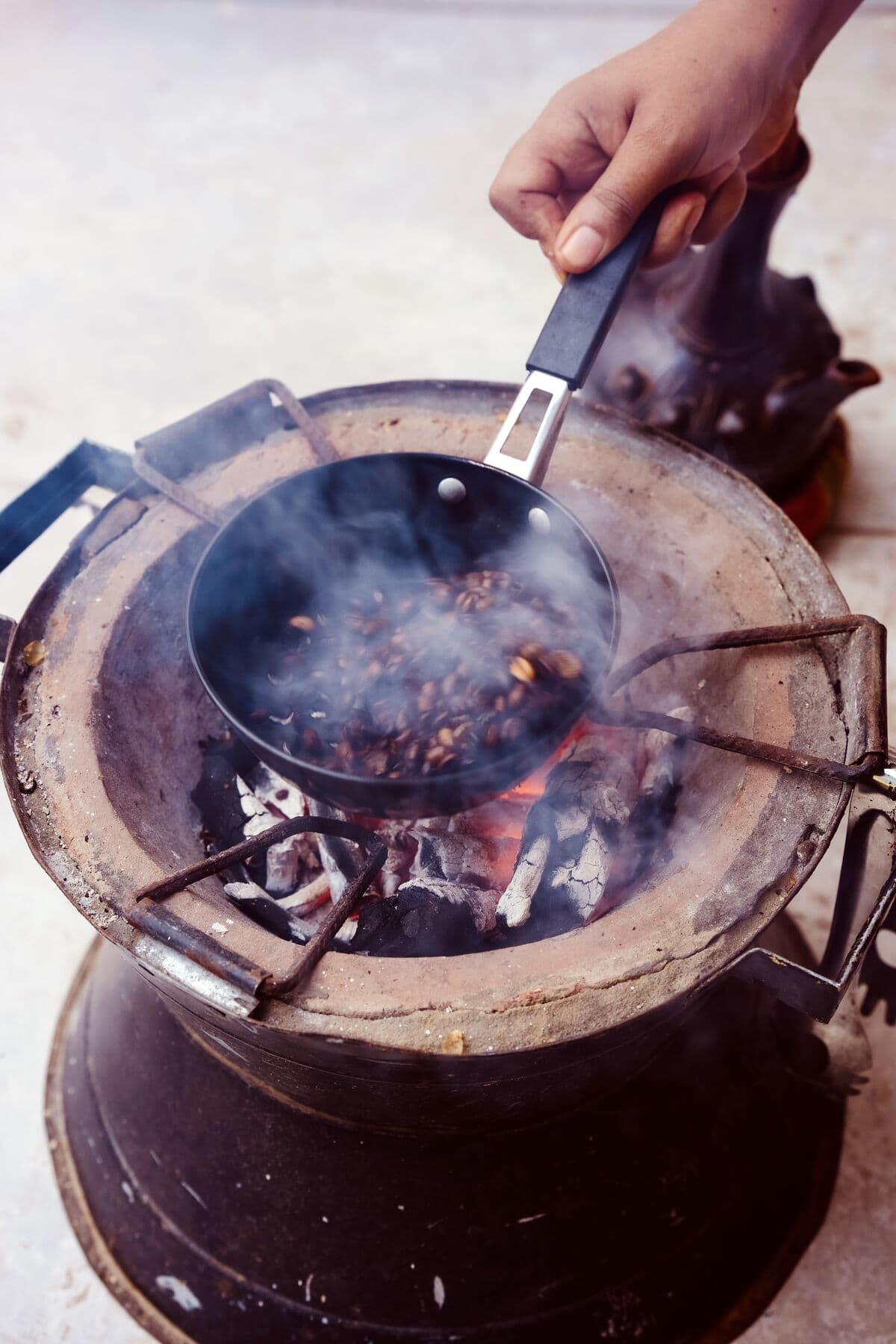
To drink specialty coffee in Dakar, look for a place that tells you where its coffee comes from, how it is roasted and brewed, and that offers more than a single drink. At Ge'eza, in Point E, the menu is built on an Ethiopian specialty coffee, served as a macchiato at 2,500 F, iced, or in the full ceremony at 5,000 F per person, where the beans are roasted fresh in front of you.
What "specialty coffee" means
The phrase generally describes high-quality coffee, grown in good conditions, harvested with care, traceable to its region of origin and scored at a tasting. In common trade usage, a coffee is called "specialty" above a threshold of 80 points out of 100 in cupping. The term is used rather freely, so it is better to look at what a venue does with it than to trust a label.
Three questions are enough to judge an address.
- Where does the coffee come from? A country, a region, perhaps a cooperative or a washing station. A vague answer ("blend", "arabica") is a weak signal.
- When was it roasted? Coffee loses aroma with time. The fresher the roast, the better.
- How is it brewed? A method chosen to show the coffee off, not only to be quick.
Why Ethiopia is a benchmark
Ethiopia is regarded as the birthplace of arabica coffee, and its range of growing areas is exceptional: Yirgacheffe, Sidamo, Harrar, Guji, each with its own profile. Washed coffees often show floral and citrus notes, natural ones more pronounced fruit. Specialty drinkers seek them out for exactly that palette. For details, see Ethiopian coffee regions: Yirgacheffe, Sidamo, Harrar, Guji.
Ethiopia does not just grow coffee: it also has its own way of preparing it. The coffee ceremony is an art in its own right, far older than most fashionable brewing methods.
The Ge'eza coffee menu
The house offers several ways into Ethiopian coffee, from the quickest to the slowest.
- Ethiopian macchiato, 2,500 F: an intense espresso softened with a little hot milk. See the Ethiopian macchiato.
- Iced Ethiopian coffee, 2,500 F: the Ethiopian specialty coffee served over ice, black, pure and bright, as the menu puts it.
- Iced latte 3,500 F, iced caramel latte 4,000 F, iced mocha 4,000 F and iced spiced latte 3,500 F: softer or more indulgent versions. The spiced latte, with traditional spices, is the house signature.
- The coffee ceremony, 5,000 F per person: coffee roasted fresh, hand-ground and brewed in a clay jebena, in three rounds, Abol, Tona, Baraka.
- Each round separately: Abol 2,500 F, Tona 2,000 F, Baraka 1,500 F.
- Ethiopian tea, 2,000 F: black tea infused with spices, served hot, for those who do not want coffee.
On the side, homemade dabo with honey is 1,000 F, and the lentil sambusa 1,500 F.
Which method for which moment
Each method answers a different wish.
For the morning or a short break, the macchiato. It is quick and puts the coffee in the foreground. It pairs well with an Ethiopian breakfast, served from 8am to 11am.
For a hot day, an iced coffee. The iced Ethiopian coffee is the closest to the bean, the lattes are softer. See iced Ethiopian coffee.
For a proper pause, the ceremony. It lasts about 45 minutes and is best booked 24 hours ahead, especially for a group, with a WhatsApp confirmation. It is the best way to understand what is particular about Ethiopian coffee, because you see the roasting, smell the aroma and taste a cup that changes with each round.
How to taste specialty coffee
A few habits help you understand what you are drinking.
- Smell before you drink. The aroma announces much of the taste. At the ceremony you breathe in the smoke of the roasting beans: it is part of the plan.
- Taste without sugar, at least the first sip.
- Compare. Drinking a macchiato and then a round of Abol shows how milk and method change the same raw material.
- Take your time. A good coffee changes as it cools, and that is a chance to taste something else.
- Ask questions. The team can tell you what it serves and how.
Coffee in Dakar, in a place that does other things
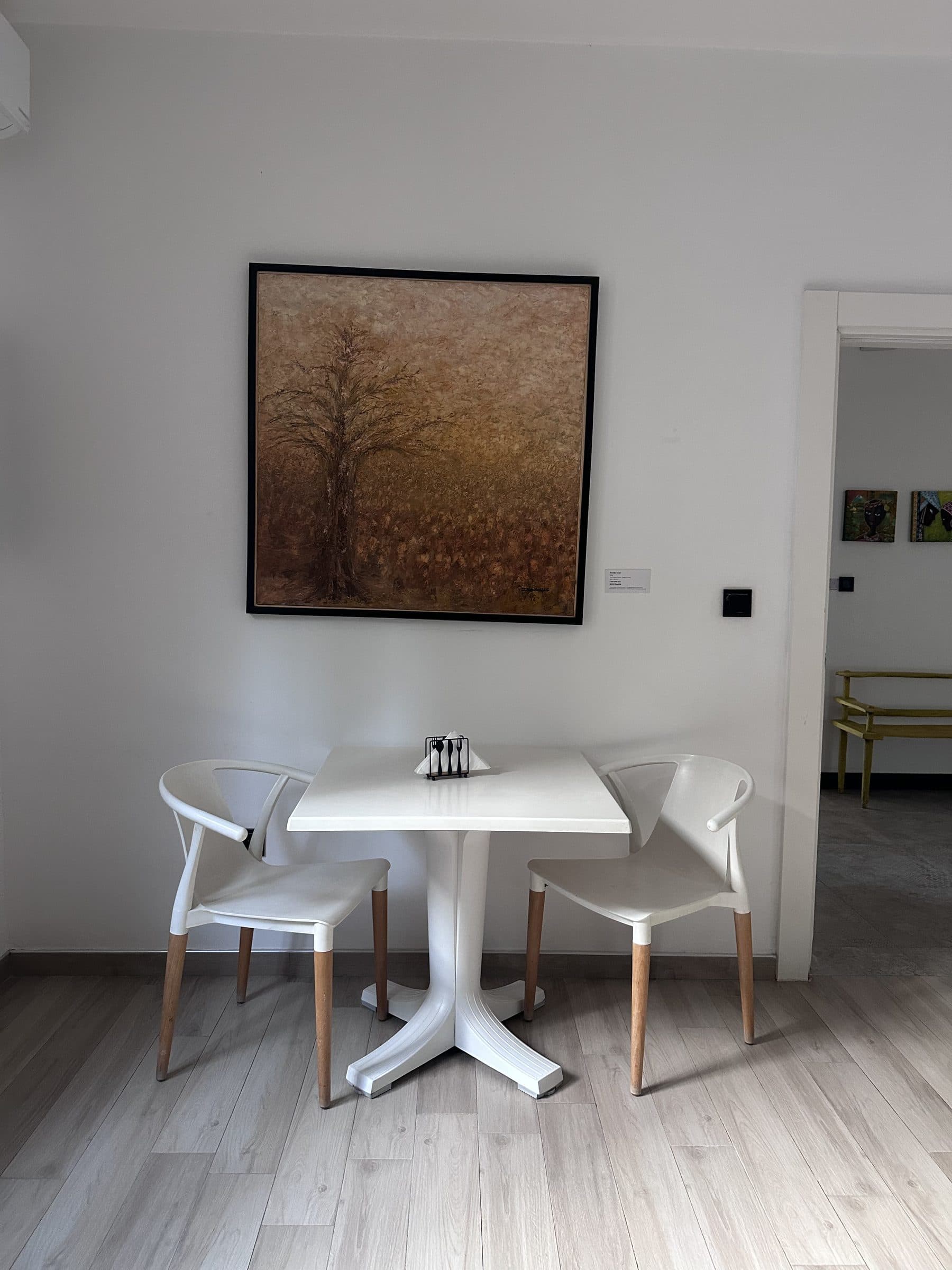
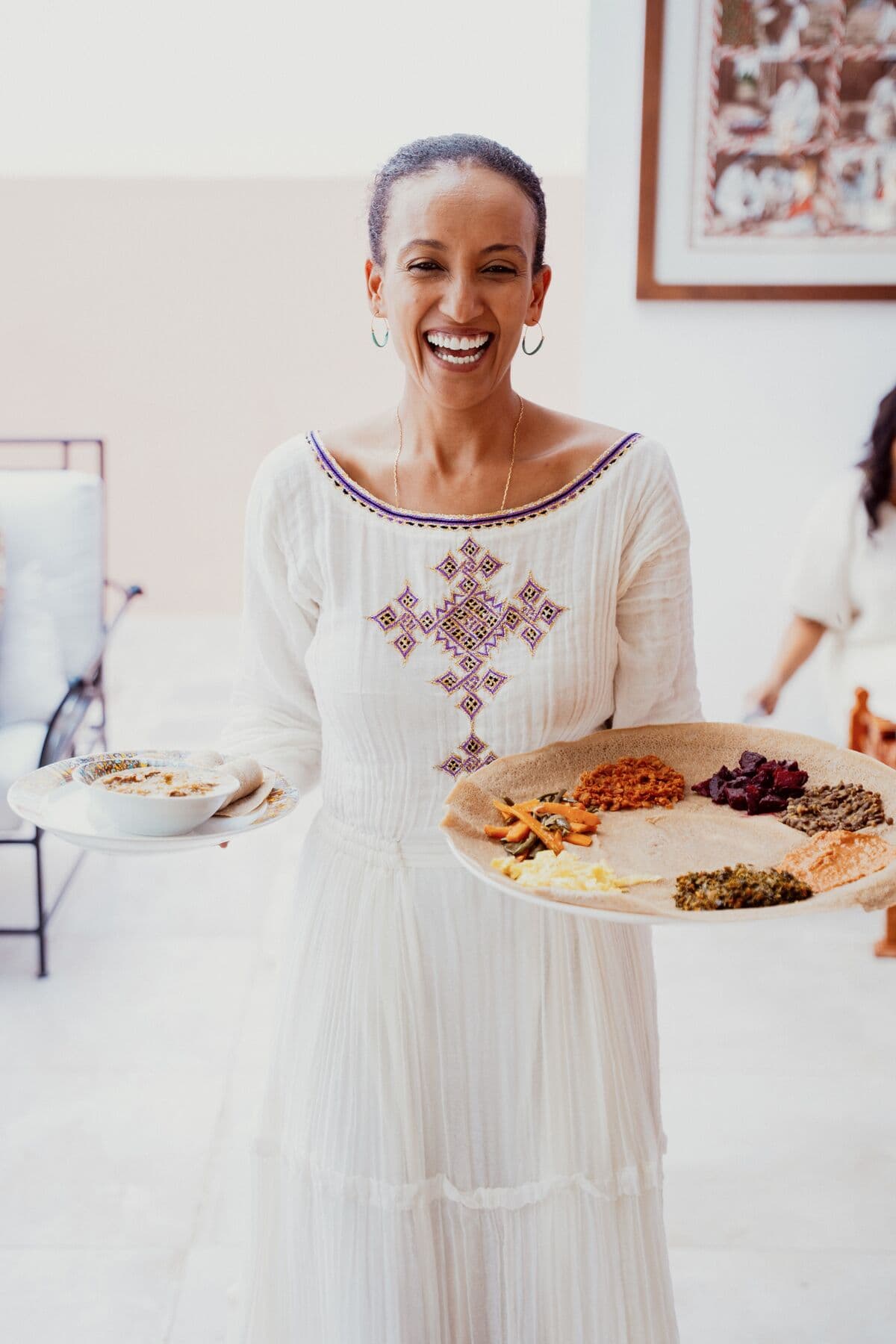
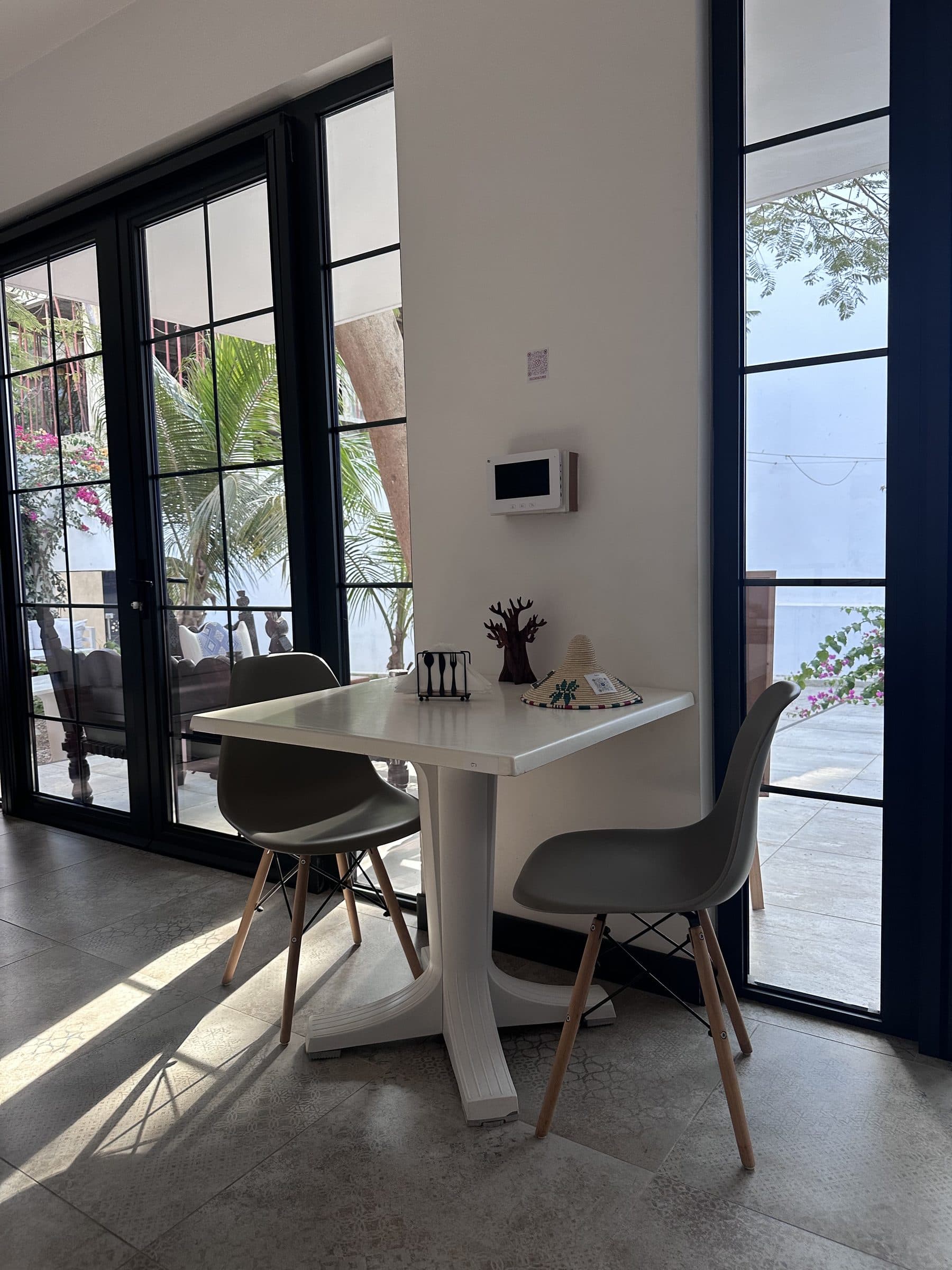
Ge'eza is not a specialist coffee shop. It is an Ethiopian restaurant, a contemporary art gallery, a concept store and an events venue, in a villa with a gallery lounge, a glass-roofed room and a terrace under the trees. Coffee has its place there as in every Ethiopian home: at the centre of welcome.
That changes how you drink it. You can spend a moment with a macchiato, look at the works in the gallery, then carry on with lunch. Ethiopian coffee is also on sale at the concept store, with berbere, crafts and art editions, on site during restaurant hours or set aside by WhatsApp.
Visiting
Ge'eza is open Tuesday to Sunday, 8am to 10pm, at 656 avenue Birago Diop, Point E. For the ceremony, a group or a lunch, you can book online or write on WhatsApp at +221 78 660 07 07.
Frequently asked questions
Does Ge'eza roast its own coffee?
For the ceremony, yes: the coffee is roasted fresh in front of the guests, over the brazier, then ground by hand.
How much is a coffee at Ge'eza?
The macchiato and the iced Ethiopian coffee are 2,500 F. The full ceremony is 5,000 F per person.
Can I buy Ethiopian coffee to take away?
The concept store offers Ethiopian coffee. To know what is available, ask on site or by WhatsApp.
Do I need to book for a coffee?
Not for a single coffee. For the ceremony, it is better to book 24 hours ahead, especially for a group.