Guide · 28 September 2026
Ethiopian Coffee Regions: Yirgacheffe, Sidamo, Harrar, Guji
Yirgacheffe, Sidamo, Harrar, Guji: the main Ethiopian coffee regions, their general profiles, washed and natural processing, and how coffee is served at ge'eza in Dakar, from macchiato to ceremony.
Ethiopian coffee stands out for its diversity: each region gives a different aroma profile. Yirgacheffe is often described as floral and citrusy, Sidamo as balanced and fruity, Harrar as intense and fruity with wine notes, Guji as fragrant and fruity. These are general markers, which vary with lots and processing.
Why so much diversity
Ethiopia is the cradle of arabica (see origins of coffee in Ethiopia). The country has a great diversity of local varieties, grown at altitude, in different microclimates and soils. The result is coffees with strongly contrasting flavours, which specialty coffee lovers seek out.
The main regions
Yirgacheffe. A small area of the south, in Gedeo, known for delicate, floral coffees with notes of citrus, tea and flowers. It is often the profile quoted to illustrate the elegance of Ethiopian coffee.
Sidamo. A large southern region, whose coffees are generally balanced, with fruity notes, good acidity and medium body. The name long served to designate a broad set of southern coffees.
Harrar. An eastern region, with coffees often dried as whole cherry, with pronounced fruity notes, of blueberry or wine, and an intense character.
Guji. A southern zone, next to Sidamo, whose coffees are appreciated for their floral and fruity aromas.
There are other regions, such as Limu or Jimma. The descriptions given here are tendencies: two lots from the same region can differ noticeably.
Washed or natural
The processing method counts as much as the region. A washed coffee is depulped and fermented in water before drying: the result is cleaner, clearer, often floral and tangy. A natural coffee, dried in the cherry, dries with the fruit: it is fruitier, rounder, sometimes sweeter. Each method reveals one facet of the region.
How it is drunk in Ethiopia
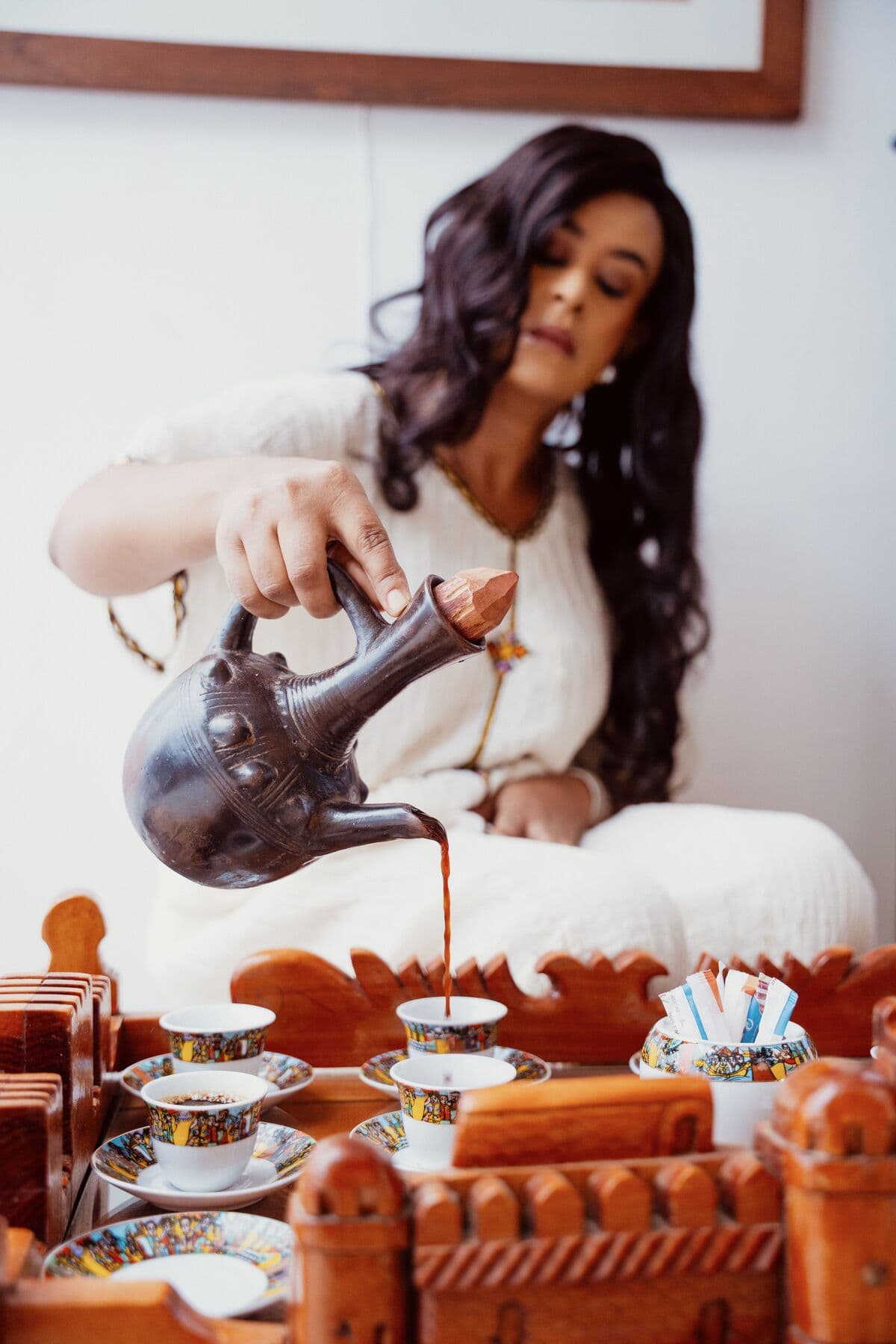
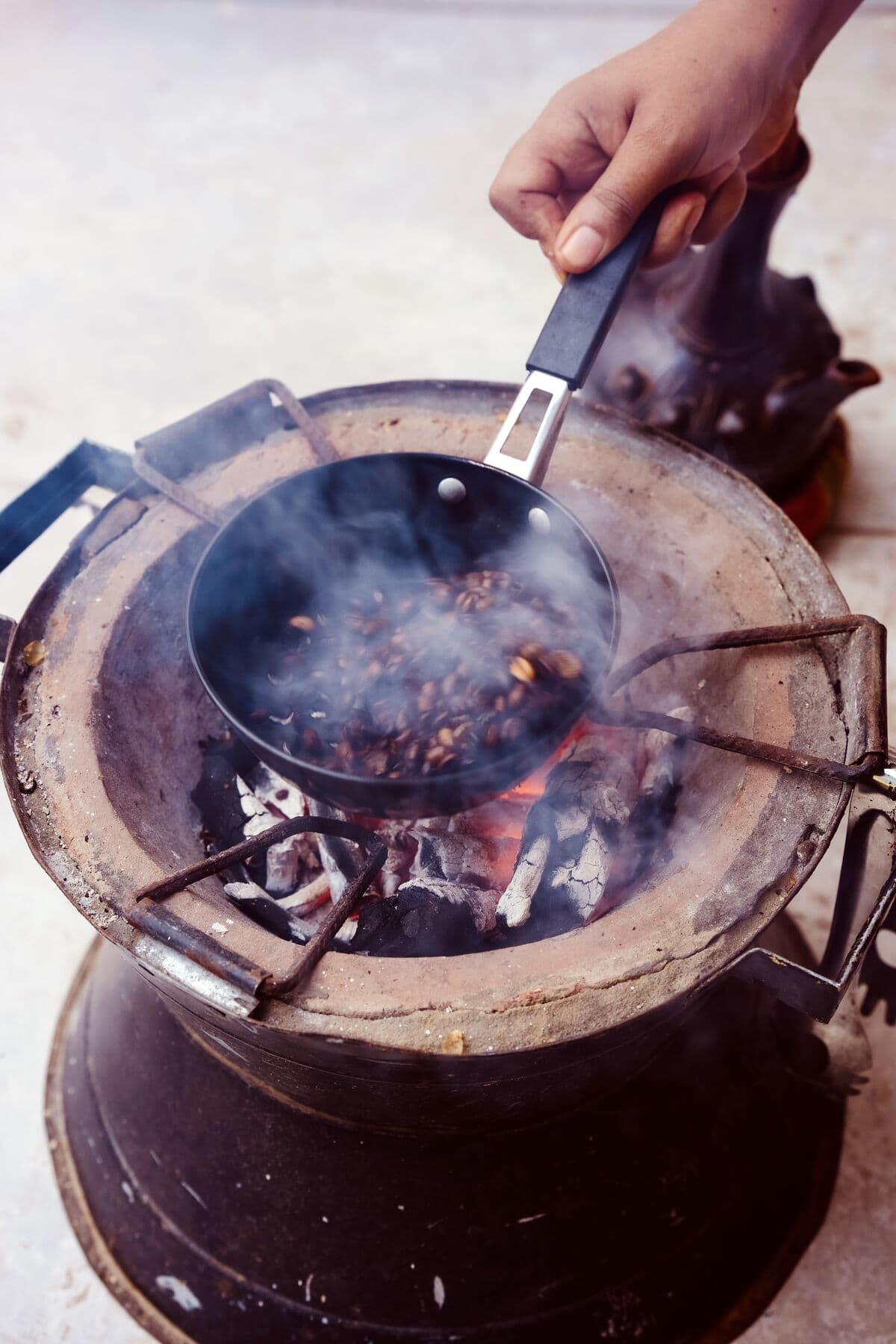
In Ethiopia, coffee is above all drunk through the ceremony: green beans roasted in front of the guest, ground by hand, brewed in a jebena, served in three rounds. Espresso and macchiato exist too, notably in cities.
Coffee at ge'eza
At ge'eza, an Ethiopian specialty coffee is served in several forms. The Ethiopian macchiato, an intense espresso softened with a little hot milk, is 2,500 F. Iced coffee is 2,500 F, and iced lattes (latte, caramel, mocha, spiced) from 3,500 F to 4,000 F. The full ceremony, with Abol, Tona, Baraka, incense and dabo, is 5,000 F and takes about 45 minutes. Each round can be taken alone: Abol at 2,500 F, Tona at 2,000 F, Baraka at 1,500 F. House dabo, Ethiopian bread served with honey, is 1,000 F.
The precise origin of the lots served may vary: ask the team, who will tell you about the coffee of the moment. To live the ceremony, see the coffee ceremony page, and to book it, book here.
Tasting by comparing
To learn to tell profiles apart, nothing beats comparison: taste two coffees side by side, without milk, noting first the aroma, then the acidity, then the length in the mouth. The three rounds of the ceremony are, in their way, a lesson in nuance: Abol, Tona and Baraka reveal three facets of one coffee.
For receiving guests
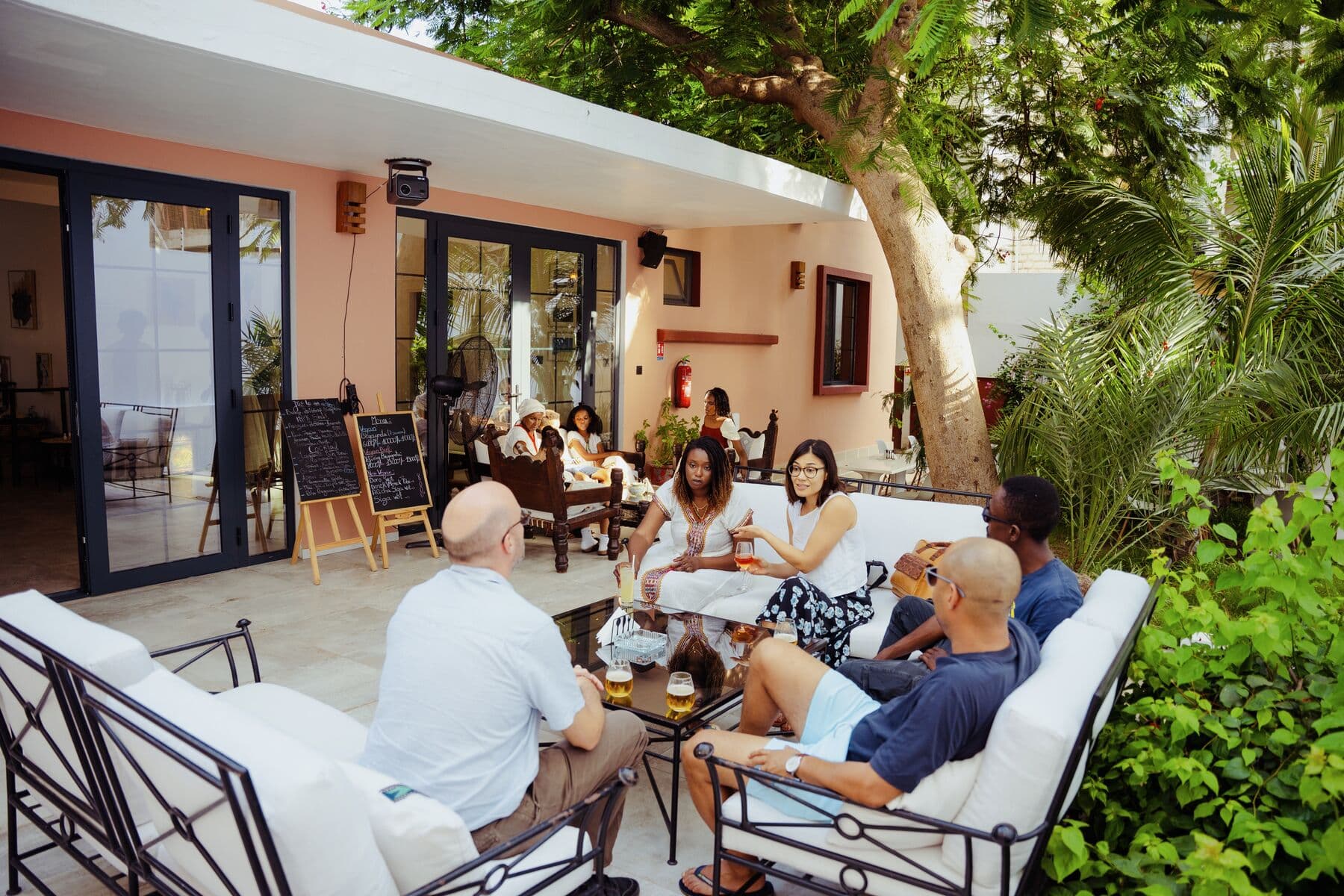
A coffee ceremony is also a beautiful way to host. The ge'eza villa can be hired privately for lunches, dinners, receptions or team moments: see the spaces page. The venue is open Tuesday to Sunday, 8am to 10pm, at 656 avenue Birago Diop, Point E.
Reading an Ethiopian coffee label
On a bag you often find, in order: the region, sometimes the zone or the cooperative, the processing method (washed or natural), the altitude and a tasting note. High altitude is generally associated with denser, more complex coffees. Tasting descriptions, such as citrus, flowers, blueberry or tea, are markers rather than ingredients: they describe sensations. To choose, it is better to start from what you like: if you prefer tangy and floral, take a washed Yirgacheffe; if you prefer round and fruity, a natural.
Roast: light, medium, dark
Roasting changes taste as much as origin. A light roast brings out acidity and floral or fruity notes, typical of Ethiopian specialty coffees. A darker roast gives notes of chocolate and caramel, smoothing out some nuance. In the ceremony, roasting is done on the spot, in a pan, which gives a fresh coffee with a marked aroma, different from espresso.
Brewing at home
For a filter brew, a light to medium roast of an Ethiopian coffee usually shows its floral side well. Use freshly ground beans, water just off the boil and a clean filter, and taste without milk first. For a ceremony-style approach, a small clay or metal pot brewed slowly on low heat, then poured in small cups, reproduces something of the gesture. The result will differ from the ceremony you can live at ge'eza, but it is a good way to slow down at home.
Frequently asked questions
Which region produces the best Ethiopian coffee?
There is no best region: Yirgacheffe is prized for floral finesse, Harrar for fruity intensity, Sidamo and Guji for balance. It all depends on your taste.
What is the difference between washed and natural?
Washed is cleaner and tangier, natural fruitier and rounder, because the bean dries with the fruit.
Which coffee does ge'eza serve?
An Ethiopian specialty coffee. The precise origin varies: ask the team.
How much is the coffee ceremony?
5,000 F for the full ceremony, about 45 minutes.