
Art · 22 October 2026
Posca and Acrylic on Kraft Paper: Saadio's Technique
Acrylic and Posca on kraft paper, shown under glass: the technique Saadio uses for a series of small pieces at Ge'eza's gallery. What it is, why the glass, and how to care for the piece.
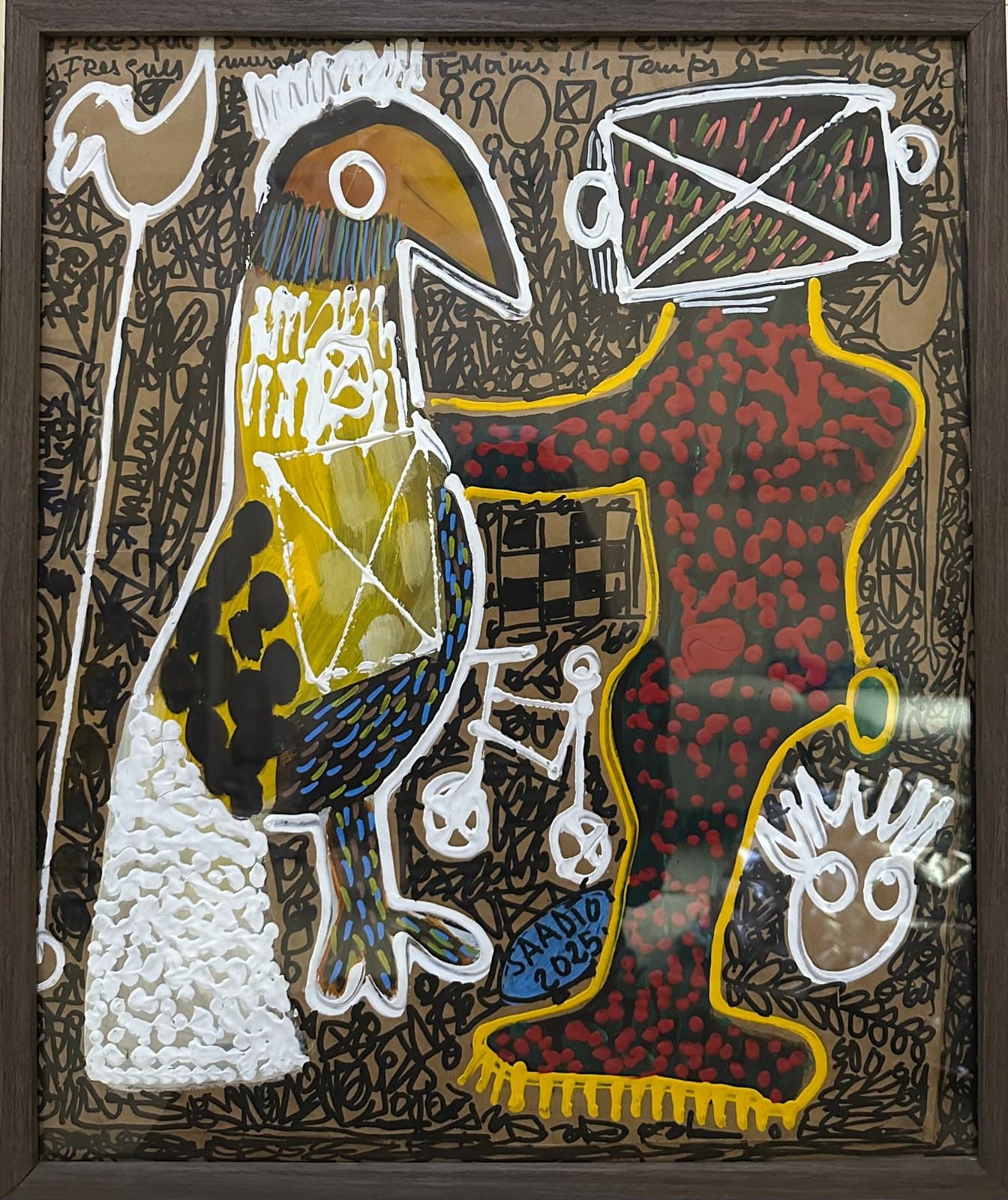
Acrylic and Posca on kraft paper, shown under glass, is a technique artist Saadio uses for a series of small 60 x 50 cm pieces on view at Ge'eza's gallery in Point E, Dakar. Nine works from this series are currently online, including "Le dompteur 1," and the price of each is given on request from its own page.
What the mixed media technique is
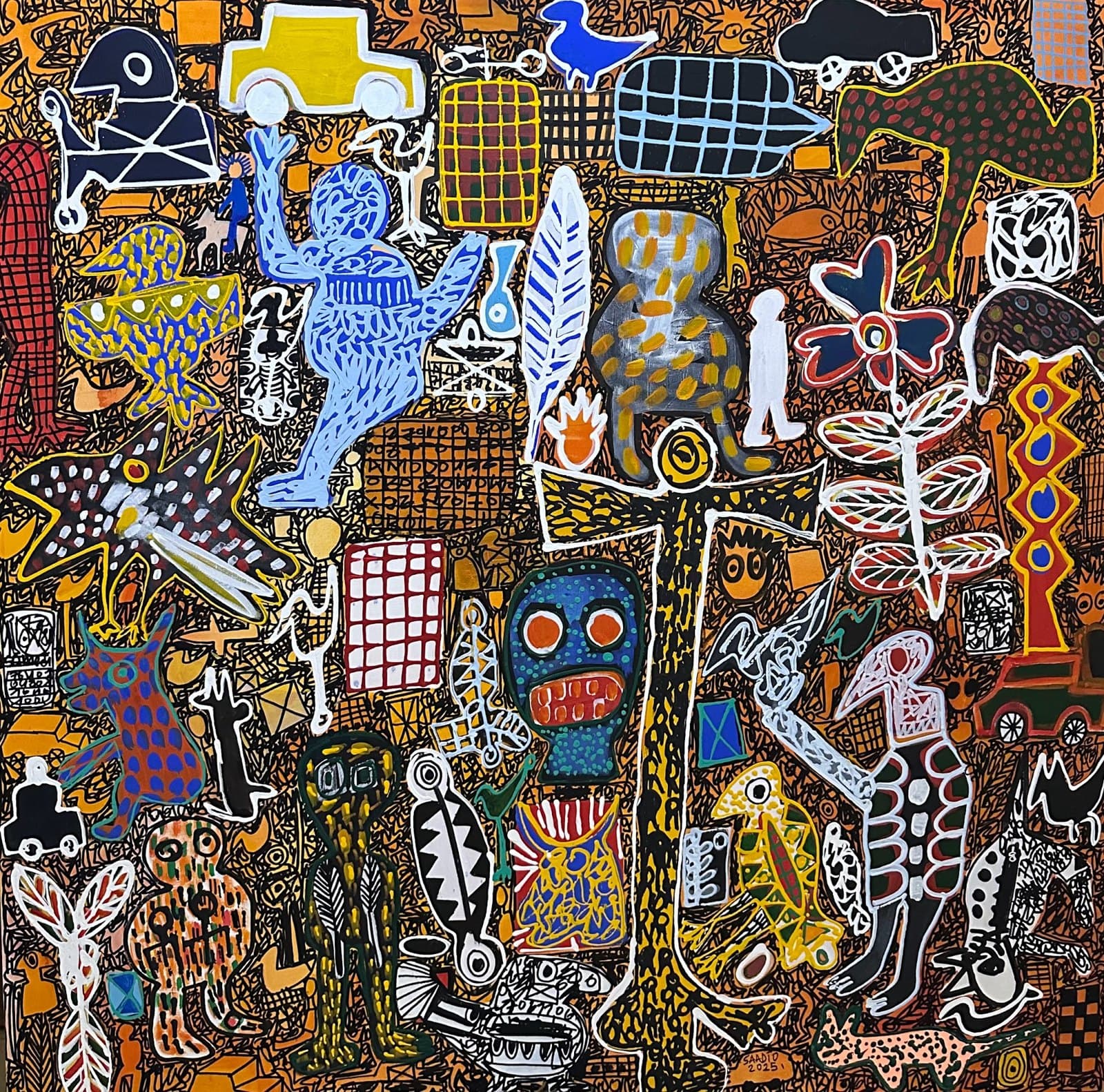
In Saadio's practice, the mixed media pairs two tools: acrylic, a paint that lays down the backgrounds and the large blocks of colour, and Posca, a pigment marker that then traces the lines, the motifs and the fine detail. This combination gives a result that reads as both a painting and a drawing, with a density of marks specific to this artist's work, whether on a large canvas or on one of these smaller framed pieces.
Canvas or kraft paper: two supports
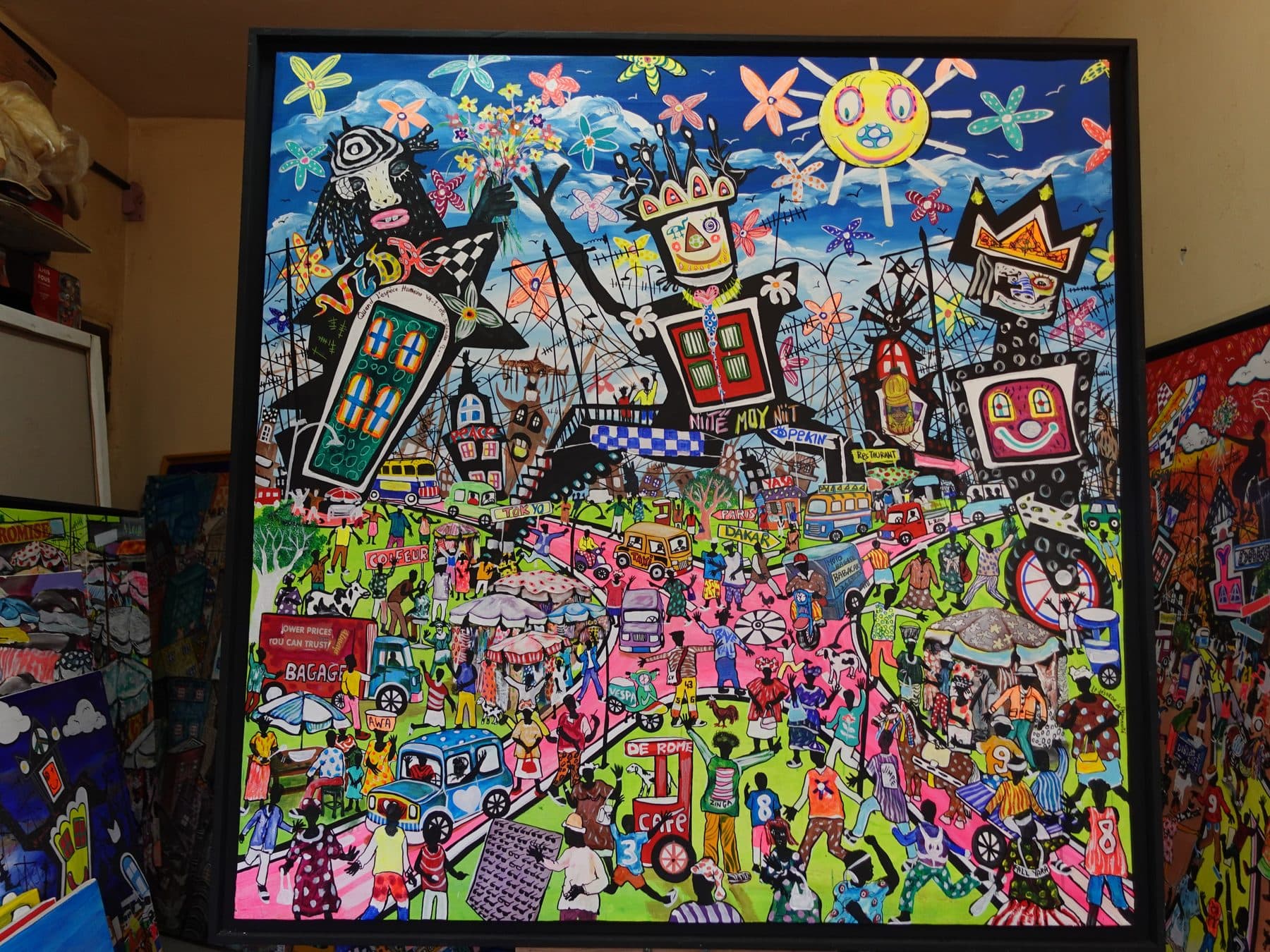
Part of Saadio's work is on canvas, in formats ranging from 80 x 60 cm to 150 x 150 cm. Another part, smaller in size, is on kraft paper, always at 60 x 50 cm, and shown under glass. This paper series counts nine titles online: "Le dompteur 1," "Le dompteur 2," "Le défi," "Le défi 2," "Tik Tok," "Ma moto," "Petit oiseau," "Amulette" and "La danse du lion (Simb)." A tenth piece of the same format and technique, "Le Voyageur" ("the traveller"), has already found a buyer and carries the status sold.
Why a work on paper is shown under glass
Kraft paper is a more fragile support than canvas: it reacts more to humidity, direct light and repeated handling than a painted or primed canvas surface. Showing it under glass protects the painted and drawn surface, limits the effect of changes in ambient humidity, and lets the piece be hung on a wall like a framed picture rather than kept flat in storage. This is a common solution for works on paper in galleries generally, not something specific to Ge'eza.
How to care for a framed kraft paper piece
Once the piece is home, a few simple habits protect it over time. Keep it out of direct sunlight, which can alter the colours on paper faster than on canvas. Watch the ambient humidity, especially during Dakar's rainy season. Hang the piece at eye level, under soft rather than harsh light, and avoid moving it around too often once it is framed. The certificate of authenticity that comes with every sold work is worth keeping with the invoice, in one folder: the article on the certificate of authenticity covers what this document should contain.
A format that travels easily
At 60 x 50 cm, framed under glass, a piece from this series travels more easily than a large canvas. It suits a first purchase, a smaller apartment, or a gift meant to be carried as luggage, subject to the usual care needed when travelling with a piece framed under glass, such as wrapping it well and keeping it out of a checked bag if possible. For shipping outside Dakar, the glass calls for suitable packaging, and shipping is best arranged on request rather than as hand luggage in most cases.
Titles that tell an urban, everyday story
The titles in this series give a sense of Saadio's repertoire at this smaller scale: "Tik Tok" and "Ma moto" ("my motorbike") point to contemporary habits, "Le dompteur 1" and "Le dompteur 2" ("the tamer") share a title in two versions, as do "Le défi" and "Le défi 2" ("the challenge"), while "La danse du lion (Simb)" refers to a popular Senegalese tradition, the Simb, also known as the false lion. "Petit oiseau" ("little bird") and "Amulette" round out the group, and seeing all nine together at the gallery gives a fuller sense of the series than any single piece on its own.
Asking for the price of a piece from this series
Prices are not posted online: they are given on request from the artwork's page, on the page for artist Saadio, or directly by WhatsApp at +221 78 660 07 07, naming the exact title. The team replies with the price, the technical details and the certificate of authenticity.
Seeing these works at the gallery
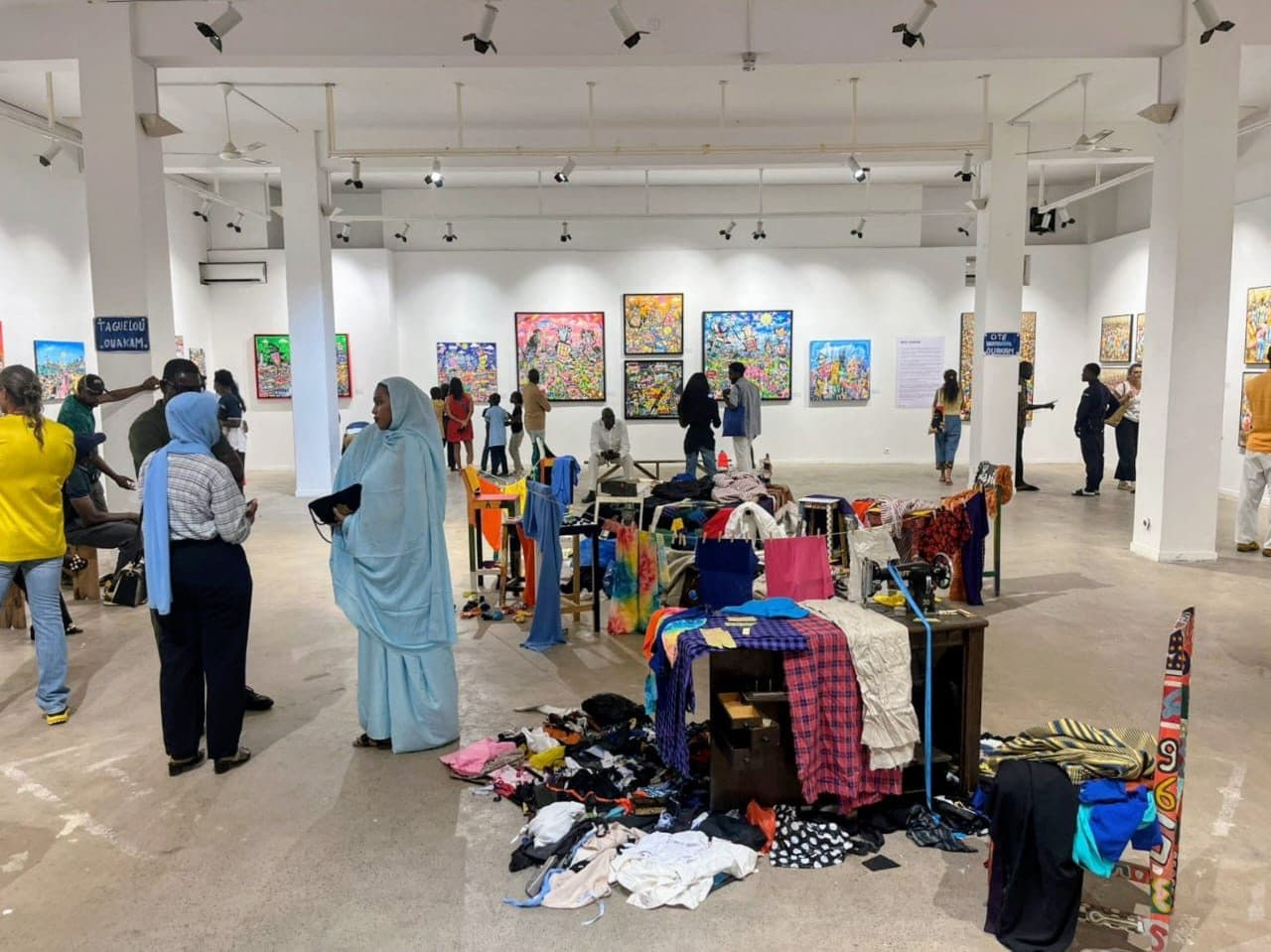
The best way to judge the density of a mixed media piece is to see it up close. Ge'eza's gallery can be visited without an appointment, Tuesday to Sunday, 8am to 10pm, at 656 avenue Birago Diop, Point E, the same hours as the restaurant. The page for "Le Voyageur," a sold piece from this same series, remains viewable on its own page, which shows how a work from this series is presented: title, year, technique, size and status. For any question before you come, write on WhatsApp at +221 78 660 07 07 or to geezacultures@gmail.com.
Frequently asked questions
What is the acrylic and Posca mixed media technique?
A combination of acrylic, for the backgrounds and blocks of colour, and Posca, a pigment marker, for the lines and fine detail.
Why are these works shown under glass?
Because they are made on kraft paper, a more fragile support than canvas, which the glass protects from humidity and direct light.
How many works from this series are online?
Nine available, plus "Le Voyageur," already sold.
How do I find out the price of a piece from this series?
Ask from the artwork's page, or by WhatsApp at +221 78 660 07 07.