
Food · 27 October 2026
Homemade Peanut Baklava in Dakar at Ge'eza
Ge'eza's peanut baklava is homemade, flaky and sweet, for 5,000 F. A pastry that pairs a technique from the Middle East with peanuts, one of Senegal's signature crops. Best with a macchiato or a cup of tea.
Ge'eza's peanut baklava, in Point E, is a homemade flaky pastry, priced at 5,000 F. It is one of the richest sweets on the menu, built to be shared between two or three people, in the middle of the afternoon or at the end of a meal.
A flaky pastry, filled with peanuts
Baklava is a pastry made of thin layers of flaky dough, filled with crushed nuts and held together with syrup or honey. At Ge'eza, the filling of choice is peanuts, rather than the walnuts, pistachios or almonds found in other versions around the world. The result is a crisp, sweet, dense dessert, served in small portions given how rich it is.
Peanuts, one of Senegal's signature crops
Peanuts have long been one of the crops most closely tied to Senegal, holding an important place in the country's agriculture and cooking. Finding them at the centre of a baklava, a pastry whose technique traces back historically to the Middle East and the Balkans, captures something of what Ge'eza is about: a house that lets different culinary traditions speak to each other, without claiming one replaces the other. The baklava stays a baklava in how it is made, but its filling roots the dessert in a local ingredient.
How it is served
The peanut baklava is homemade and served in portions, at 5,000 F. Its richness, between the sweetness of the syrup and the crunch of the flaky pastry, makes it a dessert better shared than finished alone. It works just as well at the end of lunch or dinner as it does during an afternoon break, away from regular meal times.
What to pair it with
Two hot drinks on the menu pair particularly well with baklava. The Ethiopian macchiato, at 4,000 F, an intense espresso softened with a little hot milk, brings a bitterness that plays well against the sweetness of the dessert. The article Ethiopian macchiato covers that drink and its Italian-Ethiopian history. Ethiopian tea, at 3,000 F, brewed with spices, offers a gentler alternative, without the sharper caffeine kick.
A break rather than an end-of-meal dessert
Many guests order baklava outside regular meal times, as a sweet break in its own right rather than a dessert tacked onto a full meal. It suits the middle of the afternoon well, between two appointments or after a visit to the gallery. The article afternoon coffee and snacks in Dakar covers the full range of snacks and sweets on the menu, for anyone composing their own break.
Sharing it between several people
Given how rich it is, baklava lends itself well to sharing. One portion is often enough for two or three people, especially alongside another snack, such as a sambusa, or after an already substantial meal. It is also a simple way to close a business lunch or a meal among friends on a sweet note, without weighing the table down further.
Where to have it
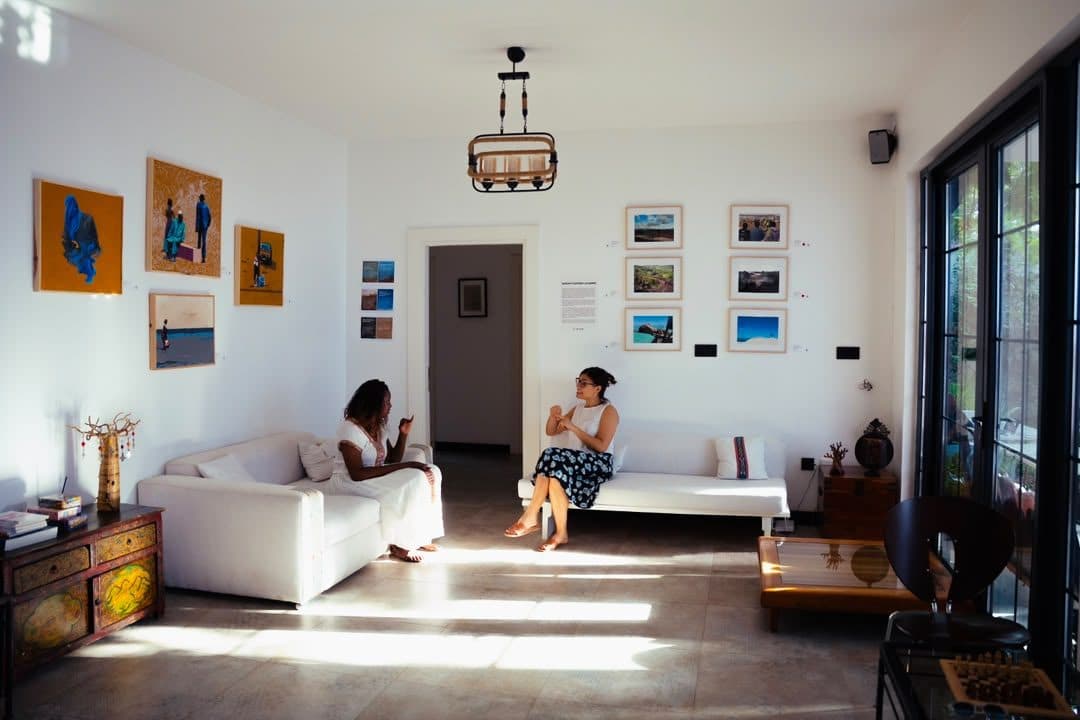
Baklava can be ordered in the gallery lounge, in the glass-roofed room or on the terrace, depending on the weather and available seating, during the house's opening hours. The restaurant page covers the full menu and the spaces of the villa, snacks and sweets included.
Booking your table
For a break alone or for two, booking is not required. For a group, or to be sure of a specific table, it is best to book through the restaurant page or write on WhatsApp at +221 78 660 07 07.
Thin layers, a technique that takes time
Making a good baklava means working with very thin layers of dough, brushed one at a time, before the filling goes in and the whole thing is sealed. It is work that takes time, long before the dessert reaches the table at Ge'eza, which is part of why baklava stays associated with special occasions in many culinary traditions. The goal is a balance between the crunch of the layered dough and the softness of the filling, without the whole thing turning too dry or too soaked in syrup.
A dessert that travels well beyond its origin
Classic baklava turns up across many cuisines of the Middle East, the Balkans and Central Asia, each with its own habits around filling and syrup. By choosing peanuts rather than an imported nut, Ge'eza places its own version within that family of recipes while pulling it closer to Senegal. It is a simple way of showing that a pastry technique can travel and be reinvented without losing what defines it: thin layers, a syrup or honey, and a carefully chosen filling. For a visitor who already knows baklava from elsewhere, tasting a peanut version in Dakar is a chance to see the same technique carry a different regional accent, without the dessert losing what makes it recognisable in the first place.
Frequently asked questions
How much does the peanut baklava cost at Ge'eza?
5,000 F, homemade, served in a portion meant to be shared.
Why peanuts rather than pistachios or almonds?
Peanuts are one of Senegal's signature crops: the filling roots this Middle Eastern dessert in a local ingredient.
What drink pairs well with baklava?
An Ethiopian macchiato at 4,000 F or an Ethiopian tea at 3,000 F both suit its rich sweetness.
Is baklava only served as a dessert?
No, many guests order it as an afternoon break, away from regular meal times.