Dakar · 28 September 2026
Moving to Dakar: an expat guide to your first months
Neighbourhoods, social life, good addresses and the customs of teranga: what to know to settle in during your first months in Dakar, and where to find your bearings in Point E.
Settling into Dakar usually takes about three months: time to find a neighbourhood that feels like home, a handful of regular addresses, and an understanding of teranga, the Senegalese art of hospitality that shapes almost every social situation. Paperwork, housing and transport get sorted faster once you are surrounded by people who know the city.
Choose the neighbourhood before the apartment
In Dakar, location matters more than square footage. Traffic at peak hours is heavy, and a ten-kilometre trip can take a long time. Many newcomers start by living close to the office or the children's school. The Plateau holds administrations and offices, Fann, Point E and Mermoz are residential areas of villas and low-rise buildings, and the Almadies and Ngor face the sea. Our comparison of Dakar neighbourhoods for expats goes through what each one offers.
One simple piece of advice: rent for a few months first if you can, and test your real commute on a Tuesday morning and a Friday evening.
The first weeks
Formalities depend on your status (local contract, mission, NGO, family reunification), and your employer or embassy is the best source. A few things help in every case:
- Locate pharmacies, a doctor and a clinic near your home before you need them.
- Pick a reliable way to get around: a driver, a taxi you know, a ride-hailing app. Agreeing on a taxi fare before getting in is common practice.
- Get a local SIM card and get used to WhatsApp, which is used for everything: shops, craftspeople, restaurants, schools.
- Learn a few words of Wolof. A simple greeting opens more doors than a stack of documents.
The codes of teranga
Teranga is the art of welcoming well, and it applies to you, the newcomer. It shows up in greetings that take their time, in questions about family and health before the business of the day, and in sharing: a dish is set in the middle and everyone helps themselves. A few useful habits:
- Greet everyone when you enter a room, instead of rushing to the reason you came.
- Accept the tea or coffee you are offered, and do the same when you host.
- Use your right hand to give, receive and eat from a shared dish.
- Expect meetings to start a little later than planned, and do not read it as disrespect.
This taste for sharing has a direct echo in Ethiopian food, where several people eat from one large round of injera. We come back to it in our article on teranga.
Building a social life
In the first months, the difficulty is rarely finding things to do. It is finding your own circle. International schools, associations, embassies and cultural venues are the classic entry points. Galleries and openings are especially good for meeting people: you may find yourself next to artists, collectors, diplomats and curious Dakar residents, and a painting gives everyone something to talk about. For evenings, see also our guide to going out in Dakar at night.
Dakar also offers easy escapes a short way from the centre: the Corniche for a morning walk, Gorée Island for a day trip, the beaches on the northern side of the peninsula at the weekend.
Finding your bearings in Point E
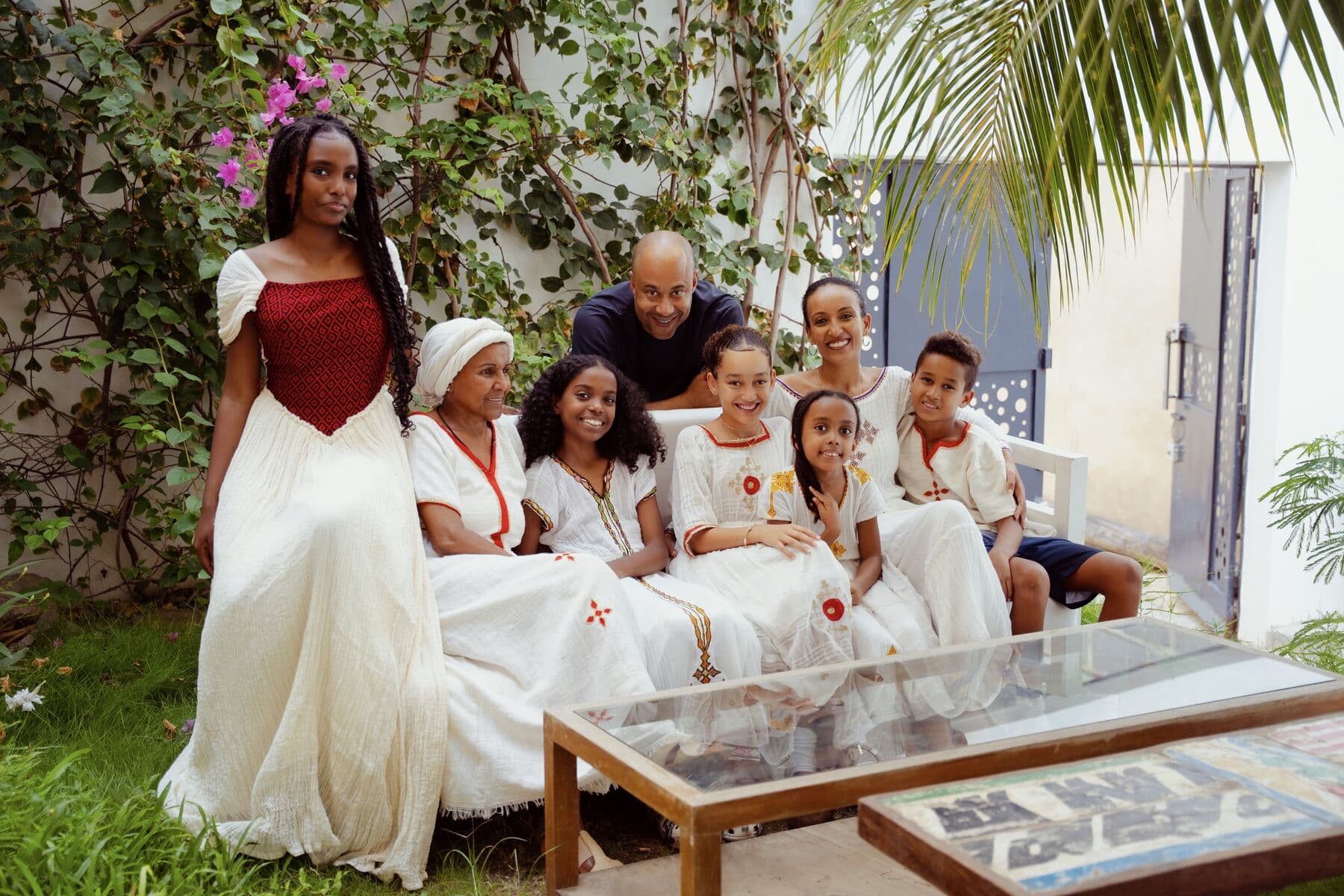
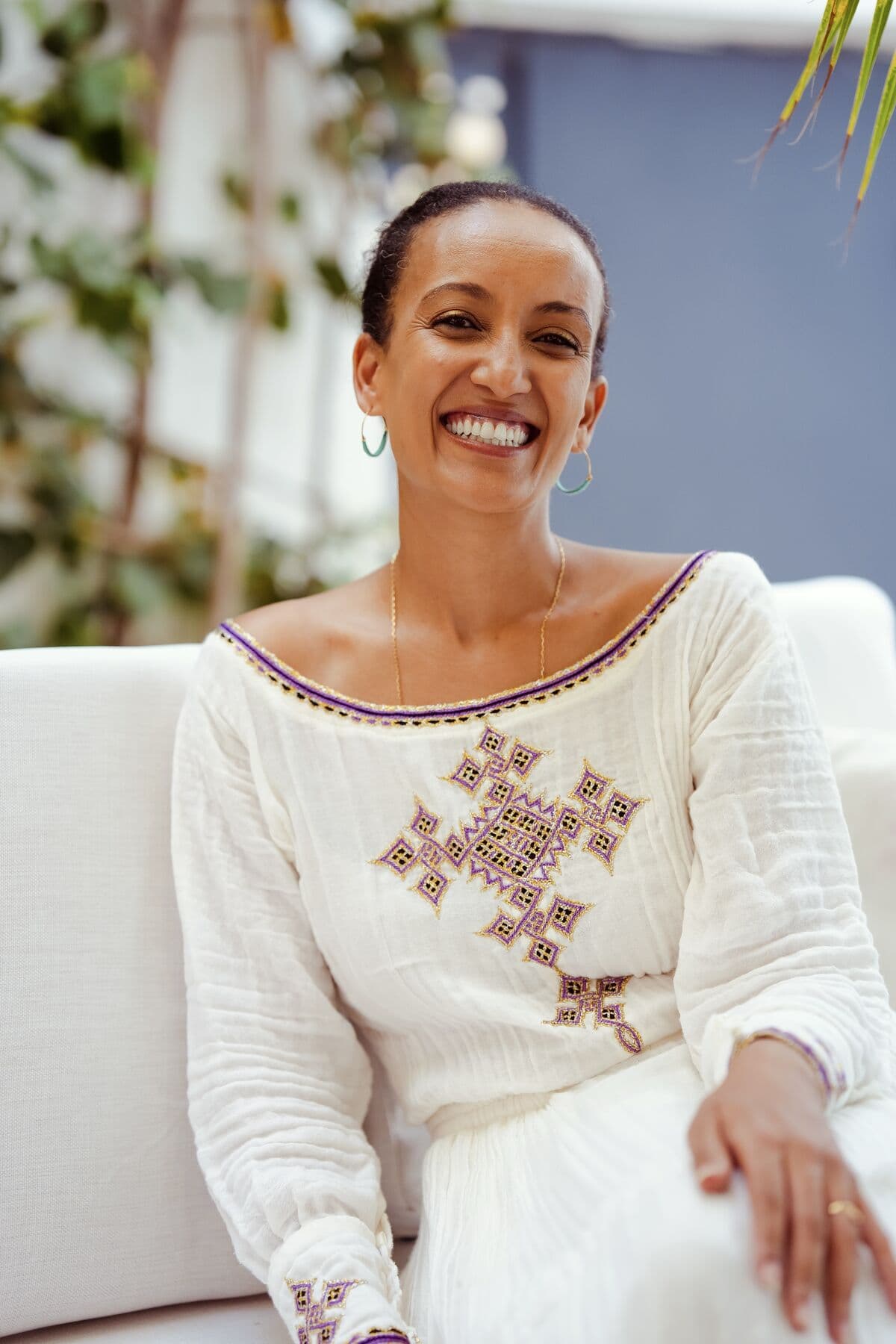
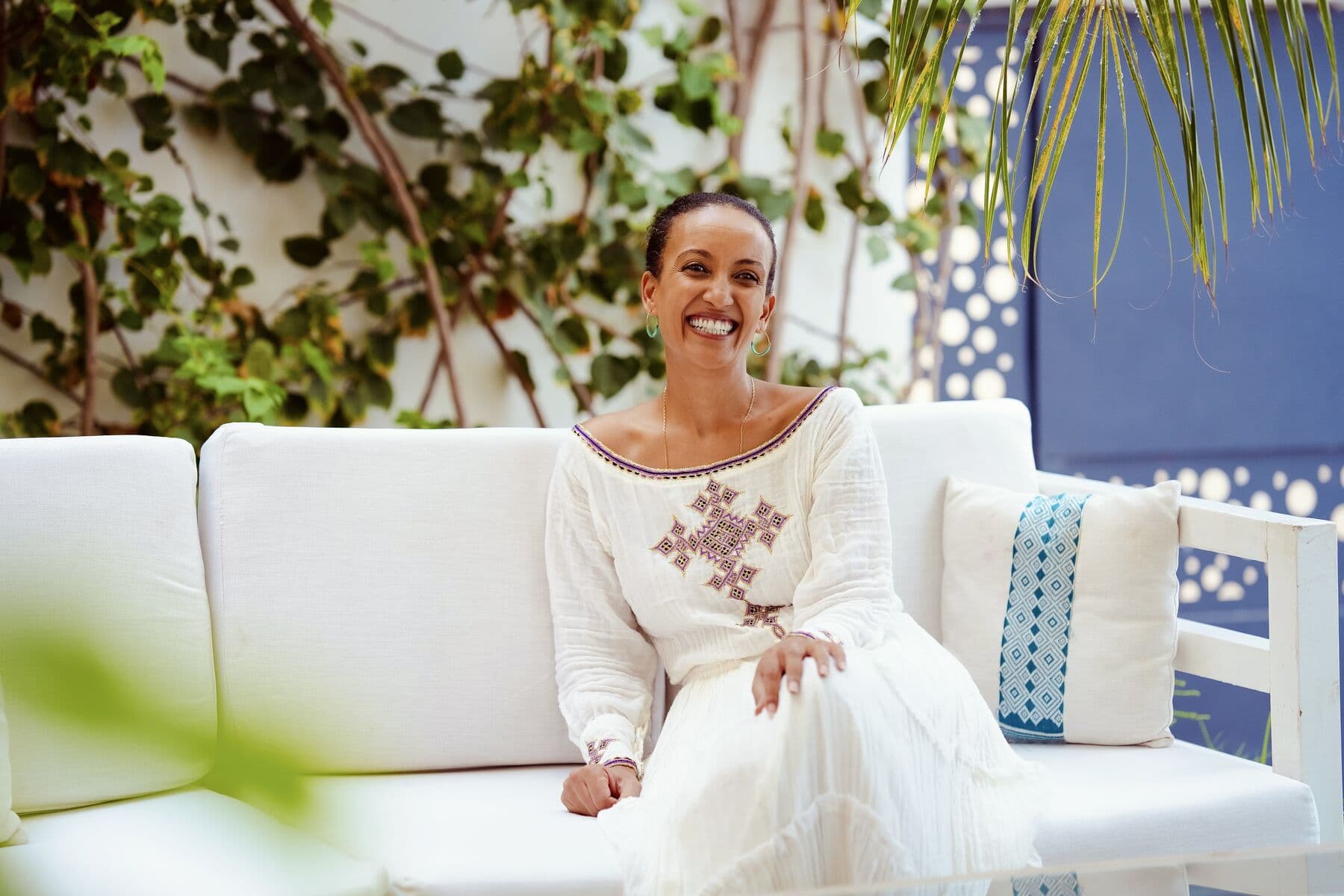
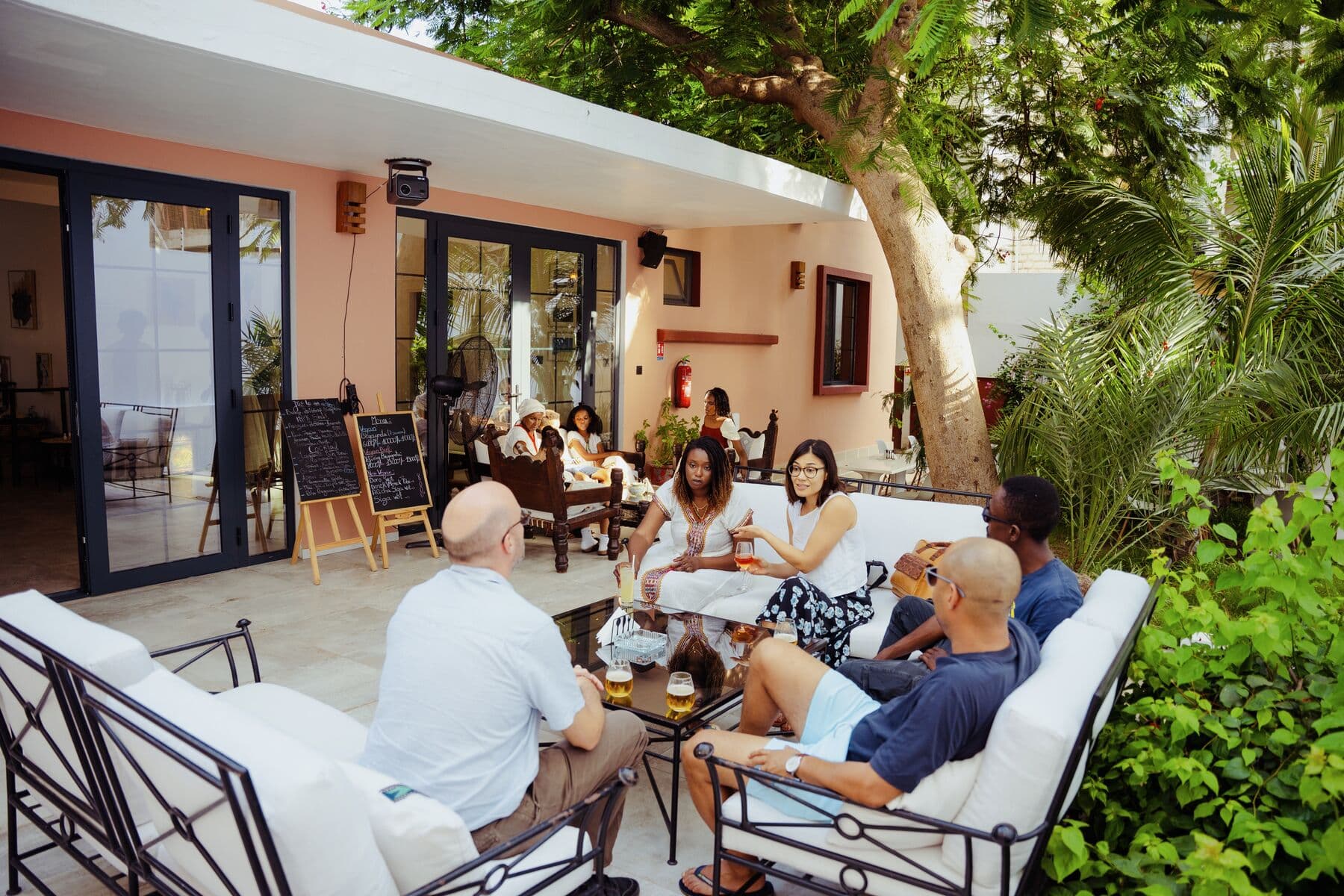
ge'eza is a villa with a garden and terrace at 656 avenue Birago Diop, in Point E. People come for an Ethiopian breakfast between 8am and 11am, for lunch (Tuesday to Friday, a Senegalese dish of the day at 5,500 F with a drink and attaya), for specialty coffee, or for dinner. The living room and other rooms double as a gallery: works by artists from East and West Africa are on view and for sale.
For a newcomer it is a practical place to host a first visitor from home or a new colleague, or to introduce someone to the Ethiopian coffee ceremony, which suits conversation well. You can book online or message us on WhatsApp at +221 78 660 07 07. The house is open Tuesday to Sunday, 8am to 10pm, and closed on Mondays.
Three common mistakes to avoid
Many newcomers make the same missteps, all easy to avoid. The first is signing a lease without testing the daily commute: an attractive address twenty minutes away as the crow flies can mean an hour on the road at rush hour. The second is staying in a bubble: it is tempting to see only other expats, whereas the richest encounters happen with Dakar residents, in cultural venues, associations and around meals. The third is trying to settle everything in the first week: procedures take time, and patience is part of local etiquette.
Keep some time to do nothing as well: walk on the Corniche, sit on a terrace, observe. That is often how Dakar lets itself be understood.
Frequently asked questions
How long does it take to adjust to life in Dakar?
Most expats mention about three months to find their practical and social footing. The pace depends a lot on the neighbourhood you choose and on how you build your circle.
Do I need to speak Wolof to live in Dakar?
No, French is widely used, especially at work and in administration. A few words of Wolof are still very much appreciated and change the tone of conversations.
Which neighbourhood should I pick first?
It depends on where you work or where the children go to school. A central residential area such as Point E, Fann or Mermoz often keeps commutes simple.
Where can I meet people when I first arrive?
In cultural venues, at openings, in associations and around shared tables. At ge'eza, openings, brunches and workshops are all chances to get to know people.