
Dakar · 6 October 2026
Learning Wolof in Dakar: First Phrases and Methods
When you settle in Dakar, a few words of Wolof change the quality of your encounters. The first greetings and thank-yous, how to learn, and a nod to Amharic, the language of Ge'eza.
To start Wolof when you move to Dakar, learn the greetings first: "Salaam aleekum" to say hello, "Maleekum salaam" to answer, "Nanga def?" to ask how someone is, "Maa ngi fi rekk" to say all is well, and "Jërëjëf" to say thank you. These five phrases are enough to change how people welcome you, in the market as in a meeting.
Why a few words change everything
In Dakar, French is the official and working language, and you can get by without Wolof. But Wolof is the language of the street, the market, the taxis, the home. Even a few words show that you are not just passing through: that you live here. The reaction is almost always warm, sometimes amused, often encouraging.
It fits the spirit of teranga, Senegalese hospitality: people take an interest in someone who takes an interest. For a newcomer, whether diplomat, expat or long-stay traveller, it is one of the best investments of the first weeks. See also newly posted diplomat in Dakar.
The first phrases
Here is a small, safe foundation, usable as it stands.
| To say | In Wolof |
|---|---|
| Hello (basic greeting) | Salaam aleekum |
| Reply to the greeting | Maleekum salaam |
| How are you? | Nanga def? |
| I am fine, simply | Maa ngi fi rekk |
| Thank you | Jërëjëf |
| Yes | Waaw |
| No | Déedéet |
| See you next time | Ba beneen yoon |
Pronunciation matters less than effort. The "ë" sounds roughly like the "e" in "the", and doubled vowels are longer. Ask the person in front of you to repeat: people are glad to correct you.
A greeting is an exchange
In Wolof, greeting is not a single formula but a back and forth. You ask how the person is, then the family, then the day, and the other answers each time. This can seem long to someone in a hurry, but it is part of politeness. Do not cut it short: take the time to answer, even if you only know the first words. For a wider frame on these customs, see teranga: understanding Senegal.
How to learn
Several approaches complement each other.
- Classes. Wolof classes exist in Dakar, one to one or in small groups. Ask your mission, your employer or your expat network rather than following a random advert.
- A regular conversation partner. The driver, the guard, the person who works in your home, the market seller: each is a potential teacher. Ask one question a day.
- A notebook. Write down the words you hear, with their meaning, and reread them in the evening. Wolof spelling is phonetic and has several variants, so do not worry about differences.
- Listening. Radio, music, conversations. You start by recognising words before producing them.
- Regularity. Ten minutes a day beats two hours on Sunday.
Resist the urge to understand everything from the start. The goal of the first months is modest: greet, thank, haggle a price with a smile, follow a simple conversation.
Common mistakes to avoid
- Rushing the greeting. Going straight to a request without greeting is the most common slip, and the easiest to fix.
- Using only your left hand to give or receive. Offer and take with the right hand, or with both: it is a general courtesy in Senegal.
- Being afraid to be wrong. People forgive mistakes made with good will, and often correct you with a smile.
- Learning only written phrases. Wolof is first an oral language: repeat out loud, with someone if possible.
Wolof, French and Senegal's other languages
Wolof is the most widely spoken language of the country as a language of exchange between communities, but it is not the only one. Senegal has several national languages, such as Pulaar, Serer, Jola and Mandinka. In Dakar people often move from Wolof to French within a single sentence. If you hear that mix, it is normal, and there is no shame in asking what a word means.
A nod: Amharic at Ge'eza
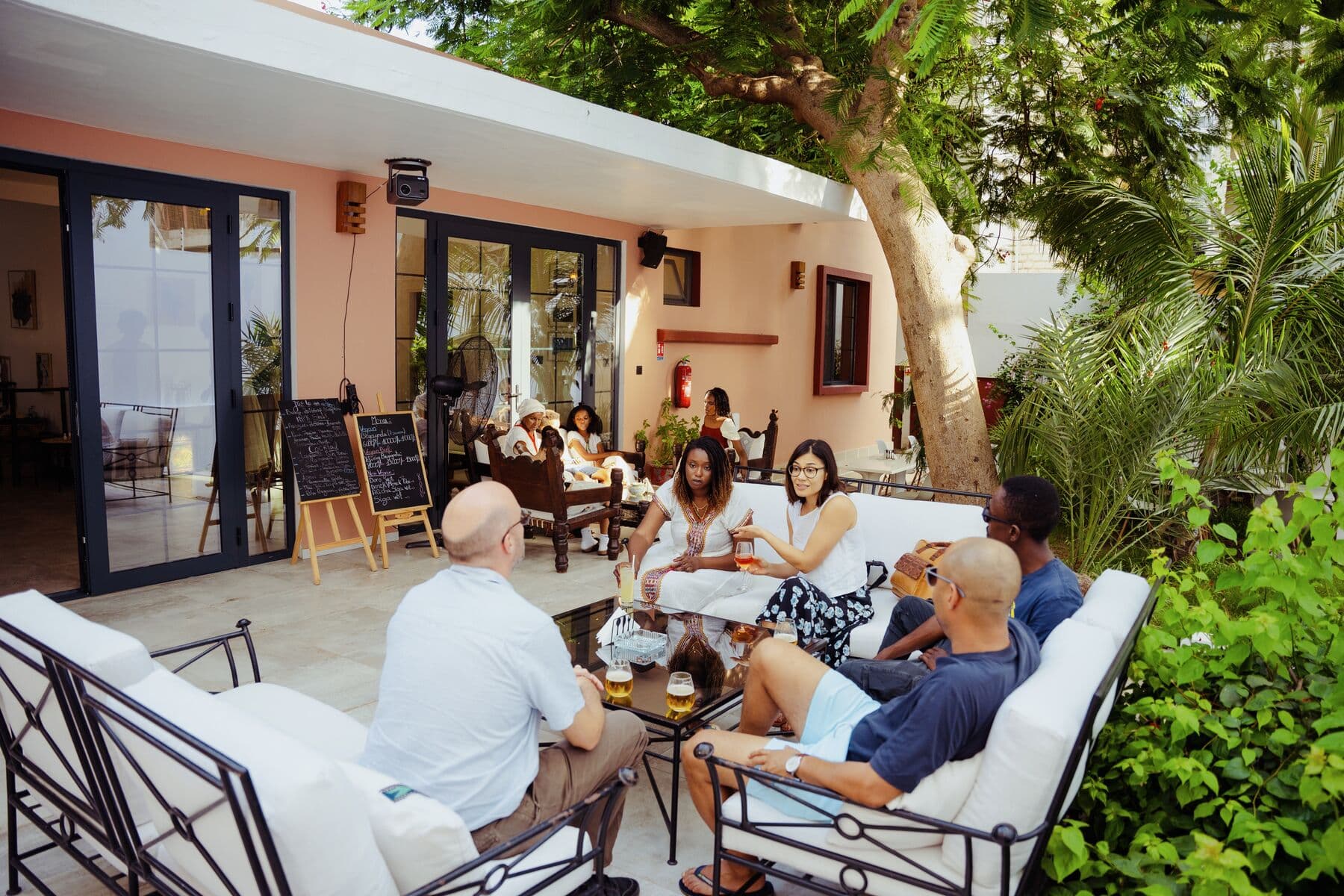
Ge'eza brings two civilisations into dialogue, the Ethiopian and the Senegalese. The name itself, "home" in Ge'ez, comes from an ancient language of Ethiopia. The country's main language today, among many spoken ones, is Amharic, written in the Ge'ez script (see the Geez script explained). If you meet the Ethiopian team, two words go down well:
- Selam: hello.
- Ameseginalehu: thank you.
And the word "bunna", coffee, will lead you straight to the ceremony. Between "Jërëjëf" and "Ameseginalehu" you already have two ways to say thank you in Point E.
Practising at the table
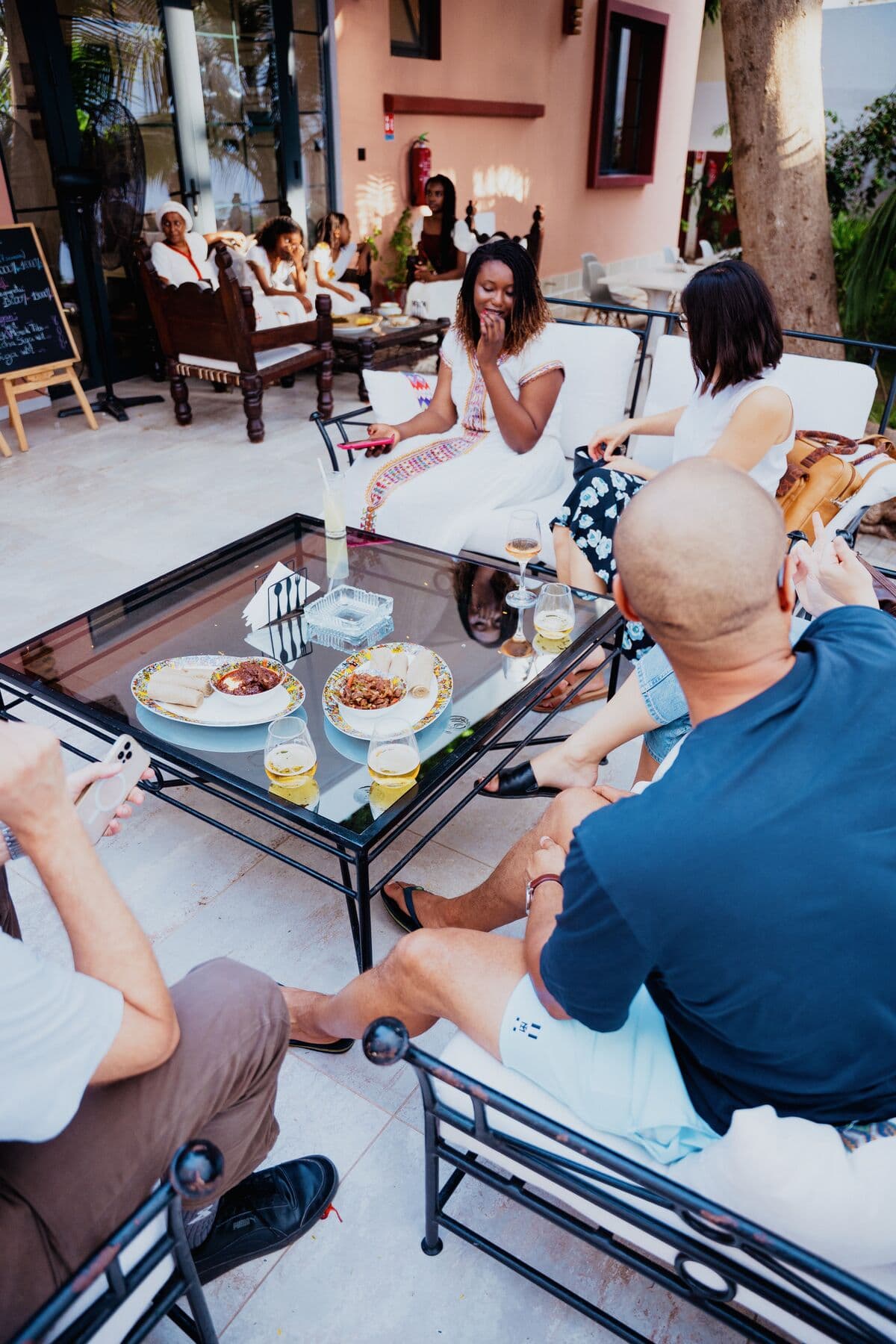
A restaurant is good practice ground. You ask, you thank, you comment on what you eat. At Ge'eza, the Senegalese dish of the day, served Tuesday to Friday at lunch for 5,500 F with water or a local juice and attaya, is a chance to recognise mafé, thiéboudienne, supou kanja and chicken yassa by name. The restaurant is open Tuesday to Sunday, 8am to 10pm, at 656 avenue Birago Diop, Point E. You can book online or write on WhatsApp at +221 78 660 07 07.
Frequently asked questions
Do I need Wolof to live in Dakar?
No, French is enough for work and most formalities. But a few words of Wolof make daily life and encounters much easier.
How do you say thank you in Wolof?
"Jërëjëf", pronounced roughly "jur-uh-jef".
How do I answer "Nanga def?"
With "Maa ngi fi rekk", which means "I am just here", a way of saying all is well.
How long to hold a simple conversation?
It depends on practice. With a few minutes a day and regular partners, first exchanges come within weeks.