
Dakar · 6 October 2026
Newly Posted Diplomat in Dakar: A Guide to the First Weeks
Newly posted to Dakar, at an embassy or an international organisation: how to build a network, the codes worth knowing, where to host, and which places help you understand the city.
When you are posted to Dakar, at an embassy, a consular office or an international organisation, the first weeks serve three purposes: settling in, understanding local codes and building a network. The city is welcoming, but it is discovered through people, not guidebooks. This article offers practical pointers, without claiming to replace the advice of your own mission or your outgoing colleague.
The first two months: the order of things
Every posting has its own obligations, but the same order tends to come back.
- Paperwork and housing. They take time, and they condition everything else.
- Choosing a neighbourhood. Point E, Fann, Almadies and Plateau do not have the same life or the same travel times. A comparison is in Dakar neighbourhoods for expats.
- First introductions. Handover with your predecessor, meetings with counterparts, first lunches.
- Everyday landmarks. Markets, pharmacies, reliable restaurants, a quiet place to work.
It is tempting to sort everything out in a month. It is wiser to allow more time, because in Dakar many things are settled through relationships rather than forms.
Building a network without scattering yourself
A diplomat's network in Dakar usually has several circles.
- The institutional circle: your mission, counterparts at other missions, contacts in ministries and organisations.
- The cultural circle: galleries, cultural centres, openings, festivals. It is often the richest for understanding society, and the least formal.
- The local professional circle: entrepreneurs, academics, journalists, associations.
- The informal circle: neighbours, friends of friends, expat and diaspora communities.
The advice heard most often: do not stay in a single circle. A lunch in a cultural venue lets you meet people a meeting room does not bring together.
Social codes worth knowing
Senegal is known for teranga, hospitality. A few pointers help you fit in.
Greetings take their time. People do not go straight to the point: they ask after news, family, the day. A hurried greeting reads as coldness. If you know two or three phrases in Wolof, they are much appreciated (see learning Wolof in Dakar).
The time of a relationship. A deal is rarely concluded at the first meeting. The second or third meal often counts for more than the first.
An invitation is returned. If you are hosted, you are expected to host someday. Thinking about a venue early in your posting avoids being caught short.
Dress and tone. Sober and careful in official settings. In cultural and friendly settings, freer, often with local dress.
The holiday calendar. The country's calendar is marked by Muslim and Christian holidays. Check public holidays before fixing an event.
Choosing a place to host
After a few weeks comes the first occasion to host: a colleague, a local contact, a visiting delegation. Three questions help you choose.
- What register? A working lunch, a dinner, a ceremony, an event with guests.
- What atmosphere? Neutral and discreet, or warm and cultural.
- What logistics? Dietary needs, accessibility, quiet, opening hours.
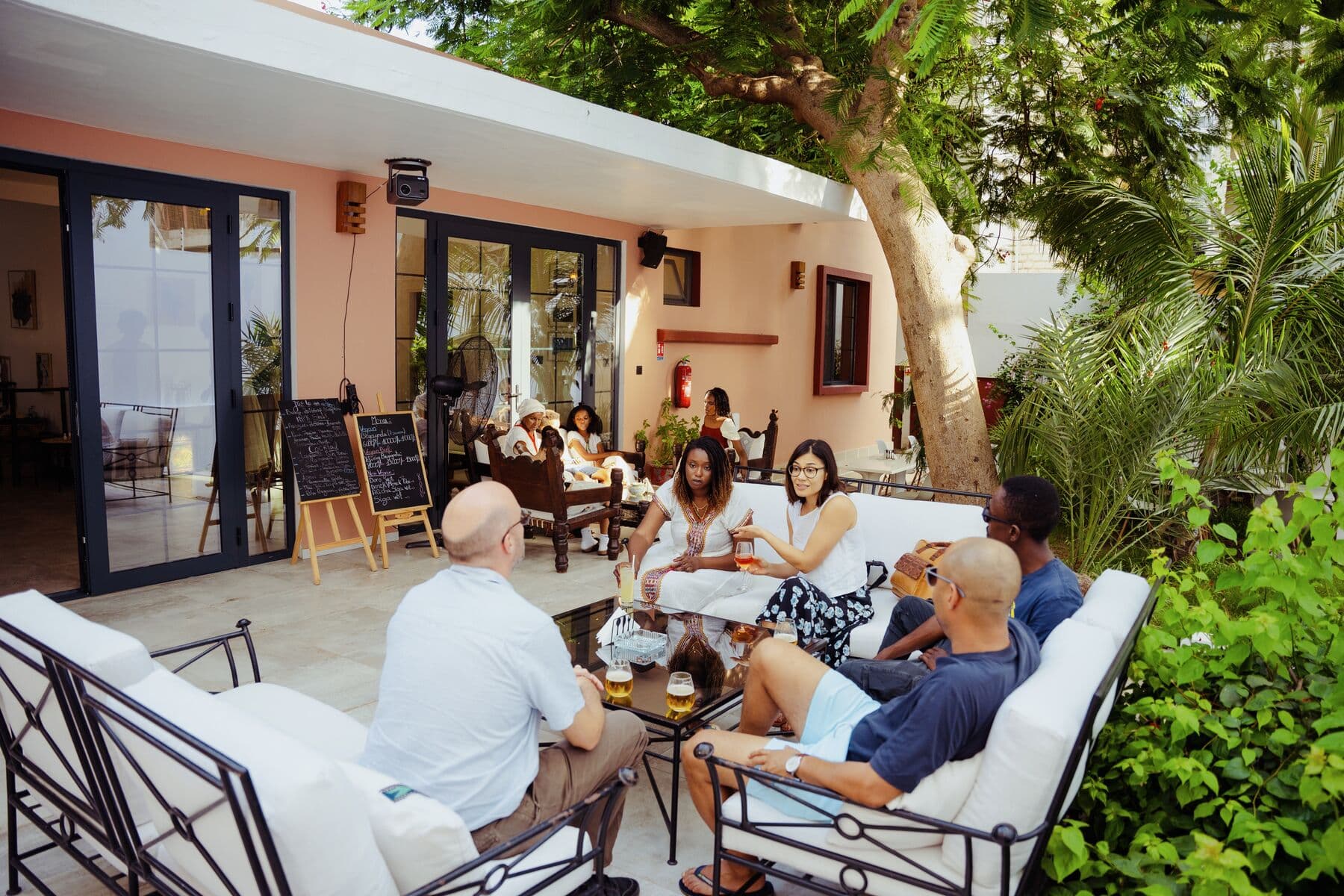
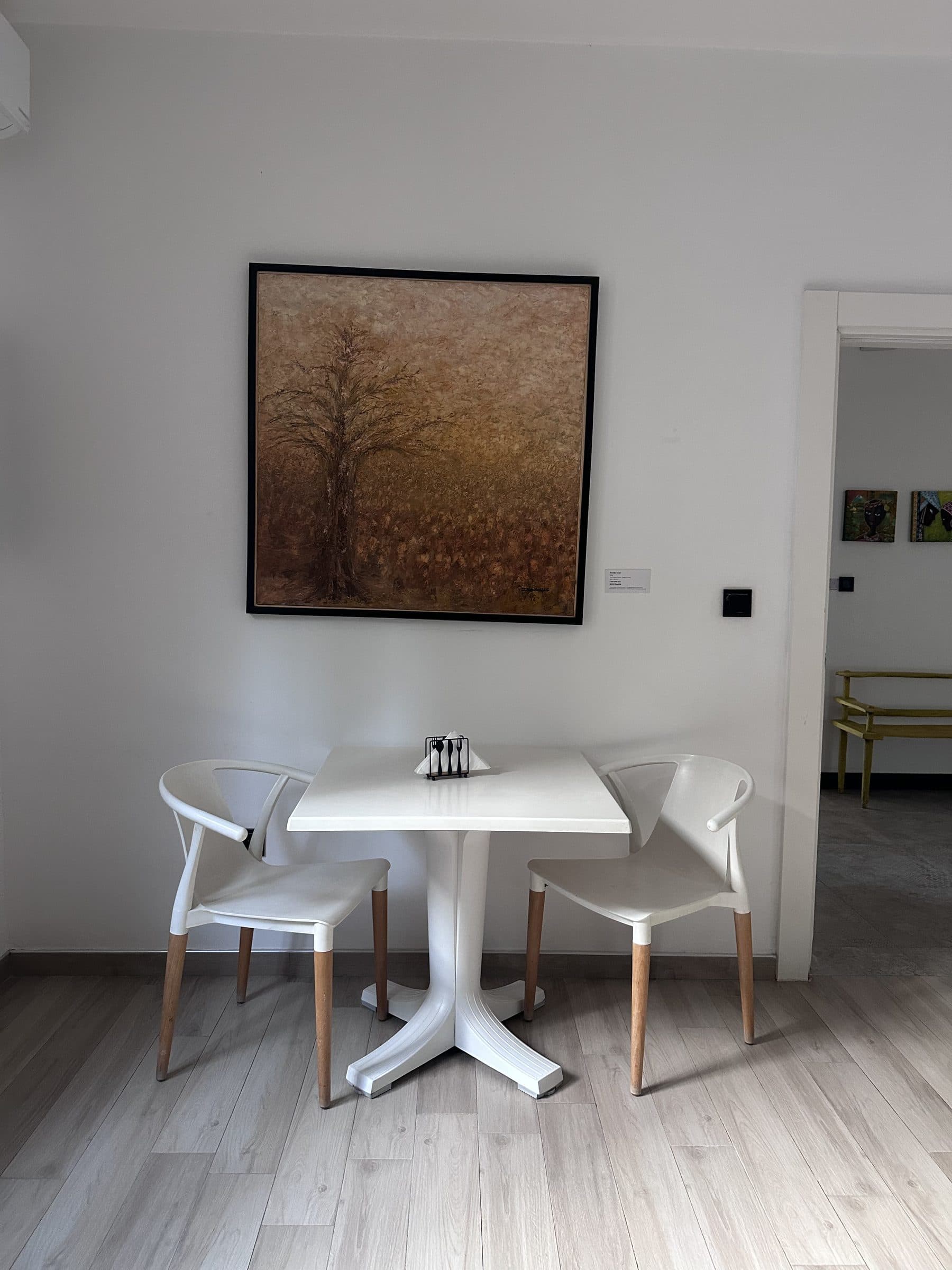
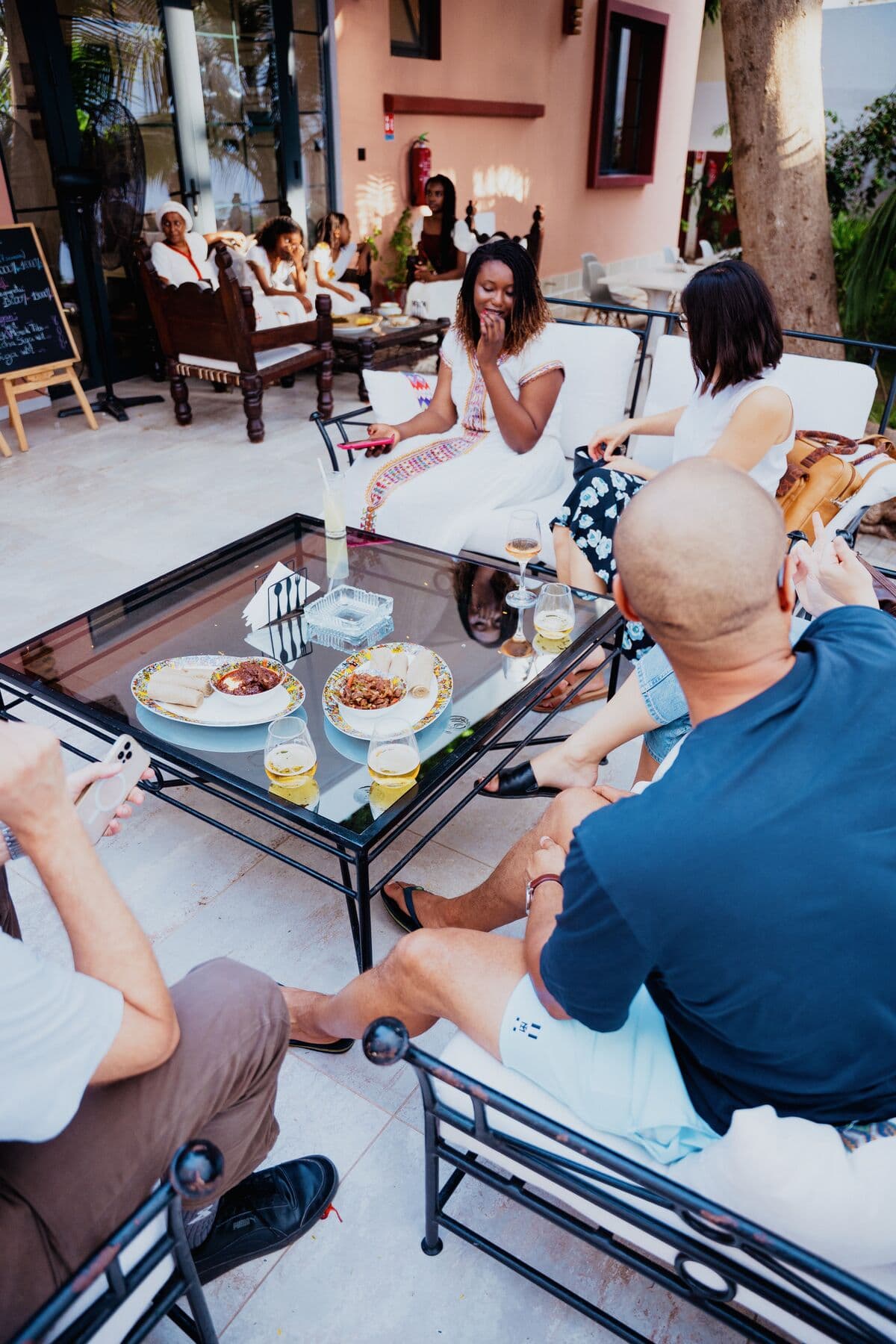
Ge'eza, a villa in Point E with a gallery lounge, a glass-roofed room and a terrace under the trees, offers a setting of that kind. You can have an Ethiopian or Senegalese lunch (the dish of the day, Tuesday to Friday at lunch, is 5,500 F with water or a local juice and attaya), share a beyaynetu from 7,000 F for one person, and finish with the coffee ceremony, 5,000 F per person, a ritual of hospitality that suits an official meeting well. Group formats and hire are discussed on the spaces page, with a reply within 24 working hours.
For a detailed plan of what can be organised, see hosting a delegation in Dakar.
Understanding the city through art and culture
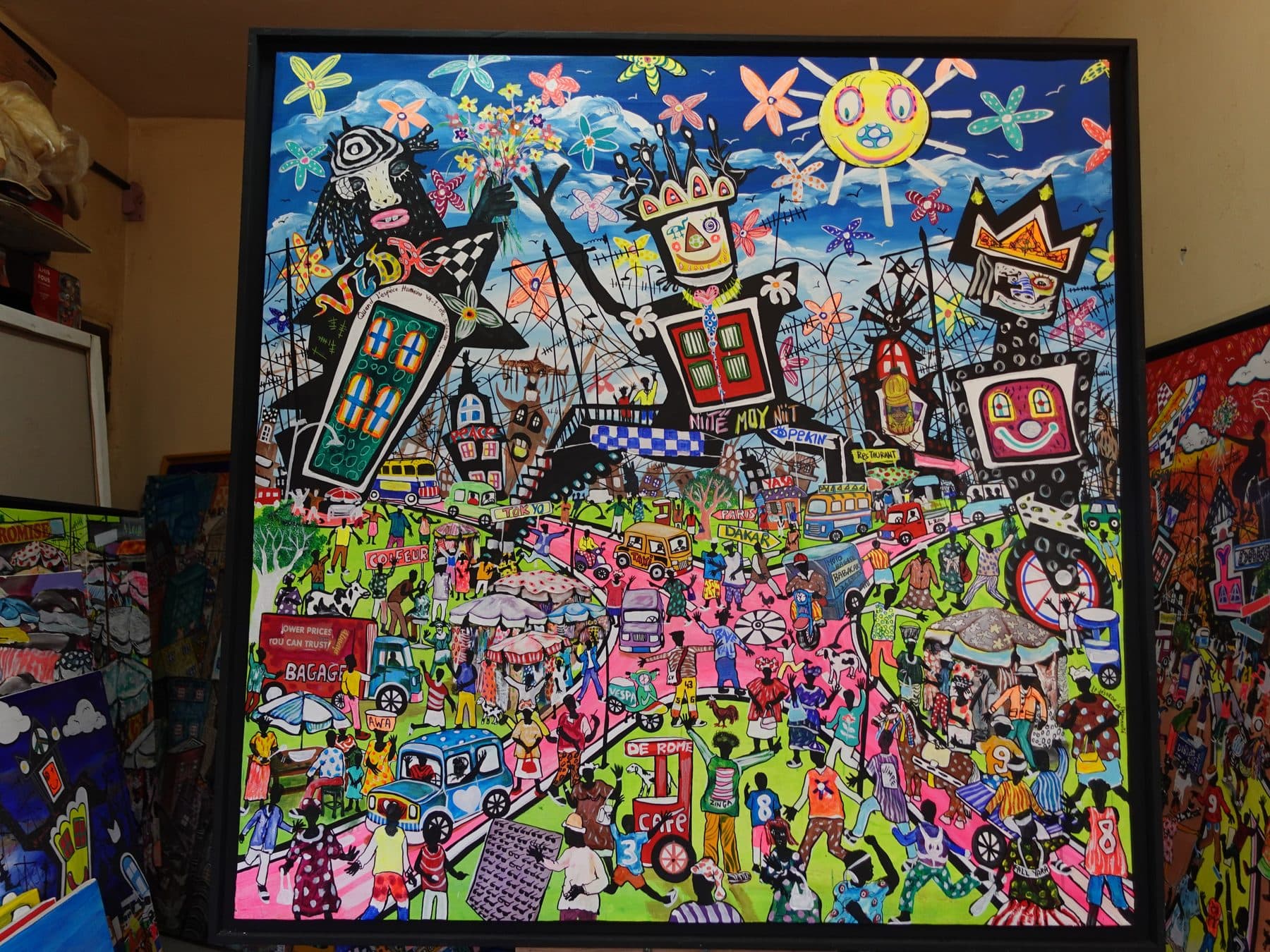
Dakar has an active art scene that sets the rhythm of city life: galleries, the Dak'Art Biennale, cultural centres, museums. Visiting exhibitions is one of the most natural ways to start a conversation and meet artists. The Ge'eza gallery presents artists from East Africa, West Africa and the diaspora, and the house hosts events whose calendar is on the site's events calendar page. No date is guaranteed in advance: check the page or write to the team.
A few practical habits
- Check opening hours before travelling: many venues close on Monday, as Ge'eza does.
- Plan journeys, allowing for rush-hour traffic.
- Book ahead for guest lunches and dinners.
- Mention dietary needs when booking: Ethiopian fasting dishes are all vegan.
- Keep a contact notebook from the start: names are hard to remember after three weeks.
Visiting Ge'eza
The house is open Tuesday to Sunday, 8am to 10pm, at 656 avenue Birago Diop, Point E. For a lunch or dinner you can book online or write on WhatsApp at +221 78 660 07 07.
Frequently asked questions
Do I need to speak Wolof to work in Dakar?
French is the official and working language, but a few words of Wolof are much appreciated and open the conversation.
Where can I host an official guest in Dakar?
It depends on the register. A quiet place with a careful setting and dishes suited to dietary needs works well. Ge'eza hosts lunches and dinners in Point E.
Can I organise a private reception at Ge'eza?
Yes, the house offers exclusive hire of its spaces. Details and a quote are requested from the team, with a reply within 24 working hours.
Is the restaurant suitable for vegetarian and vegan diets?
Yes. The fasting dishes are all vegan, made without butter, and the beyaynetu brings them together.