
Guide · 22 October 2026
Investing in African Art: the Honest Version
Investing in contemporary African art, with no promised return: buying what you genuinely like first, documenting every purchase, understanding the primary and secondary markets. Practical pointers from a Dakar gallery.
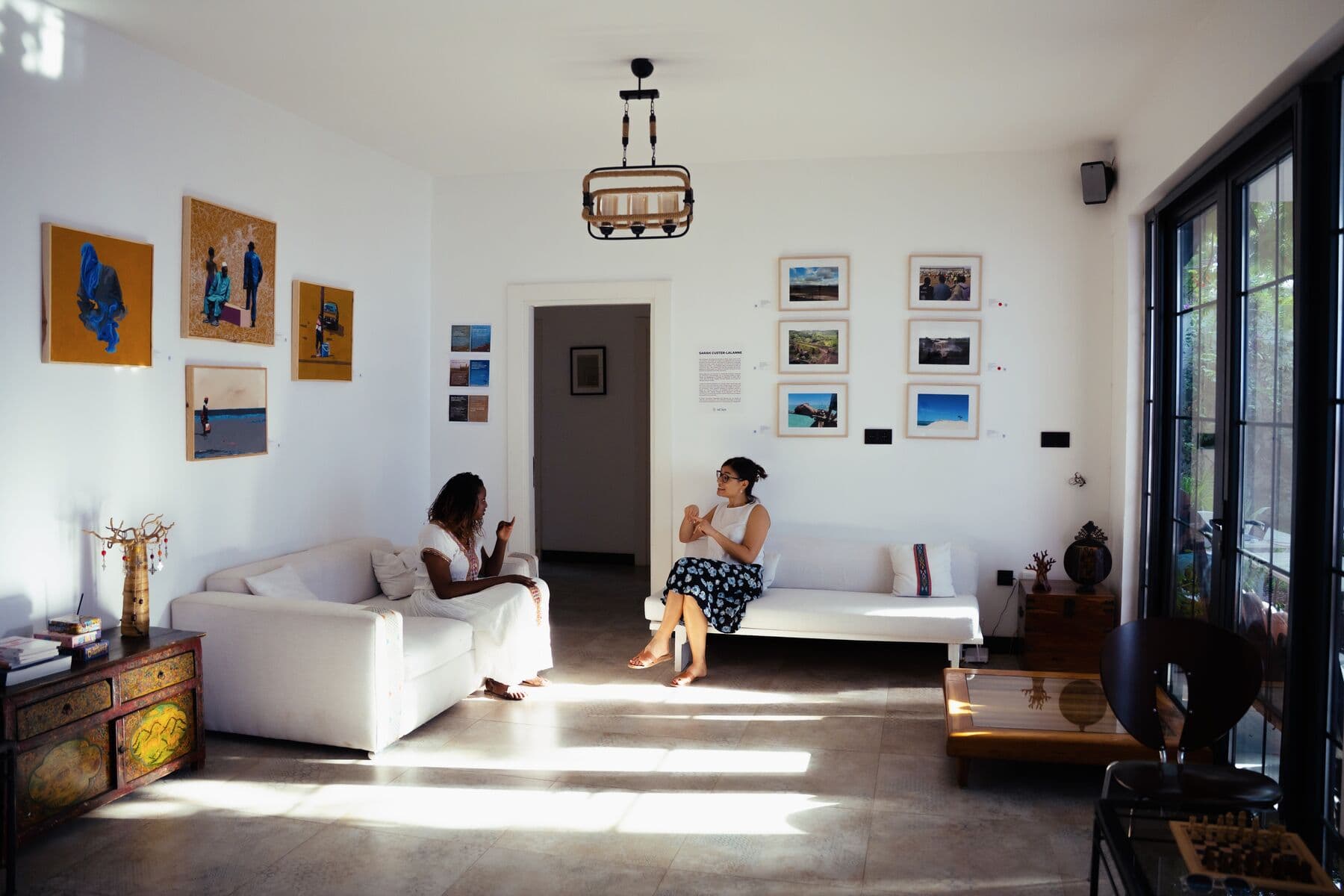
Investing in contemporary African art, in its honest version, starts with a simple rule: no piece comes with a guaranteed return, and a serious gallery never promises future appreciation. What can genuinely be built is a documented collection, bought from living artists on the primary market, with an invoice and a certificate of authenticity for every piece. That is the approach followed at Ge'eza's gallery in Point E, where every work leaves with its certificate signed by the artist.
Buy what you like, first
The first rule of a thoughtful purchase remains choosing a piece you actually like, independent of any assumption about its future value. A painting you regret buying stays a poor investment even if its price were ever to rise; a painting you enjoy keeping at home stays a good purchase even if its price never moves. That rule protects you from disappointment, whatever the market does.
Primary market and secondary market
Buying directly from a living artist, through a gallery, is called buying on the primary market: the price is set between the artist and the venue showing the work, with no published list in Ge'eza's case, given piece by piece on request. The secondary market, made up of auctions and resales between collectors, follows different logic, tied to the standing of an artist already established. The three artists shown at Ge'eza's gallery, Ibou Diagne, Saadio and Tampidaro, sell on the primary market.
What protects a purchase over time
Three things matter more than any prediction of value: the invoice, which proves the purchase and its price; the certificate of authenticity, which confirms the piece is genuinely by the artist; and good storage conditions, away from direct sunlight and humidity. The article on the certificate of authenticity covers what that document should contain and why it matters as much for insurance as for any future resale.
One example available at the gallery
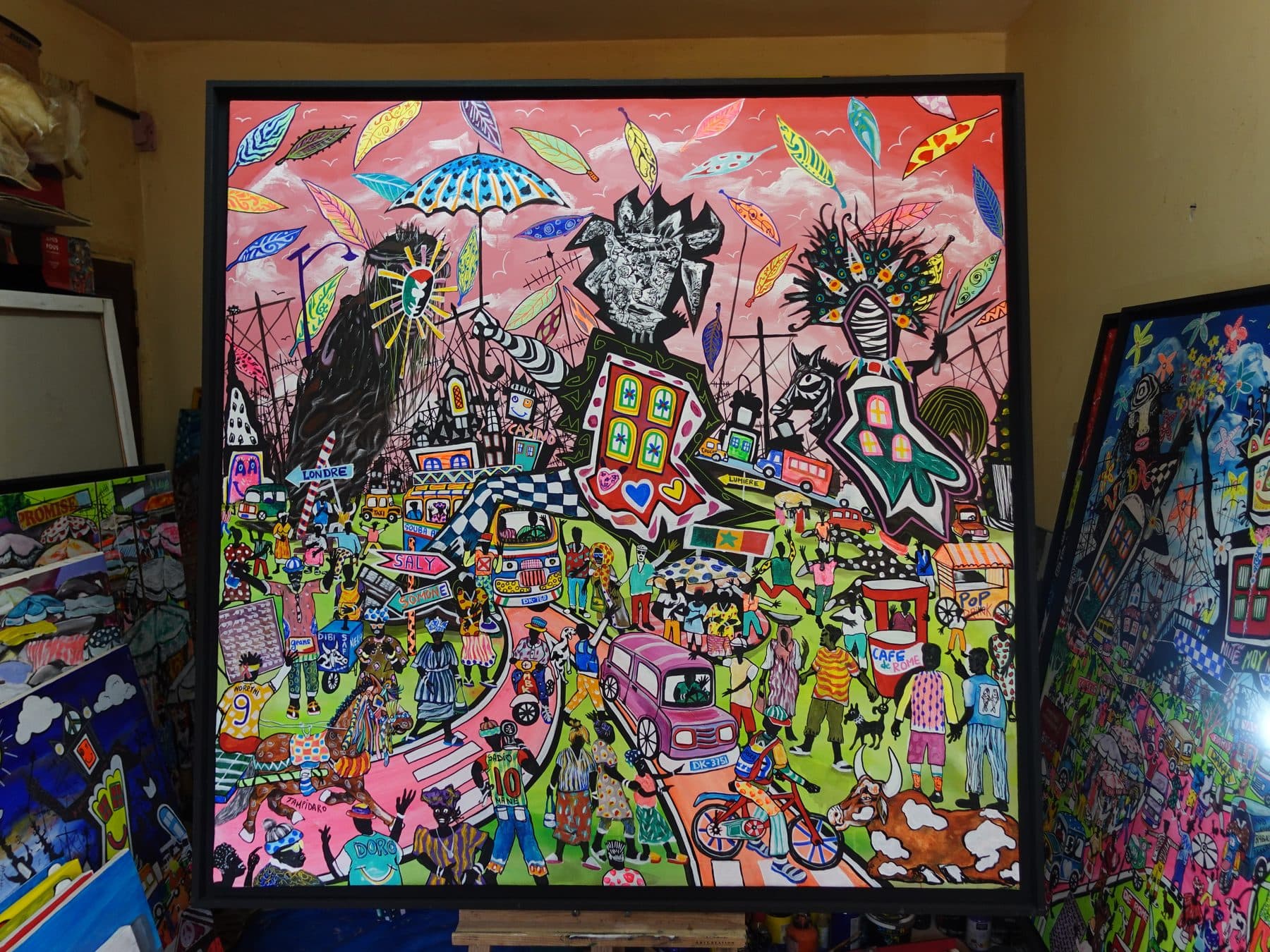
Among the works currently on show, "Sans titre I (Lien commun)," an acrylic on canvas from 2025, not attributed to a specific artist, illustrates well what buying on the primary market means: a documented piece, with a price given on request from its page, rather than a value projected forward in time.
What the market figures say
According to the Art Basel and UBS Art Market Report 2026, produced by Arts Economics, 87 percent of dealer transactions in 2025 involved works under 50,000 dollars, and 49 percent of those dealers' buyers were new clients. These figures show a market that is widening, without guaranteeing the price of any one piece rising: a global market figure says nothing about what happens to a particular canvas.
Time, a better ally than speculation
A living artist builds their practice over several years: the number of works they show, the techniques they explore, the formats they take on all shift from one year to the next. Following that path over time, rather than looking for a single piece expected to gain value quickly, remains the more honest way to approach a purchase from an artist still active today. The works shown at Ge'eza's gallery, for instance, span from 2021 to 2025 for Ibou Diagne, which already shows a development across several years rather than a single isolated moment.
What a gallery can and cannot guarantee
A gallery can guarantee a piece's authenticity through a signed certificate, its provenance through an invoice, and its availability at the time you ask. It cannot guarantee an artist's future standing, the ease of a future resale, or a resale timeline. Any wording that promised appreciation or a return on a specific piece should raise a flag rather than build confidence: that is not how a serious art market works, whether the artist is just starting out or already established.
Build rather than speculate
A collection is built better by following a few artists over time than by multiplying isolated purchases in the hope of a return. The guide on starting an African art collection covers setting a budget, documenting each piece and putting together a coherent collection, purchase after purchase.
Keeping a record of each decision
Beyond the invoice and the certificate, noting why you chose one piece over another, its exact dimensions, and where it hangs in your home is useful to whoever picks up this collection one day, whether that is you in a few years or someone close to you. That simple habit often matters more, over time, than an estimate of value that rests on nothing verifiable.
See before you decide
No figure replaces a visit to judge a piece at its real scale. Ge'eza's gallery can be visited without an appointment, Tuesday to Sunday, 8am to 10pm. For any question about a specific piece, write on WhatsApp to +221 78 660 07 07 or to geezacultures@gmail.com.
Frequently asked questions
Is contemporary African art a good investment?
No piece comes with a guaranteed return. What can be built is a documented collection bought from living artists, not a promise of future appreciation.
What is the difference between the primary and secondary markets?
The primary market means buying directly from a living artist through a gallery; the secondary market covers resales and auctions between collectors.
What should I keep after a purchase to protect its documented value?
The invoice and the certificate of authenticity, together, along with good storage conditions away from sunlight and humidity.
Are Ge'eza's prices published publicly?
No, each price is given on request from the artwork's page, since the primary market works piece by piece.