
Art · 6 October 2026
Starting a Contemporary African Art Collection in Dakar
Your first purchase of contemporary African art: setting a budget, looking for a long time, meeting the artist, documenting the work, framing it and keeping it safe in a humid climate. A step-by-step guide from Dakar.
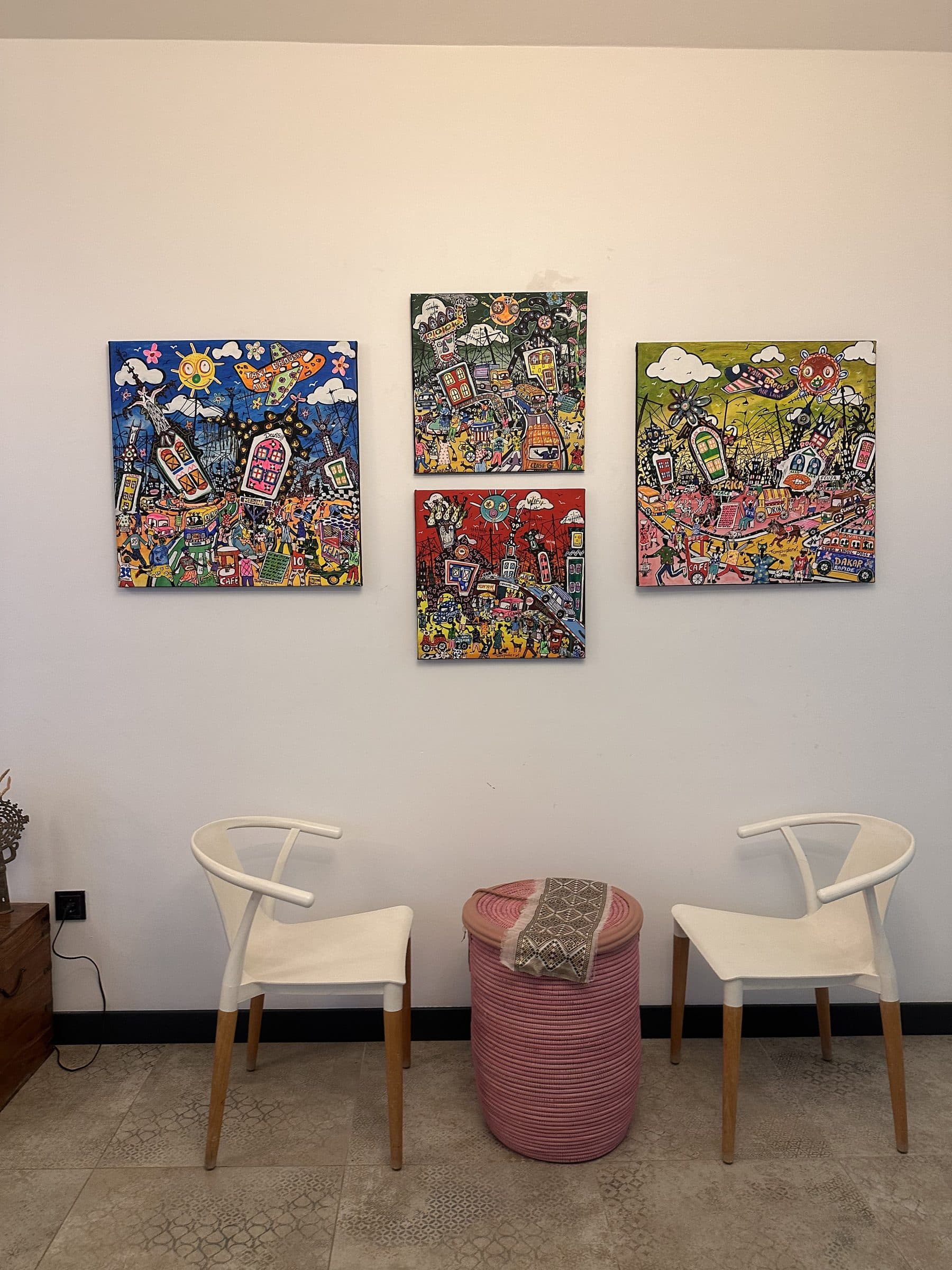
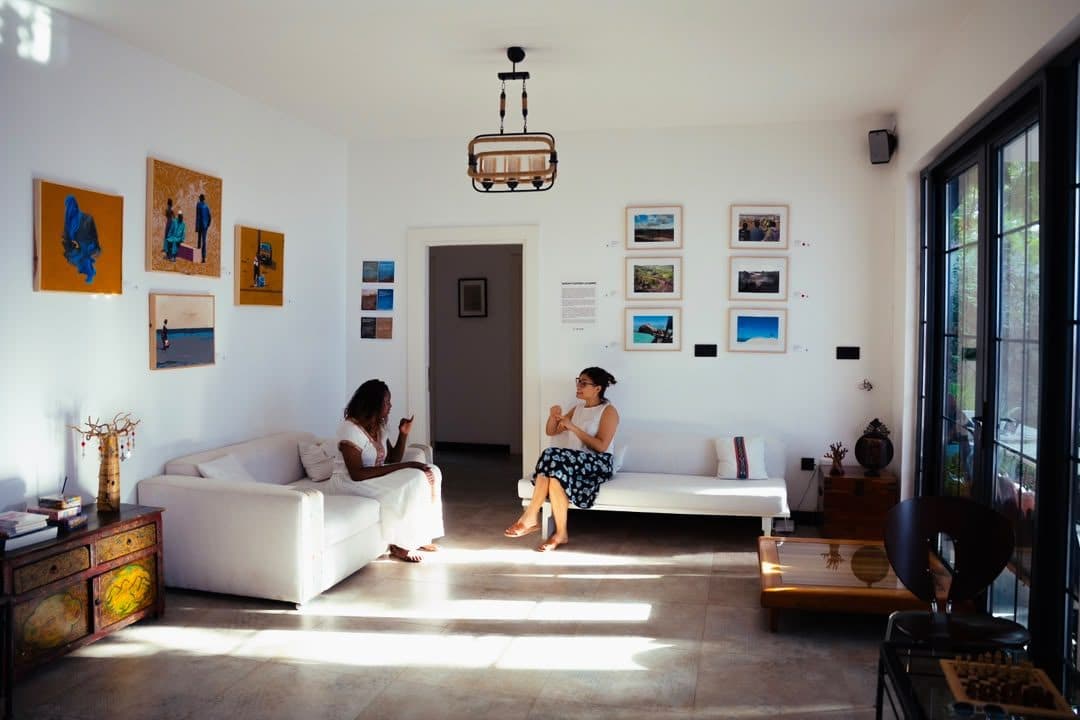
To start a collection of contemporary African art, first set a budget you are comfortable with, look at a lot before buying, meet the artist if you can, ask for a certificate of authenticity and an invoice, then take care of the work: suitable framing, hanging away from direct sun, and attention to humidity. In Dakar, the Ge'eza gallery shows works to acquire, with prices on request and a certificate signed by the artist.
Start by looking
The best advice is also the simplest: see works, often. Visit galleries, exhibitions, studios when they open, and let time sort things out. A work that returns to your mind a week later deserves more attention than a quick glance suggests. To find the venues, see the guide to art galleries in Dakar.
Look beyond the city walls too. Biennials, fairs, catalogues and artists' websites help you understand the landscape. But nothing replaces seeing the work in person: size, material, brushwork and light cannot be guessed on a screen.
Set a budget
Decide on a sum you can spend without worry, including framing, any transport and insurance. A first purchase does not need to be spectacular. A work you enjoy living with beats a piece bought to impress. Prices of Ge'eza works are given on request: feel free to ask, with no commitment, before deciding.
Meet the artist
Talking with the person who made the work changes your relationship with it. Openings, studio visits and gallery events are simple occasions. Ask concrete questions: how was the work made, what is the series, what motivated the subject. You do not have to understand everything to buy, but these exchanges build a lasting attachment.
To see who has already been shown at Ge'eza, visit the artists page.
Document the purchase
Keep a record of everything: artist's name, title, year, technique, dimensions, invoice and the signed certificate of authenticity. Take photographs of the work on receipt. Note the gallery's contact. This simple file serves for insurance, for a possible resale, for an exhibition or a loan. To understand the role of the main document, read the answer on the certificate of authenticity.
Frame with care
Framing protects the work as much as it shows it off. For a work on paper or a photograph, choose conservation materials and glass that guards against light. A canvas can be shown unframed, or in a light floater frame that protects the edges. Get advice from a framer used to artworks, and avoid glues and adhesives that damage paper over time.
Keep it safe in a humid climate
In Dakar, the rainy season and the nearness of the sea put works under strain. A few simple habits help:
- Avoid damp walls and poorly ventilated rooms, where mould can appear.
- Keep the work out of direct sun. Direct light fades pigments and tires supports.
- Leave air behind the work. A small gap between wall and frame limits condensation.
- Check the work from time to time: stains, rippling paper and a musty smell are warning signs.
- Dust gently, with no liquid product, using a dry cloth or a soft brush.
Air conditioning or a dehumidifier can also help in a room where sensitive works hang. If in doubt about a valuable piece, ask a conservator.
Build over time
A collection forms in touches. Go back to see an artist, follow their new exhibitions, and let your taste evolve. You can choose a guiding thread, a country, a technique, a theme, or stay open to whatever moves you. Both approaches work. What matters is to choose knowingly and to enjoy living with what you buy.
Buying at Ge'eza
The works on show can be seen Tuesday to Sunday, 8am to 10pm, at 656 avenue Birago Diop in Point E. Payment is by Wave, Orange Money, bank card or on site. The work is collected at the gallery or shipped outside Dakar on a quote. For a question or a price request, visit the gallery page or write on WhatsApp at +221 78 660 07 07.
Common first-purchase mistakes
Buying under pressure of the moment, without comparing. Neglecting side costs (framing, transport, insurance). Forgetting to ask for the certificate and the invoice. Hanging the piece where it is exposed to sun or damp. And above all, buying for a reason that is not your own. A collection is built over time: there is no rush.
Questions to ask the gallery
Before you decide, a few questions are worth asking. Who made the work, and has the artist shown elsewhere? What are the technique, support and dimensions? Is the work signed, and will it come with a certificate signed by the artist? What is the price, and what does it include? How can the work be collected or shipped? Good answers are specific. A gallery that welcomes questions is usually a good sign.
Frequently asked questions
How much should I spend on a first purchase?
There is no ideal sum. Choose a comfortable amount that includes framing and transport, and buy what you love.
Should I meet the artist before buying?
It is not compulsory, but it is often enriching. Openings and gallery events are good occasions.
How do I protect a work from humidity?
Avoid damp walls, leave air behind the frame, keep the work away from direct sun and check it regularly.
Do Ge'eza works come with a certificate?
Yes, every work sold leaves with a certificate of authenticity signed by the artist.