
Guide · 22 October 2026
Partner Venue for Cultural Projects in Dakar: What It Offers
What a private cultural venue in Dakar can bring to a foundation, institute or embassy looking for a local hosting partner: spaces, a kitchen, a coffee ceremony, and programming already delivered.
A foundation, institute or embassy looking for a local hosting partner in Dakar will find, at private cultural venues, available spaces, a kitchen, and often programming already tested, useful for the Dakar leg of a project funded elsewhere. That kind of role, a venue that hosts without being the project's funder, is the one envisaged by cooperation programmes such as Spaces of Culture, run by the European Union and the EUNIC network, which fund local cultural projects carried out in partnership.
A hosting role, not a funding one
A private cultural venue generally grants no funding and does not present itself as a project's funder: it offers what it already has, a space, a kitchen, a programme, for the part of the project that takes place there. It is the association, institute or embassy behind the application that answers for the funding to the programme in question. That distinction matters for any partner preparing an application with a cooperation fund or a cultural foundation.
Flexible spaces
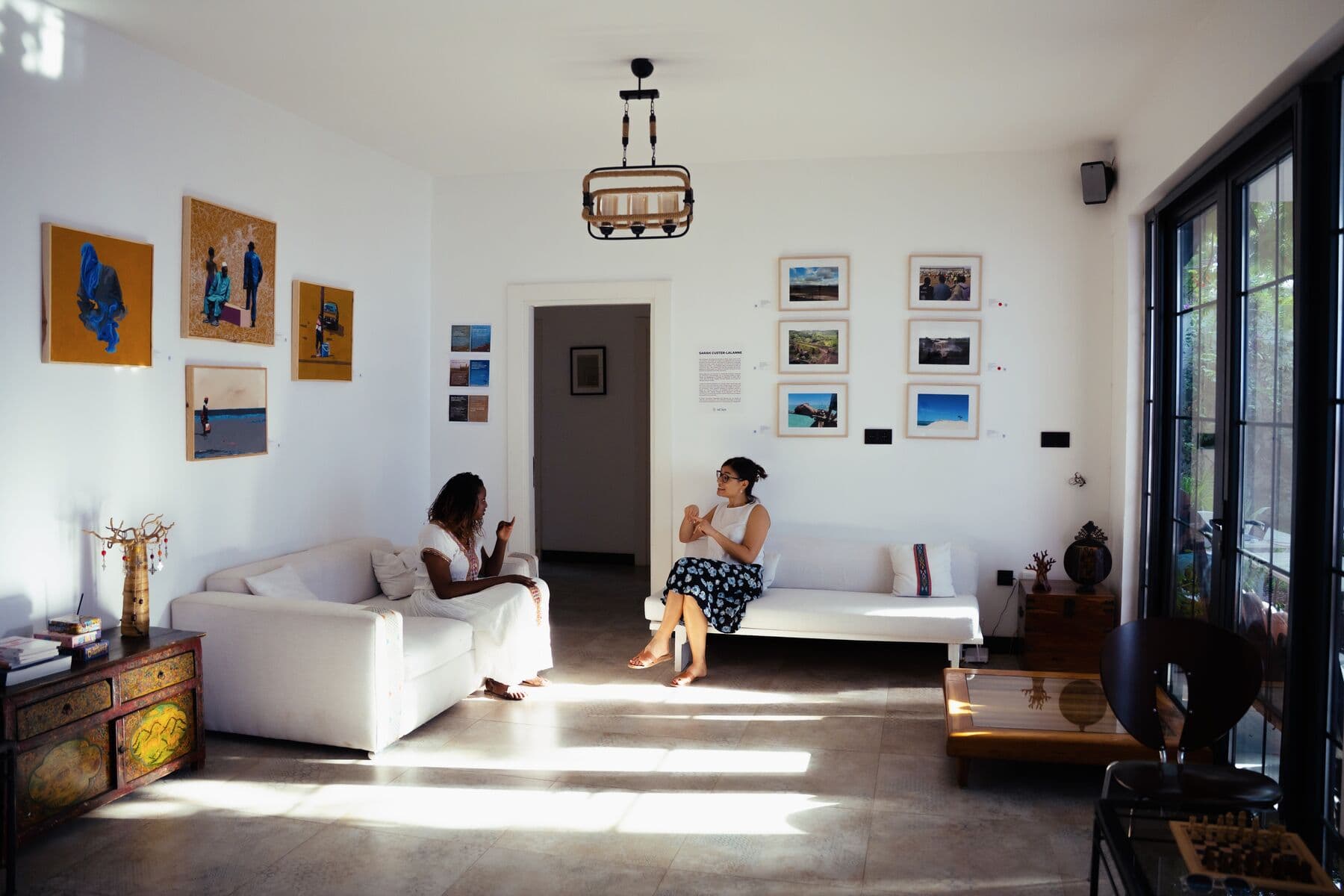
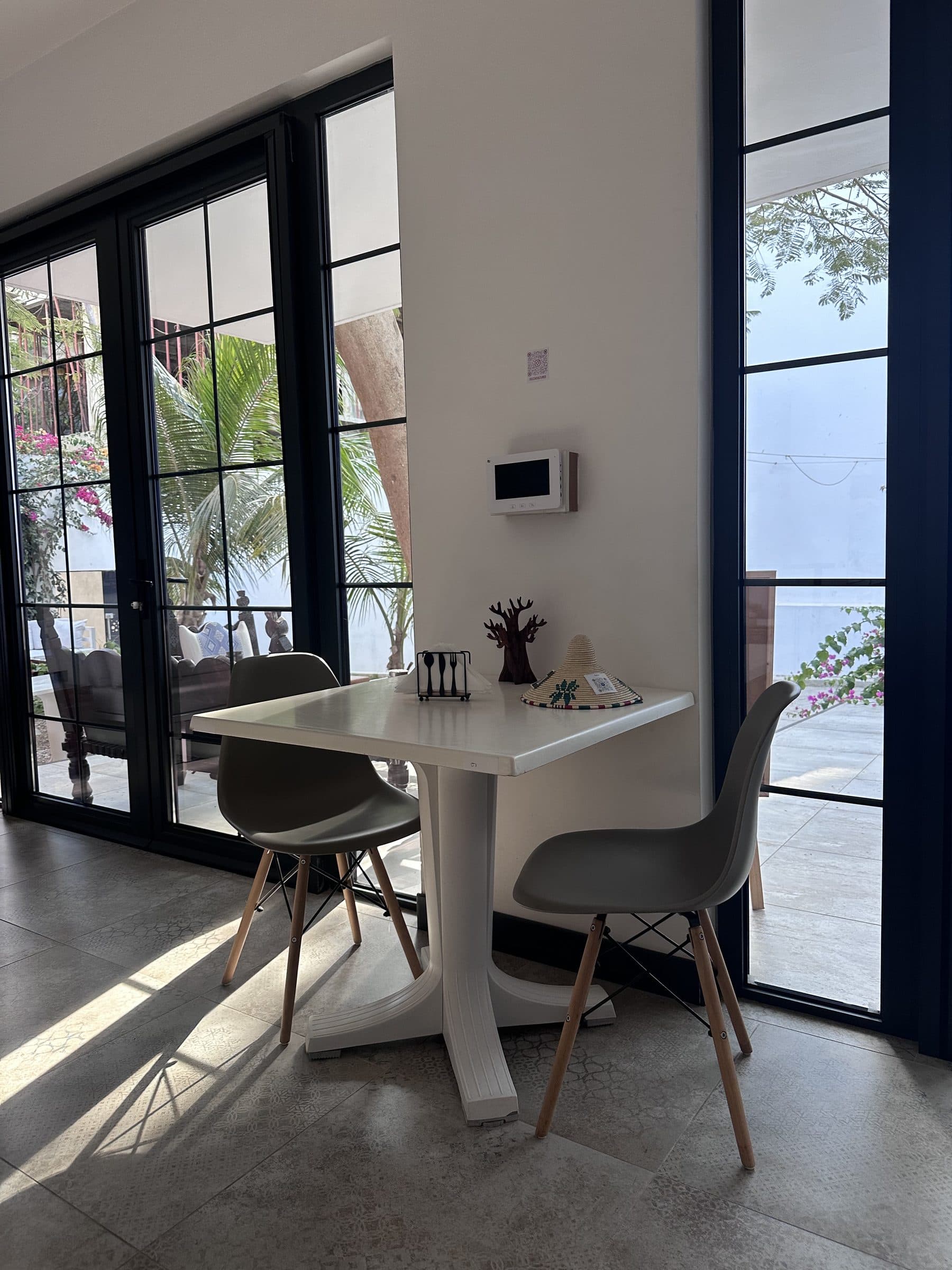
Ge'eza, set inside a villa in Point E, offers several spaces: a gallery lounge for a meeting or an opening, a glass-roofed room for a seated dinner or a workshop, a terrace under the trees for a brunch or a reception. The spaces page sets out these formats, with a reply by quote within 24 business hours, and no capacity or pricing published in advance.
A kitchen that opens a conversation
Ge'eza's Ethiopian and Senegalese kitchen naturally accompanies a cultural event: a shared dish, a coffee ceremony, create an informal moment that makes it easier for guests from different backgrounds to talk. For a delegation or an international audience, that setting gives a warmer context than a neutral reception room.
Programming already delivered
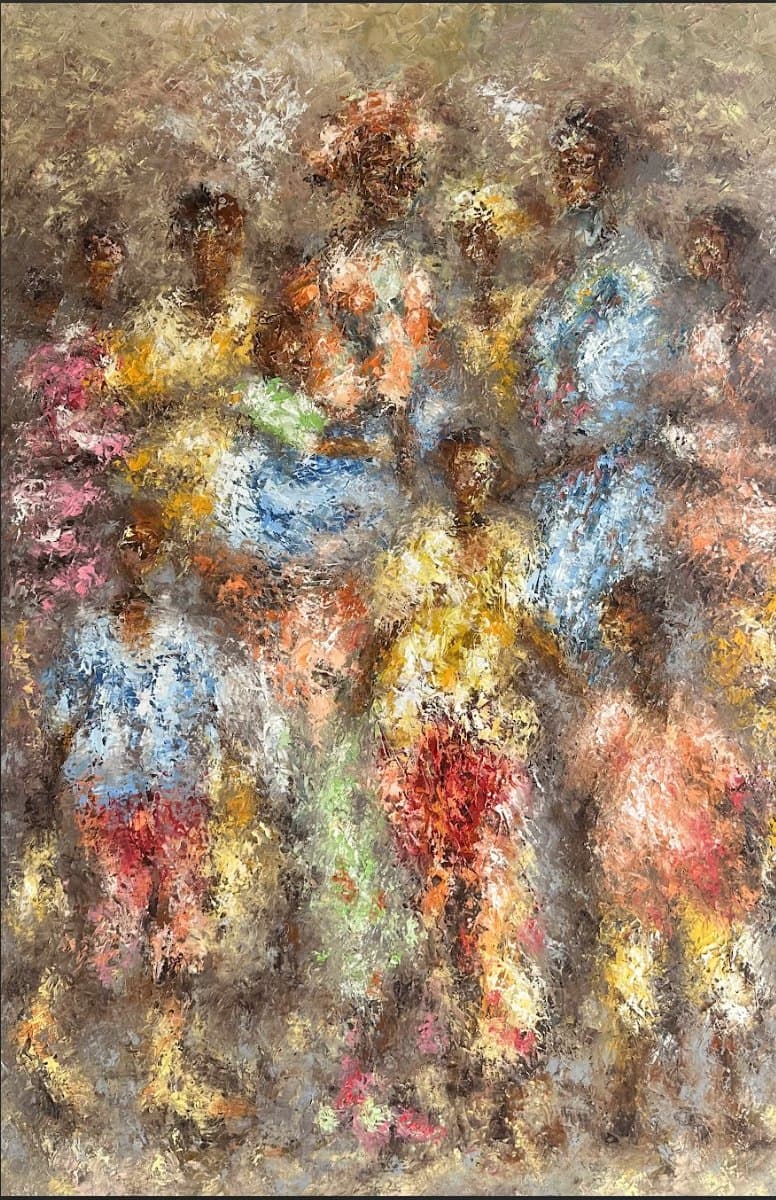
Before offering a space to a partner, it helps to show what has already been hosted there. Ge'eza presented the group exhibition "Lien commun" in 2025, then hosted "Dia Nifanena," a day of Malagasy creations and music, as well as the "Un pays à l'honneur" series, with editions devoted to Cape Verde and Sudan, combining an exhibition, a music brunch and a small craft market. More recently, "Live Mbongui," a jazz concert with African influences, brought together music and Ethiopian food for one evening. This past programming can be checked in the events archive and gives a concrete sense of what a venue like this one can organise.
Three partner profiles, three different needs
A foundation, an institute and an embassy do not all expect the same thing from a host venue. A foundation often looks for a setting to present the artists or projects it supports, paying close attention to the quality of the hang and the visual documentation that will come out of it. A cultural institute, for its part, usually thinks of its project over a longer stretch of time, with several events across the year, and values a venue able to host several different formats (an exhibition, a workshop, a gathering). An embassy more often favours a one off event, built around a date or a visiting delegation, with a stronger sense of protocol. A venue that understands these differences can tailor its hosting proposal to each partner, rather than offering a single fixed format.
What a partner should clarify before committing
Before any collaboration, a partner benefits from stating in writing what is expected of the venue (a space, a date, a reception format) and what remains its own responsibility (funding, communication, speakers or performers). That clarity avoids any ambiguity about each party's role, including in applications filed with a cooperation fund. The article on cultural diplomacy in Dakar looks more broadly at the place of private venues in that landscape.
How much lead time to plan for
A space is usually blocked out faster than a full programme comes together: booking a date with the venue takes a few exchanges, while pulling together the works, the speakers or performers, and the communication around a project often takes several weeks, sometimes several months for an exhibition with pieces coming from another country. It is better to start the conversation with the venue as soon as the project takes its first shape, rather than once a calendar is already fixed elsewhere.
A concrete request
For a foundation, institute or embassy preparing a project with a Dakar leg, describing the project and the dates under consideration brings a quick reply on space availability.
Taking it further
Any organisation preparing a cultural project with a Dakar leg can write to Ge'eza's team through the spaces page, on WhatsApp at +221 78 660 07 07, or at geezacultures@gmail.com, stating the format under consideration and the timeline.
Frequently asked questions
Does a venue like Ge'eza fund the projects it hosts?
No. The venue provides a space, a kitchen and programming, but does not fund the project: that responsibility stays with the association, institute or embassy behind the application.
What spaces does Ge'eza offer a partner?
A gallery lounge, a glass-roofed room and a terrace, set out on the spaces page, with a reply by quote within 24 business hours.
What programming has Ge'eza already hosted?
The exhibition "Lien commun," the "Dia Nifanena" day, the "Un pays à l'honneur" editions devoted to Cape Verde and Sudan, and the "Live Mbongui" concert, all listed in the events archive.
Are there cooperation programmes that fund this kind of partnership?
Yes, programmes such as Spaces of Culture, run by the European Union and the EUNIC network, fund local cultural projects carried out in partnership; conditions and deadlines are checked on that programme's official site.