Art · 22 October 2026
The Contemporary African Art Market, in a Few Figures
A look at the modern and contemporary African art market, with sourced figures: the global market, auctions, galleries, new buyers. What it means for anyone buying a painting at a Dakar gallery.
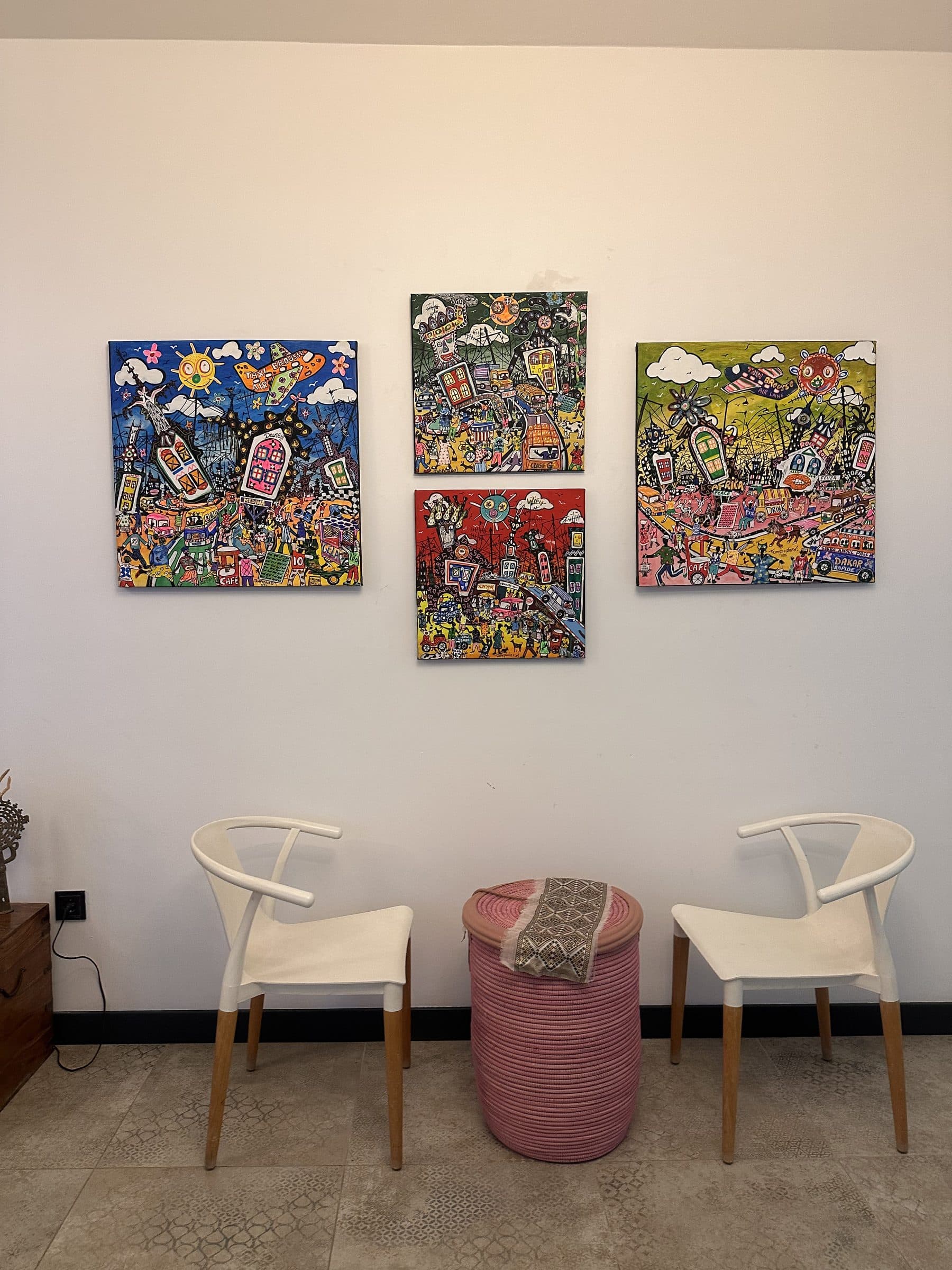
The global art market reached 59.6 billion dollars in 2025, up 4 percent, according to the Art Basel and UBS Art Market Report 2026, produced by Arts Economics. Within that market, modern and contemporary African art remains a modest but clearly recovering segment: auction sales devoted to it reached 62.8 million dollars in 2025, up 42.6 percent year on year, after 43.9 million in 2024, according to ArtTactic. For anyone buying a painting at a gallery, those figures mainly say one thing: the primary market, made up of galleries and living artists, remains the most accessible way into this landscape.
A global market that is becoming more accessible
The same Art Basel and UBS report notes that 87 percent of dealer transactions involve works under 50,000 dollars, and that 49 percent of dealers' buyers were new clients in 2025. The two figures line up: the art market as a whole is opening up to buyers who were not collecting a few years ago, often through human-scale galleries rather than the major auction houses.
The recovery in African art auctions
The 42.6 percent rise recorded by ArtTactic in 2025 is driven mostly by modern artists and by Southern Africa. At the same time, Sotheby's closed its department dedicated to modern and contemporary African art in 2025, according to The Art Newspaper, while Bonhams continues to hold dedicated sales in London. None of that says much about the primary market at galleries, where living artists, together with the venue showing their work, set the terms on which their pieces are sold. Auction houses mostly focus on artists who are already established, whose standing has built up over years of successive sales; an artist selling today on the primary market, through a gallery, follows a different path, built piece by piece rather than auction result after auction result.
How collectors are buying today
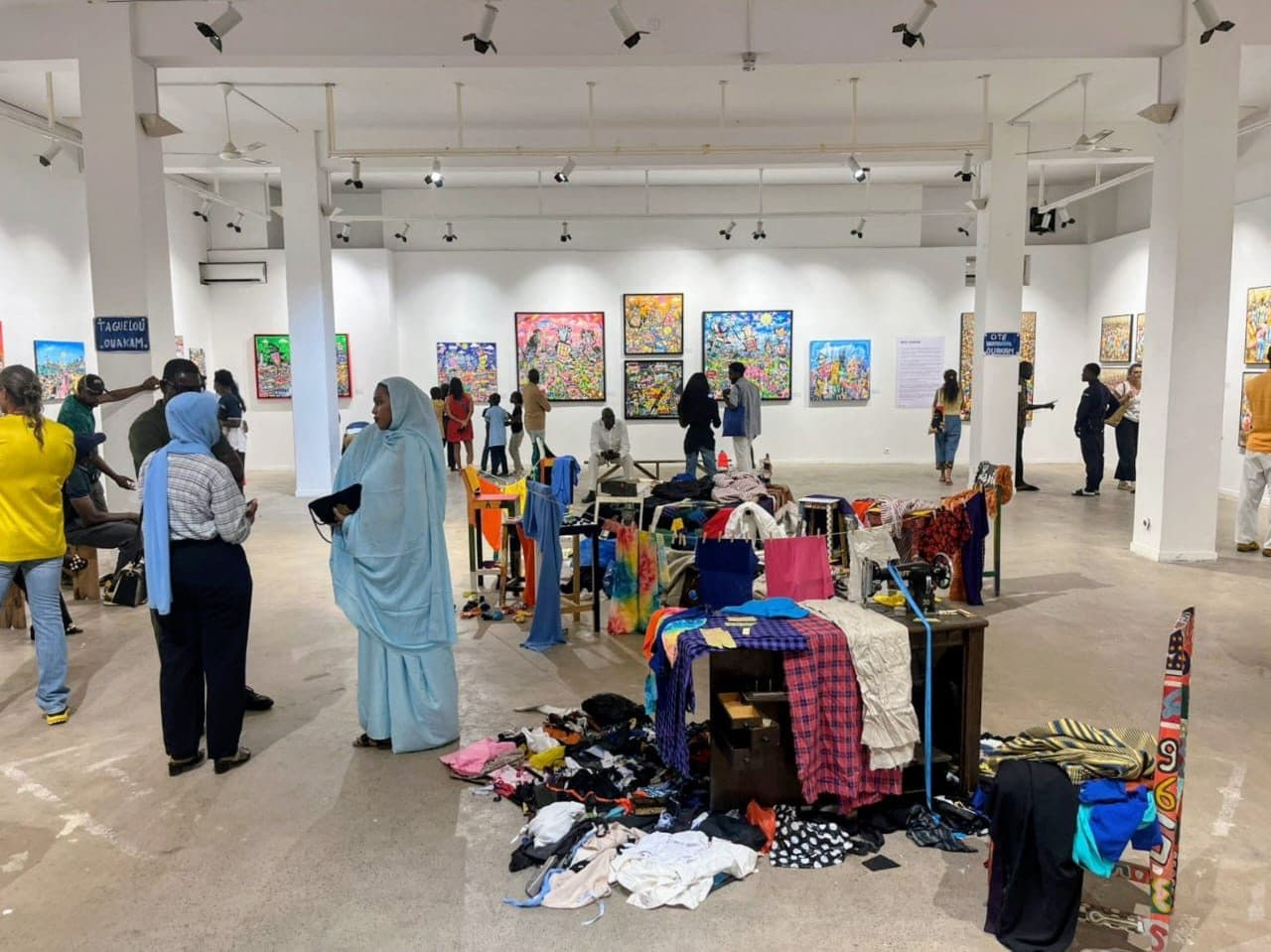
According to the Art Basel and UBS 2025 survey of wealthy collectors, 51 percent use Instagram to buy art. That figure confirms what many galleries see on the ground: a growing share of sales are first discussed online, by message, before any in-person visit. That is also how Ge'eza's gallery in Point E works, where asking for a price from an artwork's page starts an exchange on WhatsApp.
What this means for a buyer in Dakar
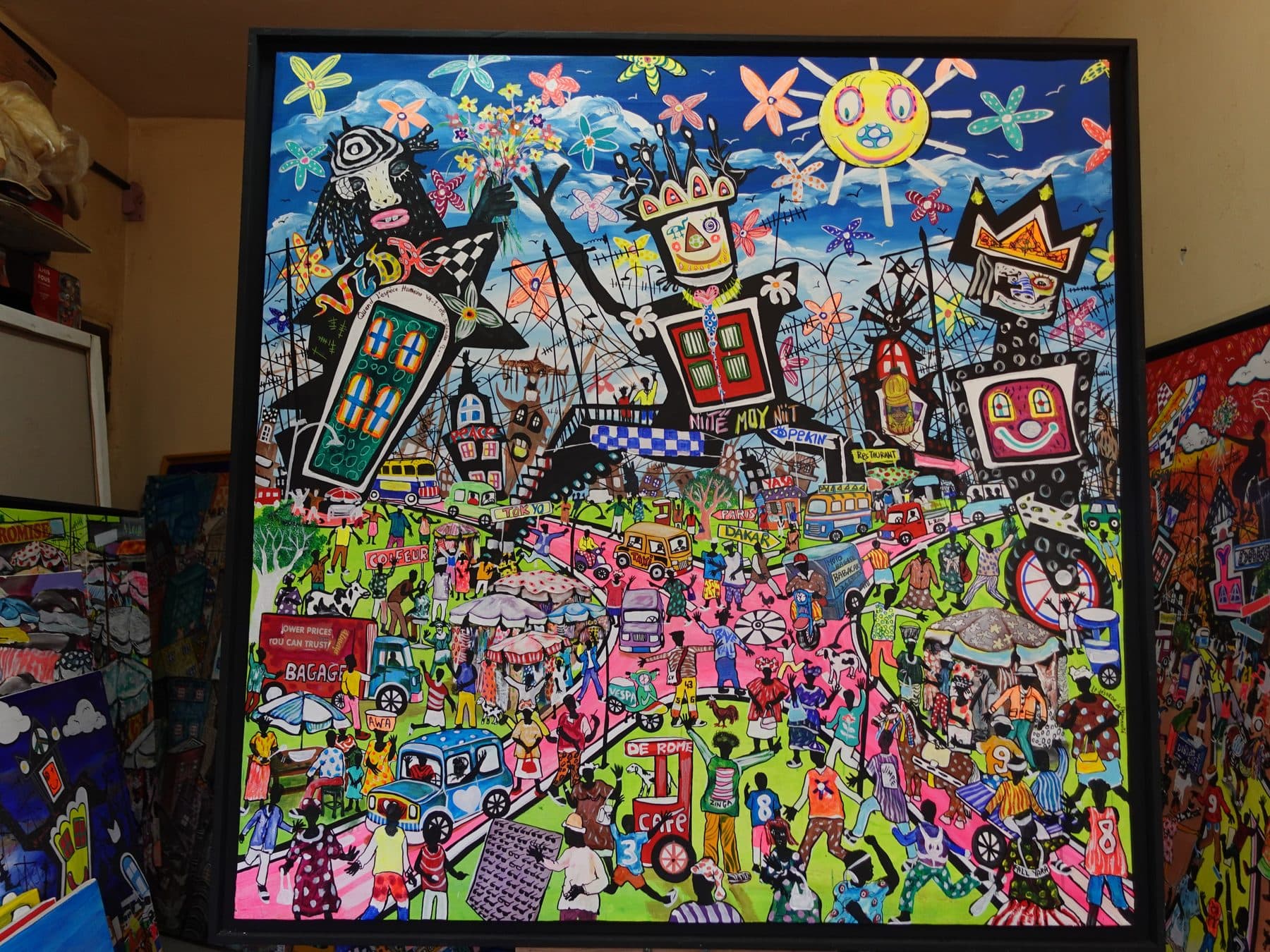
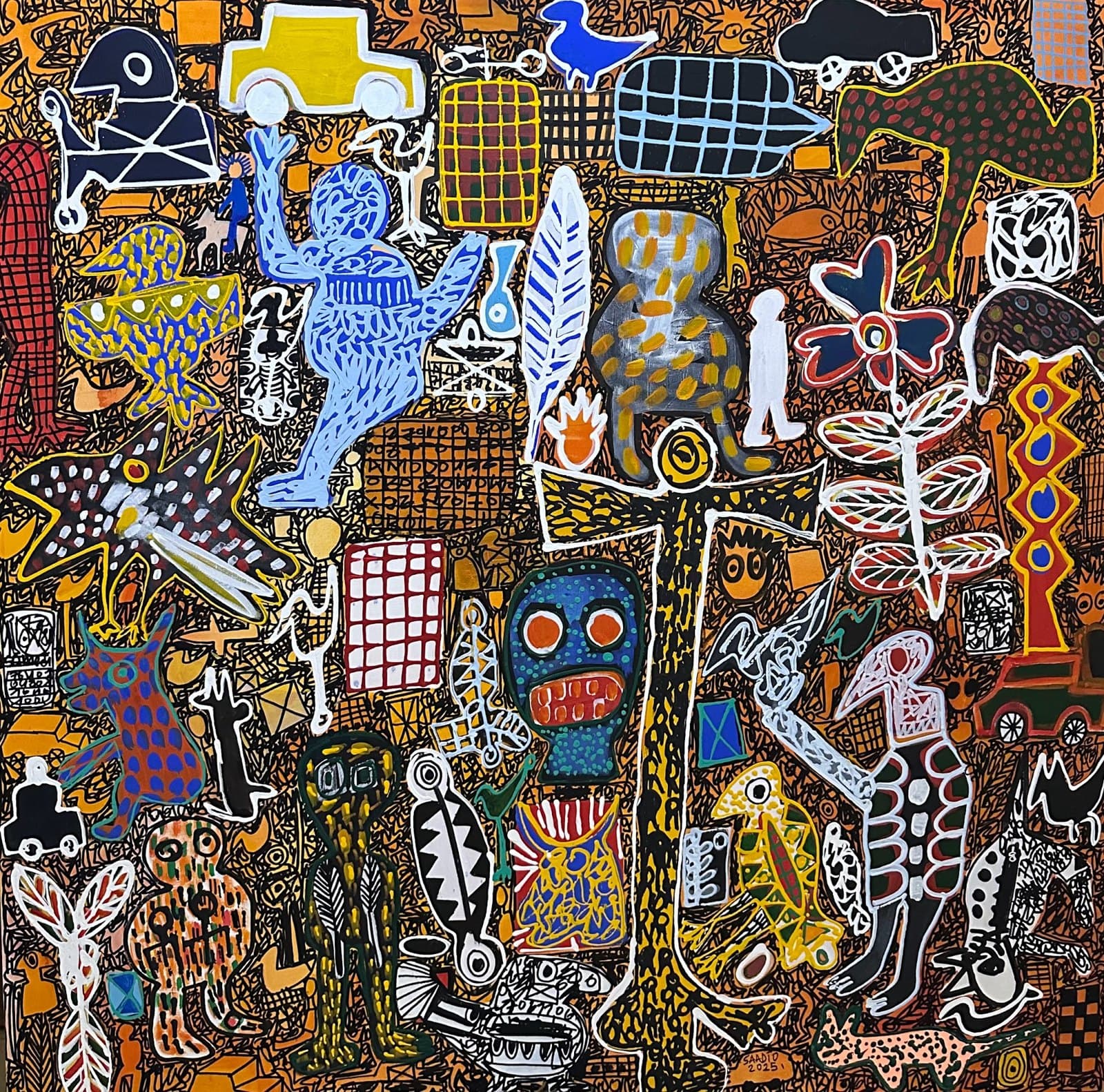
The artists shown at Ge'eza's gallery, Ibou Diagne, Saadio and Tampidaro, sell on the primary market: each price is discussed directly with the gallery, piece by piece, with no published list for now. The exact price of a painting is given on request from its page. The guide on buying Senegalese contemporary art explains how that process works, from asking the price to receiving the certificate of authenticity.
Building a collection in this context
Against a global market that is opening up to new buyers, starting a collection does not require an unlimited budget: it mainly requires looking, asking questions, and documenting every purchase with an invoice and a certificate. The guide on starting an African art collection walks through those steps, for a first purchase and for the ones that follow.
What this means for a buyer abroad
For a collector based in the US, the UK or elsewhere, these market figures read mostly as context, not as a promise about any specific piece. A global market up 4 percent guarantees nothing about the future value of a painting bought in Dakar: it only indicates that a growing number of people are buying art, often for the first time, and increasingly through direct exchanges with a gallery rather than a major auction house. That is the wider context a purchase from Ibou Diagne, Saadio or Tampidaro sits within.
Following the major events
Fairs devoted to contemporary African art, such as 1-54 in London, Marrakech and New York, or ART X Lagos, offer a snapshot of the market at a given moment. The Dak'Art Biennale, whose 16th edition is announced by the organisers for 19 November to 19 December 2026 under the theme "(Anti)fragilité," remains the reference event for seeing contemporary art in Dakar itself. The guide on the Dak'Art Biennale explains how to visit it.
Reading a market report without overreaching
A market report, however carefully sourced, describes aggregate trends across thousands of transactions, not the fate of a single painting. Treat these figures as background for a conversation with a gallery, not as a substitute for it: ask about the specific piece in front of you, its technique, its format and its year, rather than extrapolating from a percentage that applies to a market as a whole.
Checking before you buy
A market figure, however solid, is no substitute for a visit and a direct conversation with a gallery about a specific piece. For any question about an available painting at Ge'eza's gallery, write on WhatsApp to +221 78 660 07 07 or to geezacultures@gmail.com.
Frequently asked questions
How big was the global art market in 2025?
59.6 billion dollars, up 4 percent, according to the Art Basel and UBS Art Market Report 2026, produced by Arts Economics.
Is the modern and contemporary African art market growing?
Yes at auction: 62.8 million dollars in 2025, up 42.6 percent year on year, according to ArtTactic, a recovery driven mostly by modern artists and Southern Africa.
Do Ge'eza's prices follow a published list?
No, each price is given on request from the artwork's page, since the primary market works piece by piece rather than through a fixed list.
Do I need a large budget to start collecting?
Not necessarily: a large share of global transactions involve works under 50,000 dollars, often through galleries rather than major auction houses.