
Art · 22 October 2026
Collecting Senegalese Art: Pointers to Get Started
Collecting contemporary Senegalese art: a few historical pointers, the Dak'Art Biennale, and how to build a small collection around a handful of artists followed over time, starting from the Lien commun exhibition.
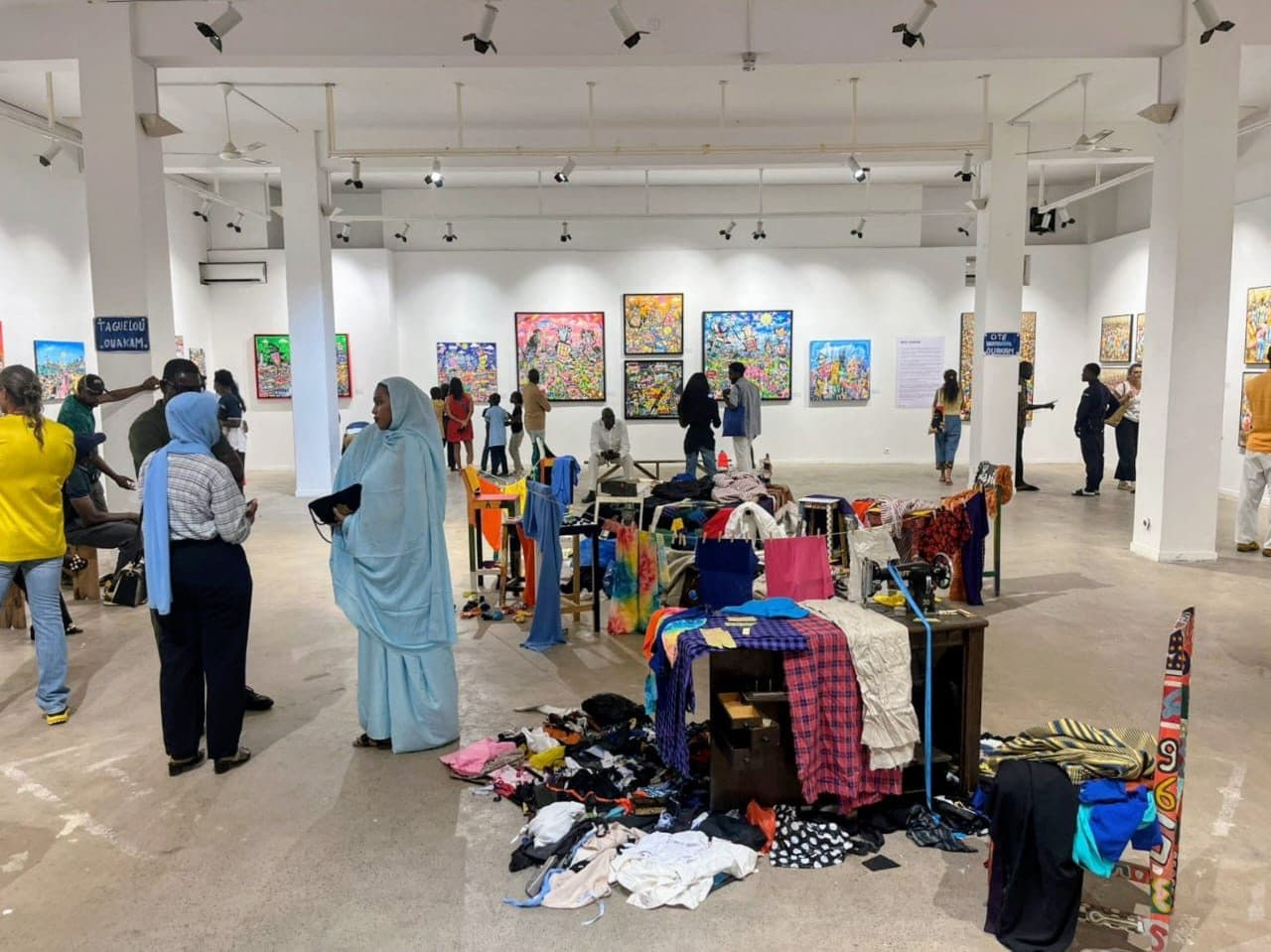
Collecting contemporary Senegalese art starts with a few simple pointers: knowing the recent history of painting in Senegal, following the Dak'Art Biennale as the reference event, and building a collection around a handful of artists followed over time rather than through isolated purchases. The group exhibition "Lien commun," presented by Ge'eza from 16 to 31 October 2025 at the IFAN Theodore Monod Museum, brought together three artists whose works are now on show at the Point E gallery: a good entry point for anyone discovering this scene.
A historical reference point: the Ecole de Dakar
Under President Leopold Sedar Senghor, a deliberate cultural policy supported, from the 1960s onward, a generation of artists trained in Dakar, often grouped under the name Ecole de Dakar. The 1966 World Festival of Black Arts, held in Dakar, remains one of its most visible moments, and its legacy still runs through the Senegalese art scene today. The article on the 1966 World Festival of Black Arts looks back at that event and what it left behind.
The Biennale, the event for today's scene
The Dak'Art Biennale remains the most visible event for following current generations of Senegalese and African artists. Its 16th edition is announced by the organisers for 19 November to 19 December 2026, under the theme "(Anti)fragilité." The guide on the Dak'Art Biennale explains how to visit it and how it connects to the city's galleries.
Lien commun, a practical entry point
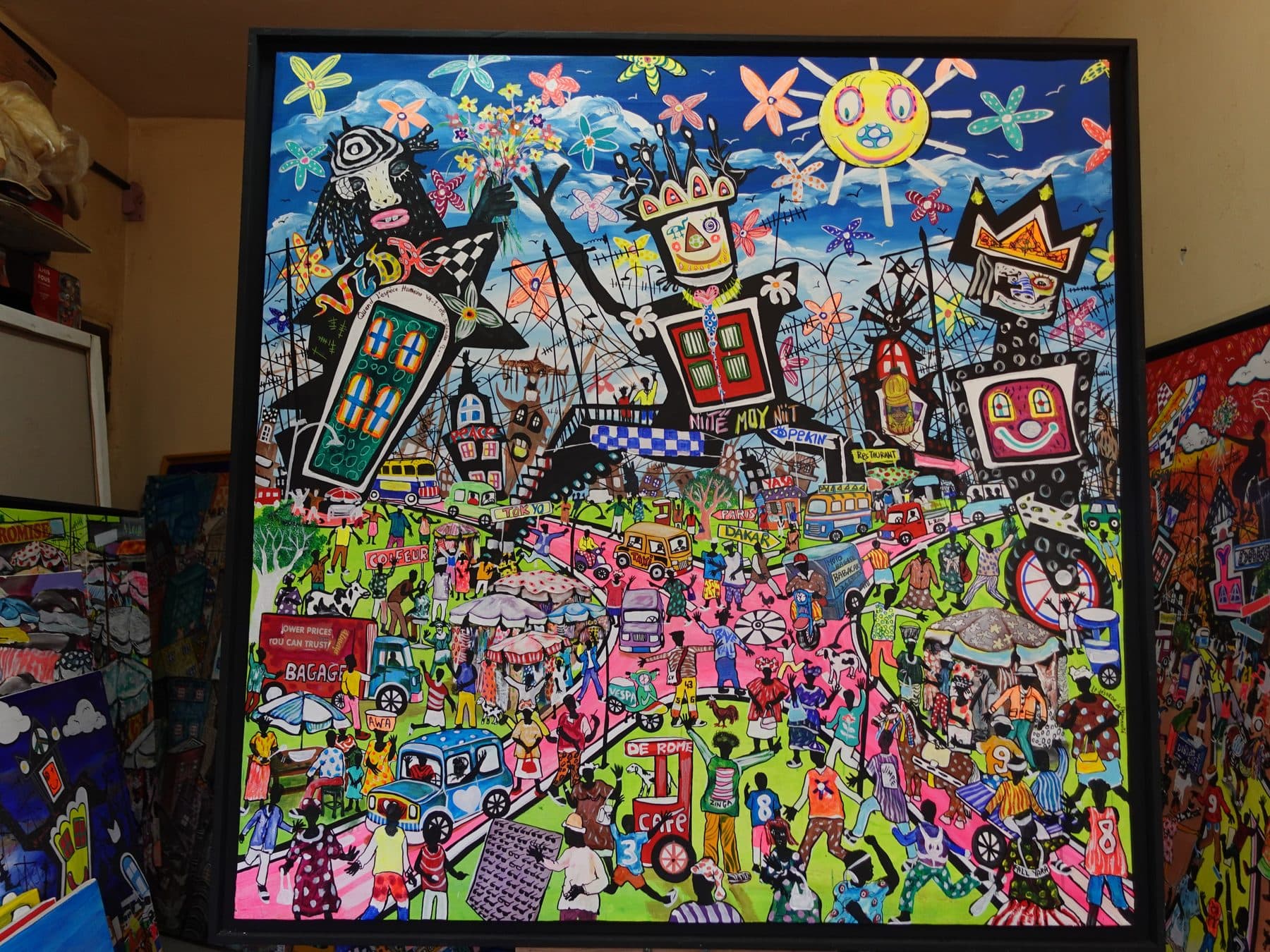
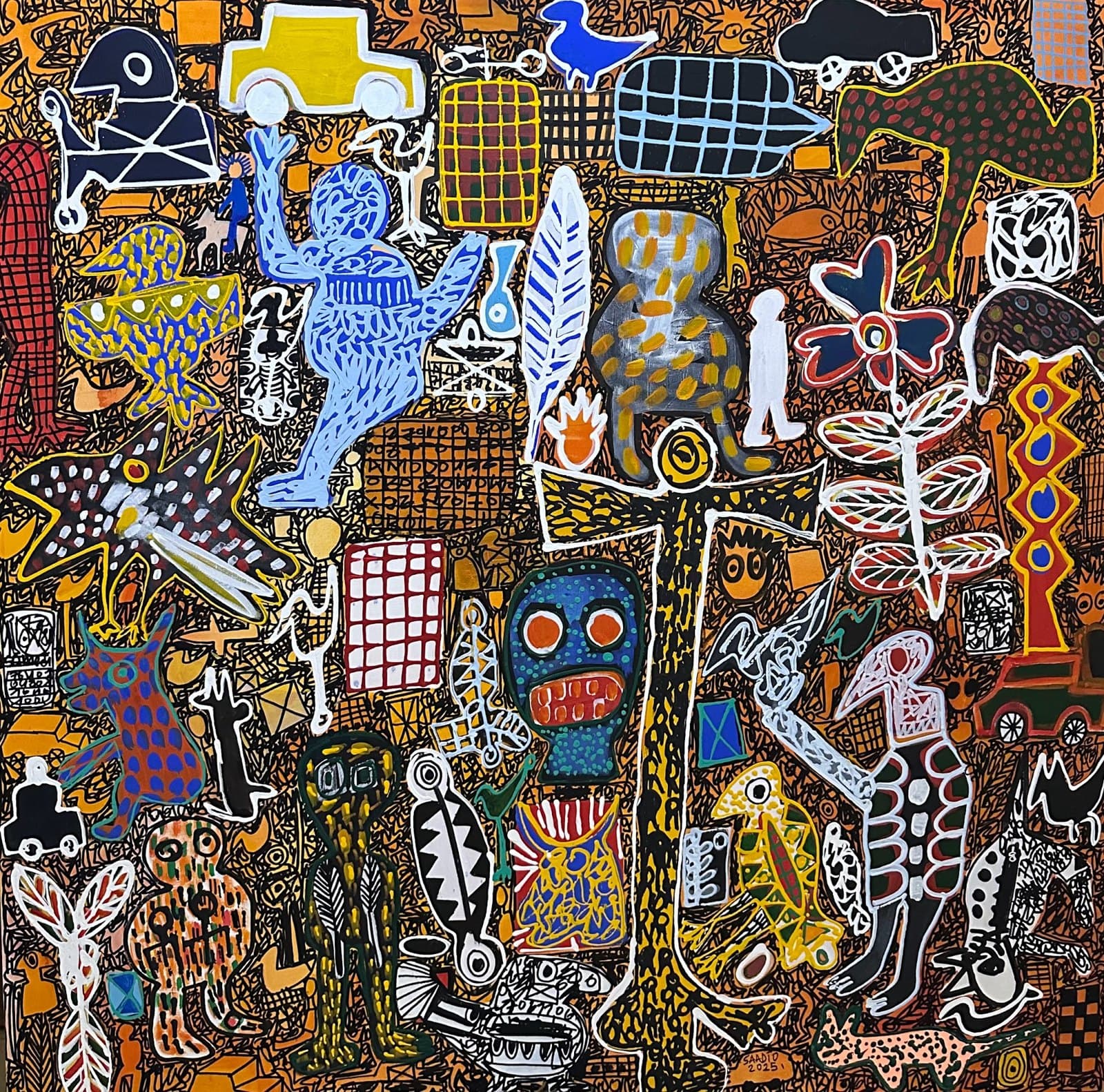
"Lien commun" brought together Ibou Diagne, Saadio and Tampidaro at the IFAN Theodore Monod Museum in October 2025. The works of these three artists are now shown at Ge'eza's gallery in Point E: 22 works by Ibou Diagne, in oils and acrylics, 30 works by Saadio, in mixed media acrylic and Posca, and 22 works by Tampidaro, in mixed acrylic. Seeing these pieces together, at Ge'eza's gallery, gives a useful overview before choosing a first acquisition.
Follow a few artists rather than buying widely
A coherent collection is often built around a handful of artists followed over time: coming back to see their new pieces, comparing formats and techniques, and gradually understanding what sets one artist's work apart from another's. Ge'eza's artist pages present each painter through their works online, their number, techniques and formats, with nothing added that cannot be verified.
What formats and years tell you
Looking at an artist's dates and formats already gives useful pointers before buying. For Ibou Diagne, the works online span from 2021 to 2025, in oil and acrylic, with formats ranging from 90 by 70 centimetres up to 180 by 120 centimetres for the largest canvases, such as "La famille" or "Vendeuses de poissons." For Saadio, the whole body of work is dated 2025, in mixed media acrylic and Posca, with small framed pieces on kraft paper alongside larger canvases. For Tampidaro, the works range from 2023 to 2025, in mixed acrylic, from small 50 by 50 centimetre formats to large 150 by 150 centimetre canvases. These pointers help compare artists without needing to invent a personal story for each one.
How to buy a first Senegalese piece
The guide on buying Senegalese contemporary art covers the process specific to the Lien commun artists: asking for the price from the artwork's page, getting a reply on WhatsApp with the details and the certificate of authenticity, then paying and arranging collection or shipping.
Putting together a collection that makes sense
Rather than aiming for a number of pieces, it helps to choose works that speak to each other: the same subject treated by two different artists, for instance market scenes by Ibou Diagne and Dakar street life by Saadio, or several formats by the same artist followed across a few years. That approach makes a collection more legible, both to you and to anyone discovering it later.
Keeping a record of a small collection
For every piece acquired, noting the exact title, the artist, the year, the technique and the source of the purchase helps make sense, a few years on, of the logic behind a collection. That simple habit matters as much for two pieces as for twenty, and it makes any future conversation with a gallery, an insurer or a relative discovering the collection much easier.
Coming to see the works
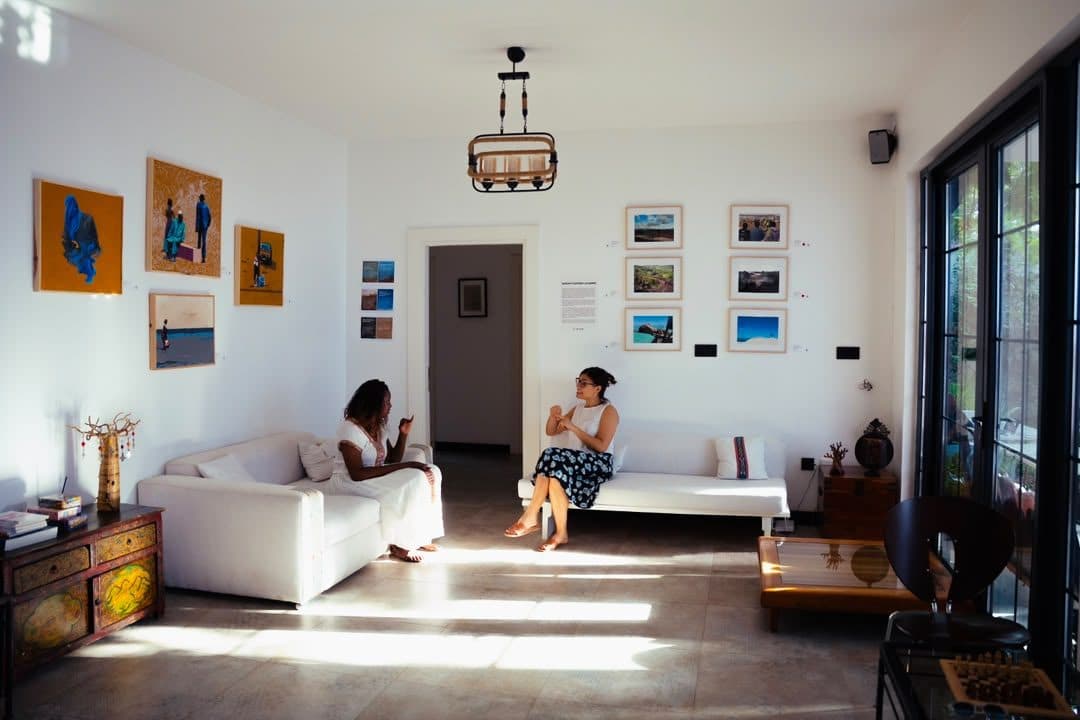
Nothing replaces a visit to judge a canvas before adding it to a collection. Ge'eza's gallery can be visited without an appointment, Tuesday to Sunday, 8am to 10pm. For any question, write on WhatsApp to +221 78 660 07 07 or to geezacultures@gmail.com.
A scene worth following beyond a single visit
A collection built around Senegalese art tends to reward patience: new works appear at the gallery as artists keep working, and returning every few months gives a far better sense of a practice than a single visit ever could.
Frequently asked questions
Where should I start to collect Senegalese art?
With a gallery visit and a few historical pointers, such as the Ecole de Dakar and the Dak'Art Biennale, before choosing a first piece.
What is the Lien commun exhibition?
A group exhibition presented by Ge'eza from 16 to 31 October 2025 at the IFAN Theodore Monod Museum, bringing together Ibou Diagne, Saadio and Tampidaro.
Do I need to buy many pieces to have a coherent collection?
No, following a few artists over time and choosing works that speak to each other is enough to build a collection that makes sense.
How do I find out the price of a piece by a Lien commun artist?
By asking from the artwork's page on the gallery site, or directly on WhatsApp at +221 78 660 07 07.