
Food · 27 October 2026
Alicha Ater Kik: Ethiopian Split Peas With Turmeric
Alicha ater kik is an Ethiopian dish of split peas cooked slowly with turmeric, mild and vegan, at 5,500 F at Ge'eza in Point E, Dakar. A berbere-free dish for anyone who would rather skip chilli.
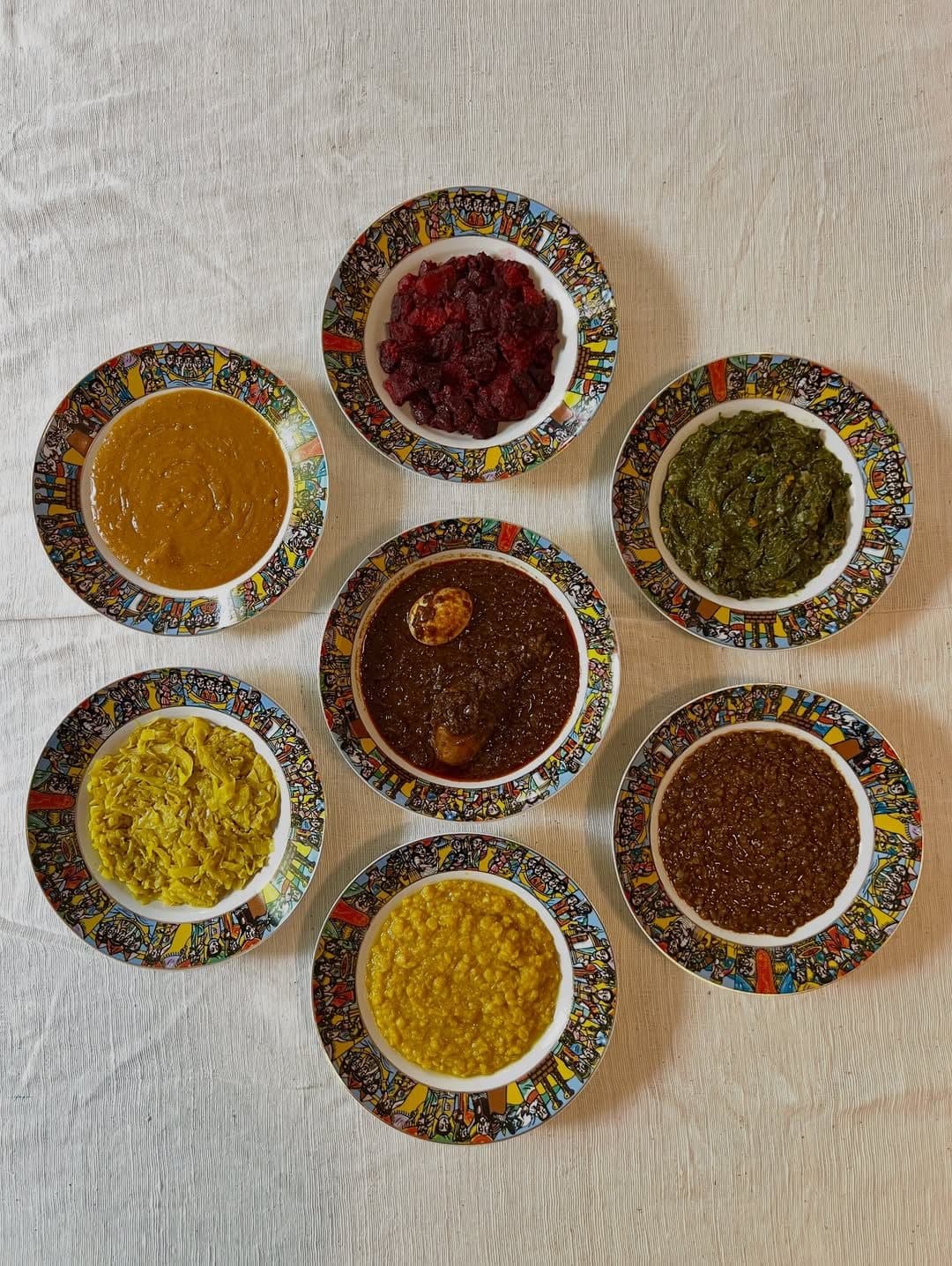
Alicha ater kik is an Ethiopian dish of split peas cooked slowly with turmeric. Mild and vegan, made without butter, it costs 5,500 F at Ge'eza in Point E, Dakar, and it is one of the seven dishes in the beyaynetu. It is one of the easiest dishes on the menu for anyone who would rather avoid chilli.
What alicha means
In Ethiopian cooking, the word alicha describes a preparation made without berbere, the chilli-based spice blend that gives many stews their heat. An alicha dish is, by definition, a mild sauce, usually cooked with turmeric, garlic and onion, with no added heat at all. Alicha ater kik applies that principle to split peas: ater kik names the vegetable itself, while alicha specifies how it is cooked.
This split between alicha and berbere runs through much of Ethiopian cooking. It shows up, for instance, between siga wot, beef simmered in an intense berbere sauce, and alicha siga wot, the same beef cooked instead with turmeric, without the heat of the red sauce. Alicha ater kik follows the same logic with pulses.
What the Ge'eza menu says
At Ge'eza, alicha ater kik is described as split peas cooked slowly with turmeric. The slow cooking gives the peas time to break down almost completely, producing a texture close to a fine, golden puree. The dish is vegan, served at 5,500 F, with no berbere and no chilli.
Its gentleness recalls misir wot, the red lentil stew, though alicha ater kik stays even milder, since it does not carry as much garlic or any bold spice. See misir wot to compare the two mildest legume dishes on the menu.
Its place in the beyaynetu
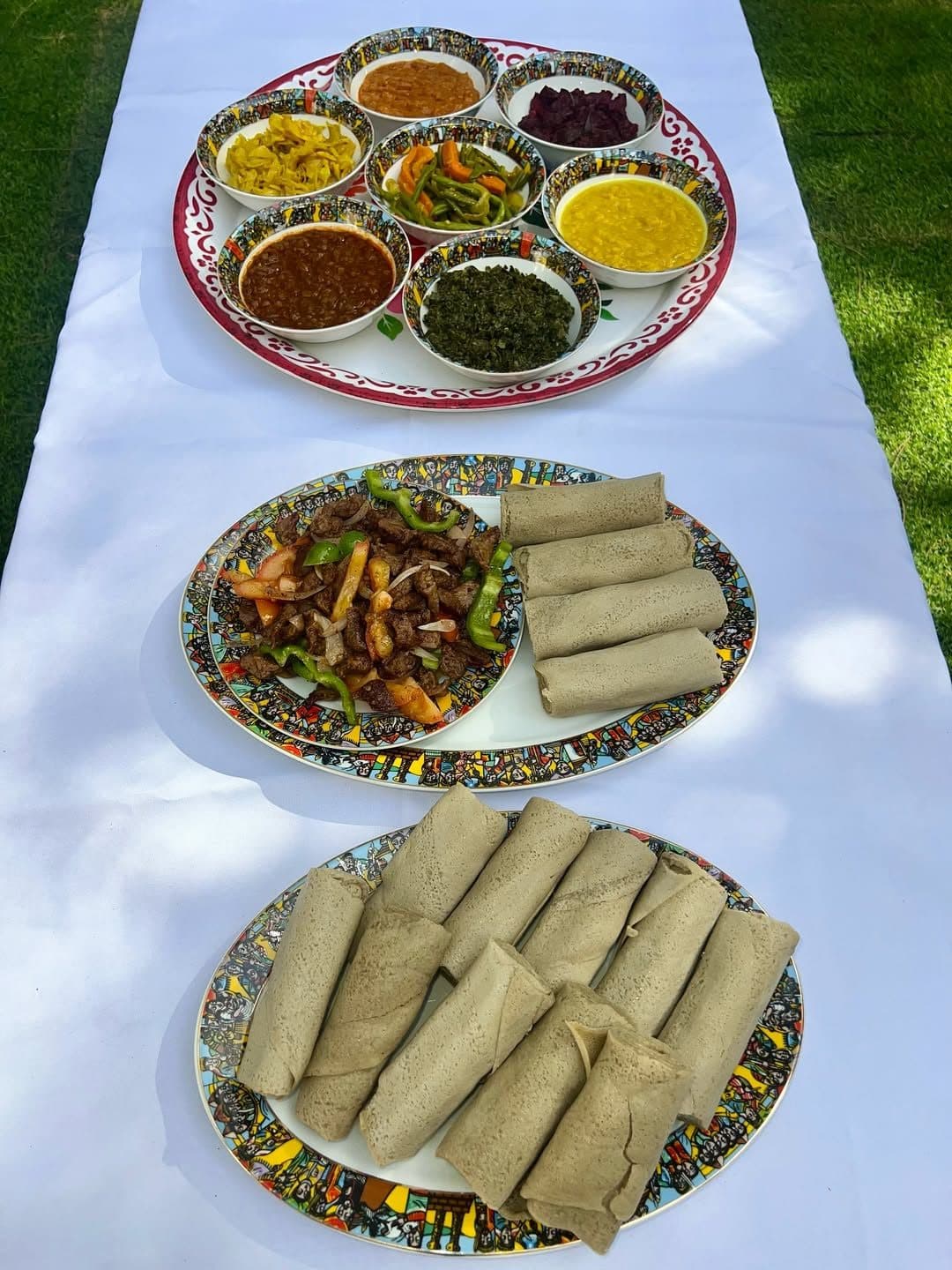
Alicha ater kik is one of the seven dishes that make up Ge'eza's beyaynetu, alongside shiro wot, misir wot, fosolia, gomen, key sir and tikil gomen. On the large injera, it forms a small, pale golden, smooth mound, set apart from the deep red of the shiro or the purple of the beetroot. The full beyaynetu starts at 7,000 F for one person: see beyaynetu for the full platter.
On that shared plate, alicha ater kik often serves as a refuge for guests most sensitive to chilli: people return to it between bites of shiro wot or misir wot, to let the palate rest.
For guests who would rather skip the chilli
Among the fasting dishes on the menu, alicha ater kik is one of the safest choices for anyone wary of heat. It sits, along with tikil gomen and key sir, in the family of mild preparations cooked with turmeric rather than berbere. Is Ethiopian Food Spicy? maps out the bolder and milder dishes on the menu, and can serve as a guide before ordering.
For a guest new to Ethiopian food who is still deciding between several dishes, starting with alicha ater kik makes it easy to enjoy the injera and the gesture of eating with your fingers, without chilli taking over the experience.
How to eat it
Like everything on the menu, alicha ater kik is eaten with the right hand, using a torn piece of injera folded to scoop up the split peas. Its smooth texture is easy to pick up without dripping. It pairs well with a bolder dish such as shiro wot, to build a plate that alternates mild and spicy, or with other mild dishes for a meal that stays gentle throughout.
A bissap or ginger juice, at 2,000 F, suits this kind of light, calm meal, and an Ethiopian macchiato makes a fitting way to close it.
A texture that reassures
For anyone who has never tried split peas cooked the Ethiopian way, alicha ater kik comes as a pleasant surprise: a fine, even texture, close to a smooth puree, with no firm pieces left to chew. Turmeric gives it a pale to golden colour, and the absence of berbere leaves the natural flavour of the legume front and centre, slightly earthy and a touch sweet. It takes little getting used to, which is why it is often the dish recommended to a hesitant first-time guest.
With a bissap or ginger juice, at 2,000 F, alicha ater kik makes a light, entirely vegan lunch. For a fuller meal, add a green vegetable dish such as gomen, to vary the textures without ever turning up the heat.
Coming to taste it
The full menu, alicha ater kik and the other fasting dishes included, is on the restaurant page. Ge'eza is open Tuesday to Sunday, 8am to 10pm, at 656 avenue Birago Diop, in Point E, Dakar. For a group or an evening meal, it helps to book a table ahead, or write to +221 78 660 07 07 on WhatsApp.
Frequently asked questions
What does alicha mean?
Alicha describes a preparation made without berbere, cooked with turmeric, garlic and onion, with no added heat.
Is alicha ater kik spicy?
No, it is one of the mildest dishes on the menu, with no berbere and no chilli.
How much does alicha ater kik cost at Ge'eza?
5,500 F as a single dish. It is also one of the seven dishes in the beyaynetu, from 7,000 F for one person.
What is the difference with misir wot?
Both are mild and vegan, but misir wot is made of red lentils with turmeric and garlic, while alicha ater kik, built on split peas, stays even gentler.