
Art · 22 October 2026
Why Buy From a Living African Artist, at Ge'eza
Buying a painting from a living artist through a gallery like Ge'eza supports work still in progress, comes with a signed certificate, and lets a buyer follow the artist over time. The Senegalese artists currently shown.
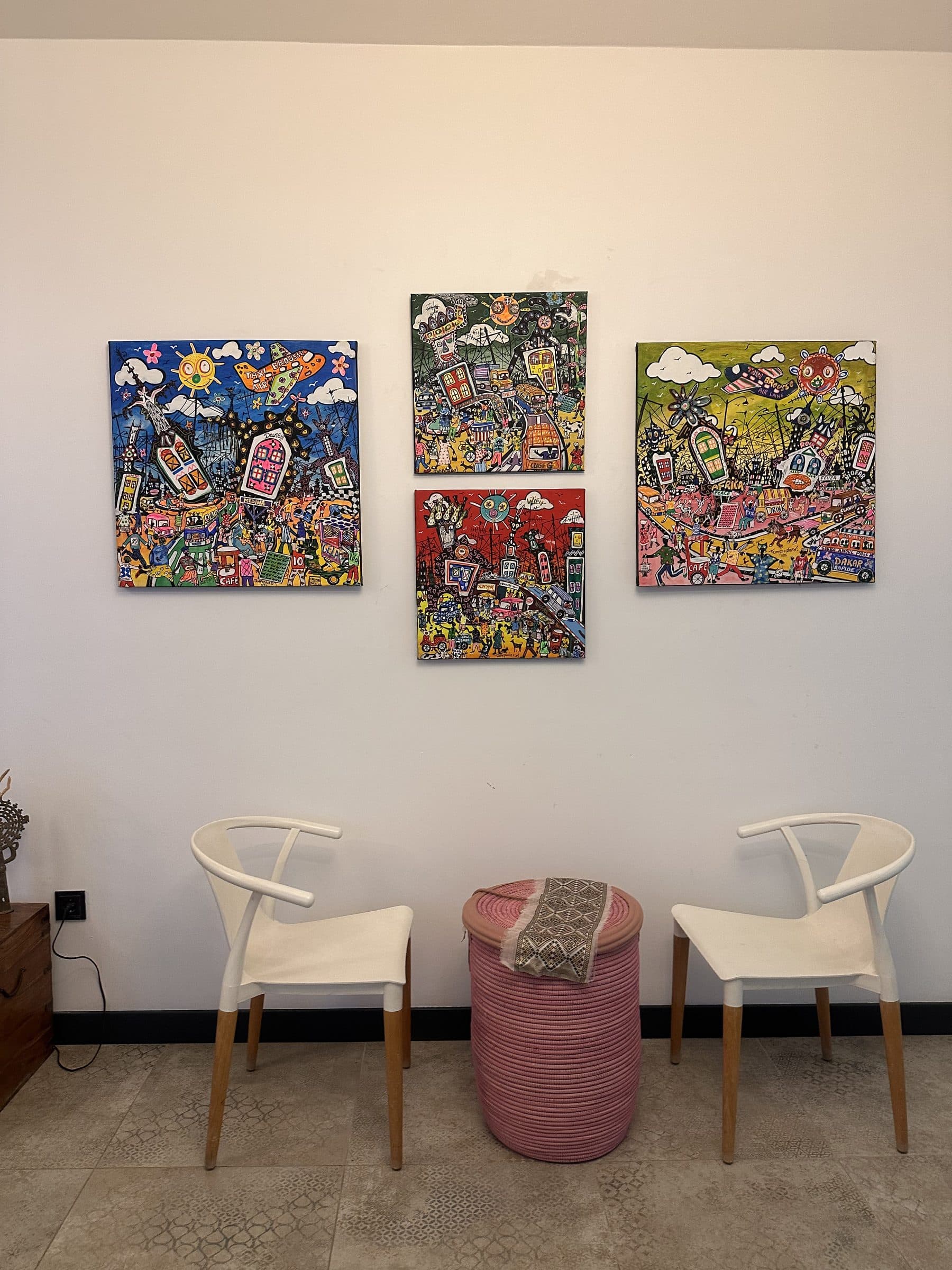
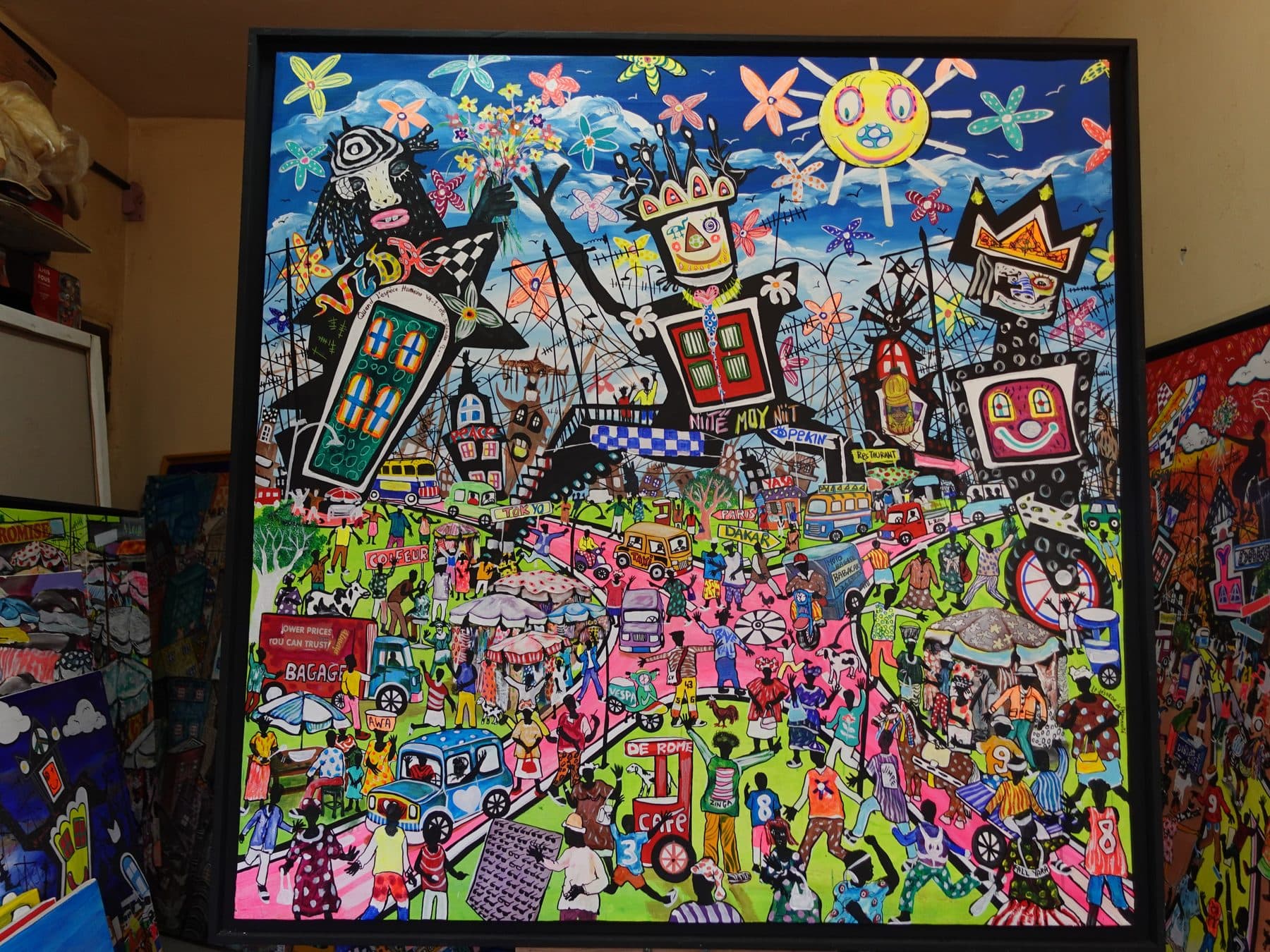
Buying a painting from a living artist, through a gallery such as Ge'eza, changes the nature of the purchase: the artist keeps working, the buyer can follow that work over time, and every piece leaves with a certificate of authenticity signed by the artist's own hand. The canvases by Ibou Diagne, Saadio and Tampidaro, currently shown in the gallery in Point E, are priced on request from each artwork's page.
A purchase that supports ongoing work
Buying a work on the secondary market, through an auction house or a collector, generally only benefits the seller. Buying directly from a gallery that represents a living artist, by contrast, supports work that is still in progress: galleries representing living artists generally pass on a share of each sale to the artist, under terms that vary from one gallery to another, with no single percentage standard across the trade. At Ge'eza, that share is not published publicly; what matters for the buyer is that the purchase directly supports the artist's continuing work.
Following an artist, not just one piece
A living artist keeps producing: a canvas bought today is not the last chance to follow that body of work. Ge'eza's artists page brings together the pages of the artists shown by the house, with a view of their work online. A buyer who likes a canvas by Ibou Diagne, Saadio or Tampidaro can come back to see other pieces by the same artist on a future visit to the gallery, rather than treating the purchase as a one-off gesture.
The Senegalese artists shown at Ge'eza
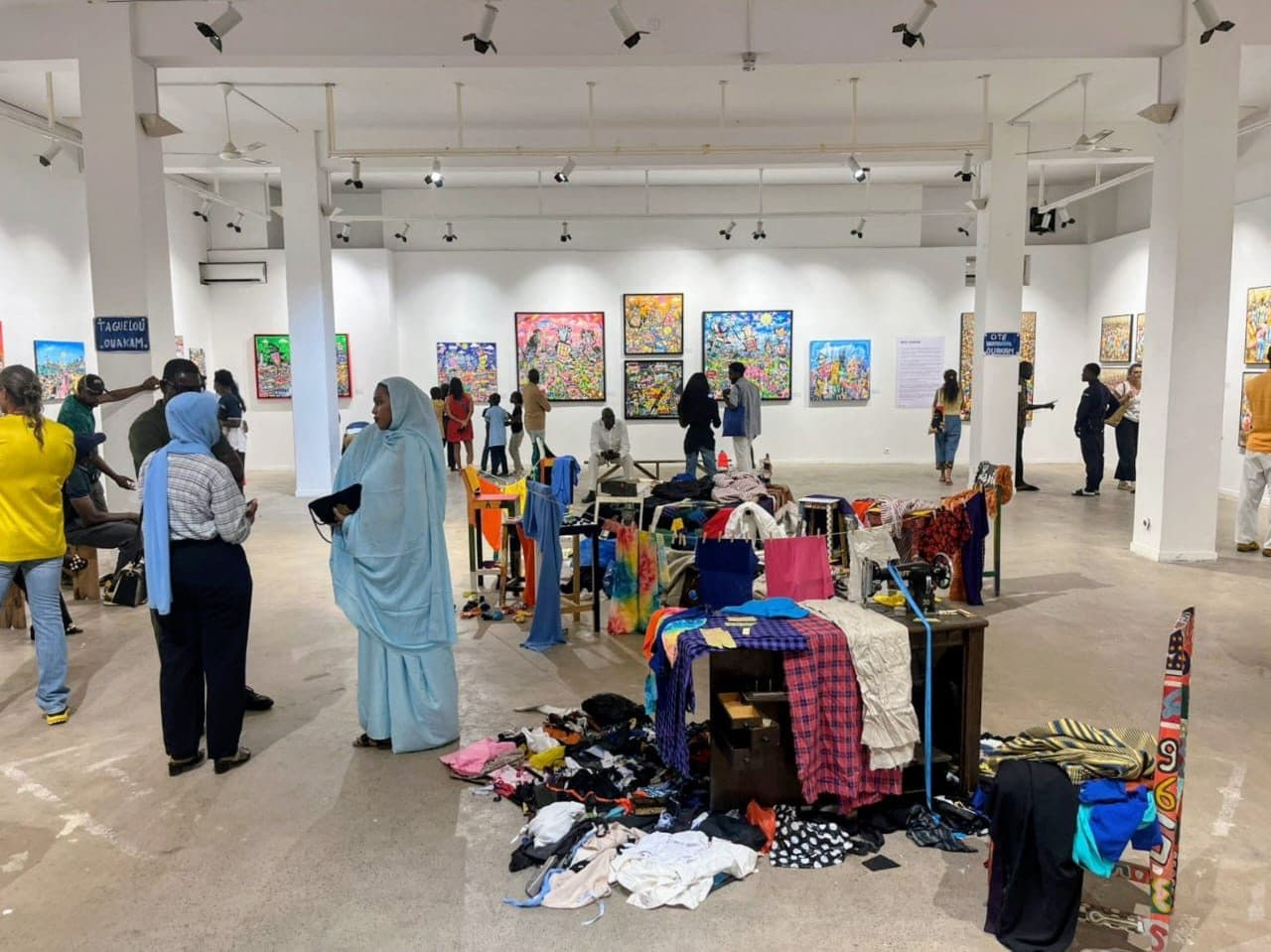
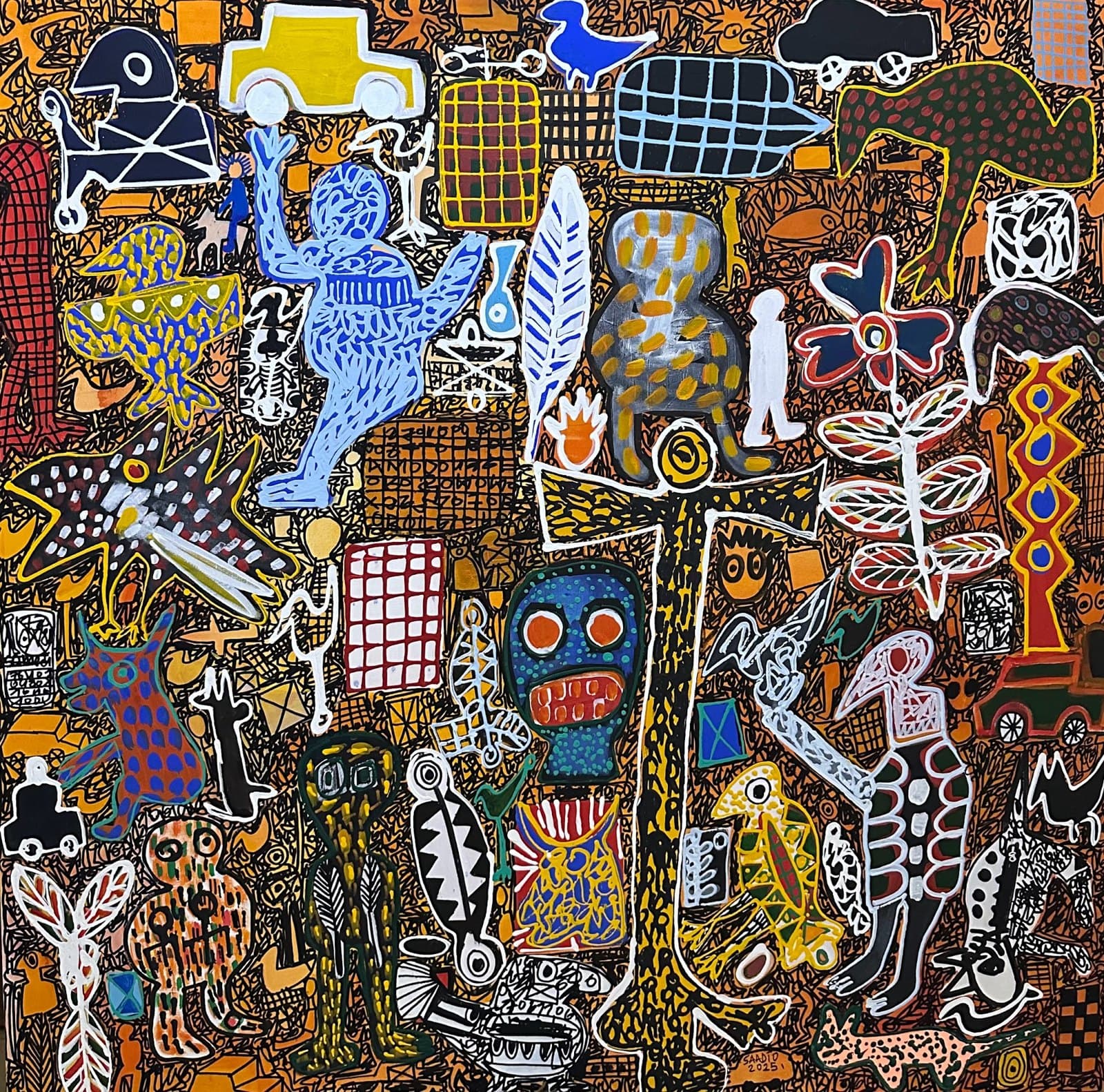
Ge'eza's new gallery shows works by Ibou Diagne, Saadio and Tampidaro, brought together notably in the Lien commun hang. Ibou Diagne works in oil and acrylic, around market scenes and communal subjects. Saadio works in mixed media, pairing acrylic and Posca on canvas or kraft paper, with a dense graphic language of signs and figures. Tampidaro, in mixed acrylic, paints urban Dakar, with subjects such as Saint-Louis or the figure of Battling Siki. Each has dozens of works online, viewable on the gallery page.
The certificate: a safeguard for buyer and artist alike
Every work sold by Ge'eza leaves with a certificate of authenticity signed by the artist. The document protects the buyer, by confirming the piece's origin, but it also benefits the artist: it places their work inside a clear record, useful for the rest of their career. The guide on buying a painting in Dakar covers the steps followed at Ge'eza, from asking for a price to collecting the piece.
A relationship that can last
Buying directly from the gallery also makes it possible to ask questions about a piece: how it was made, how long it has been shown, whether it belongs to a set such as the Lien commun hang. That closeness, impossible at an anonymous auction, gives the purchase a more personal dimension, one that can continue into the artist's next hang.
What this means for a personal collection
For a new collector, buying only from living artists shown by an identified gallery simplifies a lot: there is no need to verify a long chain of past ownership or trace a piece's history through several hands, since the work moves directly from the artist to the gallery, then from the gallery to the buyer. That simplicity takes nothing away from the value of the approach: a collection built this way, piece by piece, is just as personal as an older one, and it comes with the advantage of fresh, recent stories about each piece, still clear in the gallery's memory.
How to proceed
To buy a piece by a living artist at Ge'eza, browse the gallery online or in person, then ask for the price of the piece you are interested in from its page. The team replies on WhatsApp at +221 78 660 07 07 or by email at geezacultures@gmail.com, with the details and the certificate. To learn more about the Senegalese scene as a whole, the guide on buying Senegalese contemporary art widens the view beyond the artists currently shown at Ge'eza.
Keeping a record of each purchase
As with any collection, even a modest one, keeping the certificate, the invoice and a few notes on the conversation with the gallery helps recall, years later, what drew someone to a particular purchase. This small habit matters especially with a living artist: it makes it easy to trace a collection built piece by piece, often across several visits to the gallery rather than in a single trip.
Frequently asked questions
Why buy from a living artist rather than on the secondary market?
Because the purchase directly supports the continuation of that artist's work, rather than only benefiting an intermediary seller.
Which Senegalese artists are shown at Ge'eza?
Ibou Diagne, Saadio and Tampidaro, each with dozens of works online, notably brought together in the Lien commun hang.
Does the artist receive a share of the sale price?
Galleries representing living artists generally pass on a share of each sale, under terms that vary from one gallery to another.
Does every piece come with a certificate?
Yes, every work sold by Ge'eza leaves with a certificate of authenticity signed by the artist.
Can a buyer follow one artist across several purchases?
Yes, that is a common approach: coming back to see other works by the same artist on a future hang or visit.