
Question · 22 October 2026
Valuing a Contemporary African Artwork
Valuing a contemporary African artwork means weighing several factors together: the artist's standing, past sales, the gallery, dimensions, technique and provenance, with no invented figure for a specific piece.
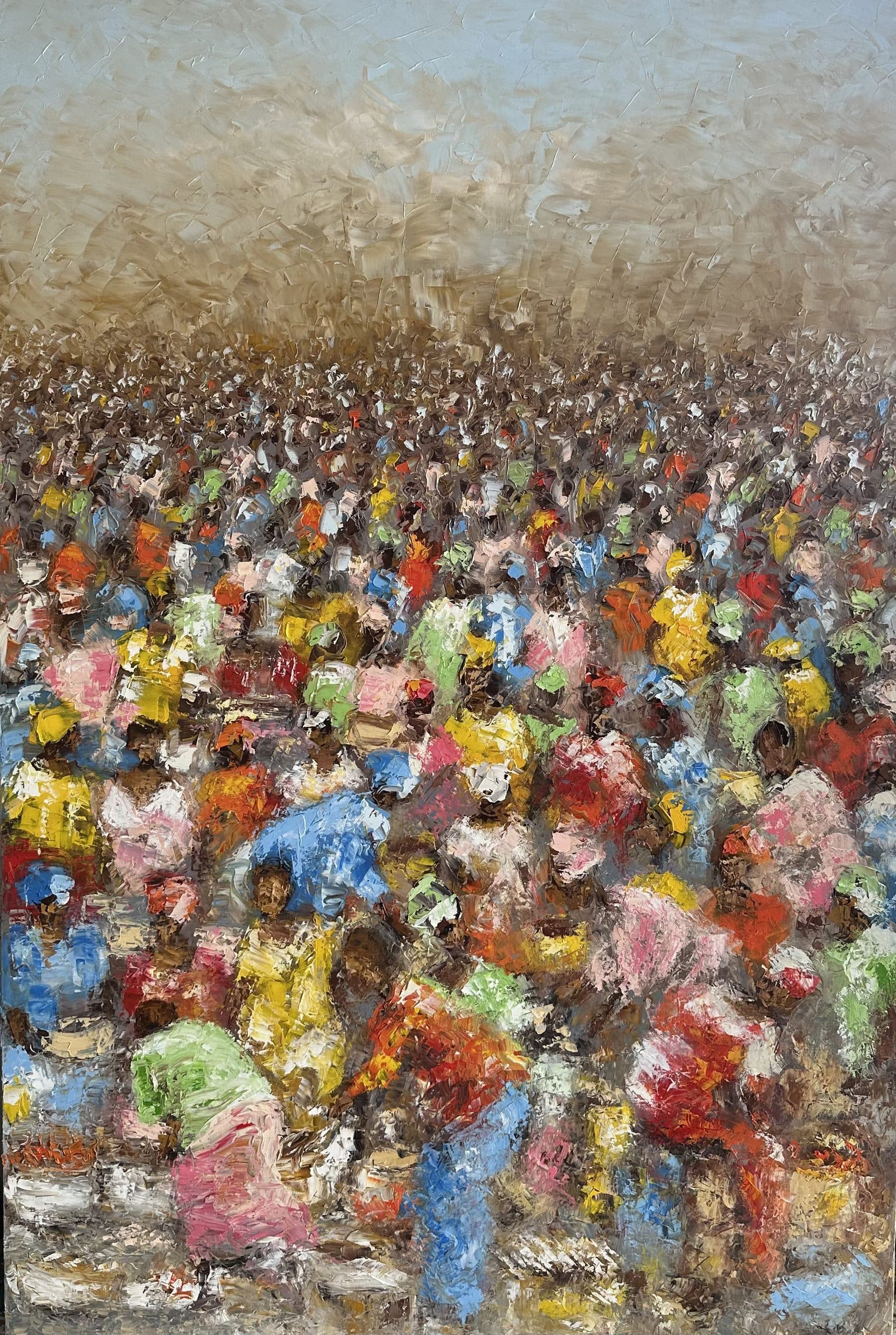
Valuing a contemporary African artwork means weighing several factors together: the artist's standing, the record of past sales, the gallery showing the piece, its dimensions, its technique and its provenance. No single factor on its own gives a reliable figure; at Ge'eza, each price is communicated case by case, on request, from the artwork's page.
What moves a valuation
Two canvases of the same size and the same year can carry different values depending on the artist, the technique used, and how rare the subject is within that artist's body of work. An artist's standing builds over several years, through exhibitions, gallery sales and, for some, auction appearances. The market for modern and contemporary African art has its own pattern: auction sales of modern and contemporary African artists reached 62.8 million dollars in 2025, up 42.6% on 2024, according to the research firm ArtTactic (April 2026), though that overall figure says nothing about the price of any one canvas.
Provenance and paperwork matter
A work accompanied by a certificate of authenticity signed by the artist, a purchase invoice and a clear history (where it was shown, who owned it) is valued more easily than a piece with no documentation. The guide on the certificate of authenticity covers what that document should contain to be useful for a resale or an insurance claim.
Gallery, primary market and auctions
A work bought from a gallery, on the primary market, does not necessarily carry an immediate resale value: its purchase price reflects the artist's and the gallery's work, not a value set in an auction room. Ge'eza's online auctions, when a sale is open, offer an example of an organised secondary market, with a public, time-stamped bid history. For a piece already in a collection, that kind of sale, or a gallery's opinion, is often the most concrete reference point available.
Who to ask for a valuation
For a work bought at Ge'eza, the gallery is the first point of contact: it knows the artist, the format, the technique and the piece's history. The guide on how art is priced in Dakar explains how a price is built at the point of purchase. For an independent valuation, for insurance or resale purposes, a specialist or an auction house focused on African art remains the most reliable option.
Frequently asked questions
Can the future value of a piece bought at Ge'eza be known in advance?
The sale price is given on request, from the artwork's page; no future resale value is ever promised.
What moves the valuation of a contemporary African work?
The artist, the technique, the format, the provenance and the documentation available (certificate, invoice, history).
Does the auction market give a reliable reference?
It gives a reference for the secondary market in general; each individual work remains a case of its own.
Does a certificate of authenticity change the valuation?
Yes, a documented piece (certificate, invoice, history) is valued more easily than a work with no paperwork.