
Question · 22 October 2026
Spotting an Original African Painting From a Reproduction
Signature, texture, the back of the canvas, a certificate of authenticity and an identified gallery: the concrete signs that help tell an original African painting apart from a reproduction or a print run.
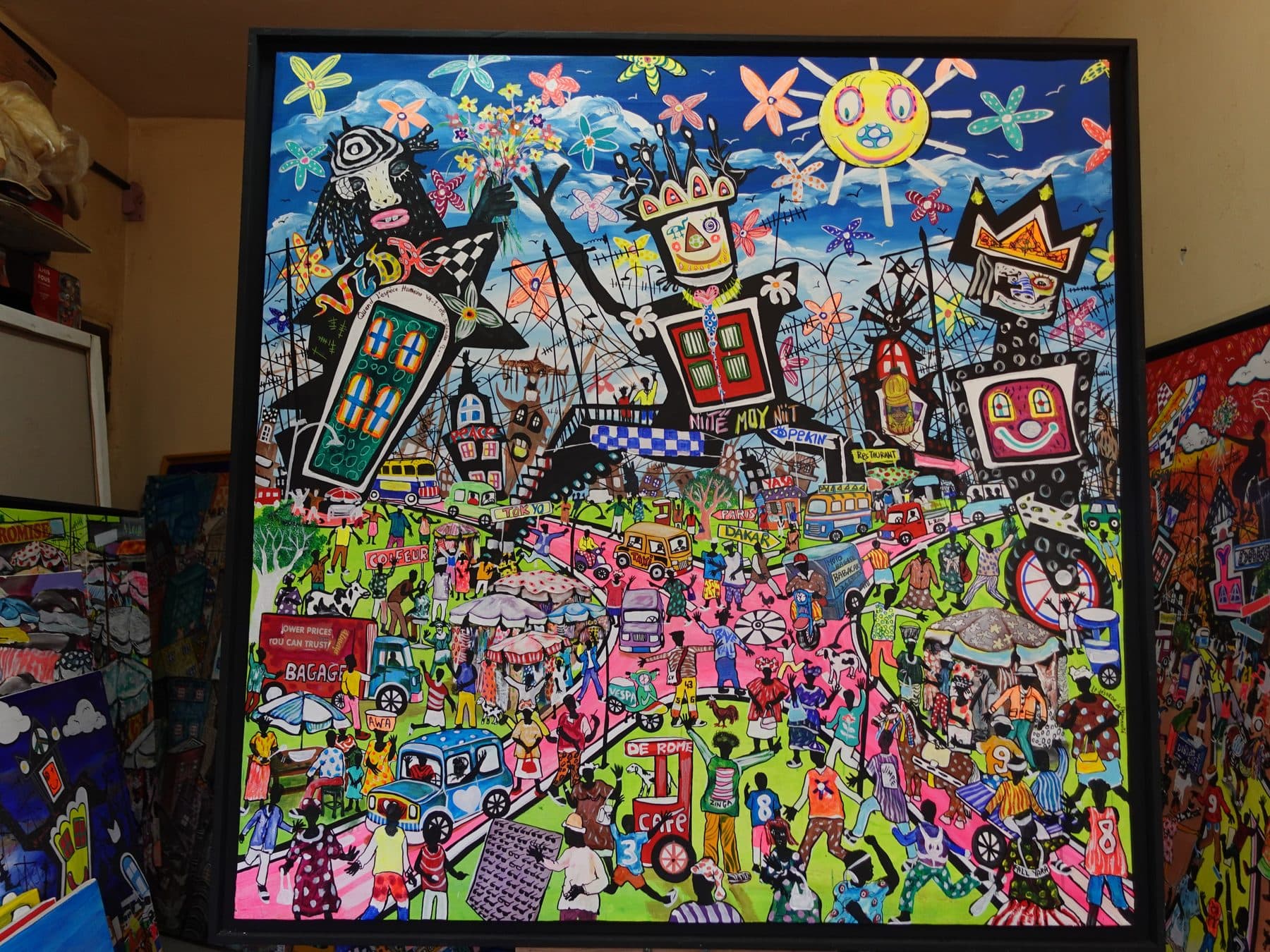
Spotting an original African painting means checking a handful of concrete things: the artist's signature, the texture and brushwork visible up close, the back of the canvas, and above all a certificate of authenticity issued by an identified gallery with a physical address. None of these on its own is enough; it is the combination that gives confidence in a piece's origin.
Signature and texture
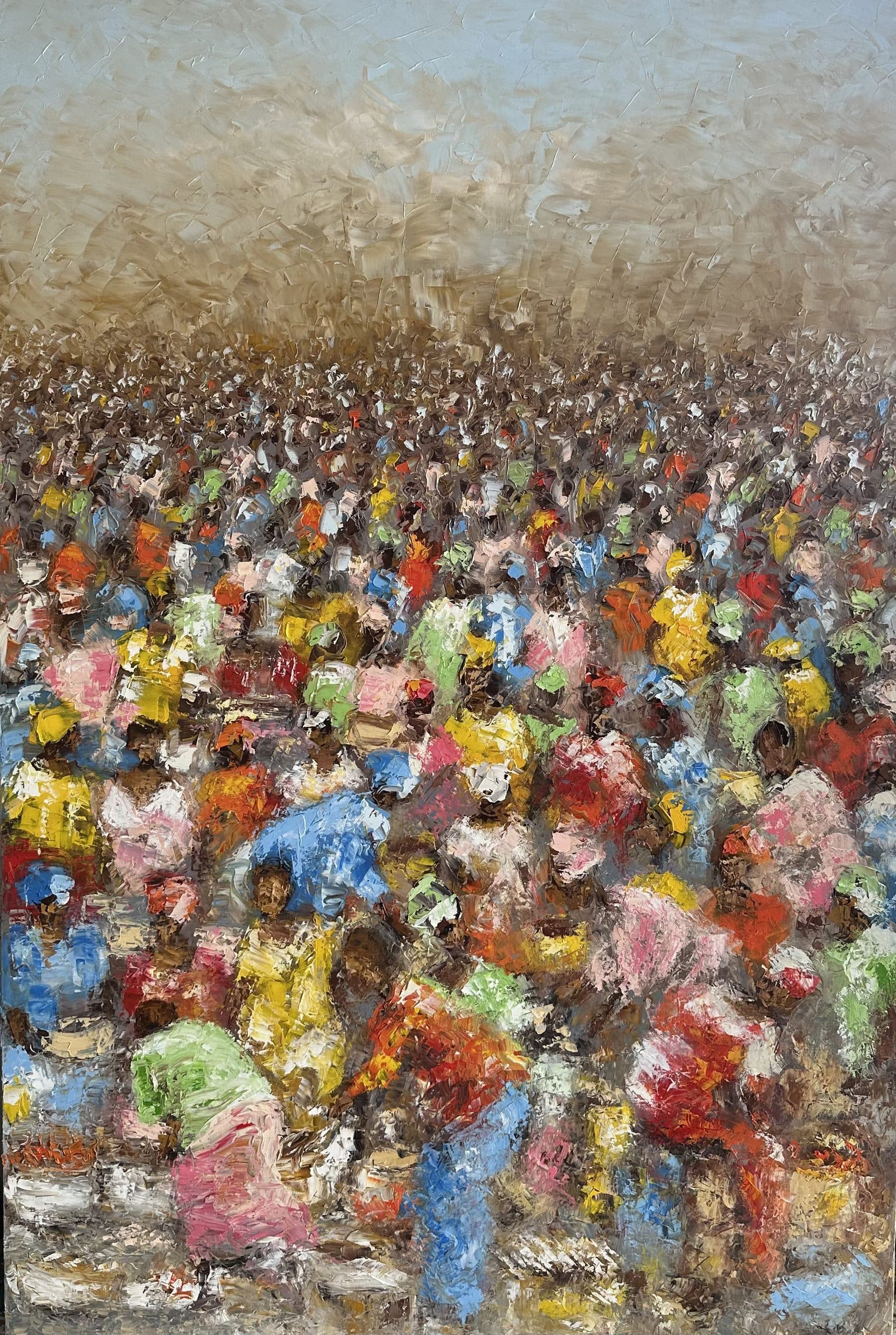
An original work usually carries the artist's signature, visible on the front or the back of the canvas. Beyond the signature, texture matters: a painting in oil or mixed media, acrylic and Posca for instance, has a relief and a surface that can be felt up close, missing from a print or a flat reproduction.
The back of the canvas and the stretcher
The back of an original canvas often gives useful clues: handwritten notes, a gallery inventory number, an exhibition label. A wooden stretcher with canvas stretched by hand looks and feels different from an industrial frame holding a print on paper or synthetic canvas.
The certificate of authenticity, the deciding factor
The document that settles any doubt is the certificate of authenticity, signed by the artist, which identifies the work precisely (title, technique, dimensions, year) and ties it to its author. The guide on the certificate of authenticity covers what it should contain. At Ge'eza, every work sold leaves with this document, handed over at the time of payment.
An identified gallery, a sign of trust
Buying from an identified gallery, with a physical address and set visiting hours, lowers the risk considerably compared with an unverified seller. The guide on buying a painting in Dakar covers the steps followed at Ge'eza, from asking for a price to receiving the certificate. The gallery can be visited during restaurant hours, Tuesday to Sunday, 8am to 10pm, to see a piece up close before deciding.
If in doubt
Faced with a work offered with no certificate, no identifiable gallery, or no way to see it in person, it is best to ask for these elements before paying, or to walk away from the purchase. A serious gallery answers these questions in writing, without hesitation, before any transaction.
Frequently asked questions
How can you check that a canvas is an original?
By checking the signature, the texture and the back of the canvas, and by asking for a certificate of authenticity signed by the artist.
Is the certificate enough on its own?
It remains the most decisive element, but it is usefully backed up by a visible signature and the piece's history.
Why buy from an identified gallery?
Because it has a physical address, set visiting hours, and answers in writing before any transaction, which lowers the risk.
What if no certificate is offered?
Ask for one before paying, or walk away from the purchase if the gallery or seller cannot provide it.