
Question · 22 October 2026
Oil or Acrylic: How to Choose a Painting
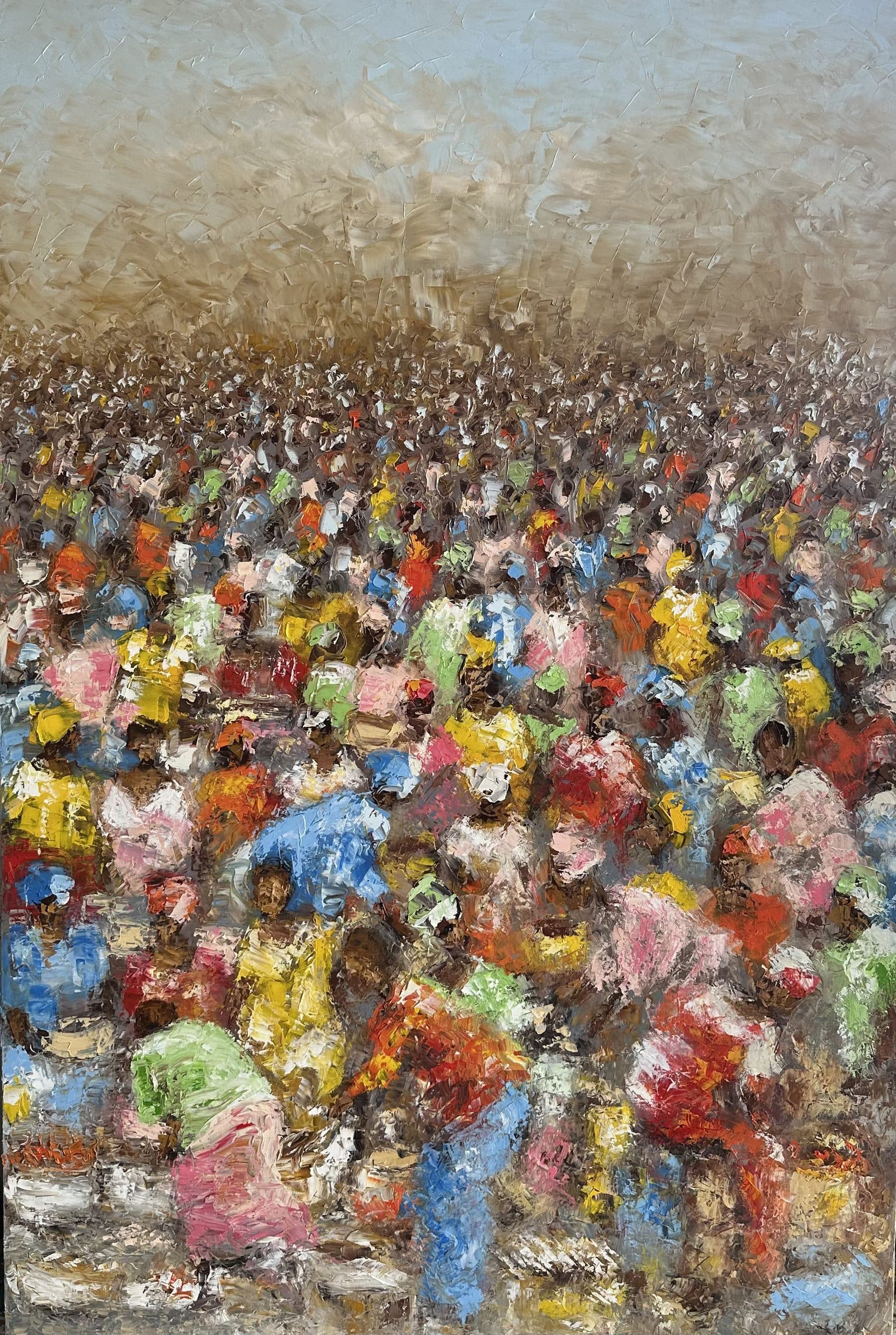
Oil or acrylic: differences in finish, drying time and care in a hot, humid climate. La foule is an oil, Sans titre I (Lien commun) and Sans titre II (Lien commun) are acrylics, both at Ge'eza's gallery.
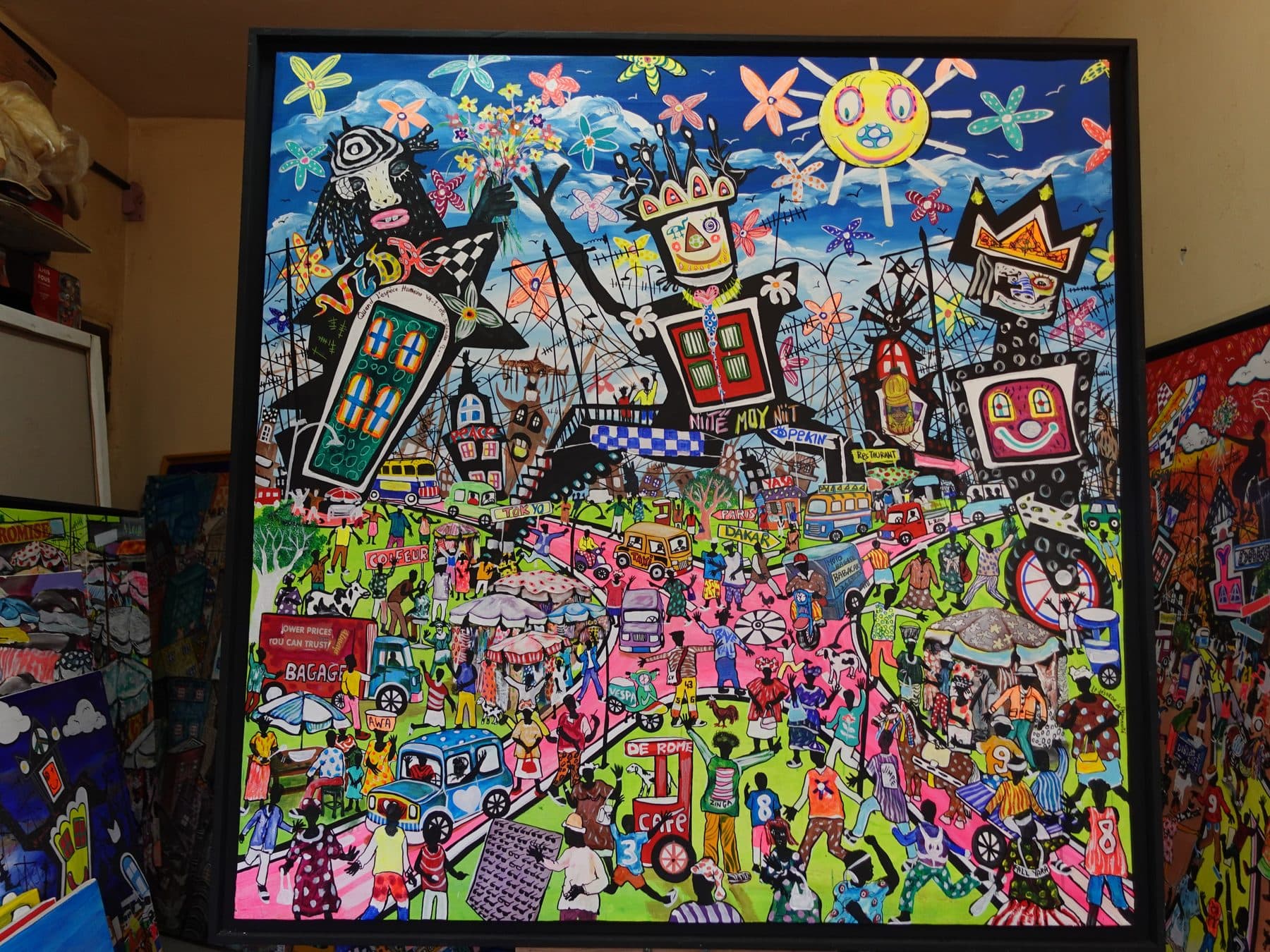
Between an oil painting and an acrylic painting, the main difference lies in drying time, texture and upkeep: oil dries slowly and often keeps a more noticeable texture, acrylic dries fast and gives flatter, sharper colour. Both techniques can be found at Ge'eza's gallery, where Ibou Diagne works in either one.
What sets the two techniques apart
Oil paint takes several days, sometimes several weeks, to dry fully, which lets an artist work the surface longer and build soft transitions and texture between colours. Acrylic, a water-based paint, dries within hours, giving flatter colour and sharper edges, but leaving less time to rework an area once it is down.
Two examples at the gallery
"La foule" (2025, 180 x 120 cm, its title meaning "the crowd") is an oil on canvas. "Sans titre I (Lien commun)" and "Sans titre II (Lien commun)" (2025, acrylic on canvas) show the other technique. Comparing these three works in person, in the gallery lounge, gives a concrete sense of what changes between the two, without needing to describe their composition any further.
Standing up to a hot, humid climate
In Dakar, humidity and temperature swings deserve attention regardless of technique. An oil painting is generally stable once dry, but is sensitive to sudden temperature changes and prolonged direct sunlight, which can yellow the varnish over time. An acrylic painting holds up well against ambient humidity, but stays sensitive to intense heat, which can slightly soften the paint layer in extreme cases.
Everyday care
In both cases, a few simple habits protect a painting over time: hang it away from direct sunlight, keep it away from heat or humidity sources such as a kitchen or bathroom, and dust the surface with a soft, dry cloth rather than a liquid product. The guide art for your home in Dakar covers more pointers for hanging a piece at home in this climate.
Which one to choose
The choice between oil and acrylic mostly comes down to the look you want and which canvas catches your eye, rather than any general rule. Both techniques age well if cared for properly, and every work currently online at Ge'eza's gallery, oil or acrylic, can be viewed on the pages for "La foule" and "Sans titre I (Lien commun)", with a price given on request.
Frequently asked questions
Is oil more fragile than acrylic?
No, both techniques age well if protected from direct sunlight and from sharp swings in humidity.
Which technique does Ibou Diagne use?
Both: he works in oil as well as acrylic, depending on the canvas.
Is La foule an oil or an acrylic?
An oil on canvas, 2025, 180 x 120 cm.
How do I find out the price of one of these works?
Ask from the artwork's page, or by WhatsApp at +221 78 660 07 07.