

Food · 27 October 2026
Key Sir: Slow-Cooked Ethiopian Beetroot, Naturally Sweet
Key sir is a slow-cooked Ethiopian beetroot, earthy and naturally sweet, vegan, at 5,000 F at Ge'eza in Point E, Dakar. A beyaynetu dish that gives the platter its deep purple colour.
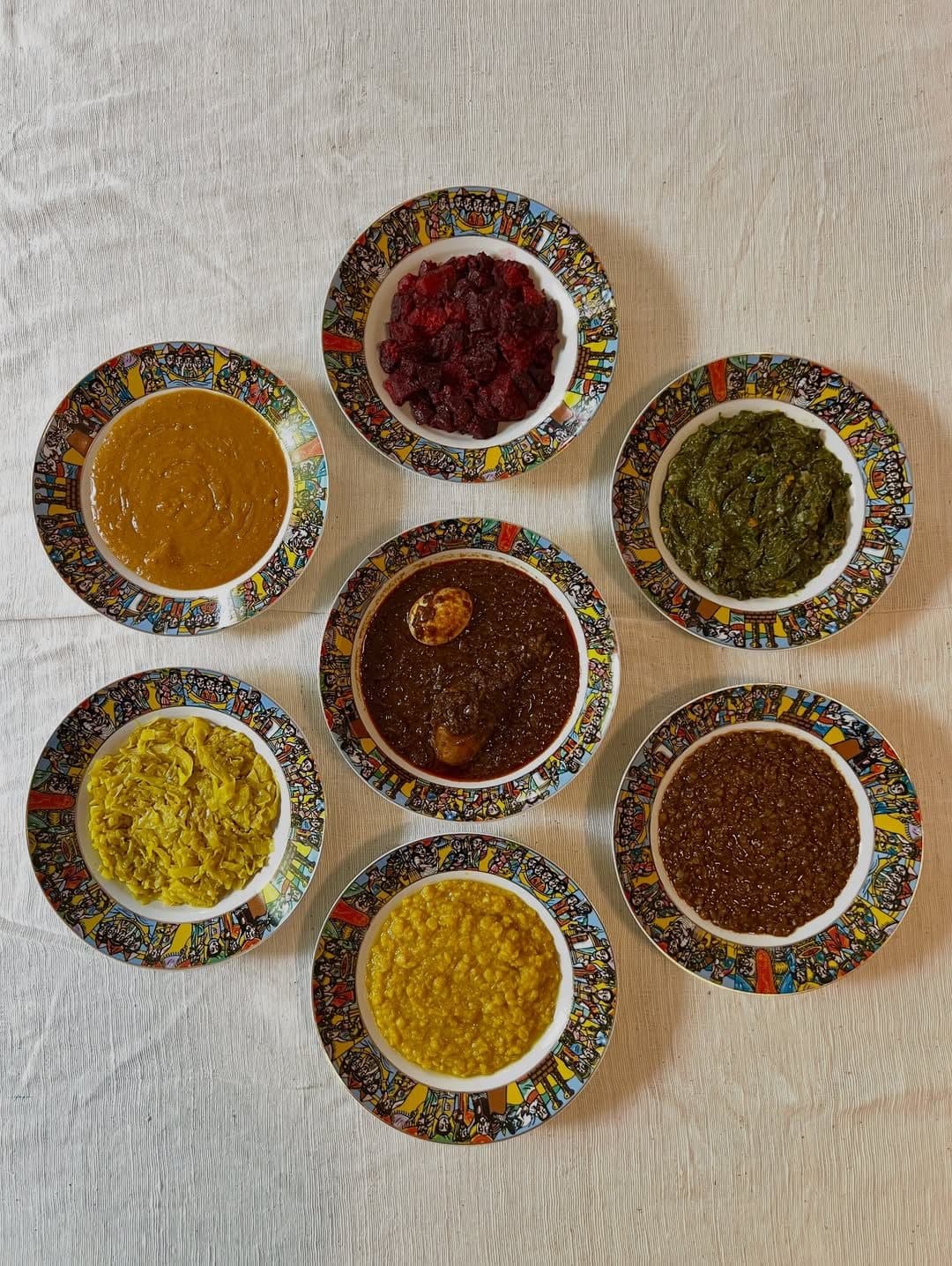
Key sir is a slow-cooked Ethiopian beetroot, earthy and naturally sweet. Vegan and made without butter, it costs 5,000 F at Ge'eza in Point E, Dakar, and it is one of the seven dishes in the beyaynetu, the Ethiopian fasting platter. It is one of the mildest dishes on the menu, and one of the most colourful.
A name that describes a colour
In Amharic, key means red and sir means a root. Key sir is, quite simply, the red root, which is to say beetroot. The name describes what the eye sees first: a deep, almost purple red that stands out clearly against the yellow, green and red tones of the other fasting dishes sharing the same injera.
That colour is not just decoration. On a platter where several dishes sit side by side, beetroot works as a visual marker as much as a flavour: you spot it before you even taste it.
What the Ge'eza menu says
At Ge'eza, key sir is described as beetroot cooked slowly, earthy and naturally sweet. That long, gentle cooking is what sets the dish apart: it gives the vegetable's own sugars time to concentrate, with nothing added. The result is a melting, almost candied dish, firm enough to be picked up with injera.
It is a vegan dish, served at 5,000 F on its own, with no added chilli or thick sauce. Its simplicity makes it a useful marker for understanding Ethiopian fasting cooking, which does not always chase heat: it also knows how to be gentle.
Its place in the beyaynetu
Key sir is one of the seven dishes that make up Ge'eza's beyaynetu, alongside shiro wot, misir wot, fosolia, gomen, tikil gomen and alicha ater kik. On the large injera, its purple hue stands apart immediately from the deep red of the shiro or the green of the gomen, which helps guests find their way around the platter before tasting each dish. The full beyaynetu starts at 7,000 F for one person: see beyaynetu for the full set of seven dishes.
Within that shared platter, key sir often plays the role of a sweet pause between bolder dishes. Its natural sweetness sits well against the heat of shiro wot or the heaviness of a thick legume sauce.
What to pair it with
Key sir pairs naturally with the other mild dishes on the menu, such as alicha ater kik, split peas with turmeric, or tikil gomen, cabbage with turmeric and olive oil: together they build an entirely mild, gentle plate. For those who prefer contrast, pairing it with a bolder shiro wot sets off the beetroot's sweetness by comparison.
Like everything on the menu, it is eaten with the right hand, using a torn piece of injera folded to scoop up the vegetable. Key sir's soft, melting texture suits that gesture well, without running or spilling over the edge.
A texture of its own on the plate
Set on the injera, key sir forms a small, compact mound, deep purple and faintly glossy with cooking oil. Unlike saucier dishes such as shiro wot or misir wot, it does not run across the bread: it holds together in soft, melting pieces, which makes it easy to pick up with your fingers, even for someone trying this way of eating for the first time. That firmness also makes it a practical dish to share around a table, since everyone can take a small portion without unbalancing the rest of the plate.
With a cold drink such as a bissap or a ginger juice, at 2,000 F, key sir makes a light, entirely vegan lunch. For a longer visit, an Ethiopian tea or a macchiato at the end of the meal extends the pause nicely.
Who it suits, and when to order it
Key sir suits guests looking for a mild, vegan dish that is easy to like, including on a first visit to Ethiopian food. It often appeals to children or to anyone unused to chilli, precisely because it contains neither berbere nor green chilli.
For a restaurant that serves vegetarians and meat eaters alike, key sir is an easy dish to put in front of a whole table: see Vegetarian Restaurant in Dakar for ideas on building a meal that works for several diets at once.
Coming to taste it
The full menu, key sir and the other fasting dishes included, is on the restaurant page. Ge'eza is open Tuesday to Sunday, 8am to 10pm, at 656 avenue Birago Diop, in Point E, Dakar. For a lunch or dinner with a group, it helps to book a table ahead, or write to +221 78 660 07 07 on WhatsApp, so the team can prepare the room in advance.
Frequently asked questions
What does key sir mean?
In Amharic, key means red and sir means a root. Key sir means red root, which is to say beetroot.
Is key sir spicy?
No, it is one of the mildest dishes on the menu, with no chilli or berbere, naturally sweetened by the beetroot itself.
How much does key sir cost at Ge'eza?
5,000 F as a single dish. It is also one of the seven dishes in the beyaynetu, from 7,000 F for one person.
Is key sir vegan?
Yes, like all the fasting dishes on the menu, it is made without butter or any animal product.