
Question · 6 October 2026
Jebena: The Ethiopian Clay Coffee Pot and How It Works
The jebena is the traditional Ethiopian coffee pot: a long-necked clay carafe set on the embers. Its shape, its role in the coffee ceremony, the rekebot and the small cups, and where to see one in Dakar.
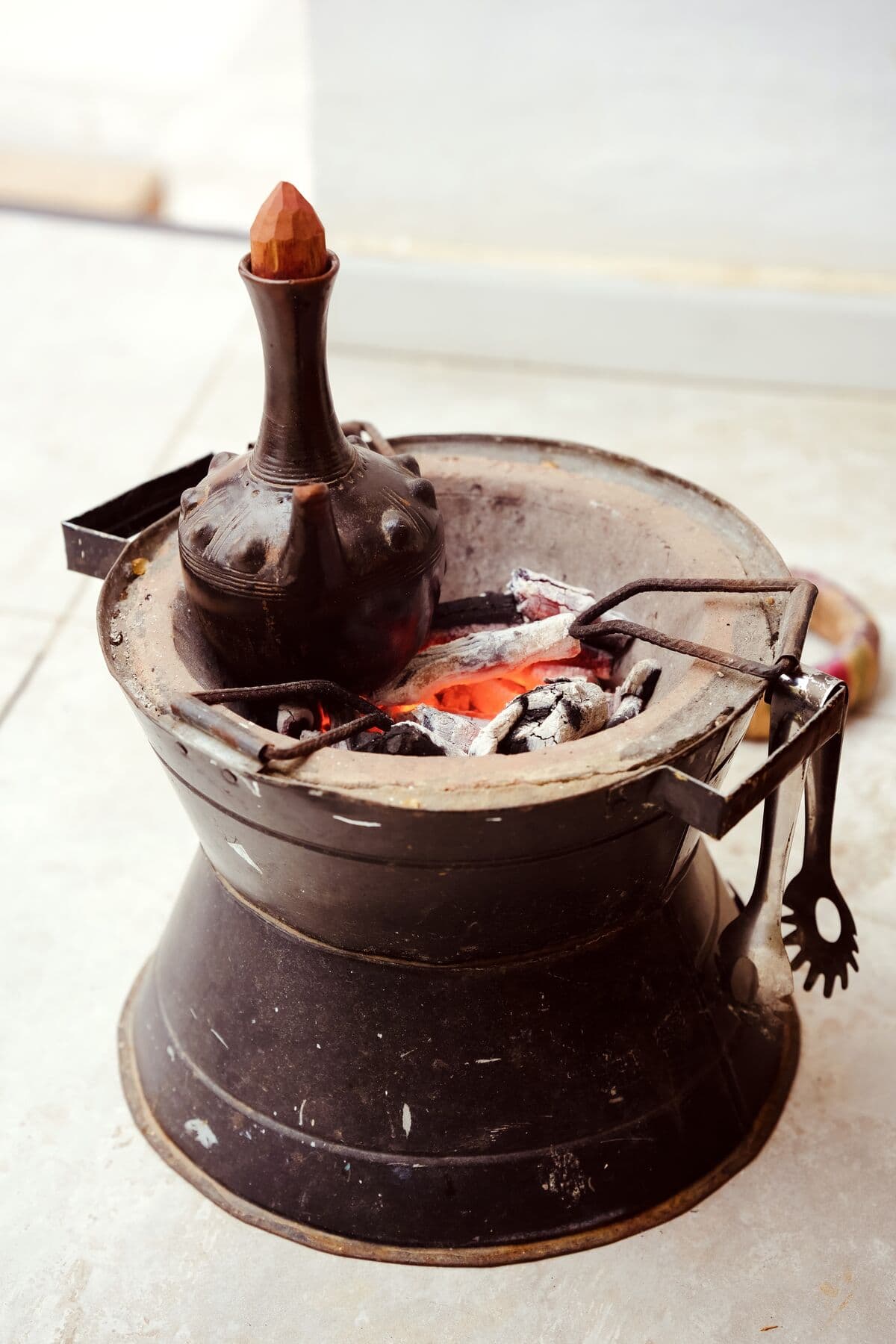
The jebena is Ethiopia's traditional coffee pot: a clay carafe with a round belly, a long narrow neck and a spout, in which coffee is brewed over embers. It is the central object of the coffee ceremony. At Ge'eza it is used to prepare the three rounds, Abol, Tona and Baraka, in the full ceremony at 5,000 F per person.
What a jebena looks like
A jebena is recognisable at once. The base is wide and rounded, so it sits on the embers and heats the water evenly. The neck rises narrower and ends in a spout. A handle lets you lift it without burning your hand. It is made by hand from fired clay, and its look varies from workshop to workshop: brown, blackened by use, sometimes decorated with patterns.
The shape is not decorative. The narrow neck helps keep the heat and lets the grounds settle at the bottom. When you pour, the coffee comes out clear and the grounds stay behind.
How it is used
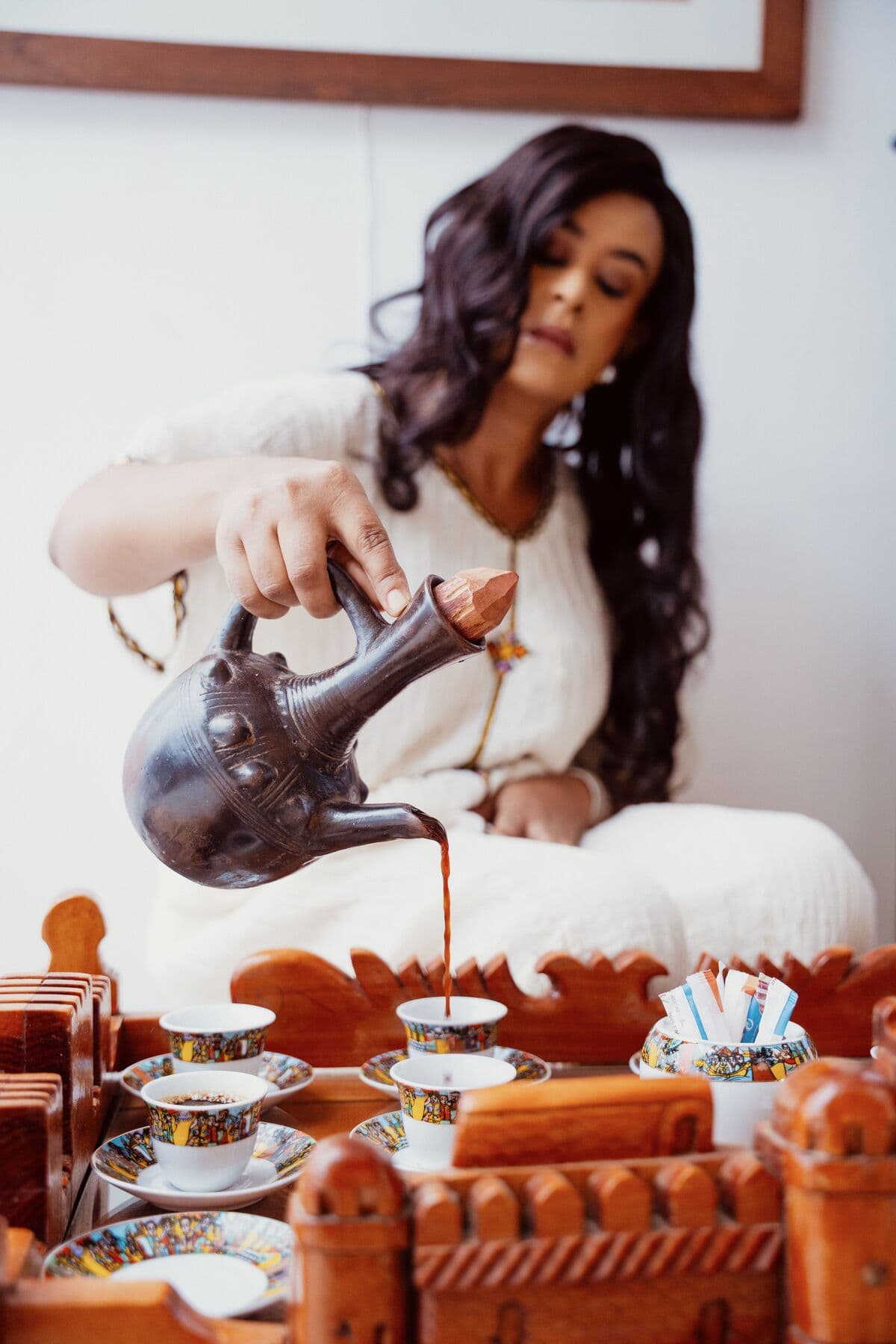
The coffee is first roasted fresh, then ground by hand. The jebena receives water and the ground coffee, and is set on the embers. The brew rises slowly. When it is ready the jebena is lifted off the heat, left to rest a moment, and the coffee is poured from a height into the small cups in one continuous movement. That pour, often the most beautiful part to watch, avoids stirring up the bottom.
For the following rounds, water is added to the same coffee. This is why the three cups differ: the first is the strongest, the second more nuanced, the last the gentlest. The three rounds are explained in Abol, Tona, Baraka.
The rekebot and the small cups
Two other objects belong to the scene around the jebena.
- The rekebot is the small carved stand on which the cups are placed, upside down, before serving. At Ge'eza you can see it near the brazier, with the cups lined up.
- The sini are the small handleless cups. They hold very little, which explains the three rounds: you drink a little at a time, and you stay a long while.
All of it is served with incense, dabo, the homemade bread served with honey (1,000 F), and all the time it takes. The ceremony lasts about 45 minutes.
Why clay
Clay gives the coffee a taste that many describe as rounder and earthier. The jebena also holds heat for a long time and tolerates direct contact with the embers, which not every carafe does. Above all it is the object found in Ethiopian homes for generations: using it means making coffee the way it is made there, not just serving it.
Seeing or buying a jebena in Dakar
To see the jebena at work, the Ge'eza ceremony is the simplest way: it is best booked 24 hours ahead, especially for a group, with a WhatsApp confirmation. The dedicated page is the coffee ceremony. The house is open Tuesday to Sunday, 8am to 10pm, at 656 avenue Birago Diop, Point E. For any question, write on WhatsApp at +221 78 660 07 07.
Frequently asked questions
How do you pronounce jebena?
Roughly "jeh-beh-nah", with the stress on the first syllable.
Can a jebena be used on a hob?
It is designed for embers or a gentle flame. On an electric or induction plate the clay can crack. Ask the person selling it for advice.
Why three cups from the same coffee?
Because water is added to the same grounds: the first round is the strongest, the last the lightest.
Can I taste without doing the whole ceremony?
The menu offers each round separately: Abol 2,500 F, Tona 2,000 F, Baraka 1,500 F.