
Question · 6 October 2026
Abol, Tona, Baraka: The Three Rounds of Ethiopian Coffee
Abol, Tona and Baraka are the three rounds of the Ethiopian coffee ceremony, from strongest to gentlest. What each one brings, what changes from cup to cup, and how to order them separately at Ge'eza.
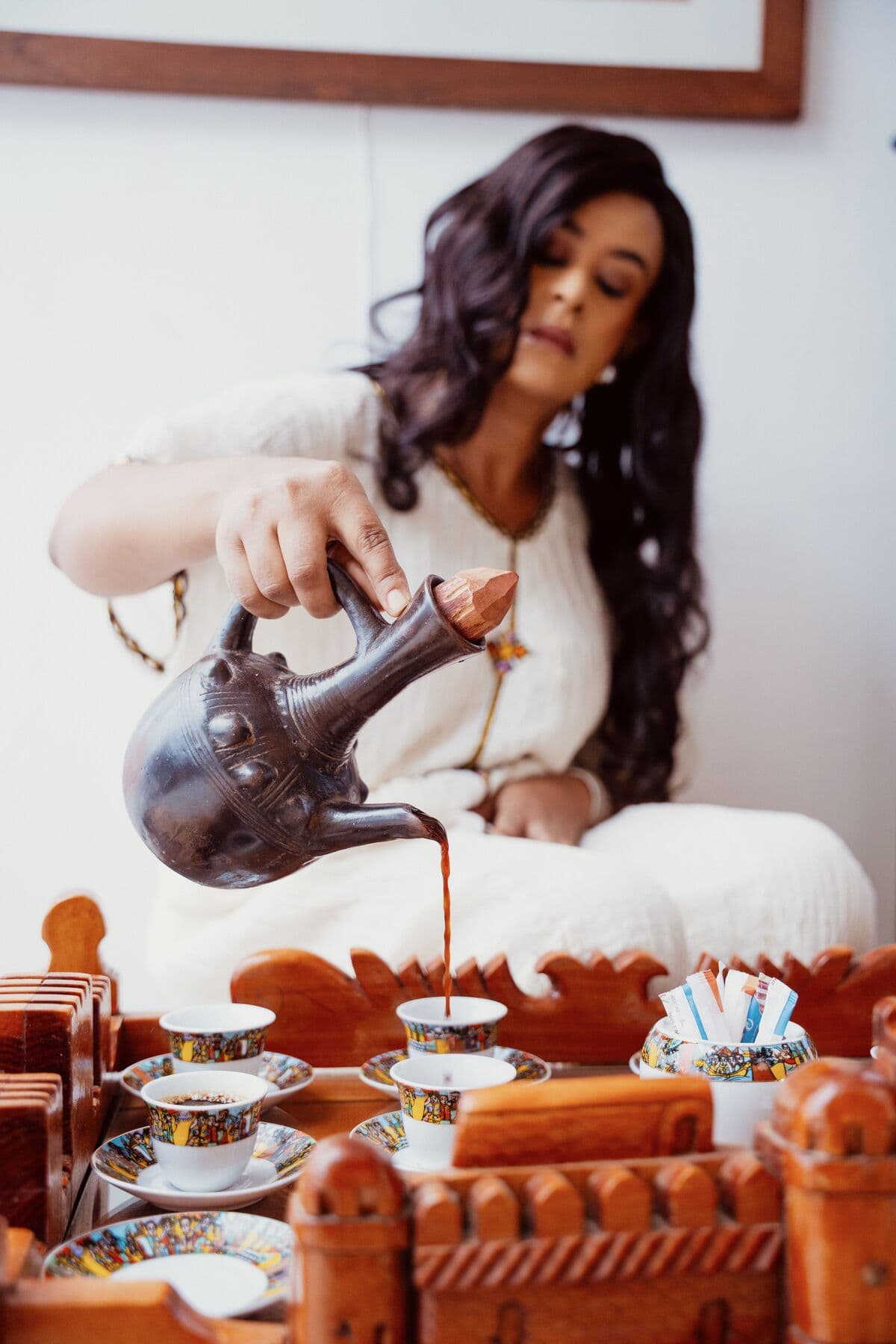
Abol, Tona and Baraka are the three rounds of the Ethiopian coffee ceremony. The first, Abol, is the strongest. The second, Tona, is more nuanced. The third, Baraka, the gentlest, closes the ceremony with a blessing. At Ge'eza the full ceremony is 5,000 F per person, and each round can also be ordered alone: Abol 2,500 F, Tona 2,000 F, Baraka 1,500 F.
One coffee, three cups
The principle is simple and clever. Three different coffees are not prepared: the same coffee is brewed three times in a row, with water added to the jebena. As the coffee gives up its aromas gradually, each round has its own character.
The house menu gives orders of magnitude. Abol draws out about 65 to 70% of the available aromas, Tona captures another 20 to 25%, and Baraka finishes with what remains, in a lighter cup. These are guideposts, not laboratory measurements, but they sum up the experience well: intensity falls with each round while subtlety grows.
Abol, the first round
This is the fullest cup. Abol is robust, grounded, foundational: it gives the coffee its structure and its noble bitterness. It is the round you drink first and take most seriously. If you only have one, it is often the one that best represents Ethiopian coffee as you imagine it. It is 2,500 F.
Tona, the second round
Tona is the nuanced cup. Once the first intensity has passed, subtler notes appear that the first round masked: more roundness, more fruit or flower depending on the origin of the coffee. It is the favourite of those who find Abol a little strong. It is 2,000 F.
Baraka, the blessing
Baraka is the last round, the lightest. The word means "blessing": it is drunk at the end of the ceremony, in gratitude and calm. It is 1,500 F. In the spirit of the ceremony, declining the third round is frowned upon, because it is the one that seals the shared moment.
What changes from cup to cup
| Abol | Tona | Baraka | |
|---|---|---|---|
| Order | 1st round | 2nd round | 3rd round |
| Character | Intense, robust | Nuanced | Mild, light |
| Price at Ge'eza | 2,500 F | 2,000 F | 1,500 F |
Sugar, milk or spices are a matter of habit, but a guest discovering the ceremony does well to taste first with nothing added.
Ordering one round or the full ceremony
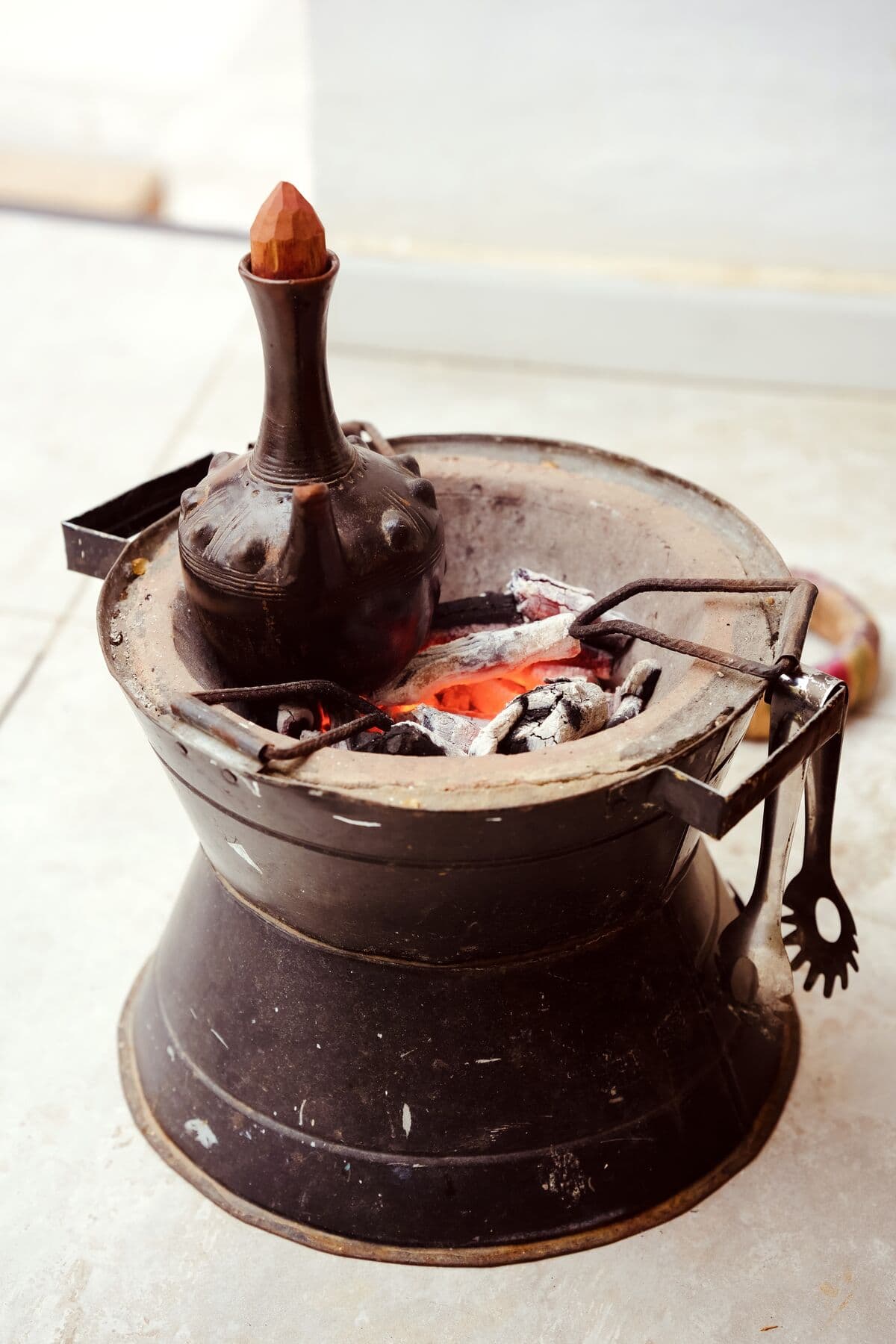
If you are short of time, one round is enough to taste the coffee. If you want the whole ritual, the full ceremony at 5,000 F brings together the three rounds, incense, dabo (the homemade bread) and all the time it takes, about 45 minutes. It is best booked 24 hours ahead, especially for a group, and is confirmed by WhatsApp at +221 78 660 07 07. To understand the meaning of the gesture, see the coffee ceremony as a language of hospitality. For the object that prepares everything, see the jebena.
Frequently asked questions
What does Baraka mean?
The word means blessing. It is the third round, which closes the ceremony.
Do the three rounds use the same coffee?
Yes. Water is added to the same coffee, which explains the drop in intensity.
Can I drink only Abol?
Yes, the Ge'eza menu offers each round separately, Abol at 2,500 F.
How long does the full ceremony take?
About 45 minutes, at 5,000 F per person. The house is open Tuesday to Sunday, 8am to 10pm.