
Food · 27 October 2026
Horn of Africa Food in Dakar at Ge'eza
Ethiopians, Eritreans, Sudanese and Somalis passing through or living in Dakar share some table references, injera, foul, coffee and spices. Ge'eza, in Point E, serves Ethiopian food, without claiming to represent the other countries' cuisines.
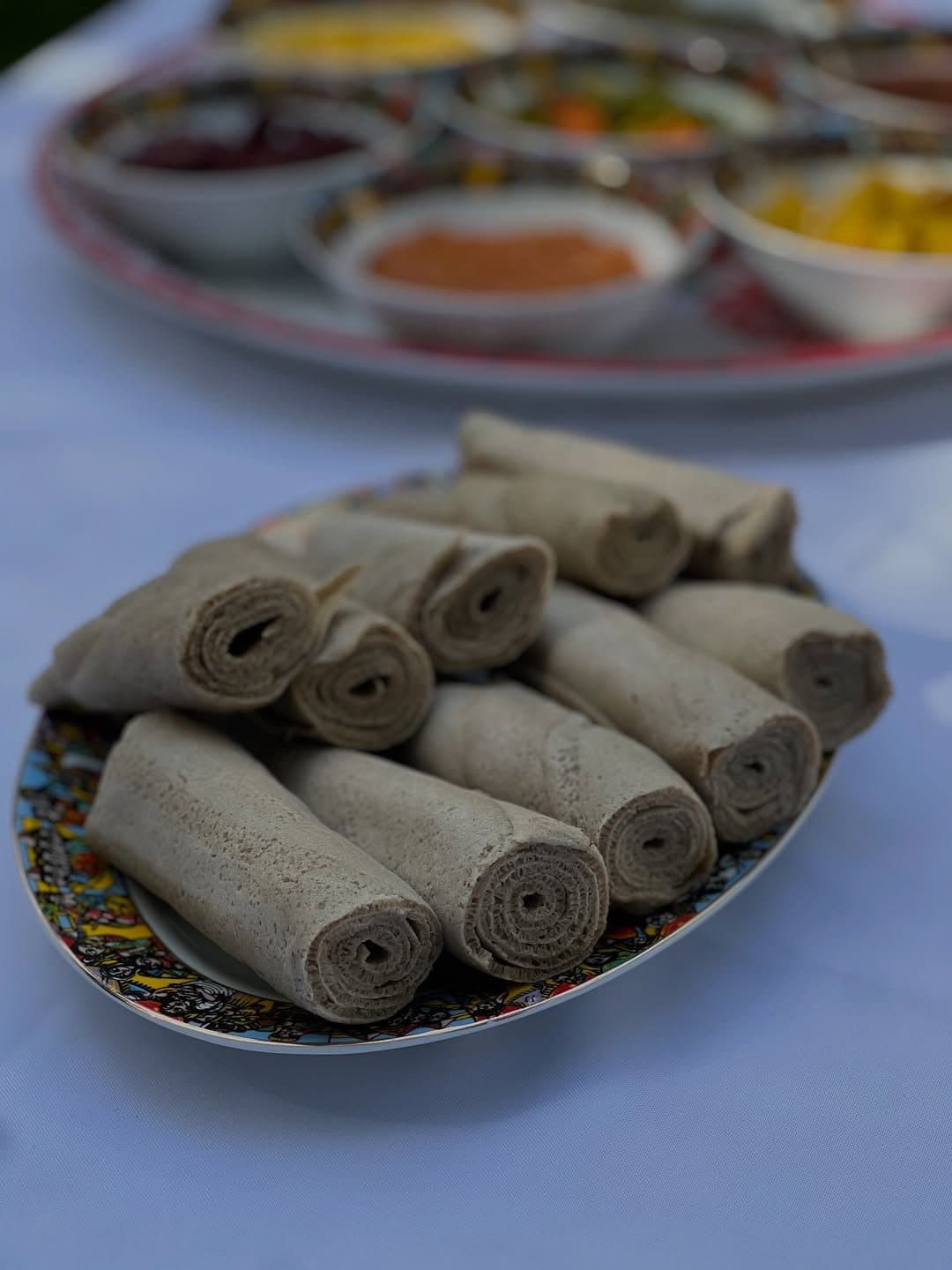
For Ethiopians, Eritreans, Sudanese and Somalis passing through or living in Dakar, several table references carry across the Horn of Africa: injera or similar flatbreads, foul made from fava beans, slow-brewed coffee, and spices that travel between kitchens. Ge'eza, in Point E, serves Ethiopian food, without claiming to represent Eritrean, Somali or Sudanese cuisine.
One region, several tables that echo each other
The Horn of Africa brings together neighbouring countries whose tables resemble each other in places without being identical. Foul, stewed fava beans in spices, appears in similar forms across several cuisines of the region and beyond, as far as Egypt and Sudan. Coffee, brewed slowly and shared over several small cups, holds a central place in the hospitality of many households, with gestures that echo from one country to another without being quite the same everywhere. These shared points do not erase the differences between the cuisines: each country keeps its own dishes, its own spices and its own way of preparing them.
What Ge'eza serves
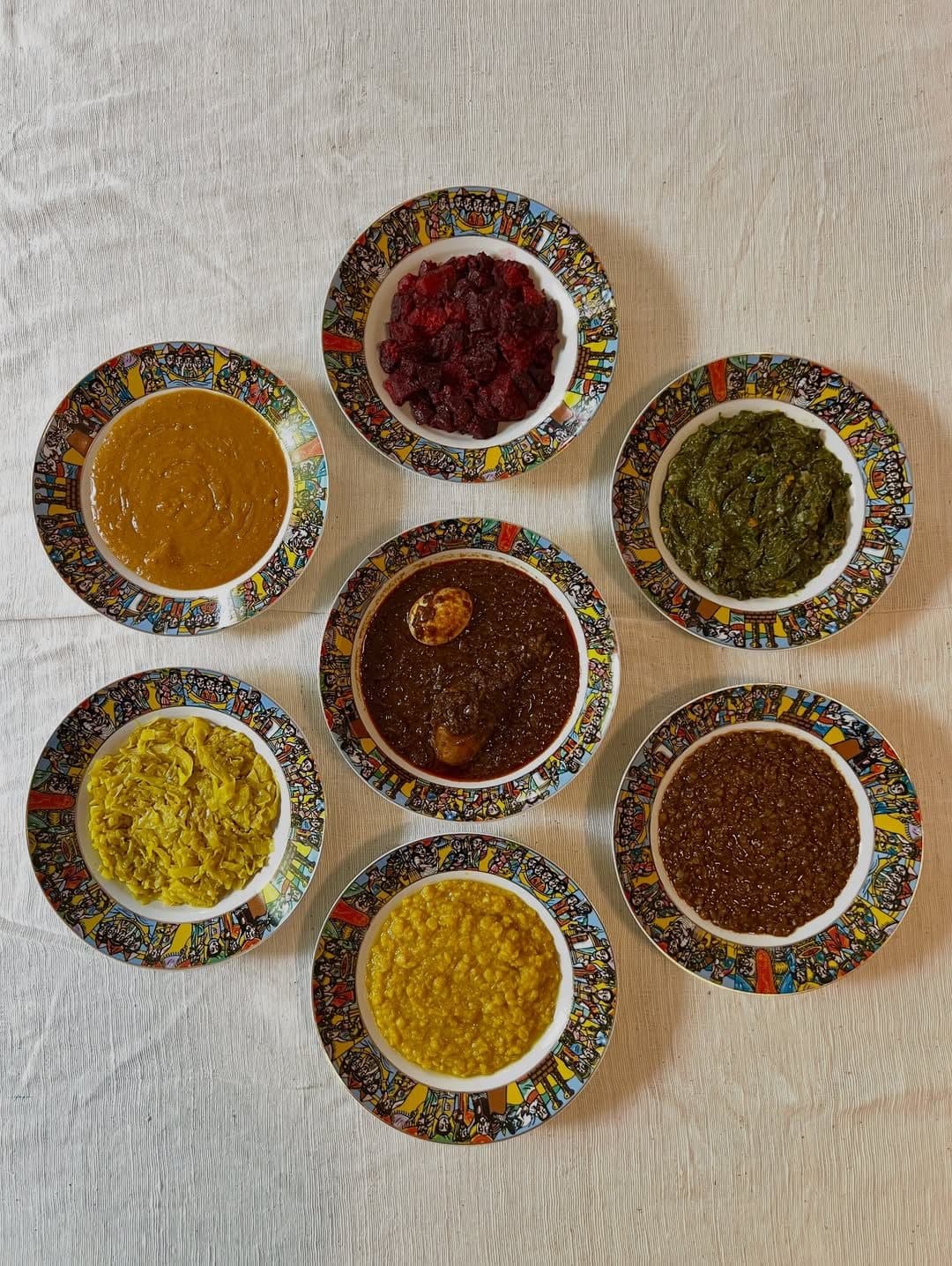
Ge'eza offers Ethiopian food: vegan fasting dishes on injera, doro wot, kitfo ordered 24 hours ahead, Ethiopian breakfast from 8am to 11am with foul, and a coffee ceremony through three rounds, Abol, Tona, Baraka. The house does not serve Eritrean, Somali or Sudanese food, and does not claim to represent those cuisines. For an Ethiopian passing through or living in Dakar, this menu offers a direct link to food from home. For an Eritrean, a Sudanese or a Somali guest, some elements, injera, coffee, spices, will still feel familiar, even though the menu does not reproduce the specific dishes of their own country.
Foul, a shared reference point
Foul, at 5,500 F in its simple version at Ge'eza, is one of the dishes that crosses the region's borders most easily: stewed fava beans served with bread, found in related forms in several countries, including Sudan and Egypt. Finding it on an Ethiopian menu in Dakar can create a sense of familiarity for guests from other countries in the region, even if the exact recipe varies from one country, and one household, to the next.
A quiet presence, with no figures to offer
There is no reliable data on how many Ethiopians, Eritreans, Sudanese or Somalis live in Dakar, and it is better to stay cautious than to offer an estimate. What shows, more than any figure, is the presence of varied profiles around the places that keep these cultures alive: diplomats, students, entrepreneurs, families settled for years or recently arrived. The guide being Ethiopian in Dakar covers what the Ethiopian community finds at Ge'eza, also without offering any figures.
Coffee, a gesture of hospitality that echoes across the region
Coffee holds a special place in the hospitality of several countries in the region: brewed slowly, shared over several cups, it often marks that someone is taking the time to receive a guest rather than simply offering a drink. The Ethiopian coffee ceremony, through three rounds, Abol, Tona, Baraka, about 45 minutes, illustrates this idea without claiming to represent how coffee is made elsewhere in the region: each country keeps its own gestures, its own pace, and its own pot. For an Ethiopian, it stays a familiar ritual; for a visitor from a neighbouring country, it might recall a habit from home without being quite the same.
The Sudan exhibition, a past moment of dialogue
Ge'eza devoted an edition of its Country in the Spotlight format to Sudan, showing works by Israa Hamad and Yasmeen Abdalah in the gallery lounge, with a last highlight on Saturday, October 3, 2026. The guide Sudan exhibition in Dakar looks back at this edition, which shows how an Ethiopian venue can give a stage to artists from a neighbouring country of the region, without mixing the cuisines: the gallery opens up to several countries, while the menu stays Ethiopian.
Spices that travel between kitchens
Beyond coffee and foul, spices make up another point of contact across the region: berbere, the Ethiopian spice blend sold at Ge'eza's concept store, shares some of its warmth with spice mixes used elsewhere in the Horn of Africa, even though each country keeps its own balance of flavours and its own name for the blend. Noticing these echoes does not mean assuming the mixes are the same.
A stopping point for the whole region
For an Ethiopian, an Eritrean, a Sudanese or a Somali passing through Dakar, Ge'eza remains a possible point of reference around coffee and a few shared ingredients, without standing in for their own national cuisine. The house is open Tuesday to Sunday, 8am to 10pm, at 656 avenue Birago Diop, Point E, a few minutes from the Corniche Ouest and the university.
Coming to taste the menu
To try the Ethiopian menu, book online on the restaurant page or write on WhatsApp at +221 78 660 07 07. Breakfast is served from 8am to 11am, and the rest of the menu runs until closing.
Frequently asked questions
Does Ge'eza serve Eritrean, Somali or Sudanese food?
No, the menu offers Ethiopian food. Some reference points, like coffee or spices, do carry across several countries in the region.
Why does foul appear in several cuisines of the region?
It is a fava bean dish found across several neighbouring countries, including Sudan and Egypt, with related but not identical recipes.
Is there any data on these communities in Dakar?
No, there are no reliable figures on this, and none are offered here.
Has Ge'eza's gallery shown artists from other countries in the region before?
Yes, an edition of the Country in the Spotlight format was devoted to Sudan, with works by Israa Hamad and Yasmeen Abdalah.