Art · 28 September 2026
Habesha Kemis, Netela and Tibeb: Ethiopian Textiles
The habesha kemis dress, the netela shawl and the embroidered tibeb borders: white cotton, weaving and embroidery, when they are worn, and the contemporary Ethiopian fashion that reinvents them.
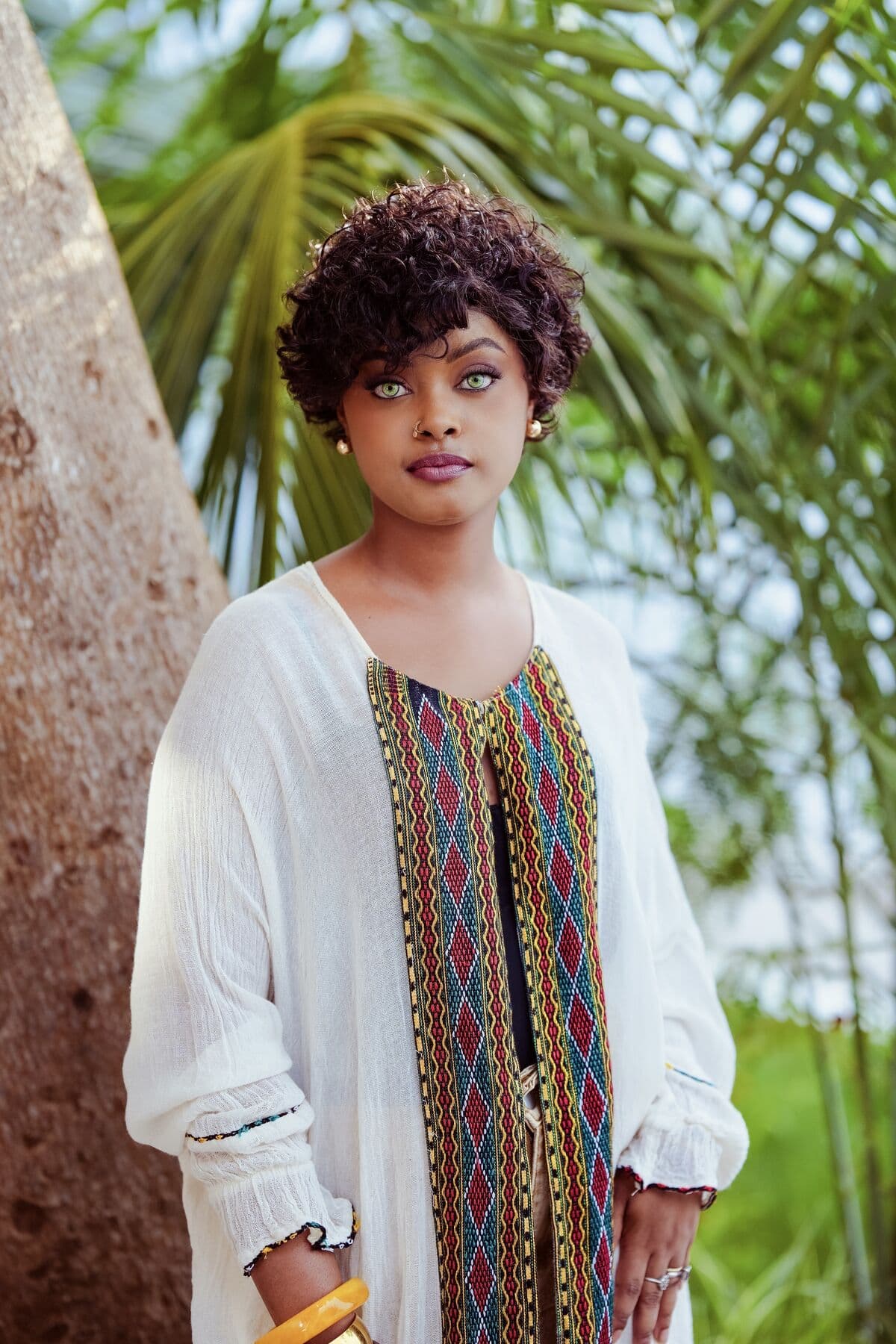
The habesha kemis is Ethiopia's traditional dress: long, in white or cream cotton, decorated with an embroidered border called tibeb. It is often worn with a netela, a light cotton shawl, also edged with embroidery. These textiles are worn at celebrations, weddings and church, and today they inspire contemporary fashion designers.
Cotton, weaving and embroidery
Traditional Ethiopian textiles rest on cotton, spun and woven by hand, on artisan looms. The light, pale fabric suits the climate of the highlands. It is the embroidery, more than the colour of the ground, that gives a piece its character: it marks the neckline, the hem, the sleeves, the edges of the shawl.
Weaving and embroidery are often skills passed down in families and workshops. The result is a piece whose value lies as much in the hand that made it as in the pattern.
The habesha kemis
The word habesha refers, in everyday use, to people from Ethiopia (and Eritrea) and their culture. Kemis means shirt or dress. The habesha kemis is a long dress, often white, with long or short sleeves, whose cut is simple and whose richness comes from the border. It is worn for big occasions: religious holidays, weddings, Enkutatash, Timkat, Genna (see Genna and Timkat).
The netela and the tibeb
The netela is a fine cotton shawl draped over the shoulders or the head. Worn at church, it carries a value of respect. Tibeb designates the embroidered or woven motifs that decorate the borders: geometric shapes, crosses, lines, sometimes coloured. In usage the word also means wisdom and art, which reflects the symbolic value of these motifs. Each region and each workshop has its habits of pattern and colour.
What these textiles tell
A traditional Ethiopian garment is not only festive clothing. It expresses a relationship with long time, with the hand, with the slowness of work. In contemporary art you find the same attention to motifs, repetition and borders. The article on contemporary Ethiopian art returns to these links between textile, painting and graphic design.
A fashion that reinvents itself
In recent years, Ethiopian and diaspora designers have revisited these codes: shorter dresses, mixed fabrics, modern cuts, tibeb motifs transposed onto jackets, bags or accessories. Traditional textile thus becomes a starting point, not a frozen costume. The same dynamic can be seen in other African countries, where wax prints, bogolan and local weaving feed today's fashion.
Textiles at ge'eza
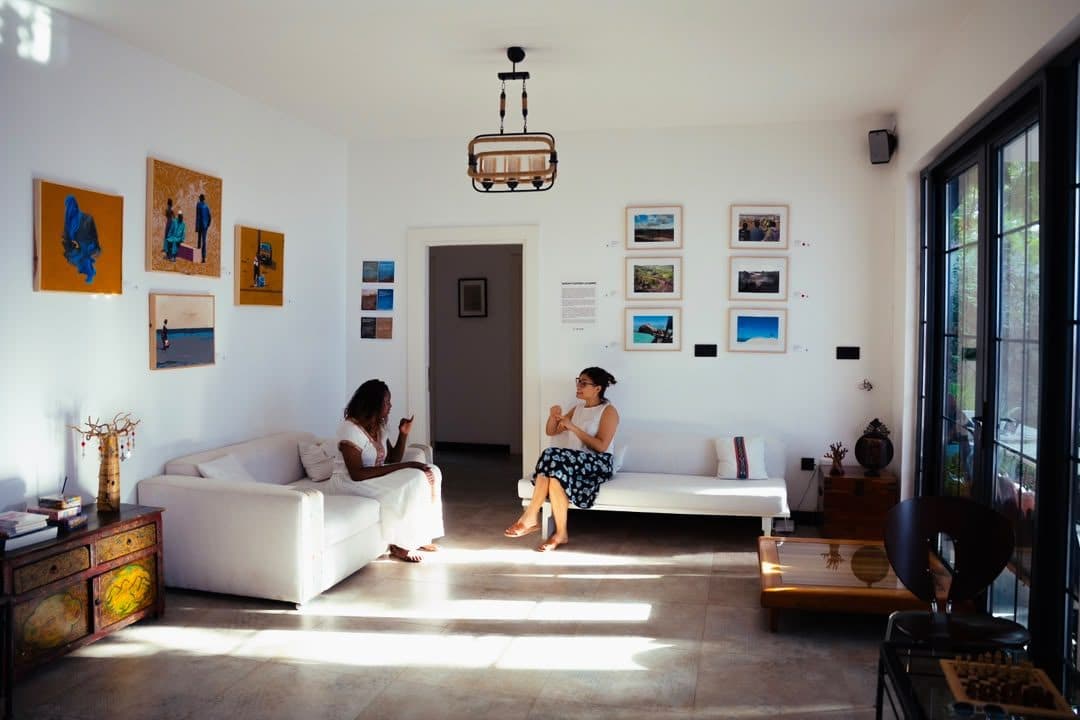
ge'eza is at once a restaurant, an art gallery and a concept store, and the house presents textile and fashion pieces in dialogue with the works on show. The pieces vary: to know what is available, write to the team at +221 78 660 07 07 or drop by the villa. The gallery shows artists from East and West Africa, with works for sale, a certificate of authenticity and shipping possible: see the gallery page.
To wear or to give
A habesha kemis or a netela is chosen according to the occasion, the cut and the fineness of the embroidery. If you are looking for a gift, a shawl is an easy piece to give. As with any craft piece, it is best to ask for advice on origin, care and how to wear it. White cotton needs gentle washing.
Coming to see
ge'eza is open Tuesday to Sunday, 8am to 10pm, at 656 avenue Birago Diop, Point E, closed on Mondays. You can have lunch, visit the gallery and see the pieces on show. To know more about the house: about ge'eza.
Colours and festivals
Although white dominates, colour is not absent: tibeb borders are adorned with red, green, yellow and blue threads, sometimes gold. Big festivals are the occasion to see the most elaborate outfits. At Enkutatash, the Ethiopian New Year, or at Timkat, Epiphany, white habesha kemis and netelas fill the streets and churches. These are moments when the textile shows its full value: it gathers, it distinguishes and it celebrates.
To understand the setting of these festivals, see the article on the Ethiopian calendar.
Caring for embroidered cotton
Cotton pieces need attention: gentle washing, by hand or at low temperature, drying in the shade, ironing inside out to protect the embroidery. Borders embroidered with coloured threads may bleed at the first wash: it is better to wash the piece separately. Stored flat or hung, away from damp, it will last a long time.
Textiles and the wider African scene
Ethiopian cotton is one voice among many. West African weaving, bogolan mud cloth, wax prints and indigo dyeing each carry their own codes. Seen side by side, as they can be in a Dakar gallery or concept store, they show how much African textile art depends on the hand, the pattern and the occasion. That is one reason a house like ge'eza places fashion beside painting and sculpture, and not in a separate corner.
Frequently asked questions
What does habesha kemis mean?
Habesha refers to the people and culture of Ethiopia and Eritrea, kemis to the shirt or dress. It is the traditional Ethiopian dress.
What is the difference between netela and habesha kemis?
The habesha kemis is the dress, the netela is the light shawl that goes with it.
What is tibeb?
It refers to the embroidered or woven motifs that decorate the borders of dresses and shawls.
Can I buy Ethiopian textiles in Dakar?
Ask the ge'eza team, who present fashion and art pieces within their gallery and concept store. Available pieces vary.