
Dakar · 9 November 2026
Exploring the Plateau in Dakar: Landmarks, Market, Station
The Plateau, Dakar's historic and administrative centre, brings together Independence Square, the presidential palace seen from outside, the Cathedral of African Remembrance, the train station and the Gorée ferry dock. A morning on foot, then lunch in Point E.
The Plateau is Dakar's administrative and business centre, home to Independence Square, the presidential palace, viewed from outside its gates, the Cathedral of African Remembrance, Dakar's train station, departure point for the TER regional train, and the ferry dock for Gorée Island. The district is best explored on foot in the morning, with no set hours or fares attached to most of these landmarks: each is worth checking on the spot. Afterwards, Point E, a short way across town, offers a lunch or an afternoon coffee at Ge'eza.
A neighbourhood at the city's origin
The Plateau is Dakar's historic core, the area around which the city grew from the 19th century onward. It still holds administrative and colonial-era buildings, wide avenues from that period, and a level of institutional and commercial activity that keeps going throughout the day. It is a district best covered in the morning, before the heat and traffic build up and before queues form outside certain buildings.
Independence Square
Independence Square is the symbolic heart of the Plateau, lined with office blocks, banks and a handful of café terraces. Its name recalls Senegal's independence in 1960. It makes a good starting point for a walk through the district, since several of its commercial streets and the other landmarks below branch out from here.
The presidential palace, from the outside
The presidential palace, the official residence of Senegal's head of state, is viewed from outside, along its gates and the garden visible from the street. It is not a site to tour like a museum: it is a place to pass by and observe while walking, rather than lingering or photographing the entrance too closely. Access and security arrangements around the palace can vary, so it is worth paying attention to any instructions on site.
The Cathedral of African Remembrance
The Cathedral of African Remembrance is Dakar's Catholic cathedral, a 20th century building that remains an architectural landmark of the Plateau. Visit it respecting the quiet of the space and whatever opening hours are posted on site, which can change.
Dakar's train station and the TER
Dakar's train station is one of the Plateau's older buildings, now the departure point for the TER, the regional express train connecting the capital to its outskirts. Timetables, frequency and fares for the TER change and are best checked on site or with the operator directly, rather than relying on older information. The station building itself, for its architecture alone, is worth a look even if you are not catching a train.
The ferry dock for Gorée Island
Dakar's port, not far from the station, houses the dock where ferries leave for Gorée Island, a UNESCO World Heritage site. Our article on visiting Gorée Island covers that crossing and what awaits once you arrive, schedules and fares included, best confirmed on site on the day.
Kermel Market, in between
Kermel Market, a covered market hall in the Plateau, sits on the way between the institutions and the port. It is a lively stop between visits, with fruit, flowers and a scattering of craftwork around the stalls. As with the rest of the district, it is best visited in the morning, when activity is at its liveliest.
A museum worth adding
For anyone interested in art and African cultures, the Théodore Monod Museum, part of IFAN, also sits in the Plateau, on Place Soweto. It is where Ge'eza presented "Lien commun" in October 2025, a group exhibition bringing together three Senegalese artists. A museum visit fits easily into a morning given over to the district.
Planning your morning
For a full morning in the Plateau, one order worth trying is to start at Independence Square, then the presidential palace and the cathedral, before heading down towards the station, Kermel Market and finally the ferry dock, for anyone continuing on to Gorée. Build in a margin of time between each stop, since traffic and crowds can slow the pace depending on the hour and the day.
What to pack
The Plateau is covered on foot, over pavements that are not always even, under a sun that climbs quickly by mid-morning. Comfortable shoes, sun protection and water remain the basics for a pleasant visit. For more formal spots, such as the cathedral, modest dress is appreciated.
Carrying the day on to Point E
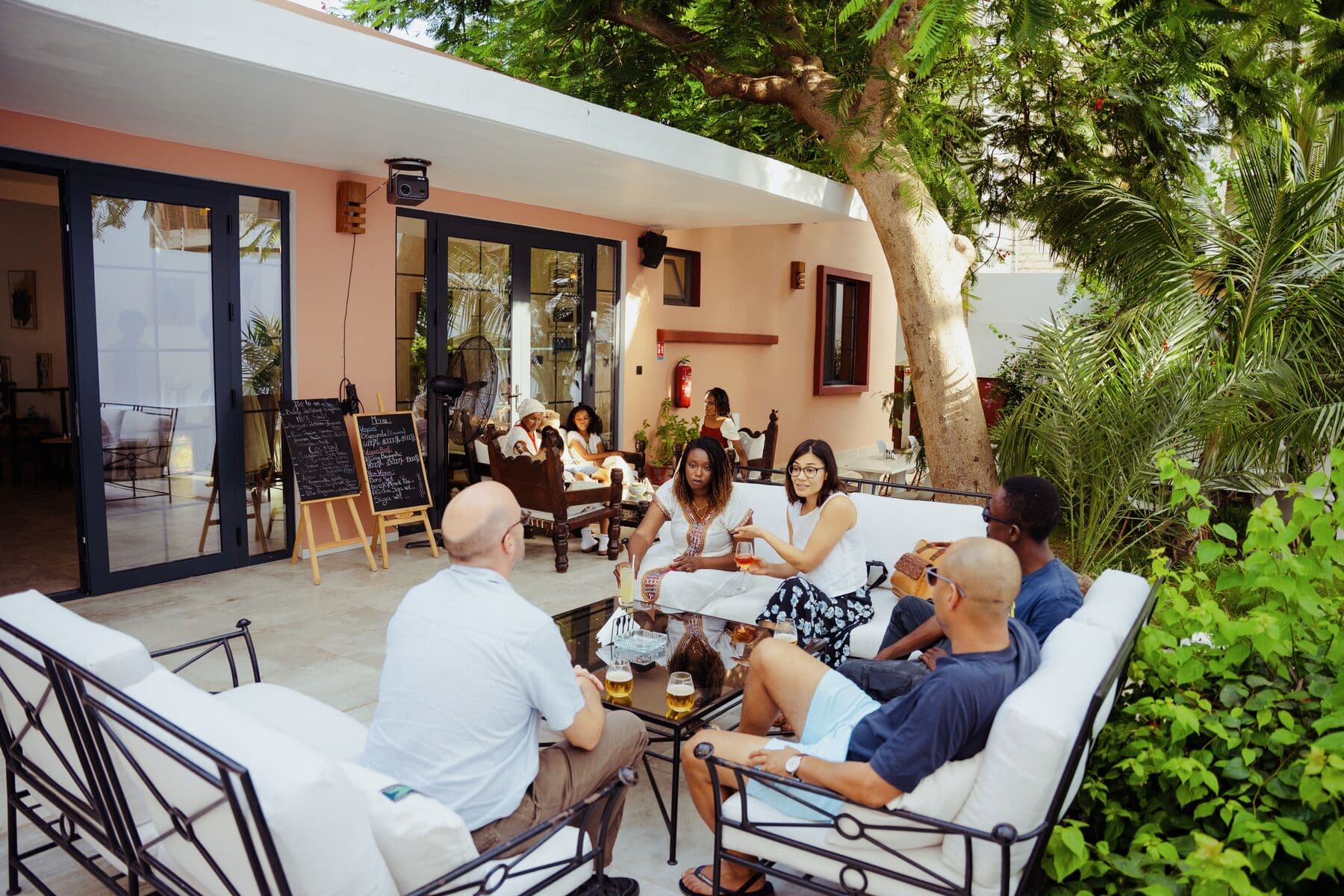
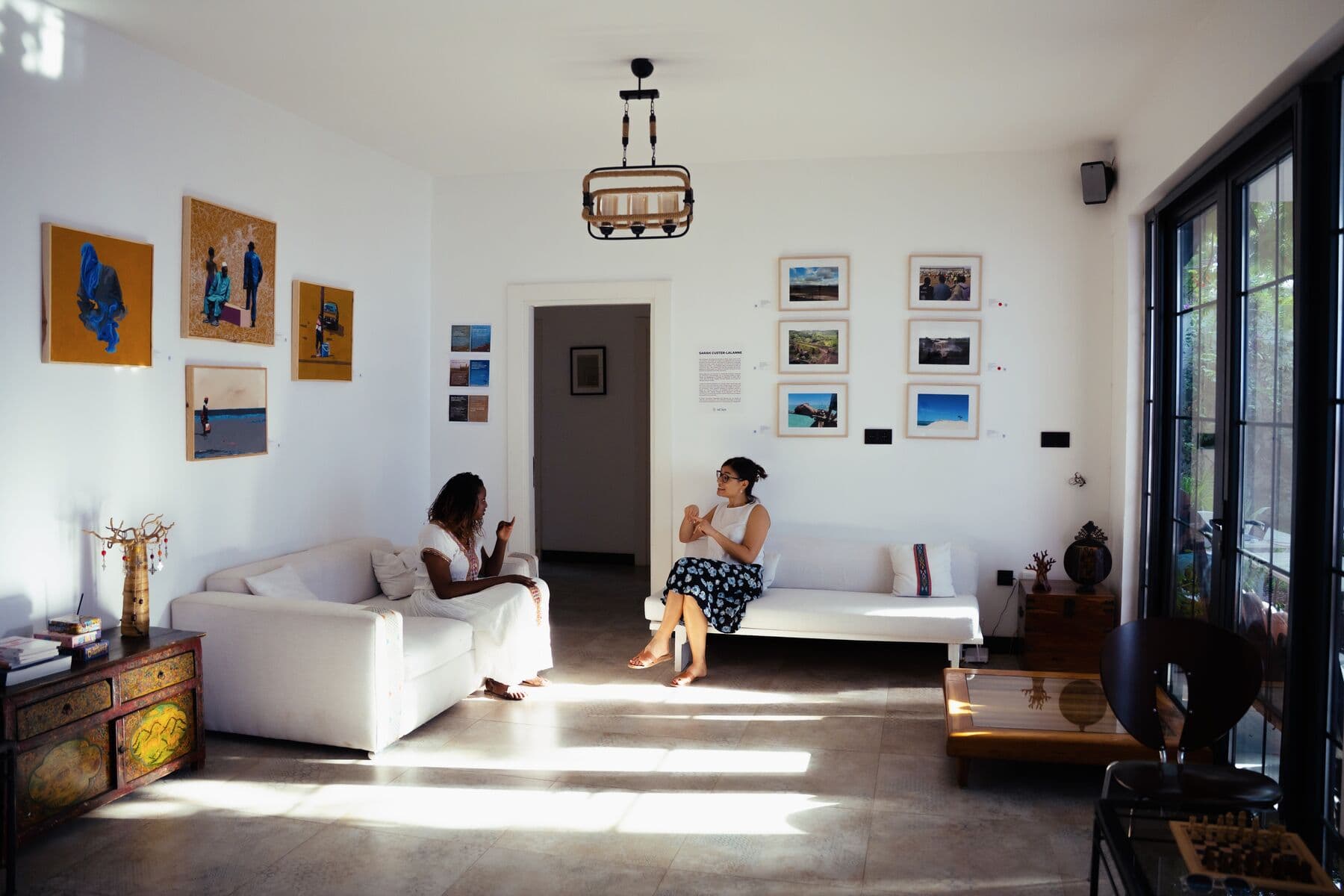
After a morning in the Plateau, Point E lets you shift gears: a lunch at Ge'eza, followed by a stop at the villa's art gallery, in the lounge or the glass-roofed room. For a wider two-day frame, our 48 hours in Dakar itinerary sets out a broader route that takes in the Plateau alongside other parts of the city.
Booking ahead
For lunch or dinner at Ge'eza after a day in the Plateau, it is worth booking ahead, especially in the evening and at weekends. The house is open Tuesday to Sunday, 8am to 10pm, closed on Mondays, at 656 Avenue Birago Diop, Point E.
Frequently asked questions
What should you see first in the Plateau?
Independence Square, the presidential palace from outside, the Cathedral of African Remembrance, Dakar's train station and Kermel Market.
Can you go inside the presidential palace?
No, it is an official residence viewed from outside, along its gates.
Where does the ferry to Gorée Island leave from?
From the dock at Dakar's port, close to the Plateau. Schedules and fares are best checked on site.
How long should you plan for the Plateau?
A morning is usually enough for the main landmarks, depending on your pace.
Where to have lunch after a morning in the Plateau?
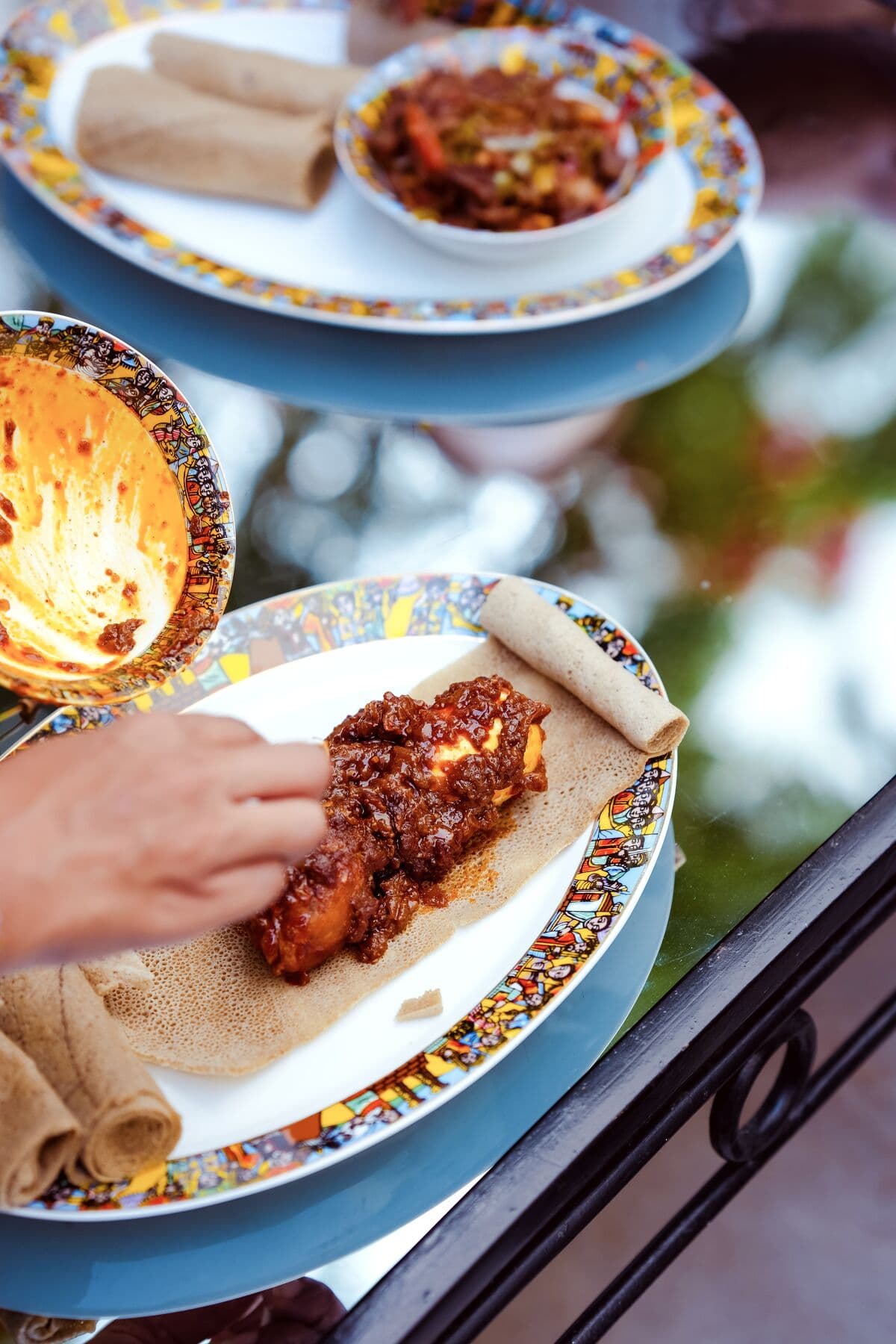
In Point E, at Ge'eza, for an Ethiopian meal and a stop at the gallery.