
Dakar · 2 November 2026
Visiting Gorée Island from Dakar: What to Know
Gorée Island, a UNESCO World Heritage Site since 1978, is reached by ferry from the port of Dakar. Check times and fares on site, then end the day in Point E with dinner and Ge'eza's art gallery.
Gorée Island is a day trip from Dakar, reached by a small ferry that leaves from the port's embarkation point. The island has been a UNESCO World Heritage Site since 1978 and is home to the House of Slaves, a central site in the memory of the Atlantic slave trade. Ferry times and fares change, so check them on site, at the embarkation point, before planning your day. To close out the visit, Point E, a short distance from the port, offers an Ethiopian dinner and a stop at Ge'eza's art gallery.
A World Heritage island
Gorée was added to the UNESCO World Heritage List in 1978, in recognition of its place in the history of the Atlantic slave trade and the value of its preserved colonial architecture. The island is a network of narrow lanes, ochre-coloured houses and old buildings, with no cars allowed, so the whole visit is done on foot.
The House of Slaves
The House of Slaves is the island's best-known site, a building that recalls the passage of enslaved people before their deportation. Most visitors walk through it quietly rather than following a running commentary, and many come away with a strong impression. Visiting hours and access conditions should be checked on site, once you arrive on the island.
A place of memory for travellers from many countries
Gorée draws visitors from around the world every year, including many members of the African diaspora who come to retrace this history in person. That role as a place of memory is part of why the island remains such a common stop on Dakar itineraries, alongside the city's major cultural institutions and museums.
The ferry crossing
Gorée is reached from the port of Dakar by a small ferry connecting the mainland to the island. Schedules, the frequency of departures and fares change with the season and demand: ask directly at the embarkation point before you leave rather than relying on older information. Build in a time margin, especially during busy periods. The embarkation point at the port of Dakar can get busy depending on the day and time, particularly at weekends and during holiday periods, so allow time to buy tickets and board. Keep your identification easily accessible, since it is usually asked for before the crossing. A small, light backpack is all you really need for the day, leaving your hands free for photographs and for picking your way along the narrow, uneven lanes once you arrive on the island.
Getting around on the island
Gorée has no car traffic: everything is done on foot, at the pace of its narrow lanes. It is a sharp change from the rest of Dakar, and many visitors enjoy the unusual quiet. Bring comfortable shoes and water, since the island is explored on foot, with no transport of its own.
Beyond the House of Slaves
The island holds many colonial-era buildings, some turned into galleries or artists' studios, others left as they are. There are also views over the ocean and towards Dakar, and a pace of visiting that suits wandering more than a timed route. Set aside a good part of a day to take it in without rushing, since everyone's pace through the island is different. Stopping in a shaded lane or on a low wall facing the sea is often as much a part of the visit as the buildings themselves, and it is worth leaving room in your day for that kind of pause rather than rushing from one site to the next.
Ending the day in Point E
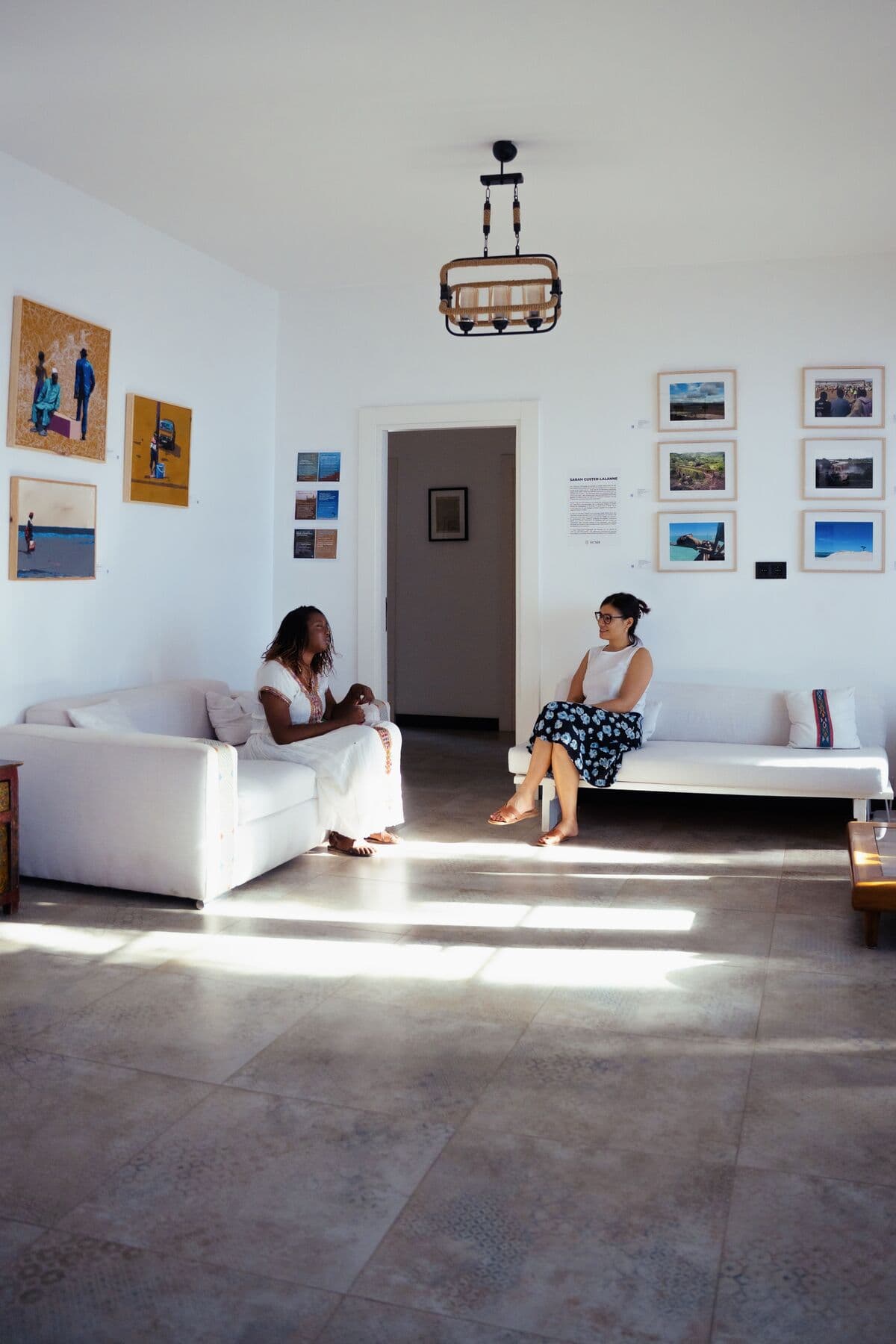
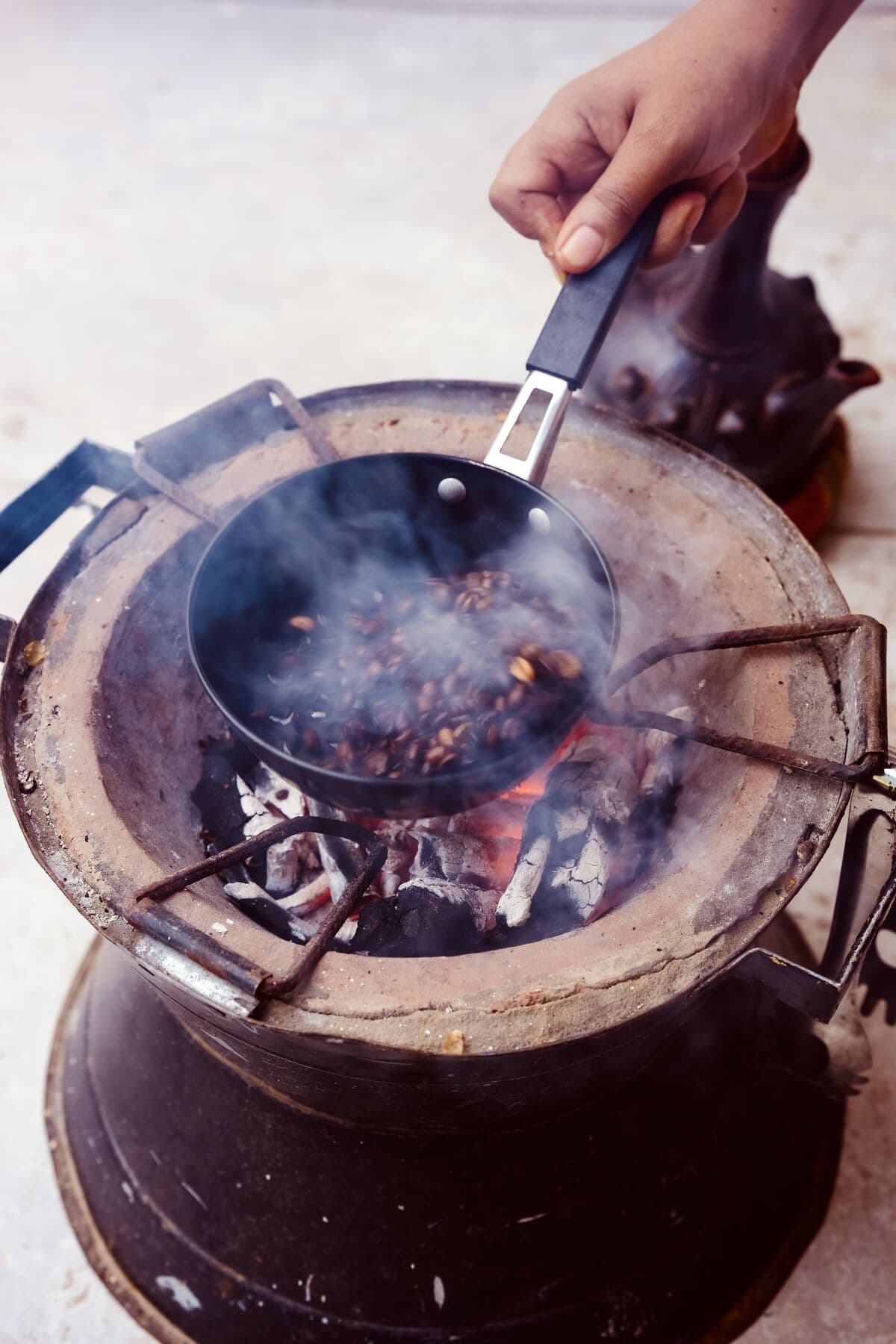
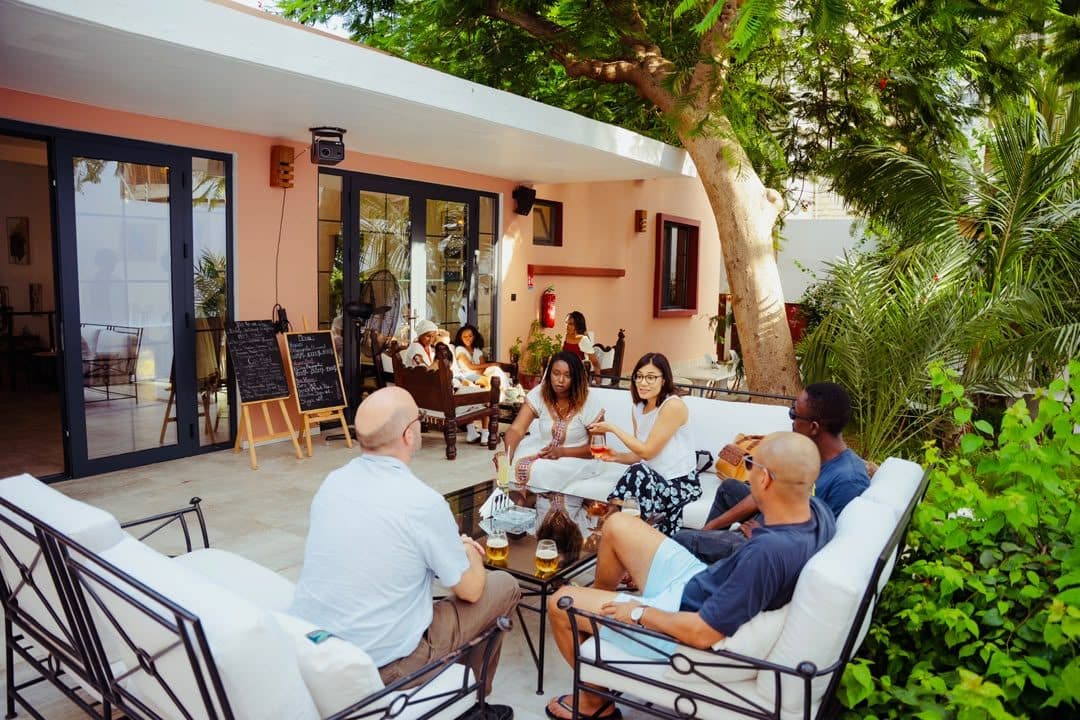
Back from the port, Point E is a short distance away, a good address for closing a day given over to memory and history. At Ge'eza, dinner and the art gallery share the same villa: an Ethiopian meal, followed by a walk through the works on show in the gallery lounge. To build a fuller day around art in Dakar, our one-day art itinerary complements this visit. And if you are showing the island to visiting family, our guide to hosting visiting family in Dakar sets out a fuller programme.
Planning your visit
A few simple precautions for a day on Gorée: check ferry times and fares before you leave, bring water and sun protection, keep identification on you, and leave a margin on the way back so as not to miss the last departure. If you are travelling as a group, arrange ferry tickets ahead of time.
Dinner after Gorée
For dinner after a day on Gorée, booking ahead is worthwhile, especially in the evening. The restaurant page sets out Ge'eza's full menu, in Point E, open Tuesday to Sunday, 8am to 10pm, closed on Mondays.
Frequently asked questions
Since when has Gorée been a UNESCO World Heritage Site?
Since 1978.
How do you get to Gorée from Dakar?
By a small ferry that leaves from the embarkation point at the port of Dakar. Check times and fares on site.
Can you drive around the island?
No, the island has no car traffic: everything is done on foot.
How much time should you set aside for the visit?
It depends on your pace: set aside a good part of a day without rushing.
Where can you have dinner after a day on Gorée?
At Ge'eza, in Point E, for an Ethiopian meal and a stop at the art gallery.