
Dakar · 27 October 2026
Ethiopian Coffee and Senegalese Attaya: Two Rituals in Three Rounds
The Ethiopian coffee ceremony and Senegalese attaya are both served in three rounds, from strongest to gentlest. Two rituals of hospitality found together at Ge'eza, in Point E, Dakar.
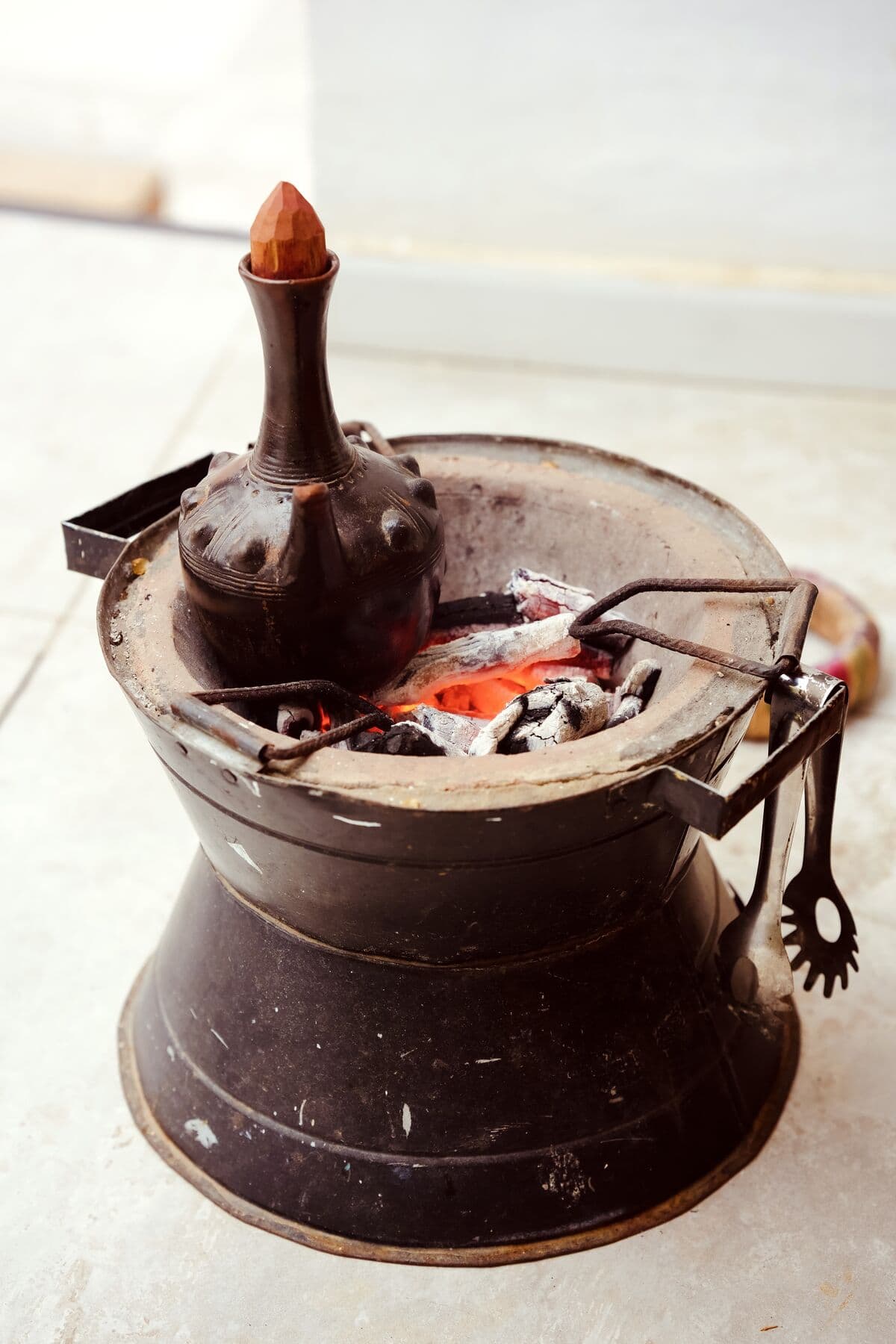
The Ethiopian coffee ceremony and Senegalese attaya share a common structure: three rounds in succession, from strongest to gentlest, taken slowly and meant to stretch the conversation out. At Ge'eza, in Point E, both rituals live under the same roof: the coffee ceremony by booking, and attaya included with the Senegalese dish of the day, Tuesday to Friday at lunch.
Two drinks, the same logic across three rounds
Ethiopian coffee, served in three rounds called Abol, Tona and Baraka, and Senegalese tea, served in three glasses, follow a similar principle: rather than preparing three different drinks, one is reused or re-brewed several times, with the result shifting at each round. For coffee, it is water added to the same grounds that changes the strength. For attaya, it is the same tea leaves, brewed again with more sugar at each pour. In both cases, the first round is the strongest, and the last the gentlest.
Abol, Tona, Baraka
Ethiopian coffee is served across three rounds. Abol, the first, is the strongest: it is the fullest cup, the one that sets the tone of the ceremony. Tona, the second, is more nuanced, with subtler notes than the first round. Baraka, the third, means blessing: it is the gentlest cup, the one that closes the ritual. The article Abol, Tona, Baraka breaks down what sets each cup apart.
The three glasses of attaya
Senegalese attaya follows a similar logic, with three glasses rather than three cups. The first glass is the strongest and most bitter. The second, softer, gains in roundness. The third, the sweetest, closes the service on a lighter note. As with coffee, it is the time spent together, more than the drink itself, that gives the ritual its meaning. The article attaya, Senegalese tea covers how it is prepared and its three stages.
Taking time, rather than the drink itself
What truly connects these two rituals is not just their shared three-round structure: it is the relationship to time they both demand. Neither Ethiopian coffee nor attaya is meant to be drunk in a hurry. Both call for sitting down, staying put, and letting the conversation follow the pace of the service rather than the other way around. It is an idea found across many hospitality cultures, where receiving someone means first offering them time.
Both rituals at Ge'eza
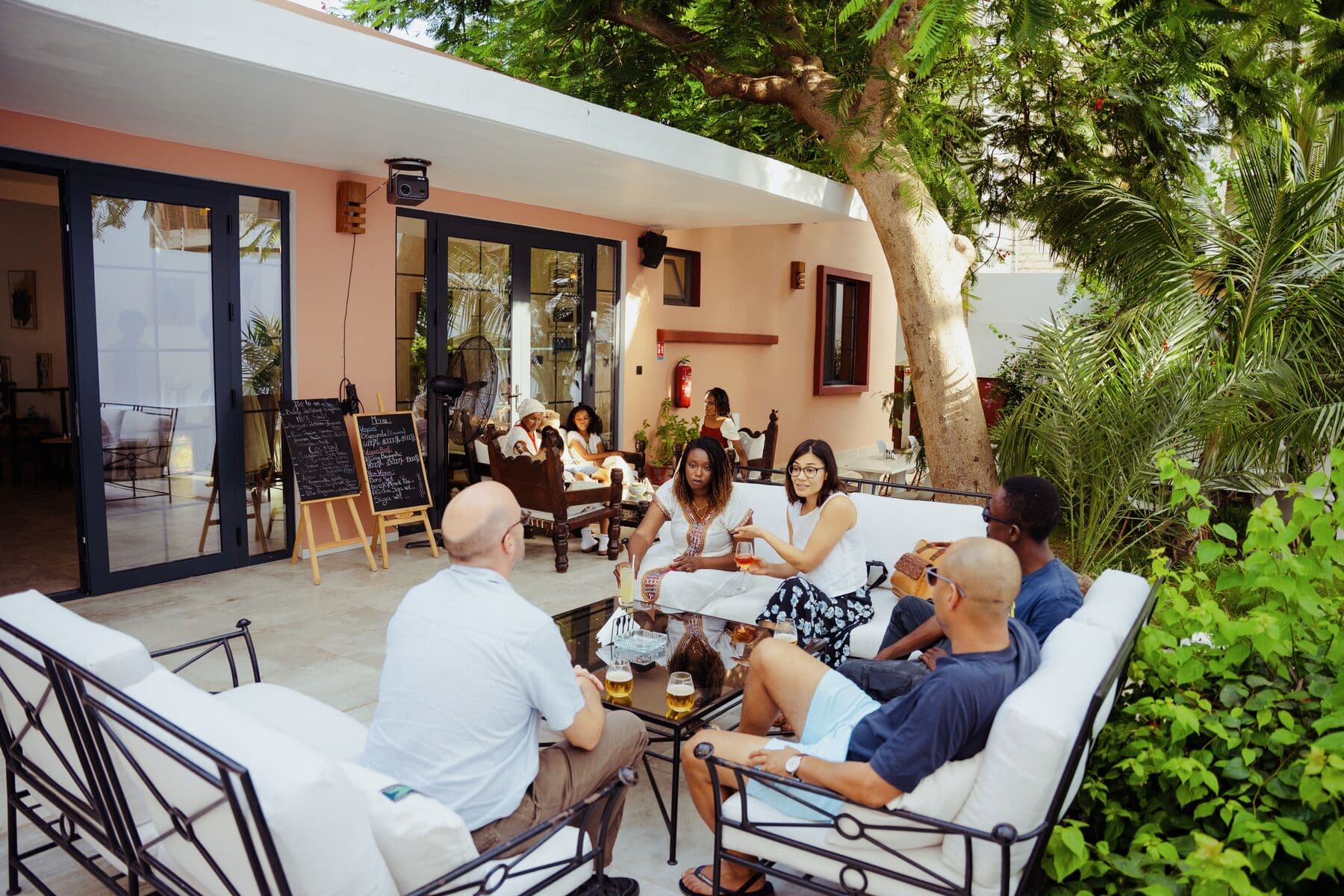
At Ge'eza, the two traditions coexist naturally. The coffee ceremony is booked ahead, at 7,000 F per person for the full round, about 45 minutes, with the three rounds, incense and homemade dabo. Attaya, on the other hand, comes included with the Senegalese dish of the day, served Tuesday to Friday at lunch, at 5,500 F with water or a local juice, depending on the day: mafé on Tuesday, thiéboudienne on Wednesday, supou kanja on Thursday, poulet yassa on Friday. The article Senegalese dish of the day covers this weekday formula.
Trying both in the same visit
Nothing stops anyone from trying both rituals on the same day: the Senegalese dish of the day with its attaya at lunch, followed by a booked coffee ceremony in the afternoon or at the end of a meal. It is a way of crossing, in a single visit, two hospitality traditions that echo each other without blending together, each keeping its own preparation and its own pace.
Booking your place
The coffee ceremony is best booked 24 hours ahead, especially for a group, by WhatsApp at +221 78 660 07 07, with confirmation by the same channel or by phone. For the weekday Senegalese dish of the day, a simple table booking is enough, or guests can simply walk in during opening hours, Tuesday to Friday at lunch.
Two countries, a similar idea of hospitality
Ethiopia and Senegal do not share a history, a language or a cuisine, but both carry a similar idea of hospitality: receiving someone means offering time before offering a service. Ethiopian coffee in three rounds and Senegalese attaya in three glasses each express that idea in their own way, with their own gestures, objects and vocabulary. Seeing them side by side at Ge'eza, a house built as a bridge between two Africas, is no coincidence.
Different objects, the same attention to detail
The clay jebena and the charcoal-heated teapot used for attaya share nothing in shape, but both demand constant attention: watching the fire, judging the sugar or the water, pouring at the right moment. The pour itself, from a height to build the froth of the attaya or to clarify the coffee, is part of the display guests watch before tasting. That care given to the gesture, more than the recipe itself, is what truly connects the two traditions.
Frequently asked questions
What do Ethiopian coffee and Senegalese attaya have in common?
Both are served in three successive rounds, from strongest to gentlest, and both call for taking time rather than drinking quickly.
Is attaya included with a dish at Ge'eza?
Yes, with the Senegalese dish of the day, served Tuesday to Friday at lunch, at 5,500 F with water or a local juice.
How much does the full coffee ceremony cost?
7,000 F per person, for the three rounds, incense and dabo, over about 45 minutes.
Can both rituals be tried on the same day?
Yes, nothing stops guests from having the dish of the day with its attaya at lunch, then booking a coffee ceremony for later in the day.