
Question · 6 October 2026
Attaya: Senegalese Tea, Its Three Glasses and Its Foam
Attaya is Senegalese tea served in three glasses, with a thick foam, in a moment taken without hurry. Its ritual, its three stages, and the parallel with Ethiopian coffee. Included in the dish of the day at Ge'eza.
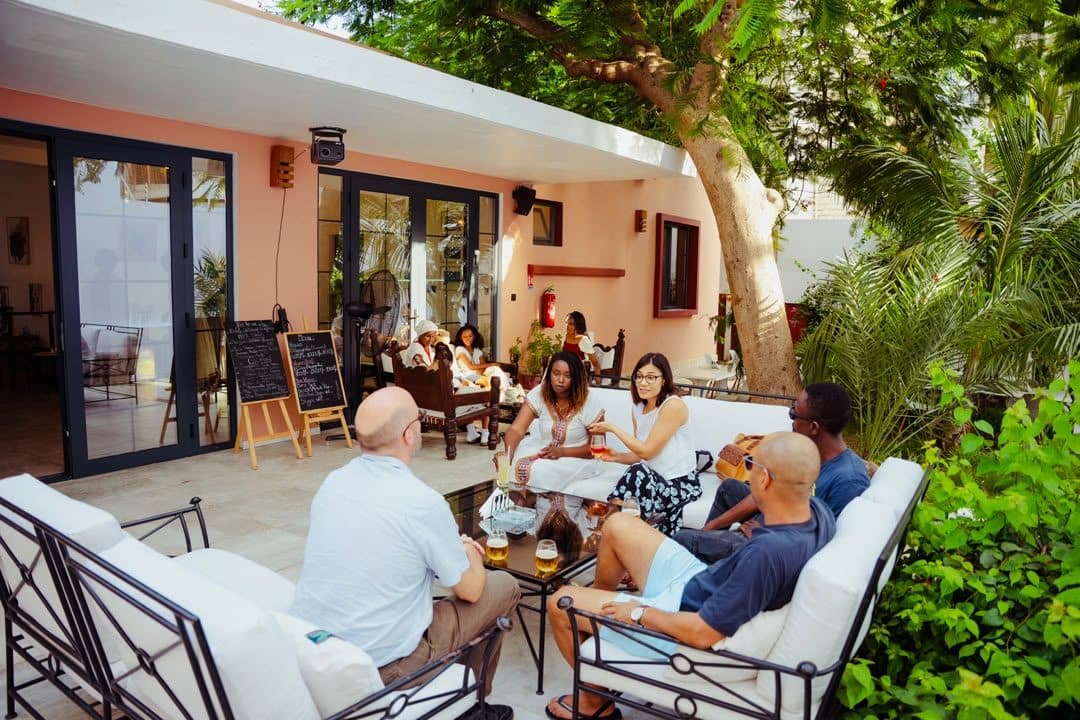
Attaya is Senegalese tea: green tea brewed at length, sweetened, poured from a height to raise a foam, and served in three successive glasses, from the strongest to the gentlest. It is as much a ritual as a drink, since it is taken with others, without hurry, after a meal or between conversations. At Ge'eza, attaya is included in the Senegalese dish of the day, Tuesday to Friday at lunch, at 5,500 F with water or a local juice. The restaurant is at 656 avenue Birago Diop in Point E, Dakar.
How attaya is made
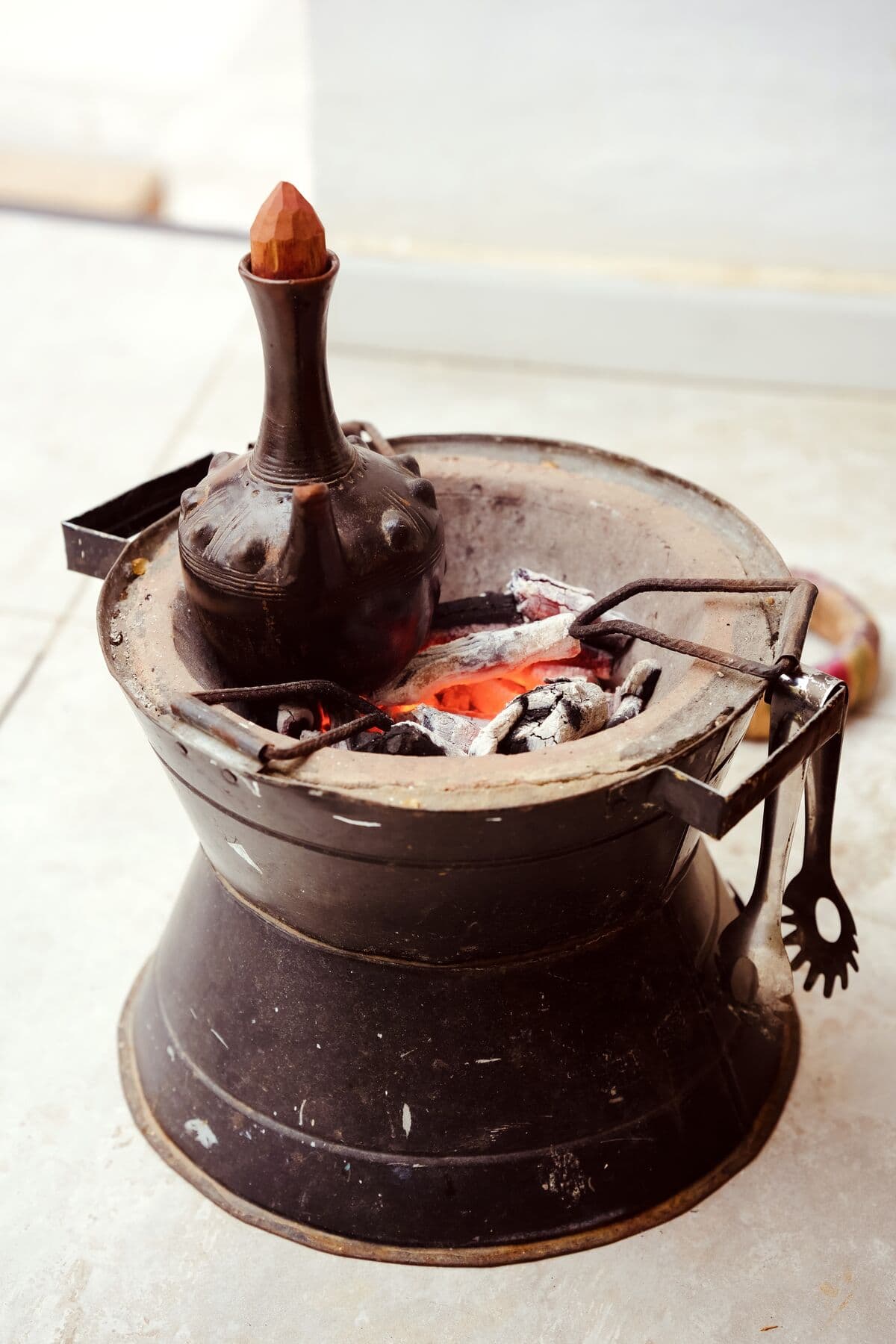
Attaya is traditionally prepared on a small charcoal stove, in a metal teapot, with Chinese green tea, a lot of sugar and often mint. The water and tea are brought to the boil, then the liquid is poured from one vessel to another, from a height, to aerate it. That gesture creates the foam, which people admire as much as they drink.
It is served in small glasses, half filled with foam, set on a tray. The person making the tea, often a younger member of the household or the host, takes their time, because patience is part of the drink.
The three glasses
Custom calls for three rounds, each with a different character, obtained by reusing the same leaves and adding sugar as you go.
- The first glass is the strongest, the most bitter. It is sipped in small mouthfuls.
- The second glass is softened, rounder.
- The third glass is the sweetest, the lightest.
A widespread saying sums it up with an image: the first is bitter like life, the second sweet like love, the third gentle like death. The wording varies by region and family, but the idea remains a progression from intensity to sweetness.
Time spent together
The value of attaya lies less in the taste than in the time it demands. You do not drink it on the move. It settles in, you sit, you talk, you comment, you discuss everything. It belongs to Senegalese hospitality, teranga, which means welcoming by taking the time. Offering attaya is inviting the other person to stay.
The parallel with Ethiopian coffee
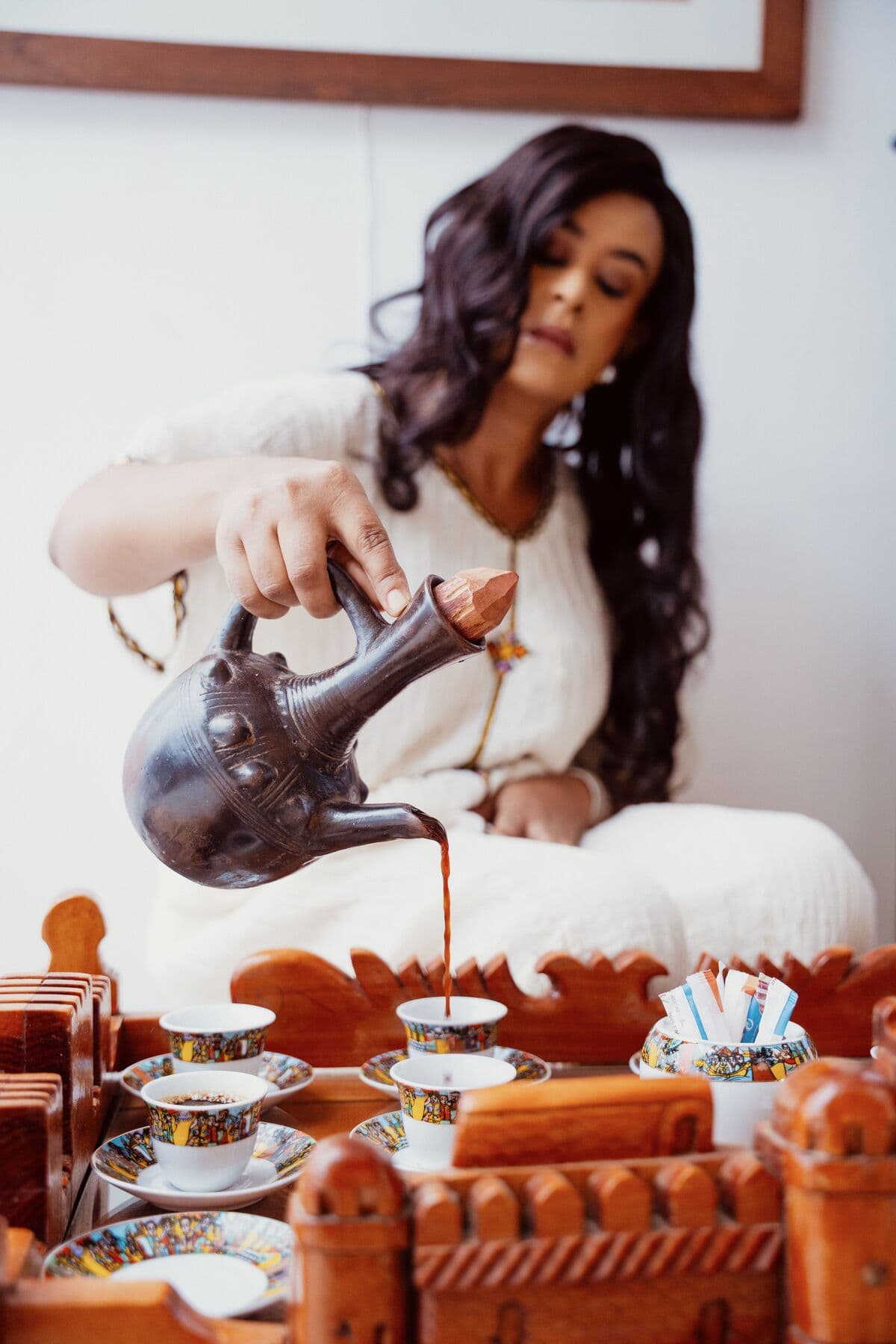
The Ethiopian coffee ceremony rests on the same logic. The coffee is roasted on the spot, ground by hand and brewed in a jebena, a clay coffee pot, then served in three rounds: Abol, Tona and Baraka, from the most intense to the gentlest. As with attaya, there are three stages that move from strength to softness, and a rhythm nobody tries to speed up.
The full ceremony is 5,000 F per person at Ge'eza, lasting about 45 minutes. It is ideally booked 24 hours ahead, especially for groups, and confirmed on WhatsApp. If you want to see how the two traditions answer each other at the table, the coffee ceremony page explains how it unfolds.
Having attaya at Ge'eza
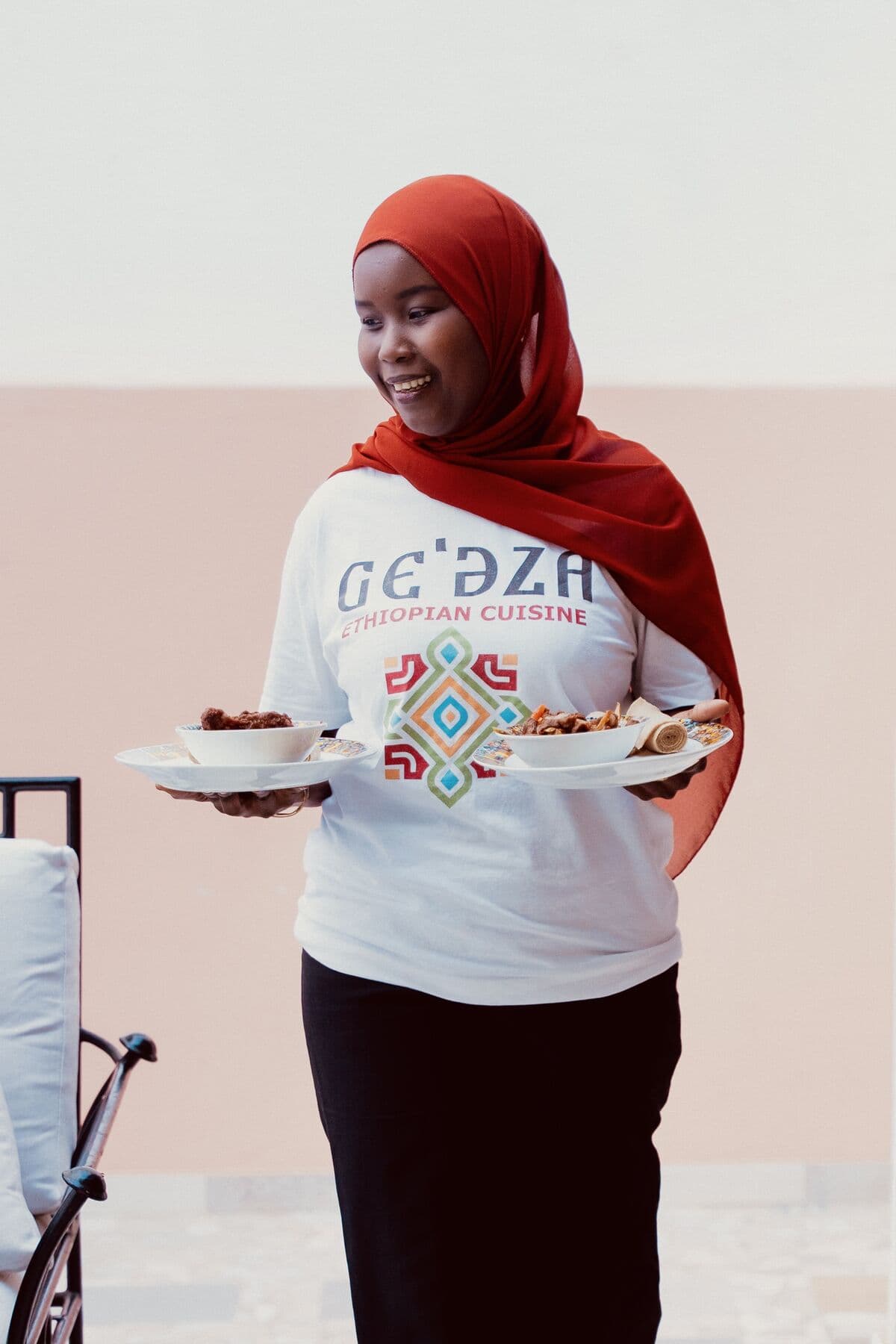
The formula is simple: the Senegalese dish of the day, Tuesday to Friday at lunch, at 5,500 F, covers the dish, a water or local juice and attaya. The dish changes daily: mafé on Tuesday, thiéboudienne on Wednesday, supou kanja on Thursday, chicken yassa on Friday. All the details are in Senegalese dish of the day.
For a meal, the terrace under the trees is a natural setting for tea. You can book online or write on WhatsApp at +221 78 660 07 07.
Frequently asked questions
What is attaya?
Senegalese tea, made with green tea, sugar and often mint, poured from a height to raise a foam, and served in three glasses.
Why three glasses?
Each glass has a different character: the first strong and bitter, the second softer, the third the sweetest. It is a progression, like the three rounds of Ethiopian coffee.
Is attaya included in the dish of the day?
Yes, at Ge'eza the Senegalese dish of the day at 5,500 F includes the dish, a water or local juice and attaya.